Disclosure: We may earn a small commission if you purchase through links on this page. No additional cost to you. We just want to be transparent about how we fund this site.
ASICS Gel-Nimbus 28 vs HOKA Bondi 9 for Plantar Fasciitis
PureGEL heel strike absorption versus Meta-Rocker toe-off redirection. Two maximum cushion strategies for the same condition.
We don't just recommend shoes. We explain why they work for your feet.
What You Need to Know First
Plantar fasciitis produces sharp heel pain because the plantar fascia, a thick connective tissue band running from the heel to the ball of the foot, becomes inflamed at its calcaneal attachment point from cumulative mechanical stress. Two distinct gait phases create that stress. Heel strike transmits impact forces directly to the fascia attachment point with every step, particularly in heel strikers running or walking on hard surfaces. Toe-off requires the plantar fascia to elongate under tension as the heel lifts and the toes dorsiflex, pulling on the already-inflamed attachment. The Nimbus 28 addresses heel strike primarily through PureGEL absorption and heel elevation. The Bondi 9 addresses toe-off primarily through Meta-Rocker geometry and soft foam volume. Understanding which phase is driving your pain points toward the right shoe.
Both shoes carry the APMA Seal of Acceptance, both are maximum cushion neutral trainers, and both are consistently recommended by podiatrists for plantar fasciitis. But the ASICS GEL-Nimbus 28 and HOKA Bondi 9 address heel pain at different points in the gait cycle, using different clinical mechanisms, and they feel completely different underfoot. The Nimbus 28 leads with PureGEL technology in the heel that directly absorbs the impact forces arriving at the fascia attachment point on heel strike, combined with an 8mm drop that passively shortens the working length of the plantar fascia with every step. The Bondi 9 leads with 41mm of supercritical EVA foam and pronounced Meta-Rocker geometry that actively rolls the foot through the gait cycle, reducing the mechanical demand on the fascia during the toe-off phase rather than the heel strike phase. Both approaches are evidence-based. The right choice depends on which phase of your gait is driving your plantar fasciitis symptoms and whether you prefer the firmer, more stable platform of the Nimbus or the softer, more maximal ride of the Bondi.
Specs Compared
Factual specs only. No brand is favored. You decide what matters most for your feet.
Which One Is Right for You?
Both are excellent. Here is the honest case for each based on your specific situation.

ASICS GEL-Nimbus 28
$165-$175
Choose this when
Your plantar fasciitis presents primarily as sharp heel strike pain that spikes with the first step on a hard floor in the morning, after sitting, or at the beginning of a run before the tissue warms up. These are hallmark signs of heel strike-driven fascial stress. The Nimbus 28's PureGEL heel insert directly cushions the calcaneal attachment point on impact, and its 8mm drop reduces the stretch load on the fascia at rest by shortening the heel-to-toe gradient. It is also the stronger choice for runners who want a firmer, more stable platform that does not feel as soft or as unstable at pace as the Bondi 9's maximum foam platform, and for anyone whose plantar fasciitis is accompanied by metatarsalgia or arthritic joint pain that benefits from the Nimbus 28's full-foot cushioning distribution.
FF Blast Plus cushioning with PureGEL technology for maximum soft landings
25g lighter than previous version - exceptional cushioning without weight penalty
Engineered knit upper wraps foot for comfort and breathability
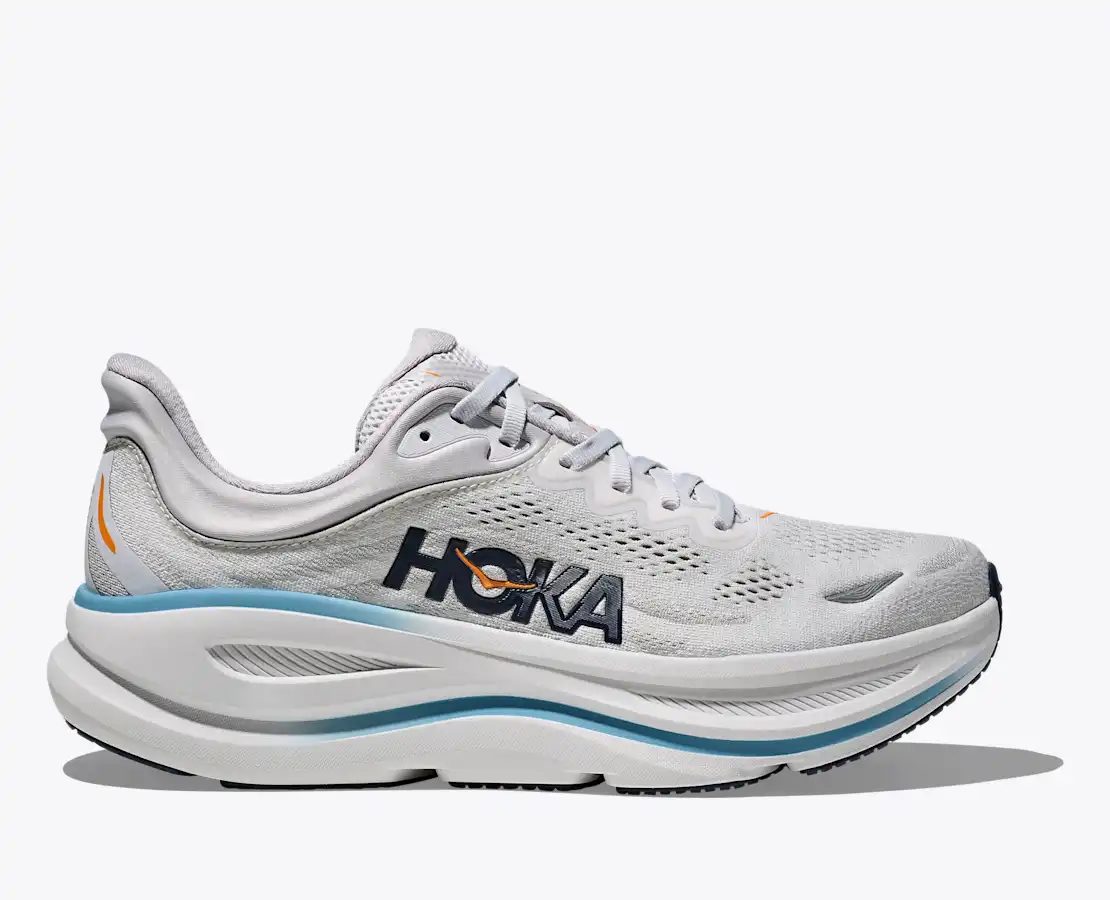
HOKA Bondi 9
$165-$180
Choose this when
Your plantar fasciitis is most painful during or after activity rather than on the first morning step, which points to toe-off fascial load rather than heel strike impact as the primary driver. The Bondi 9's Meta-Rocker geometry reduces the dorsiflexion demand at the big toe joint during push-off, directly reducing the windlass mechanism tension that aggravates the plantar fascia during the late stance phase. Board-certified podiatrists Dr. Miguel Cunha and Dr. Nicole Freels both specifically recommend the Bondi 9 for plantar fasciitis, citing its maximum cushioning and wide base. It is also the stronger choice for standing professionals who spend long hours on hard floors, patients over 55 with thinning plantar fat pads, and anyone whose symptoms have not improved with a higher heel drop shoe.
Supercritical EVA foam for maximum plush cushioning
Meta-Rocker geometry reduces plantar fascia stress
APMA Seal of Acceptance pid=9031 - podiatrist top recommendation for heel pain - verified directly from APMA Seal Database May 2026
The Honest Verdict
Both shoes are APMA accepted and clinically appropriate for plantar fasciitis. The Nimbus 28 is the stronger choice when heel strike impact is the primary pain driver, particularly for runners who prefer a firmer, more stable platform and want PureGEL technology directly cushioning the heel attachment point. The Bondi 9 is the stronger choice when toe-off fascial tension is the primary pain driver, or when maximum foam volume and rocker-assisted gait redirection are the primary clinical needs. If you are unsure which phase is driving your pain, the Bondi 9 is the safer starting point as its maximum cushioning and rocker geometry benefit nearly all plantar fasciitis presentations regardless of gait phase.
Answer These. Then Decide
Four quick questions that point you toward the right shoe for your specific situation.
Is your worst pain on the first step after waking or after sitting, rather than during activity?
Do you prefer a firmer, more stable platform over a softer maximal ride?
Do you primarily stand for long hours rather than run as your main daily activity?
Is your pain worst during or after running rather than on first morning steps?
Do you also have metatarsalgia or arthritic joint pain alongside plantar fasciitis?
Frequently Asked
Which is better for plantar fasciitis, ASICS GEL-Nimbus 28 or HOKA Bondi 9?
Both are APMA accepted and podiatrist recommended, but they address plantar fasciitis at different points in the gait cycle. The Nimbus 28 is better when heel strike impact is the primary pain driver, using PureGEL technology to absorb forces at the calcaneal attachment point. The Bondi 9 is better when toe-off fascial tension is the primary driver, using Meta-Rocker geometry to reduce push-off demand on the plantar fascia. If unsure which applies, the Bondi 9 is the safer starting point as its rocker geometry and maximum cushioning benefit most plantar fasciitis presentations.
What is the difference between the ASICS GEL-Nimbus 28 and HOKA Bondi 9?
The most clinically significant differences are heel drop and cushioning philosophy. The Nimbus 28 has an 8mm drop and uses FF Blast Plus foam with a PureGEL heel insert on a firmer, more stable platform. The Bondi 9 has a 5mm drop and uses softer supercritical EVA foam with pronounced Meta-Rocker geometry on a more maximal, enveloping platform. The Nimbus 28 is approximately 25 grams lighter than the previous generation and feels more responsive. The Bondi 9 is softer and more cushioned underfoot. Both have the same width options and comparable price ranges.
Is the ASICS GEL-Nimbus 28 good for plantar fasciitis?
Yes. The ASICS GEL-Nimbus 28 carries the APMA Seal of Acceptance, verified at PID 8554 in the APMA Seal Database. Its 8mm heel drop reduces plantar fascia stretch length passively with every step, and its PureGEL heel technology directly cushions the calcaneal attachment point where plantar fasciitis inflammation occurs. It is most appropriate for runners and walkers with heel strike-driven plantar fasciitis who prefer a firmer, more stable platform over a rocker-geometry shoe.
Can I use either shoe with custom orthotics for plantar fasciitis?
Yes. Both the Nimbus 28 and Bondi 9 have removable insoles that accommodate custom orthotics. The Nimbus 28's firmer, more stable platform provides a consistent base for orthotic correction without the foam compression variability of softer maximalist shoes. The Bondi 9's Active Foot Frame and deep heel cup also accommodate orthotics well. For overpronating plantar fasciitis patients using custom orthotics, a podiatrist may recommend pairing orthotics with a stability shoe rather than either of these neutral options.
Related Comparisons
Still Not Sure Which Is Right for You?
Take our guided quiz and get a personalized recommendation based on your specific foot condition, activity level, and concerns. We explain exactly why each shoe fits your feet.