Disclosure: We may earn a small commission if you purchase through links on this page. No additional cost to you. We just want to be transparent about how we fund this site.
HOKA Bondi 9 vs Brooks Adrenaline GTS 25 for Bunions
Two APMA-accepted shoes with genuinely wide widths, but they solve the bunion problem differently. Here is how to choose.
We don't just recommend shoes. We explain why they work for your feet.
What You Need to Know First
A bunion (hallux valgus) is a bony prominence that develops at the base of the big toe when the first metatarsal shifts medially and the big toe drifts toward the second toe. The bunion itself is not just a cosmetic issue. It changes the mechanics of every step, alters gait, and concentrates pressure on the medial forefoot. Shoes that are too narrow, too rigid, or that taper at the toe compress the bunion prominence directly, causing pain, inflammation, and accelerated progression. The right shoe for bunions must have a wide, non-tapering toe box with adequate volume at the first MTP joint, a non-rigid upper that does not press against the medial eminence, a low enough heel-to-toe drop to reduce forefoot loading, and a removable insole to accommodate orthotics that address the underlying biomechanical driver.
Bunions - hallux valgus - affect over 64 million Americans and are directly worsened by shoes that compress the forefoot. Both the HOKA Bondi 9 and Brooks Adrenaline GTS 25 carry the APMA Seal of Acceptance and come in genuine wide widths, but they are built on fundamentally different design philosophies. The Bondi 9 uses an anatomically shaped last with a naturally wide toe box and maximum cushioning to offload the first MTP joint, which is the joint where the bunion forms. The Adrenaline GTS 25 uses GuideRails stability technology with a straight last and five width options including extra wide, making it the stronger choice when bunions co-exist with overpronation or flat feet. Choosing the wrong one does not just mean discomfort. It means continued pressure on the bunion prominence and accelerated hallux valgus progression. Here is how to choose between them.
Specs Compared
Factual specs only. No brand is favored. You decide what matters most for your feet.
Which One Is Right for You?
Both are excellent. Here is the honest case for each based on your specific situation.
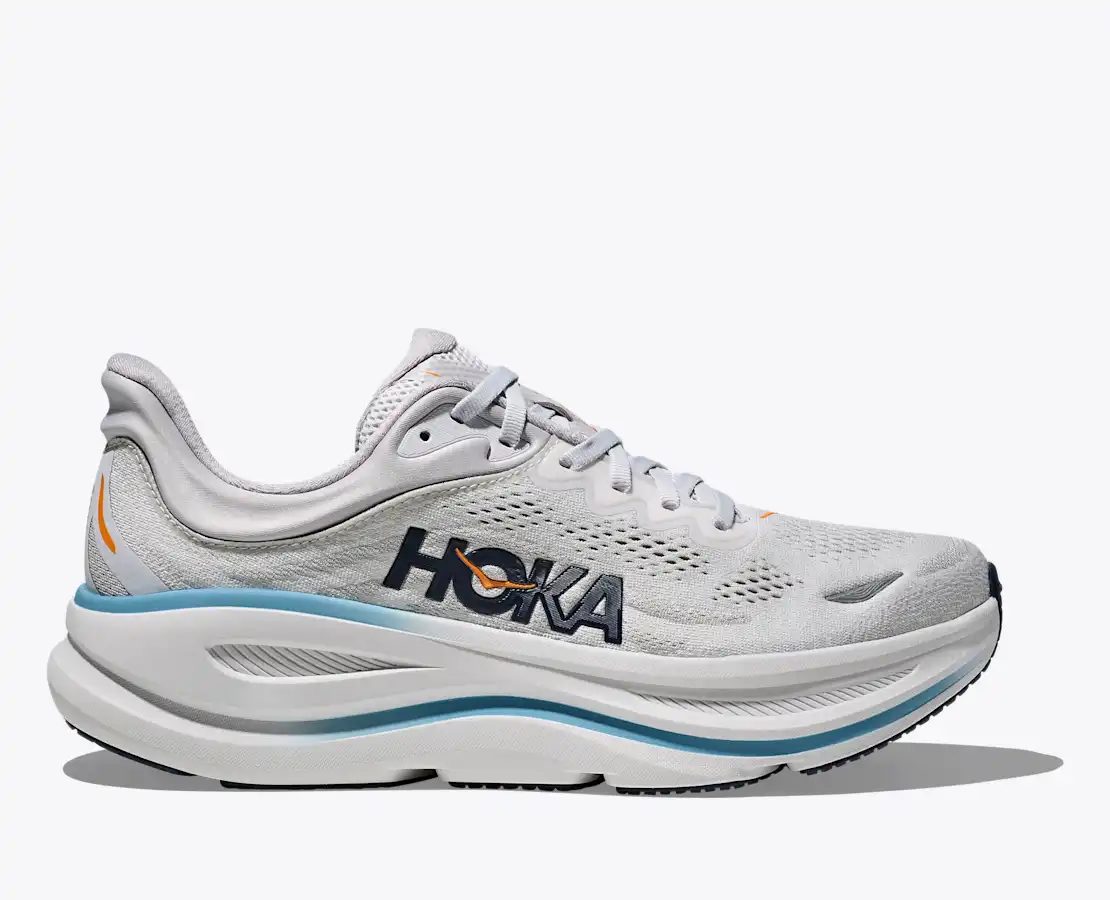
HOKA Bondi 9
$165-$180
Choose this when
Your bunion pain is primarily about forefoot compression and cushioning rather than stability. The Bondi 9's anatomically shaped last - wider at the toe than a standard running shoe - gives the first MTP joint genuine room without pressure on the bunion prominence. The meta-rocker geometry offloads the joint during push-off, which is when bunion pain is sharpest. It is the stronger choice for nurses, teachers, and anyone standing on hard floors for long shifts, patients who do not overpronate, and anyone whose bunions are accompanied by metatarsalgia or ball-of-foot pain. The 41mm stack height absorbs the impact forces that stress the bunion joint on every step.
Supercritical EVA foam for maximum plush cushioning
Meta-Rocker geometry reduces plantar fascia stress
APMA Seal of Acceptance pid=9031 - podiatrist top recommendation for heel pain - verified directly from APMA Seal Database May 2026

Brooks Adrenaline GTS 25
$150-$160
Choose this when
Your bunions co-exist with overpronation or flat feet - a clinically common combination since the same biomechanical drivers that cause flat feet also accelerate hallux valgus progression. The Adrenaline GTS 25's straight last and GuideRails technology correct the excess inward rolling that pushes the big toe further out of alignment with every step. It also offers five widths including 4E extra wide - the most width options of any shoe in this comparison - which is essential for patients whose bunions have significantly widened the forefoot. It is also the stronger choice if you need PDAC A5500 diabetic certification alongside bunion accommodation.
GuideRails holistic support system controls excess movement without overcorrecting
DNA Loft v3 nitrogen-infused cushioning for lightweight plush comfort
APMA Seal of Acceptance pid=9201 - PDAC A5500 diabetic shoe certified - verified directly from APMA Seal Database May 2026
The Honest Verdict
Both shoes are clinically appropriate for bunions and both carry the APMA Seal of Acceptance. The HOKA Bondi 9 is the stronger choice for pure bunion relief through forefoot volume and joint offloading. The Brooks Adrenaline GTS 25 is the stronger choice when bunions are complicated by overpronation, flat feet, or the need for maximum width options. If you are unsure which applies to you, a podiatrist can assess your gait and determine whether your bunion progression is being driven primarily by compression or by subtalar pronation - the answer changes the shoe recommendation significantly.
Answer These. Then Decide
Four quick questions that point you toward the right shoe for your specific situation.
Do your feet also overpronate or do you have flat feet?
Do you need extra wide (4E) width to accommodate significant bunion widening?
Do you also have metatarsalgia or ball-of-foot pain alongside your bunion?
Are you on your feet for 8-12 hour shifts on hard floors?
Do you need PDAC A5500 diabetic shoe certification alongside bunion accommodation?
Frequently Asked
Is HOKA Bondi 9 good for bunions?
Yes. The HOKA Bondi 9 is one of the most recommended shoes for bunions by podiatrists in 2026. Its anatomically shaped last provides genuine forefoot volume at the first MTP joint without compressing the bunion prominence. The meta-rocker geometry offloads the joint during push-off - the moment of peak bunion stress. It carries the APMA Seal of Acceptance and comes in wide widths. It is most appropriate for bunion patients who do not also overpronate.
Is Brooks Adrenaline GTS 25 good for bunions?
Yes, particularly for bunion patients who also overpronate or have flat feet. The Adrenaline GTS 25 has a straight last that reduces the inward rolling that drives hallux valgus progression, and it offers five widths including 4E extra wide - the most width options of any major stability shoe. It carries both the APMA Seal of Acceptance and PDAC A5500 diabetic certification. It is the stronger choice when bunions are complicated by gait instability.
What heel drop is best for bunions?
Lower heel drop is generally better for bunions because it reduces the forward weight shift onto the forefoot that increases pressure at the first MTP joint. The HOKA Bondi 9 has a 5mm drop - lower than most stability shoes. The Brooks Adrenaline GTS 25 has a 10mm drop which is within normal range but does shift slightly more load forward. For patients with significant forefoot pain, the Bondi 9's lower drop is the clinical advantage.
Can shoes stop bunion progression?
Shoes can slow bunion progression but cannot reverse it once the deformity has formed. The most important shoe features are a wide non-tapering toe box that eliminates lateral compression of the big toe, a low heel to reduce forefoot load, and a removable insole to accommodate custom orthotics that address the underlying biomechanical driver - subtalar pronation. Both the Bondi 9 and Adrenaline GTS 25 meet these criteria. For moderate to severe bunions, a podiatrist consultation is warranted.
Related Comparisons
Still Not Sure Which Is Right for You?
Take our guided quiz and get a personalized recommendation based on your specific foot condition, activity level, and concerns. We explain exactly why each shoe fits your feet.