Disclosure: We may earn a small commission if you purchase through links on this page. No additional cost to you. We just want to be transparent about how we fund this site.
HOKA Bondi 9 vs Brooks Ghost 18 for Metatarsalgia
Rocker geometry versus heel elevation. Two different ways to offload the forefoot. Here is which one fits your metatarsalgia.
We don't just recommend shoes. We explain why they work for your feet.
What You Need to Know First
Metatarsalgia occurs when the metatarsal heads, the rounded ends of the long bones in the forefoot, become inflamed from excessive pressure or impact. It presents as a burning, aching, or sharp pain in the ball of the foot, often worsened by standing, walking, or running. Common causes include high-impact activity, wearing shoes with insufficient forefoot cushioning, a high arch that concentrates weight on the metatarsal heads, a long second metatarsal, and toe deformities like hammertoes that redistribute forefoot pressure. The right shoe must distribute forefoot pressure across a wider surface area, reduce the impact arriving at the metatarsal heads, and provide adequate toe box volume to prevent compression of the forefoot structures.
Metatarsalgia, pain and inflammation in the ball of the foot, is one of the most directly shoe-dependent conditions in podiatric practice. The metatarsal heads sit in the forefoot and absorb the final phase of every step. Too little cushioning, too narrow a toe box, or a shoe that concentrates rather than distributes forefoot pressure will worsen metatarsalgia with every mile. The HOKA Bondi 9 and Brooks Ghost 18 are both APMA accepted and both recommended for metatarsalgia, but they offload the forefoot in fundamentally different ways. The Bondi 9 uses Meta-Rocker geometry to shift the body's center of pressure forward and roll the foot through the toe-off phase without requiring the metatarsal heads to bear full load. The Ghost 18 is a neutral cushioned shoe with a listed 10mm heel drop and DNA LOFT v3 cushioning. Both reduce metatarsal stress. The right choice depends on whether rocker geometry or heel elevation is the more appropriate clinical approach for your specific presentation.
Specs Compared
Factual specs only. No brand is favored. You decide what matters most for your feet.
Which One Is Right for You?
Both are excellent. Here is the honest case for each based on your specific situation.
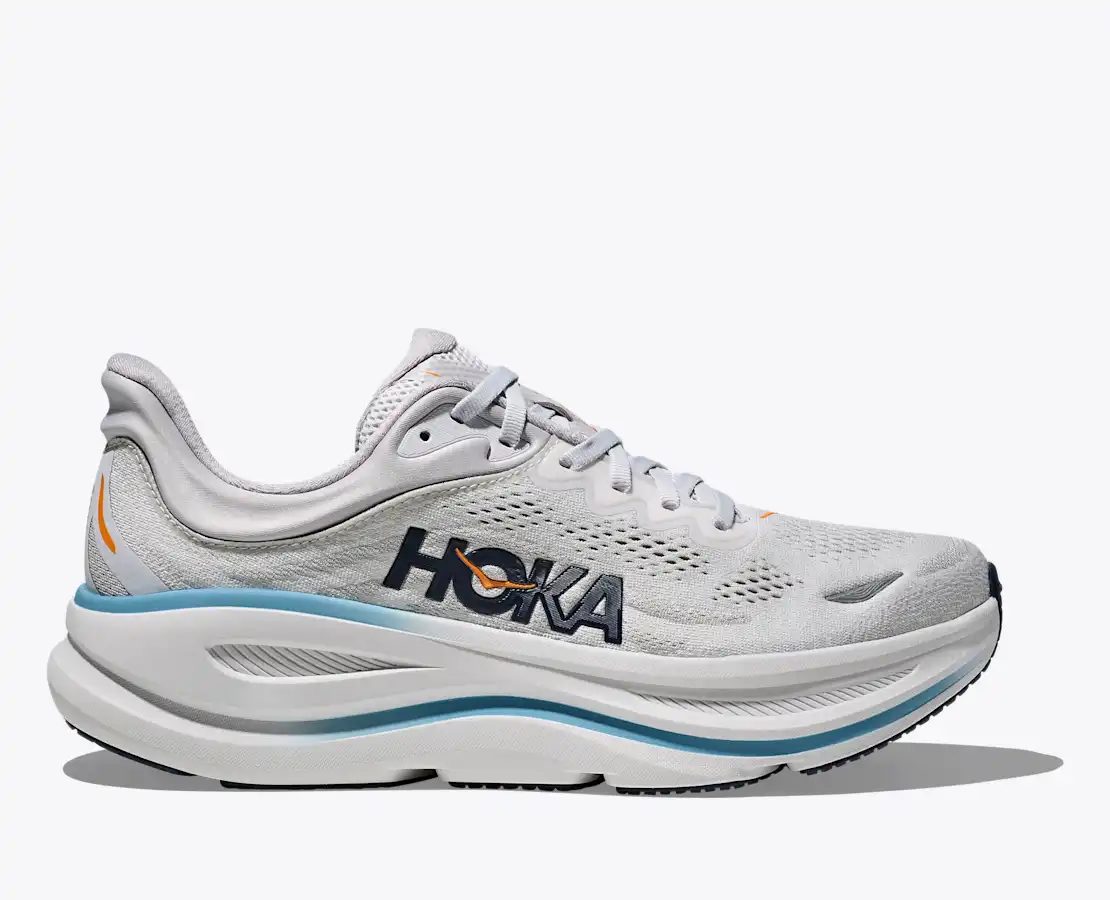
HOKA Bondi 9
$165-$180
Choose this when
Your metatarsalgia is driven by impact overload rather than forefoot weight concentration. The Bondi 9's 41mm stack height absorbs forefoot impact forces at levels that the Ghost 18 cannot match, and its Meta-Rocker geometry actively rolls the foot through toe-off without requiring the metatarsal heads to push off directly. It is also the stronger choice for patients with metatarsalgia accompanied by plantar fasciitis, for nurses and teachers standing on hard floors where forefoot impact accumulates over hours, and for anyone whose pain is worst at the end of a long day on hard surfaces. The wider forefoot base of the Bondi 9 distributes weight across a larger platform, reducing peak pressure per metatarsal head.
Supercritical EVA foam for maximum plush cushioning
Meta-Rocker geometry reduces plantar fascia stress
APMA Seal of Acceptance pid=9031 - podiatrist top recommendation for heel pain - verified directly from APMA Seal Database May 2026

Brooks Ghost 18
$140-$160
Choose this when
Your metatarsalgia is driven by forefoot weight concentration rather than impact, particularly if you have a high arch, a long second metatarsal, or hammertoes that redistribute pressure unevenly across the forefoot. The Ghost 18 has a listed 10mm heel drop and no rocker geometry. It is also the stronger choice for runners who prefer a more conventional platform feel and those who need a precise fit in multiple widths.
DNA LOFT v3 cushioning delivers a soft, smooth ride for daily running and walking
Flat-knit tongue and two-colored air-mesh upper provide superior breathability and comfort
Balanced cushioning platform works for neutral arches and all foot types
The Honest Verdict
Both shoes are APMA accepted and clinically appropriate for metatarsalgia. The HOKA Bondi 9 is the stronger choice when maximum forefoot cushioning and rocker geometry are the primary clinical needs. The Brooks Ghost 18 is the stronger choice when heel elevation and forefoot weight redistribution are the more appropriate intervention. A podiatrist can assess your specific metatarsal loading pattern to determine which approach suits your presentation. Adding a metatarsal pad to either shoe is a low-cost enhancement that can significantly improve outcomes for both presentations.
Answer These. Then Decide
Four quick questions that point you toward the right shoe for your specific situation.
Is your metatarsalgia worst after prolonged standing or at the end of a long day on hard floors?
Do you have a high arch or long second metatarsal that concentrates forefoot pressure?
Do you also have Achilles tendinitis alongside your metatarsalgia?
Is maximum forefoot impact absorption your primary clinical priority?
Do you prefer a conventional running shoe platform over a rocker sole?
Frequently Asked
Is HOKA Bondi 9 good for metatarsalgia?
Yes. The HOKA Bondi 9 is one of the most recommended shoes for metatarsalgia by podiatrists. Its 41mm stack height provides maximum forefoot cushioning that absorbs impact before it reaches the metatarsal heads, and its Meta-Rocker geometry rolls the foot through toe-off without requiring full metatarsal head load-bearing at push-off. It carries the APMA Seal of Acceptance and is particularly effective for metatarsalgia driven by impact overload from prolonged standing or high-mileage running.
Is Brooks Ghost 18 good for metatarsalgia?
Yes, particularly for metatarsalgia driven by forefoot weight concentration. The Ghost 18 has a listed 10mm heel drop and no rocker geometry. Its DNA LOFT v3 cushioning absorbs heel and forefoot impact effectively, and its APMA acceptance confirms its clinical credibility. It is most appropriate for patients with high arches, a long second metatarsal, or hammertoes that concentrate pressure unevenly across the forefoot.
What type of shoe is best for metatarsalgia?
The best shoes for metatarsalgia have adequate forefoot cushioning to absorb impact at the metatarsal heads, a wide toe box to distribute forefoot pressure across a larger area, and either rocker geometry or a higher heel drop to reduce the load arriving at the forefoot during toe-off. Shoes with a narrow or tapered toe box significantly worsen metatarsalgia by compressing the metatarsal heads together. Both the HOKA Bondi 9 and Brooks Ghost 18 meet the clinical criteria for metatarsalgia management.
Should I add a metatarsal pad to my shoes for metatarsalgia?
Yes, in most cases. A metatarsal pad placed just behind the metatarsal heads redistributes pressure away from the painful area and is one of the most effective conservative interventions for metatarsalgia. Both the Bondi 9 and Ghost 18 have removable insoles that accommodate metatarsal pads or custom orthotics with metatarsal support built in. A podiatrist can fit a metatarsal pad to your specific loading pattern for maximum benefit.
Related Comparisons
Still Not Sure Which Is Right for You?
Take our guided quiz and get a personalized recommendation based on your specific foot condition, activity level, and concerns. We explain exactly why each shoe fits your feet.