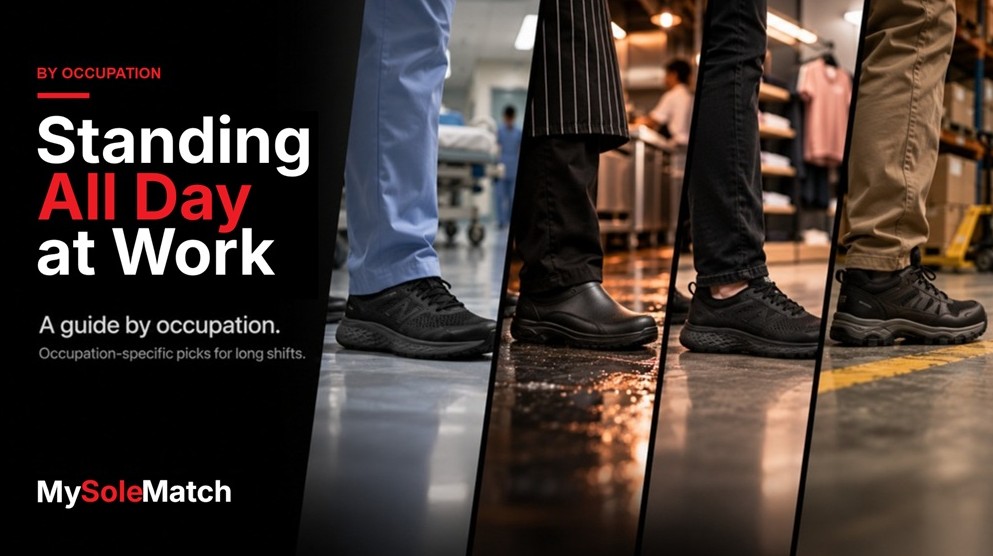
Best Shoes for Standing All Day at Work
Nurses, teachers, retail workers, chefs, and warehouse staff spend 6 to 12 hours a day on hard floors. That kind of sustained load tires the heel, strains the arch, and pushes pressure onto the ball of the foot, and it gets worse with every shift.
The right shoe will not change the demands of your job. It spreads them across the whole foot so no single structure carries the full load. Every pick below was chosen against podiatric criteria, and most carry the APMA Seal of Acceptance.
Best Shoes for Standing All Day
Lasting cushioning, rocker geometry, and wide widths, built for the long shift.
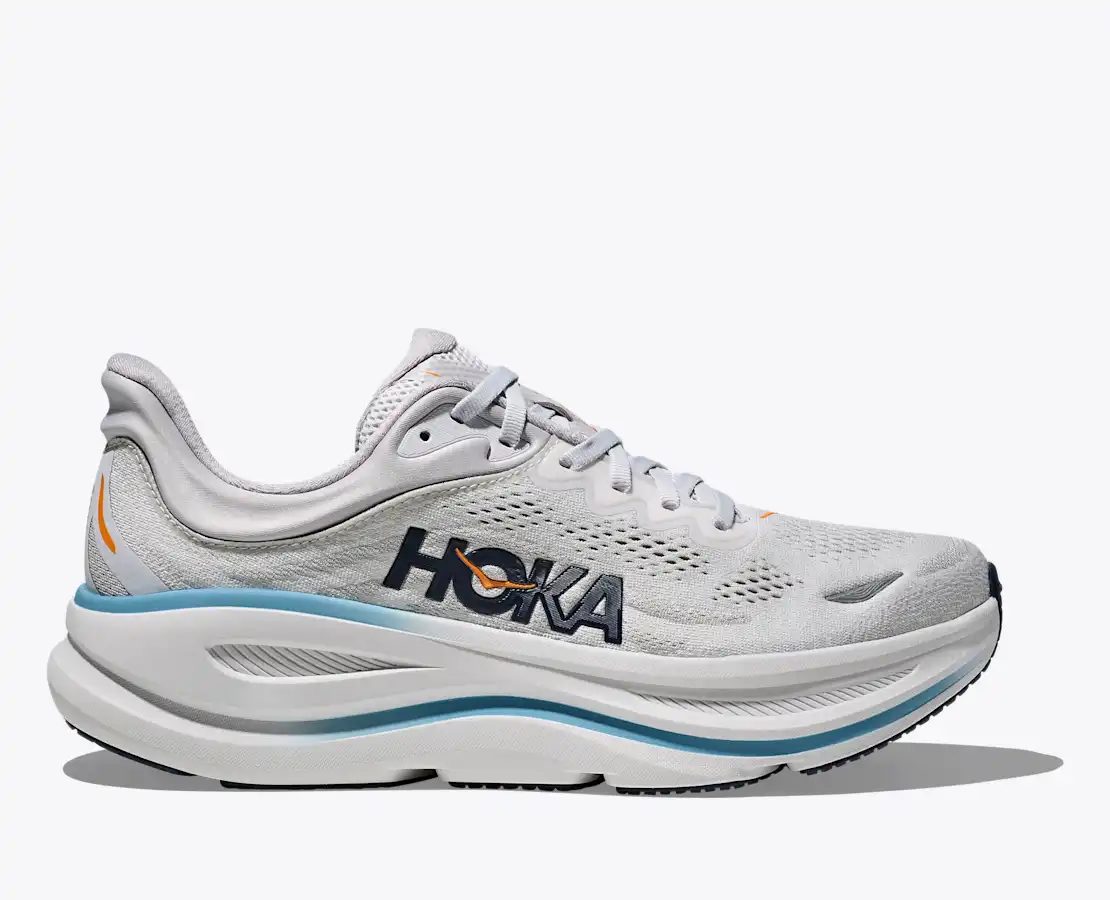
HOKA Bondi 9
hoka
$165-$180
Why for standing
Maximum stack height and rocker geometry take load off the heel and plantar fascia across a long shift. The wide platform spreads pressure evenly across the whole foot. APMA accepted.
Supercritical EVA foam for maximum plush cushioning
Meta-Rocker geometry reduces plantar fascia stress
APMA Seal of Acceptance pid=9031 - podiatrist top recommendation for heel pain - verified directly from APMA Seal Database May 2026

New Balance 1540v4
new balance
$195-$205
Why for standing
Motion control with an extra depth design, and the most supportive shoe in our catalogue for workers with flat feet who stand on hard floors all day. Works well with custom orthotics. APMA accepted.
Extra depth design accommodates custom orthotics
ROLLBAR motion control technology for severe overpronation
ABZORB cushioning for impact absorption
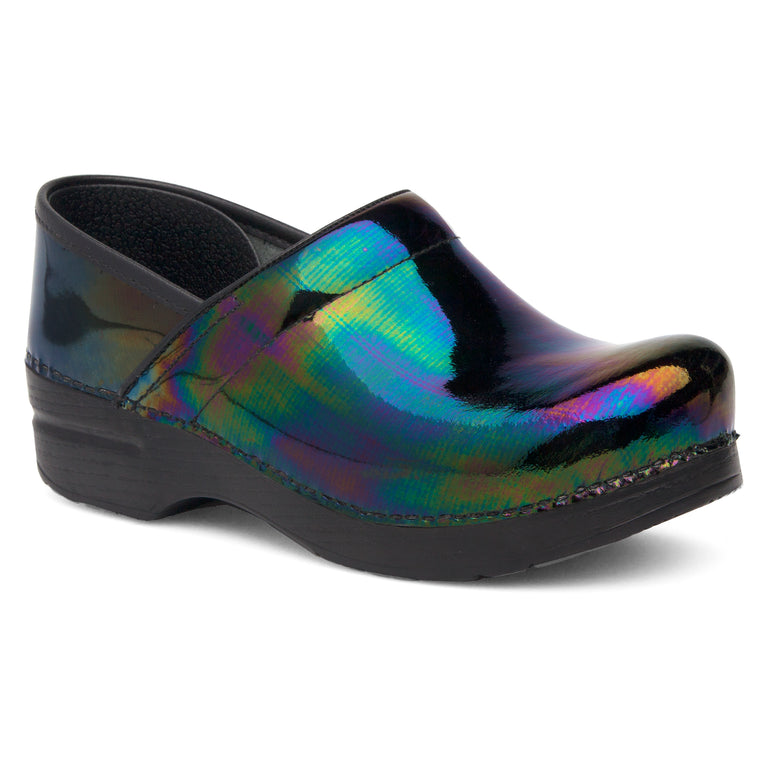
Dansko Professional Clog
dansko
$130-$150
Why for standing
A long time favorite in hospitals for good reason. A rocker bottom, firm arch support, and a slip resistant outsole built for 12 hour shifts on hard tile. APMA accepted.
APMA Seal of Acceptance pid=4442 - Dansko Stapled Clog Collection (Professional Clog) - verified directly from APMA Seal Database May 2026
Rocker bottom reduces forefoot pressure and fatigue during long standing shifts
Reinforced toe box protects feet in clinical and kitchen environments
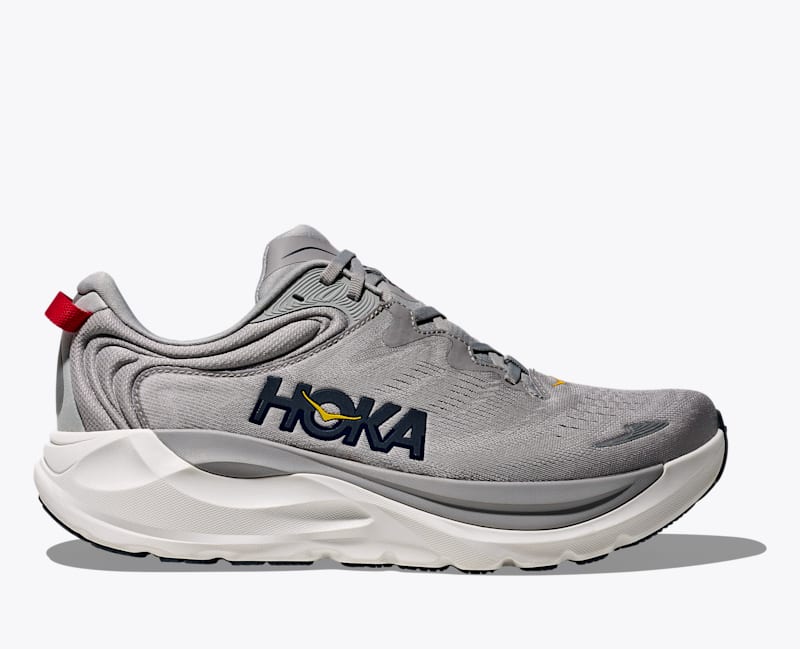
HOKA Gaviota 6
hoka
$175-$195
Why for standing
Maximum cushioning combined with stability support in one shoe. A strong choice for standing workers with flat feet or overpronation who still want full shock absorption. Wide widths available.
H-Frame stability base provides maximum motion control with premium HOKA cushioning
More cushioning than the Arahi 8, ideal for overpronators who need maximum protection
Meta-Rocker geometry reduces forefoot and plantar fascia load during long runs and walks

Brooks Ghost 17
brooks
$140-$155
Why for standing
Available in five widths for a pressure free fit. DNA Loft v3 cushioning stays soft through a full work day without bottoming out. APMA accepted.
DNA Loft v3 nitrogen-infused foam for soft responsive cushioning
APMA Seal of Acceptance pid=9077 - PDAC A5500 diabetic shoe certified - verified directly from APMA Seal Database May 2026
Segmented crash pad for smooth heel-to-toe transitions
Saucony Triumph 23
saucony
$165-$175
Why for standing
A PWRRUN PB midsole with rocker geometry that keeps absorbing impact shift after shift without letting the arch collapse. Well suited to retail, teaching, and hospitality work. APMA accepted.
Full-length PWRRUN PB superfoam midsole - first training shoe with all-superfoam construction
42mm heel stack height for maximum impact protection
Rocker geometry for effortless heel-to-toe transitions
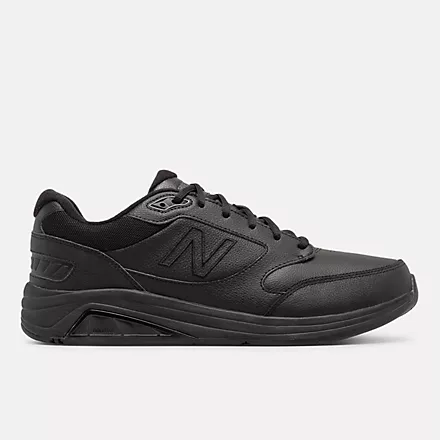
New Balance 928v3 Lace-Up Walking Shoe
new balance
$134-$145
Why for standing
Purpose built for walking and standing, with motion control support and a roomy toe box. Wide and extra wide options accommodate the swelling that builds during long shifts.
ROLLBAR motion control technology and Clinical-Grade Support: The signature ROLLBAR® motion control system minimizes rear-foot movement, keeping your stride aligned and reducing stress on the plantar fascia.
Reduces morning heel pain and keeps you moving comfortably all day, whether you're on your feet for work or walking for fitness.
Maximum Shock Absorption: Engineered with ABZORB® cushioning in the midfoot to absorb harsh impacts, protecting your heels from painful concrete and hard floors.

ASICS GEL-Nimbus 28
asics
$165-$175
Why for standing
Maximum GEL cushioning across the entire foot. The knit upper stretches with swelling feet instead of creating pressure points late in the day. APMA accepted.
FF Blast Plus cushioning with PureGEL technology for maximum soft landings
25g lighter than previous version - exceptional cushioning without weight penalty
Engineered knit upper wraps foot for comfort and breathability

Skechers Arch Fit SR
skechers
$70-$100
Why for standing
The most affordable slip resistant pick in our catalogue. Structured arch support, a slip resistant outsole, and wide widths make it a strong value for food service, retail, and healthcare workers. APMA accepted.
APMA Seal of Acceptance pid=8917 - Arch Fit SR Collection - verified directly from APMA Seal Database May 2026
ASTM F2913 slip-resistant outsole rated for wet, oily, and contaminated surfaces - the industry standard for healthcare and foodservice environments
Podiatrist-certified Arch Fit insole provides biomechanical support during 8-12 hour shifts on hard floors
What Standing Workers Need in a Shoe
The features that matter most when you are on your feet for hours on hard floors.
Cushioning that holds up
Basic foam flattens after hours of standing. Look for premium midsole foams that keep their cushioning through an entire shift, not just the first hour.
Rocker sole geometry
A curved, rocker shaped sole helps the foot roll forward with less effort and reduces pressure under the forefoot with every step you take between standing periods.
A roomy toe box
Feet swell over a long shift. Extra room at the front of the shoe prevents the forefoot compression that contributes to metatarsalgia, bunion pain, and nerve irritation.
Firm arch support
The plantar fascia carries load for as long as you are standing. Structured arch support shares that load and reduces the cumulative strain linked to heel pain.
A removable insole
A removable footbed lets you add anti fatigue insoles or custom orthotics later, which matters most for workers with a specific foot condition.
A secure heel cup
A deep, stable heel cup keeps the heel from rocking side to side, so the soft tissue under your foot is not absorbing that extra movement all day.
What Prolonged Standing Does to Your Feet
The foot handles walking and varied terrain well. Hours of standing still on concrete or tile is a different kind of demand, and it concentrates stress on three places.
The heel fat pad
The natural cushion under your heel compresses and tires under sustained load. Once it fatigues, more force travels into bone and soft tissue, which is why heel pain often builds as the day goes on.
The plantar fascia
This band of tissue under the arch stays under tension the entire time you stand. Studies of workers who spend most of their shift on their feet have linked prolonged standing with plantar heel pain.
The forefoot
As the heel tires, weight tends to shift forward. Without enough cushioning and room, the ball of the foot takes concentrated pressure, a common path to metatarsalgia.
A well chosen shoe addresses all three: cushioning for the heel, support for the arch, and room plus a rocker shape for the forefoot.
What Your Job Demands from a Shoe
Different standing jobs have different priorities. If yours is listed, the dedicated guide goes deeper.
Nurses and Healthcare Workers
Top priorities: Slip resistance, maximum cushioning, easy to clean
Top picks: Dansko Professional Clog, HOKA Gaviota 6
Teachers and Educators
Top priorities: All day cushioning, arch support, professional appearance
Top picks: Brooks Glycerin GTS 23, Skechers Arch Fit SR
Restaurant and Food Service Workers
Top priorities: Slip resistance, water resistance, easy to clean
Top picks: Dansko XP 2.0, Skechers Arch Fit SR
Retail and Sales Workers
Top priorities: Cushioning, professional appearance, a roomy toe box
Top picks: Brooks Addiction Walker 2, Nike Vomero 18
What to Avoid If You Stand All Day
Thin soled sneakers and fashion shoes. They offer little cushioning, no real arch support, and no rocker shape.
Completely flat shoes such as ballet flats or unstructured slip ons. The arch has nothing to rest on for hours at a time.
High heels for any shift longer than a couple of hours. They push your body weight onto the forefoot.
Worn out shoes. A compressed midsole stops absorbing impact long before the outsole looks worn.
Shoes that feel snug in the morning. Feet swell during long shifts, and a tight fit gets worse by afternoon.
Brand new shoes on a full shift. Break them in over shorter sessions first.
Frequently Asked Questions
What are the best shoes for standing all day at work?
Look for cushioning that lasts a full shift, a rocker sole, a roomy toe box, and firm arch support. The HOKA Bondi 9, New Balance 1540v4, Dansko Professional Clog, and Saucony Triumph 23 are strong options for prolonged standing, and all four carry the APMA Seal of Acceptance.
Why do my feet hurt so much after standing all day?
Standing for hours tires the fat pad under your heel, keeps the plantar fascia under constant tension, and shifts pressure onto the ball of the foot. Hard floors make all of this worse, and feet also swell as the day goes on. A good standing shoe addresses each of these with cushioning, arch support, and enough room up front.
How often should I replace shoes I stand in all day?
A common guideline is every 300 to 500 miles, or roughly every six months of daily work use. The midsole loses its shock absorption before the outsole shows obvious wear, so do not judge by appearance alone. Rotating between two pairs can extend the life of both.
Are rocker sole shoes better for standing all day?
For many people, yes. A rocker sole helps the foot roll forward with less effort and reduces pressure under the forefoot during walking, which is why rocker designs are common in shoes built for long shifts. They are not essential for everyone, so comfort on your own feet should decide.
Should I use insoles or orthotics if I stand all day?
Anti fatigue insoles add a second layer of cushioning for anyone standing on hard concrete or tile. Custom orthotics become worthwhile when a specific condition such as flat feet or plantar fasciitis comes on top of the standing demands. Choose a shoe with a removable insole if you plan to add either, and see a podiatrist if pain persists.
Which guide should I use for my specific job?
If you work in nursing, teaching, restaurants, or retail, start with that dedicated guide for role specific picks and priorities. For any other standing job, the picks on this page cover the core demands of standing on hard floors for hours.
Go Deeper by Job or Need
From the MySoleMatch Journal
MySoleMatch provides shoe recommendations based on podiatric research. We are not a medical platform and do not provide medical advice. If you are experiencing foot pain that affects your daily life, consult a licensed podiatrist.
Have a Foot Condition on Top of Standing All Day?
If you have plantar fasciitis, flat feet, or another condition alongside your standing demands, our quiz matches you to the right shoe for your specific combination.