Disclosure: We may earn a small commission if you purchase through links on this page. No additional cost to you. We just want to be transparent about how we fund this site.
HOKA Clifton 10 vs Saucony Triumph 23 for Achilles Tendinitis
Both carry the APMA Seal of Acceptance. We found no study of either shoe in people with Achilles tendinopathy, so the differences that matter are heel height, cushioning, and how each shoe handles the back of the heel.
We don't just recommend shoes. We explain why they work for your feet.
What You Need to Know First
Achilles tendinitis occurs when the Achilles tendon, which connects the calf muscles to the heel bone, becomes irritated from repetitive stress. Midportion tendinopathy affects the middle of the tendon. Insertional tendinopathy affects the point where the tendon attaches to the heel bone, and it adds a second concern: pressure from the back of the shoe. A raised heel reduces how far the calf and tendon have to lengthen with each step, which is the usual rationale for a moderate or higher drop during a flare, though studies of heel lifts and shoe drop have produced mixed results. Curved, rocker style soles are a separate line of evidence. In one small laboratory study of people with chronic Achilles tendinopathy, a rocker shoe reduced a measure of tendon loading during walking and running compared with a standard shoe. That study tested a specific rocker design, not these shoes, and related research found that rocker soles carry a higher energy cost when running.
Achilles tendinitis tends to be sensitive to footwear, and shoe choice is one of the few things you can change right away. A raised heel reduces how far the ankle has to bend with each step, which is the usual rationale for choosing a moderate or higher drop, although research on heel drop and tendon loading is mixed. The HOKA Clifton 10 and Saucony Triumph 23 both carry the APMA Seal of Acceptance. The Clifton 10 pairs a CM EVA midsole with an 8mm drop and HOKA's MetaRocker shape. The Triumph 23 uses a full length PWRRUN PB midsole with a listed 10mm drop at a premium price. We found no study of either shoe in people with Achilles tendinopathy, so this comparison rests on design features, not trial results. The useful question is which design suits your activity level, your symptoms, and whether your pain sits in the middle of the tendon or at the heel bone.
Specs Compared
Factual specs only. No brand is favored. You decide what matters most for your feet.
Which One Is Right for You?
Both are excellent. Here is the honest case for each based on your specific situation.
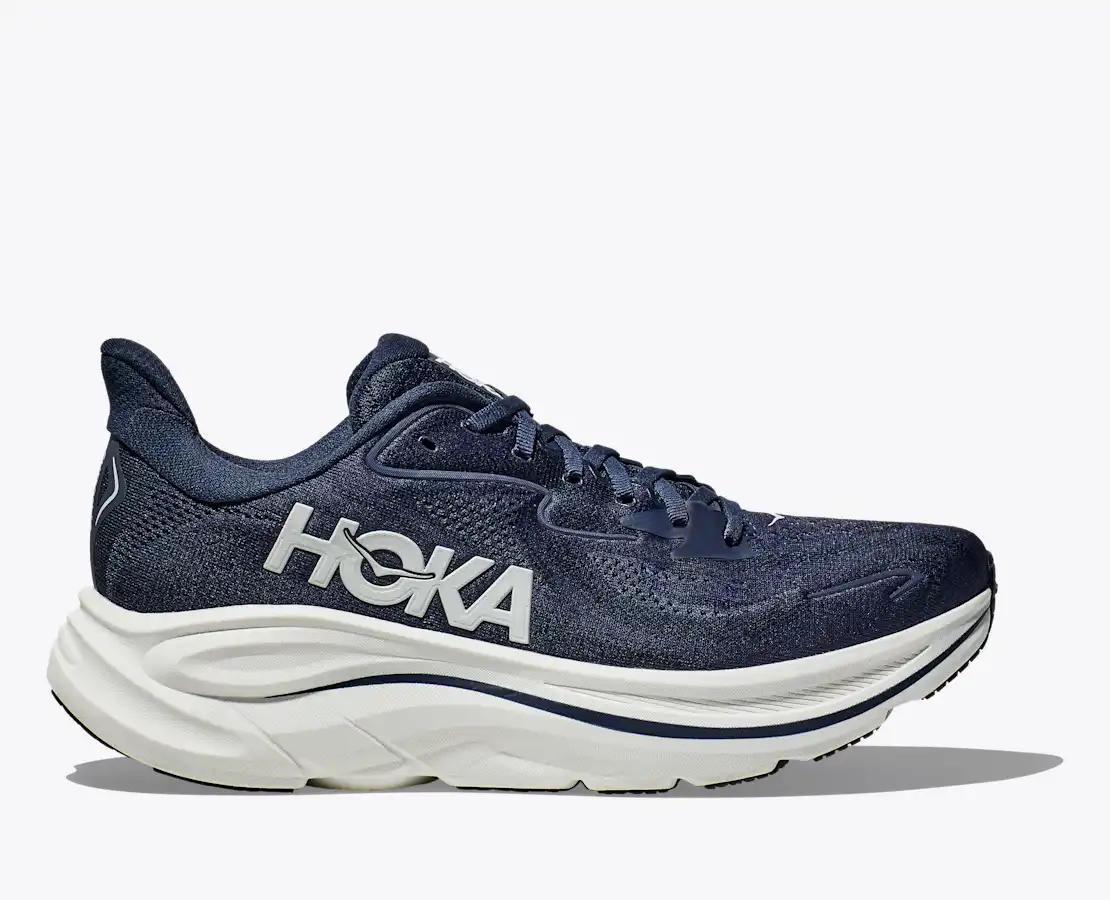
HOKA Clifton 10
$145-$160
Choose this when
You want a versatile daily shoe for recovery and regular training. The Clifton 10 has an 8mm drop and a MetaRocker shape that gives it a smooth, rolling feel. It suits people who want one shoe for everyday wear and easy runs while the tendon settles, and those who prefer a slightly lower heel than the Triumph 23 offers. With insertional pain, try both shoes and notice how each feels against the back of the heel, since collar shape and heel counter firmness differ between models.
CM EVA midsole for plush responsive cushioning
8mm heel drop reduces Achilles and calf strain
APMA Seal of Acceptance pid=9032 - lightweight daily trainer verified directly from APMA Seal Database May 2026
Saucony Triumph 23
$165-$175
Choose this when
You want a cushioned shoe with a slightly higher heel. The Triumph 23 has a listed 10mm drop, 2mm more than the Clifton 10, and a full length PWRRUN PB midsole that Saucony designed for a soft, cushioned ride. That suits people who feel better with a little more heel height. Check that the back of the shoe sits comfortably against your heel. We found no evidence that it protects the tendon better than the Clifton 10 at any level of symptoms.
Full-length PWRRUN PB superfoam midsole - first training shoe with all-superfoam construction
42mm heel stack height for maximum impact protection
Rocker geometry for effortless heel-to-toe transitions
The Honest Verdict
Both shoes carry the APMA Seal of Acceptance, which reflects a general foot health review, not a test for Achilles tendinopathy. Both are reasonable shoes to try, but we found no clinical testing of either for it. The Clifton 10 offers an 8mm drop and a MetaRocker shape. The Triumph 23 offers a listed 10mm drop and a PWRRUN PB midsole. We cannot show that either protects the tendon better, so the better choice is the one that feels comfortable on the tendon and at the back of the heel during walking and easy running. For insertional pain, or pain that is getting worse, a podiatrist or physical therapist evaluation is worth having before you commit to a shoe.
Answer These. Then Decide
Four quick questions that point you toward the right shoe for your specific situation.
Does a higher heel (10mm) feel better on your Achilles than a lower one (8mm)?
Do you need the shoe to function as both a recovery shoe and a training shoe?
Have you tried both and found the Triumph 23 more comfortable at the back of the heel?
Is your pain where the tendon meets the heel bone (insertional)?
Do you want a shoe with a defined rocker shape?
Frequently Asked
Is HOKA Clifton 10 good for Achilles tendinitis?
It can be a reasonable choice. The Clifton 10 has an 8mm drop and a MetaRocker shape, and it carries the APMA Seal of Acceptance. We found no study that tested it in people with Achilles tendinopathy, and the Seal reflects a general foot health review, not an Achilles specific one. It suits people who want one shoe for everyday wear and easy runs while the tendon settles.
Is Saucony Triumph 23 good for Achilles tendinitis?
It can be a reasonable choice for people who want a cushioned shoe with a slightly higher heel. The Triumph 23 has a listed 10mm drop and a PWRRUN PB midsole, and it carries the APMA Seal of Acceptance (PID 9310). We found no study that tested it in people with Achilles tendinopathy, and no evidence that it protects the tendon better than other cushioned shoes. If your pain is at the heel bone, check how the back of the shoe feels, because a firm heel counter can irritate that area.
What heel drop is best for Achilles tendinitis?
There is no single proven number. A raised heel reduces how far the ankle has to bend, which is the usual rationale for a moderate or higher drop during a flare, but trials of heel lifts and shoe drop have shown mixed results. The Clifton 10 lists an 8mm drop and the Triumph 23 a 10mm drop. Zero drop and minimalist shoes place more demand on the calf and Achilles, so they are often a poor fit during a flare. If you are unsure, a clinician can help you choose a drop that suits your symptoms.
What is the difference between insertional and non-insertional Achilles tendinopathy for shoe selection?
Midportion tendinopathy affects the middle of the tendon. Insertional tendinopathy affects the point where the tendon attaches to the heel bone, and pressure from the back of a shoe can matter more there. A firm or high heel counter, or a stiff collar, may irritate that area in some people. Both the Clifton 10 and Triumph 23 are reasonable shoes to try for either type. With insertional pain, try each on, notice any pressure at the back of the heel, and consider a podiatrist evaluation before choosing.
Related Comparisons
Still Not Sure Which Is Right for You?
Take our guided quiz and get a personalized recommendation based on your specific foot condition, activity level, and concerns. We explain exactly why each shoe fits your feet.