Best Shoes for Construction and Trades Workers
BLS data confirms construction laborers spend 89.2% of the workday standing - significantly above the civilian workforce average. Uneven jobsite surfaces, heavy load bearing, vibration from tools, and long hours on concrete subfloors create the most physically demanding foot health environment outside of active military service.
Every shoe in this guide is curated for the specific demands of construction and trades work - motion control for uneven surfaces, maximum shock absorption for load bearing, and durability for abrasive jobsite conditions.
89.2%
Of workday spent standing
+1pt
Pain increase per 10 min continuous standing
7.5M+
Construction workers in the US
BLS 2025
Occupational Requirements Survey
The Clinical Reality
Why Construction Work Is One of the Hardest Jobs for Feet
Construction work combines the highest standing time of any major occupation with uniquely demanding physical variables - uneven surfaces that force constant micro-adjustments in foot mechanics, heavy loads that amplify ground reaction forces, and vibration from power tools that creates cumulative nerve stress.
A peer-reviewed study published in the National Institutes of Health library confirmed the relationship precisely: for every 10 minutes added to the maximum bout of continuous standing during a construction workday, lower-extremity pain intensity increases by approximately one unit on a 0-9 scale.
The most common conditions in construction workers seen by podiatrists are plantar fasciitis from repeated heel impact on hard surfaces, posterior tibial tendon dysfunction from excessive pronation on uneven terrain, and metatarsalgia from forefoot compression in inadequate footwear. All three are largely preventable with appropriate footwear selected before symptoms develop.
What Construction Workers Need in a Shoe
Maximum motion control for uneven surfaces
Jobsite surfaces - gravel, concrete subfloors, scaffolding, and uneven terrain - cause the foot to pronate excessively as it adapts. Motion control shoes prevent this excessive inward rolling that causes plantar fasciitis, ankle sprains, and knee pain over time.
Shock absorption for heavy load bearing
Construction workers carry heavy materials, tools, and equipment that multiply the ground reaction forces on every step. Maximum cushioning in the heel and forefoot absorbs these amplified impact forces that standard shoes are not engineered to handle.
Wide toe box for end-of-shift swelling
Feet swell significantly during physically demanding shifts. A wide toe box prevents the forefoot compression that causes metatarsalgia, Morton's neuroma, and toenail damage - especially when working in heavy boots or in tight footwear.
Durable outsole for abrasive surfaces
Concrete, gravel, and rough subfloor surfaces degrade standard rubber outsoles faster than smooth indoor floors. Look for carbon rubber outsoles on the heel and high-wear areas - not blown rubber that wears through quickly on abrasive surfaces.
Removable insole for custom orthotics
Many construction workers use custom orthotics to manage chronic plantar fasciitis, flat feet, or Achilles issues developed from years of jobsite work. A removable insole that accommodates these devices is essential.
Protective toe box
Construction environments involve dropped tools, rolling materials, and compressed spaces. A reinforced or protective toe box reduces injury risk in areas where site safety requirements permit athletic footwear rather than steel-toe boots.
Critical - Read Before Buying
Active Jobsite vs Office vs Off the Clock - Three Different Footwear Needs
The shoes in this guide are podiatrist-curated for foot health - but construction work has legally mandated footwear requirements that depend on your specific role and jobsite. Understanding the difference between these three scenarios is essential before purchasing any footwear for construction work.
Active Field Work - OSHA PPE Requirements Apply
If you are working directly in the field - on scaffolding, handling heavy materials, operating equipment, or in any area where falling or rolling objects are a hazard - OSHA 29 CFR 1910.136 requires protective footwear. The current standard is ASTM F2413-24, which replaced ASTM F2413-18 as the most recent revision. The shoes in this guide do not meet this standard and are not appropriate for active field work where PPE is required.
What ASTM F2413-24 Compliant Footwear Must Provide:
- Impact resistance (I) - protective toe cap withstands 75 foot-pounds of impact force
- Compression resistance (C) - toe area withstands 2,500 lbs of compression from rolling objects
- Puncture resistance (PR) - sole withstands 270 lbs of puncture force from sharp objects
- Slip resistance (SR or SRO) - outsole rated for wet and oily surface traction
- Optional: Electrical Hazard (EH) rated for open circuits up to 600 volts - required on many electrical jobsites
How to Read the Compliance Label:
Every ASTM-compliant shoe has a label on the tongue. A label reading ASTM F2413-24 M I/C PR EH means: 2024 standard, male sizing, impact and compression resistant, puncture resistant, and electrical hazard rated. You will never see an OSHA approval number on footwear - OSHA sets the legal requirement, ASTM defines the performance benchmark.
Steel Toe vs Composite Toe vs Alloy Toe - What You Need to Know:
Steel toes are the traditional standard. Composite toes use Kevlar, fiberglass, or carbon fiber - equally ASTM certified, 30% lighter than steel, non-conductive for electrical work, and metal-detector friendly. Alloy toes use lightweight aluminum - thinner profile than steel with the same ASTM certification. All three meet ASTM F2413-24 I/C standards. Your employer and site safety officer determine which is required for your specific jobsite hazards.
Jobsite but Office-Based - Athletic Shoes Typically Acceptable
Project managers, superintendents, estimators, safety officers, and others who spend the majority of their day in a site trailer, temporary office, or vehicle - and only occasionally walk the jobsite for brief inspections - are often not subject to the same PPE footwear requirements as field workers. In many cases, close-toed athletic shoes with adequate foot protection are acceptable for this role.
The shoes in this guide are appropriate for this use case. However - always confirm your specific jobsite PPE requirements with your site safety officer or employer before assuming athletic footwear is compliant. Jobsite requirements vary significantly by general contractor, site type, and state regulations.
Important: Never assume. Always verify PPE requirements with your site safety officer before wearing non-ASTM footwear on any active construction site - even as a visitor or office-based professional.
Off the Clock - Recovery and Foot Health Are the Priority
Construction workers who wear safety boots on the job for 8 to 10 hours face a specific foot health challenge - safety boots are not optimized for clinical foot health. They are optimized for protection. The weight, rigidity, and limited cushioning of most safety boots accumulates significant plantar fascia, Achilles, and joint stress over a full shift.
The shoes in this guide are the correct choice for off-the-clock recovery - commuting, errands, evenings, and weekends. Shoes with maximum cushioning like the HOKA Bondi 9 or rocker geometry like the Brooks Adrenaline GTS 25 allow the plantar fascia and Achilles tendon to recover between shifts. OOFOS recovery slides are specifically recommended by podiatrists for post-shift recovery for trades workers.
Best Shoes for Off the Clock and Office-Based Roles
For commuting, site office use, and post-shift recovery. These shoes are not ASTM F2413-24 compliant for active field work - see the compliance section above.
Not for Active Field Work
The six shoes below are podiatrist-curated for foot health - not OSHA PPE compliance. They are appropriate for commuting, site office and trailer use, and post-shift recovery. If you work directly in the field where falling or rolling objects are a hazard, see the ASTM F2413-24 compliant options below.

New Balance 1540v4
ROLLBAR motion control technology for the severe overpronation that develops from standing on uneven jobsite surfaces. Extra-depth design accommodates custom orthotics. Made in USA with premium materials built for durability. APMA accepted.

Brooks Adrenaline GTS 25
GuideRails holistic support system controls excess movement on uneven surfaces without overcorrecting. PDAC A5500 diabetic certified - appropriate for trades workers with diabetes managing foot health on active jobsites. Available in five widths. APMA accepted.
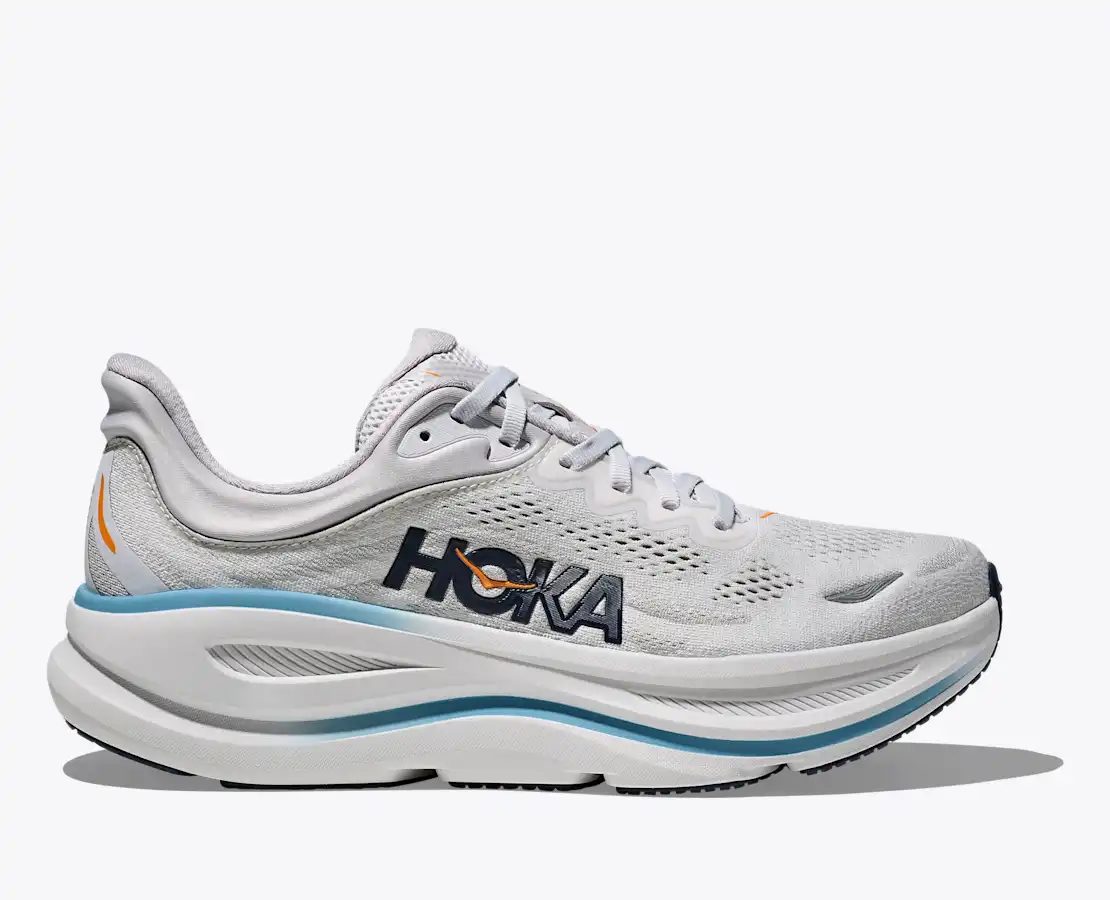
HOKA Bondi 9
Maximum 41mm stack height absorbs the high-impact load of standing on concrete subfloors, gravel, and uneven terrain all day. Meta-Rocker reduces plantar fascia stress with every step. Best for supervisors, estimators, and inspectors on lower-hazard jobsites. APMA accepted.
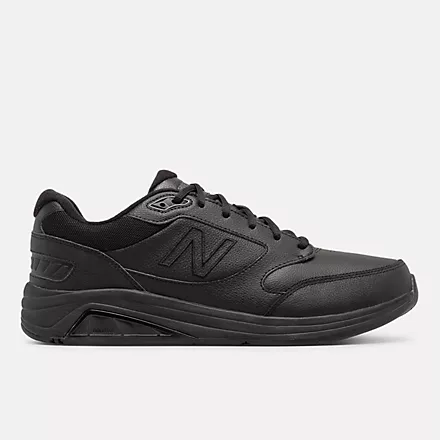
New Balance 928v3 Lace-Up Walking Shoe
SL-2 last specifically engineered for wide, flat feet common in trades workers who have spent years on hard surfaces. ROLLBAR motion control with ABZORB cushioning for impact absorption. Extra-wide options for swollen feet at end of shift. APMA accepted.

Brooks Ghost 17
DNA Loft v3 nitrogen-infused foam maintains cushioning integrity through full shift on concrete surfaces. Available in five widths. APMA accepted and PDAC diabetic certified. The most versatile option for trades workers who move between jobsite and office.

ASICS GT-4000 4
Maximum motion control construction specifically engineered for severe overpronation on uneven surfaces. Reinforced medial post prevents arch collapse during heavy load-bearing work. GEL cushioning absorbs jobsite impact forces. APMA accepted.
Active Field Work
ASTM F2413-Compliant Footwear for Active Jobsite Work
If you work directly in the field, the following options combine ASTM F2413 compliance with athletic-style comfort and clinical foot health features. All are currently available on Amazon. Always verify the specific model carries the ASTM F2413-18 or F2413-24 compliance label on the tongue before purchasing for active jobsite use - and confirm requirements with your site safety officer.

Skechers Work Arch Fit SR Comp Toe
Composite toe - Athletic sneaker style
The most clinically significant option on this list - both ASTM F2413 compliant for active field work and APMA accepted for foot health. The composite safety toe meets ASTM F2413 I/C and EH standards. The Arch Fit insole is podiatrist-certified based on 120,000 foot scans and carries the APMA Seal of Acceptance - meaning you get genuine clinical arch support inside a compliant safety shoe. Slip-resistant outsole rated for wet, dry, oily, and greasy surfaces. Available in men's and women's.
Compliance: Composite safety toe meets ASTM F2413 I/C standards. Electrical Hazard (EH) rated. Slip-resistant outsole meets ASTM F2913-19 standard. APMA Seal of Acceptance. Verify the specific colorway you purchase carries the compliance label.

Timberland PRO Overdrive Composite Safety Toe
Composite toe - Athletic sneaker style
Timberland PRO's most athletic-looking compliant shoe - composite safety toe powered by Carbon Shield technology meets ASTM F2413-18 I/C and EH standards. Anti-Fatigue Technology removable footbed with shock-absorbing geometrical construction returns energy to the foot - meaningful for trades workers on their feet all day. Slip and oil resistant outsole meets ASTM F3445-21. Lightweight and metal-free making it airport and security-checkpoint friendly.
Compliance: Carbon Shield composite toe meets ASTM F2413-18 I/C and EH standards. Slip-resistant outsole meets ASTM F3445-21. Non-metallic construction. Verify the specific model you purchase carries the compliance label on the tongue.

Timberland PRO Intercept Steel Toe
Steel toe - Athletic work sneaker style
Steel toe in an athletic sneaker silhouette - the Intercept meets ASTM F2413 I/C requirements with electrical hazard protection and slip-resistant outsole. The asymmetrical steel toe cap follows the natural shape of the foot reducing toe compression compared to traditional squared steel toes. Hidden eyelets reduce marking and scratching - appropriate for finished surface work. The most traditional protection level in an athletic format.
Compliance: Asymmetrical steel toe meets ASTM F2413 I/C requirements. Electrical Hazard rated. Slip-resistant outsole meets ASTM SR standards. Verify the specific model you purchase carries the compliance label on the tongue.

KEEN Utility - Composite and Carbon Fiber Toe Line
Composite and carbon fiber toe options - Athletic and boot styles
KEEN Utility's current line includes composite and carbon fiber toe options meeting ASTM F2413-24 I/C standards - the most current revision of the standard. KEEN is known for its wide toe box design that gives toes room to splay naturally - a significant clinical advantage over traditional narrow safety toe boxes that compress the forefoot during long shifts. Multiple models available in athletic sneaker and traditional boot silhouettes. Verify the specific model meets F2413-24 rather than the older F2413-18 standard when purchasing.
Compliance: Current KEEN Utility models meet ASTM F2413-24 I/C standards. Select models also carry EH and PR ratings. Always verify the specific model's compliance label on the tongue - not all KEEN footwear is safety rated.

Wolverine Overpass 6" CarbonMAX
Composite toe - 6 inch waterproof work boot
One of the most consistently purchased construction boots on Amazon. CarbonMAX composite toe is lighter and thinner than steel while meeting full ASTM F2413 M/I/C EH certification. OrthoLite removable cushioning footbed molds to the foot - important for construction workers who develop chronic plantar fasciitis from hard boot insoles. Waterproof premium leather with abrasion resistant toe. Dual compound rubber and PU outsole for varied terrain traction. Backed by Wolverine's 30-day comfort guarantee.
Compliance: ASTM F2413 M/I/C EH rated CarbonMAX composite toe. Waterproof construction. Verify the specific model carries the compliance label on the tongue.

Reebok Work Sublite Cushion
Composite toe - Athletic sneaker style - lightest option
The lightest ASTM F2413-compliant option on this list - composite toe meets ASTM F2413-11 M I/75, C/75 and EH standards in a low-cut athletic sneaker silhouette. Sublite foam midsole with full-foot flex grooves reduces weight and allows greater range of motion - meaningful for trades workers who cover significant ground during a shift. Memory Tech Massage removable footbed adapts to foot contours for all-day cushioning. Oil and slip resistant MaxTrax rubber outsole. Metal-free construction.
Compliance: ASTM F2413-11 M I/75, C/75, EH rated composite toe. Slip resistant outsole. Metal free. Verify the specific model carries the compliance label on the tongue.

Thorogood American Heritage Moc Toe
Steel or composite toe - American-made - Goodyear welt
The most recommended American-made work boot among experienced construction workers. ASTM F2413-18 certified in both steel and composite toe versions. MAXWear Wedge outsole tested to ASTM F3445-21 slip resistance - construction workers specifically cite the wedge outsole as superior to traditional lug soles for hard flat surfaces. EH rated for 18,000 volts. Goodyear welt construction allows resoling. Made in the USA.
Compliance: ASTM F2413-18 certified steel and composite toe options. MAXWear Wedge outsole meets ASTM F3445-21. EH rated. Made in USA. Verify the specific model carries the compliance label on the tongue.

Timberland PRO Pit Boss Steel Toe
Steel toe - 6 inch - most recommended construction boot
The most consistently recommended construction work boot for over a decade across independent testing and construction worker communities. Steel safety toe meets ASTM F2413 standards. Anti-fatigue technology built into the outsole returns energy to the foot with each step - specifically designed to reduce end-of-shift foot fatigue on hard surfaces. Full-grain leather upper with rubber outsole. Slip-resistant. The benchmark that most other construction boots are compared against.
Compliance: Steel safety toe meets ASTM F2413 I/C standards. Anti-fatigue outsole. Slip resistant. Verify the specific model carries the compliance label on the tongue.
Always Verify Before Purchasing for Active Jobsite Use
Compliance standards and model availability change. Before purchasing any footwear for active field work: confirm the specific model carries the ASTM F2413-18 or F2413-24 compliance label on the tongue of the shoe, verify the protection ratings match your jobsite hazard assessment, and confirm requirements with your site safety officer or employer. MySoleMatch links to Amazon search results rather than specific ASINs to reduce the risk of discontinued model links - always read the product listing compliance information before purchasing.
What Construction Workers Should Avoid
Lightweight fashion sneakers with minimal outsole - they wear through rapidly on abrasive jobsite surfaces
Narrow toe boxes that compress the forefoot during load-bearing work
Worn-out shoes - replace every 4 to 5 months - abrasive surfaces degrade midsoles faster than indoor floors
Maximum cushion neutral shoes without motion control on uneven terrain - they can worsen overpronation
Open-toe or low-cut footwear on active construction sites - check site safety requirements before selecting footwear
Frequently Asked Questions
What shoes do podiatrists recommend for construction workers?
Podiatrists recommend shoes with firm motion control, maximum shock absorption, and wide toe boxes for construction workers. New Balance 1540v4 leads for motion control on uneven surfaces. Brooks Adrenaline GTS 25 leads for GuideRails stability with five width options. HOKA Bondi 9 leads for maximum cushioning for supervisors and inspectors on lower-hazard jobsites. All three carry the APMA Seal of Acceptance.
Why do construction workers get foot and lower leg pain?
BLS data confirms construction laborers spend 89.2% of the workday standing - significantly above the civilian average. A peer-reviewed study confirmed that for every 10 minutes added to continuous standing during a construction workday, lower-extremity pain increases by approximately one unit on a 0-9 scale. Uneven surfaces, heavy load bearing, and vibration from tools compound this mechanical stress significantly.
Do construction workers need stability or neutral shoes?
Most construction workers benefit from stability or motion control shoes. Standing on gravel, concrete, and uneven terrain for long periods causes excessive pronation as the foot adapts to surface changes. Stability shoes like the Brooks Adrenaline GTS 25 or motion control shoes like the New Balance 1540v4 control this excess movement and reduce the downstream ankle and knee stress it causes.
How often should construction workers replace their shoes?
Every 4 to 5 months of full-time use. Abrasive jobsite surfaces degrade both outsoles and midsoles faster than smooth indoor floors. Check the midsole by pressing firmly into the heel foam - if it does not spring back immediately the cushioning is compromised regardless of how the outsole looks.
Are athletic shoes appropriate for construction sites?
It depends on the jobsite and role. Supervisors, estimators, project managers, and inspectors on lower-hazard sites can typically wear athletic footwear. Active construction workers in areas with heavy materials, scaffolding, or fall hazards may be required to wear steel-toe or composite-toe protective footwear under OSHA site safety requirements. Always check your site safety requirements before selecting footwear.
More Shoe Guides
MySoleMatch provides shoe recommendations based on podiatric research. We are not a medical platform and do not provide medical advice. If you are experiencing foot pain that affects your ability to work, consult a licensed podiatrist. Always verify footwear meets your jobsite safety requirements before use. Affiliate disclosure: we may earn a commission if you purchase through links on this page at no additional cost to you.
Have a Specific Foot Condition?
If you have plantar fasciitis, flat feet, or another condition, our guided quiz matches you to the right shoe for your specific diagnosis.