Disclosure: We may earn a small commission if you purchase through links on this page. No additional cost to you. We just want to be transparent about how we fund this site.
HOKA Bondi 9 vs Brooks Ghost 17 for Standing All Day
Maximum cushion vs balanced cushion. Which one actually survives a 12-hour shift?
We don't just recommend shoes. We explain why they work for your feet.
What You Need to Know First
Prolonged standing on hard surfaces creates continuous mechanical stress on the heel fat pad, plantar fascia, and metatarsal heads. Unlike running - which is high impact but intermittent - standing is lower impact but relentless. The cumulative load over an 8 to 12 hour shift compresses the plantar fascia, exhausts the intrinsic foot muscles, and can cause plantar fasciitis, metatarsalgia, and heel spurs over time. The right shoe needs cushioning that holds up through the entire shift - not just the first two hours - and a stable base that keeps the foot properly aligned as fatigue sets in.
Nurses log 8,000 to 12,000 steps per shift on hard hospital floors. Teachers cover 8,000 to 10,000 steps on tile and concrete. Retail workers stand for 8 to 10 hours on polished surfaces that offer zero shock absorption. For every one of these professionals, the right shoe is not a luxury - it is a clinical necessity. The HOKA Bondi 9 and Brooks Ghost 17 are the two most recommended shoes by podiatrists for standing professionals, and they represent two genuinely different philosophies. The Bondi 9 is maximum protection - the highest stack height and shock absorption score in our catalog. The Ghost 17 is balanced reliability - a proven 5-width system, PDAC diabetic certification, and DNA Loft v3 foam that maintains its cushioning through a full 12-hour shift without the bulk of the Bondi 9. Which one is right depends on what your feet are telling you after hour eight.
Specs Compared
Factual specs only. No brand is favored. You decide what matters most for your feet.
Which One Is Right for You?
Both are excellent. Here is the honest case for each based on your specific situation.
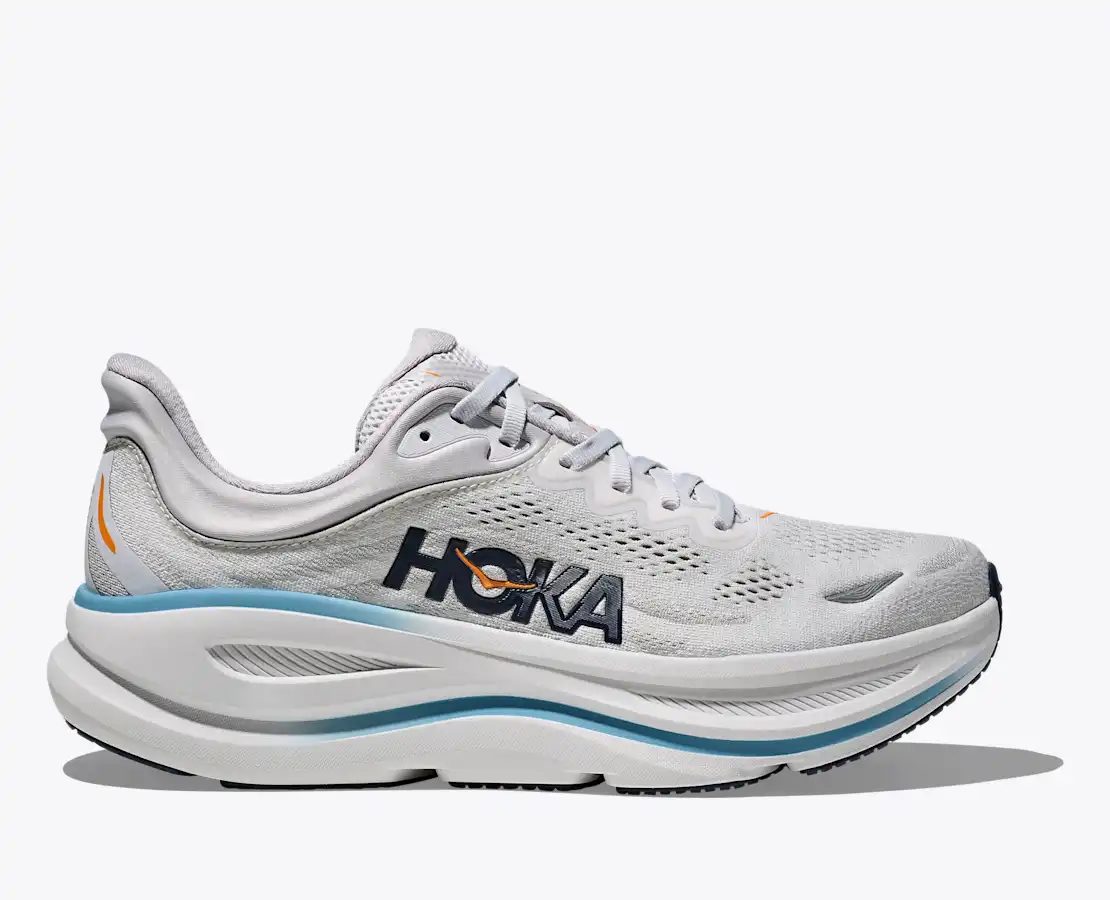
HOKA Bondi 9
$165-$180
Choose this when
Your primary complaint is heel and foot fatigue that builds relentlessly over the course of a shift. The Bondi 9's 41mm stack height and 146 SA shock absorption score - the highest we have lab-tested - provide maximum impact protection that the Ghost 17 cannot match. It is also the stronger choice for professionals over 55 with thinning plantar fat pads, anyone with existing plantar fasciitis or heel spurs, and workers who stand primarily in one place on smooth hard floors such as operating room nurses or retail cashiers.
Supercritical EVA foam for maximum plush cushioning
Meta-Rocker geometry reduces plantar fascia stress
APMA Seal of Acceptance pid=9031 - podiatrist top recommendation for heel pain - verified directly from APMA Seal Database May 2026

Brooks Ghost 17
$140-$155
Choose this when
You need a shoe that works equally well for standing and walking across varied surfaces during your shift. The Ghost 17's DNA Loft v3 foam is more responsive and versatile than the Bondi 9's maximum-protection platform, and its 5-width system from AA to 4E provides a more precise fit than the Bondi 9's 3-width range. It is also the stronger choice if you have diabetic feet - the Ghost 17 carries PDAC A5500 diabetic shoe certification that the Bondi 9 does not. Wide-footed professionals and those with multiple foot conditions benefit most from the Ghost 17's width accommodation.
DNA Loft v3 nitrogen-infused foam for soft responsive cushioning
APMA Seal of Acceptance pid=9077 - PDAC A5500 diabetic shoe certified - verified directly from APMA Seal Database May 2026
Segmented crash pad for smooth heel-to-toe transitions
The Honest Verdict
Both are APMA accepted and among the most recommended shoes by podiatrists for standing professionals. The Bondi 9 leads in pure cushioning and impact protection - the better choice for severe foot fatigue and existing heel pain. The Ghost 17 leads in fit versatility, diabetic certification, and all-around shift performance - the better choice for professionals who need a shoe that handles everything a shift throws at them. Both need replacing every 300 to 400 miles for standing workers - approximately every 6 months for full-time professionals.
Answer These. Then Decide
Four quick questions that point you toward the right shoe for your specific situation.
Is severe heel and foot fatigue your primary complaint after a shift?
Do you have diabetic feet or neuropathy?
Do you need extra wide or narrow width options?
Do you primarily stand in one place rather than walk during your shift?
Frequently Asked
Which is better for nurses - HOKA Bondi 9 or Brooks Ghost 17?
Both are top podiatrist recommendations for nursing. The Bondi 9 leads in cushioning and fatigue reduction for nurses who stand in one place on hard floors. The Ghost 17 leads in fit versatility with five width options and PDAC diabetic certification - making it the stronger choice for nurses with multiple foot concerns or those who walk extensively during shifts. Many nurses own both and rotate based on the demands of each shift.
How long do HOKA Bondi 9 and Brooks Ghost 17 last for standing jobs?
Both are rated for 300 to 500 miles. For standing professionals, replace shoes every 6 months of full-time use regardless of visible outsole wear - the midsole foam loses its protective properties well before the rubber shows wear. Nurses and teachers logging 10,000 steps per shift should replace shoes closer to every 4 to 5 months.
Is the HOKA Bondi 9 too heavy for nursing?
The Bondi 9 weighs approximately 10.9oz - heavier than the Ghost 17's 9.5oz. For nurses who do more walking than standing, the weight difference is noticeable over a long shift. For nurses who stand primarily in one place, the Bondi 9's maximum cushioning outweighs the weight penalty. The HOKA Bondi SR is a slip-resistant workplace version of the Bondi that may be more appropriate for clinical environments.
Do the HOKA Bondi 9 or Brooks Ghost 17 work with custom orthotics?
Both have removable insoles that accommodate custom orthotics. The Ghost 17's slightly wider and more standard depth works well with most OTC and custom devices. If you use thick custom orthotics, also consider the New Balance 1540v4 or Saucony Echelon 10 which offer extra-depth designs specifically built for orthotic use.
Related Comparisons
Still Not Sure Which Is Right for You?
Take our guided quiz and get a personalized recommendation based on your specific foot condition, activity level, and concerns. We explain exactly why each shoe fits your feet.