Disclosure: We may earn a small commission if you purchase through links on this page. No additional cost to you, and we only recommend products we trust. This helps us keep MySoleMatch free and ad-free. Thank you for your support!
Morton's Neuroma
Morton's neuroma causes a sharp, burning pain in the ball of the foot. Often described as feeling like a small stone or marble is lodged under the foot. It develops when the tissue surrounding a nerve between the toes thickens due to irritation or compression. Wide toe box shoes with generous forefoot cushioning are critical for reducing nerve compression.
Signs You May Have Morton's Neuroma
Burning or sharp pain in the ball of the foot
Numbness or tingling in the toes
Sensation of a small stone under the foot
Pain that worsens when wearing tight shoes
Electric shock sensation between the toes
Walk Into Your Appointment With Answers
Before Your Next Appointment
Take Your Results to Your Podiatrist
Answer a few quick questions. Takes under 2 minutes. Get personalized shoe recommendations.
Best Shoes for Morton's Neuroma | MySoleMatch
Wide toe box is the single most important feature. Look for generous forefoot cushioning and a roomy fit that allows toes to spread naturally. Avoid narrow or pointed shoes entirely.

New Balance Fresh Foam X More v6
$159-$175
Why this shoe
Maximum forefoot cushioning with rocker sole reduces nerve compression stress in the ball of the foot.
Maximum Fresh Foam X cushioning with rocker sole geometry
Maximalist stack height for superior shock absorption
Ultra-plush ride ideal for fat pad atrophy and arthritis

New Balance 1540v4
$195-$205
Why this shoe
Wide toe box in multiple widths eliminates lateral nerve compression - the primary cause of Morton's neuroma pain.
Extra depth design accommodates custom orthotics
ROLLBAR motion control technology for severe overpronation
ABZORB cushioning for impact absorption
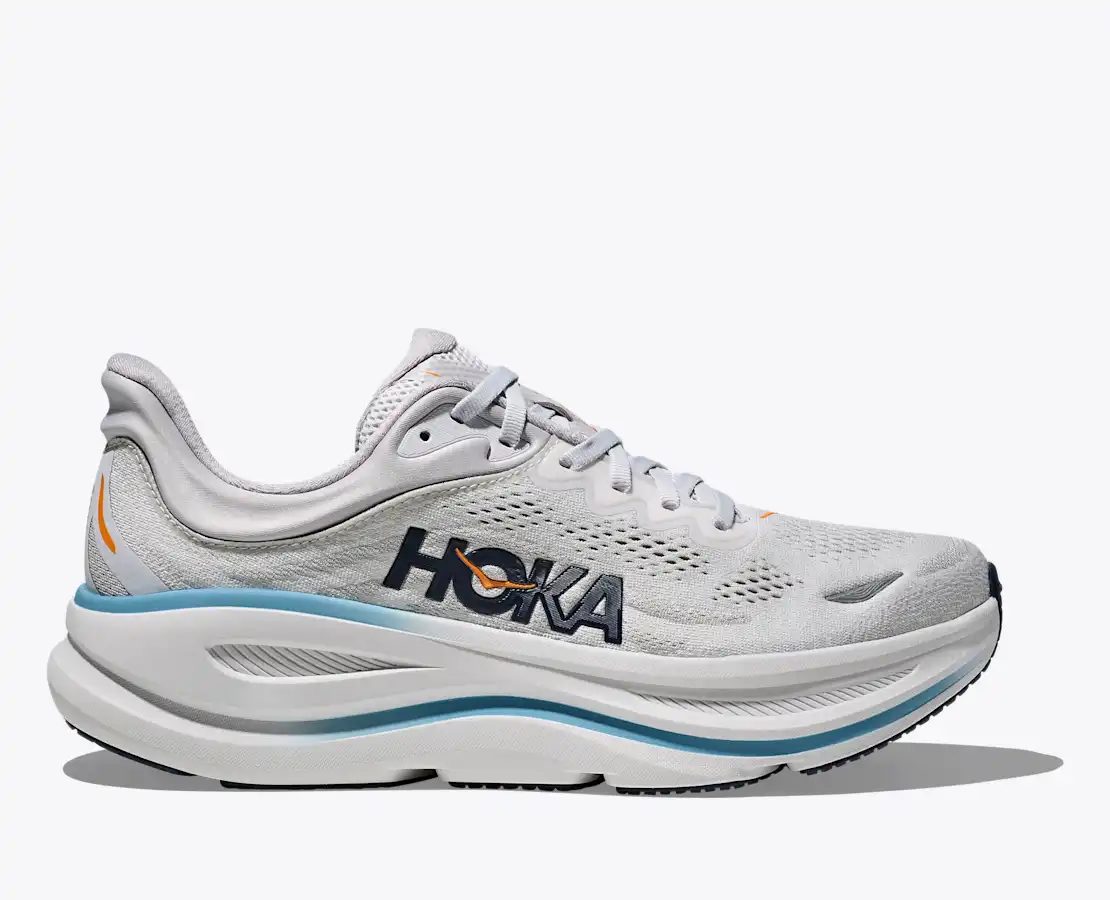
HOKA Bondi 9
$165-$180
Why this shoe
Wide toe box and maximum forefoot cushioning reduce nerve compression in the ball of the foot - rocker sole minimizes toe-off pressure.
Supercritical EVA foam for maximum plush cushioning
Meta-Rocker geometry reduces plantar fascia stress
APMA Seal of Acceptance pid=9031 - podiatrist top recommendation for heel pain - verified directly from APMA Seal Database May 2026

New Balance 1080v15
$165-$175
Why this shoe
New Balance lists the Infinion foam cushioning as Extra Soft, and men's sizing comes in widths up to 4E, which may leave the forefoot less compressed. New Balance does not describe the toe box shape, so check forefoot room before buying.
Neutral support, a 6mm drop, and a weight of 261 grams (9.2 oz) for the men's version, per New Balance
Perforated mesh upper that New Balance describes as lightweight and breathable
Ultra Heel design for secure fit

Brooks Ghost 17
$140-$155
Why this shoe
Wide toe box across multiple widths reduces nerve compression in the ball of the foot - neutral cushioning minimizes forefoot pressure with every step.
DNA Loft v3 nitrogen-infused foam for soft responsive cushioning
APMA Seal of Acceptance pid=9077 - PDAC A5500 diabetic shoe certified - verified directly from APMA Seal Database May 2026
Segmented crash pad for smooth heel-to-toe transitions

ASICS GEL-Nimbus 28
$165-$175
Why this shoe
Maximum forefoot cushioning with PureGEL technology reduces nerve compression - wider engineered knit upper provides space for toe splay reducing neuroma pressure.
FF Blast Plus cushioning with PureGEL technology for maximum soft landings
25g lighter than previous version - exceptional cushioning without weight penalty
Engineered knit upper wraps foot for comfort and breathability

Topo Athletic Atmos 2
$150-$165
Why this shoe
Roomy anatomical toe box directly reduces the nerve compression that causes Morton's neuroma pain, allowing toes to spread naturally with every step. APMA accepted.
Anatomical toe box allows toes to spread naturally
APMA Seal of Acceptance pid=9512 - Topo Athletic Atmos 2 - verified directly from APMA Seal Database August 2026
Maximum cushioning with 38mm heel and 33mm forefoot ZipFoam stack
Saucony Triumph 23
$165-$175
Why this shoe
Rocker geometry reduces forefoot pressure and toe-off load - maximum superfoam cushioning absorbs nerve compression forces in the ball of the foot.
Full-length PWRRUN PB superfoam midsole - first training shoe with all-superfoam construction
42mm heel stack height for maximum impact protection
Rocker geometry for effortless heel-to-toe transitions
What to Look for in a Shoe
Evidence-based footwear criteria specific to this condition.
Heel Drop
Recommended: 0-8mm
Low to moderate heel drop is preferred for Morton's neuroma. High heel drop shifts body weight forward onto the forefoot, dramatically increasing plantar pressure at the metatarsal heads where the interdigital nerve sits. Research in Foot and Ankle International demonstrates that every centimeter of heel height significantly increases forefoot pressure - the primary mechanical driver of nerve compression in Morton's neuroma.
Cushioning
maximum
Maximum forefoot cushioning is the primary cushioning requirement for Morton's neuroma. A thick, compliant forefoot midsole absorbs the metatarsal head impact that compresses the interdigital nerve with every footstrike. The goal is to create as much distance and padding between the ground and the nerve as possible.
Avoid: minimal, thin-soled, barefoot-style, high-heeled
Stability vs. Neutral
neutral
Morton's neuroma does not inherently require stability features. A neutral shoe with a wide toe box and maximum forefoot cushioning addresses the nerve compression mechanism directly. Stability features are only relevant if the patient also has flat feet contributing to forefoot loading patterns.
Exception: Patients with flat feet and Morton's neuroma simultaneously may benefit from mild medial support to reduce the forefoot loading that overpronation creates. A podiatrist assessment is recommended when both conditions are present, as the interaction between arch collapse and forefoot nerve compression varies by individual.
Width
Recommended: 2E, 4E
Wide and extra-wide toe boxes are the most critical footwear feature for Morton's neuroma. The interdigital nerve between the third and fourth metatarsal heads is compressed by lateral forefoot squeezing. A narrow toe box applies continuous compressive force to this nerve throughout every step. A wide toe box allows the metatarsals to spread naturally, reducing inter-metatarsal pressure on the nerve.
Insoles and Orthotics
Metatarsal pads placed just proximal to the metatarsal heads - not directly under them - are one of the most effective conservative interventions for Morton's neuroma. They splay the metatarsals apart, directly reducing inter-metatarsal compression on the nerve. Shoes with removable insoles allow metatarsal pads or custom orthotics to be positioned precisely. A podiatrist can prescribe custom orthotics with built-in metatarsal support for chronic or severe cases.
Sources: APMA Clinical Practice Guidelines; Journal of Foot and Ankle Surgery
Recommended Accessories for Morton's Neuroma
Insoles, heel cups, compression socks, and braces that complement your shoe recommendation and provide additional targeted relief.
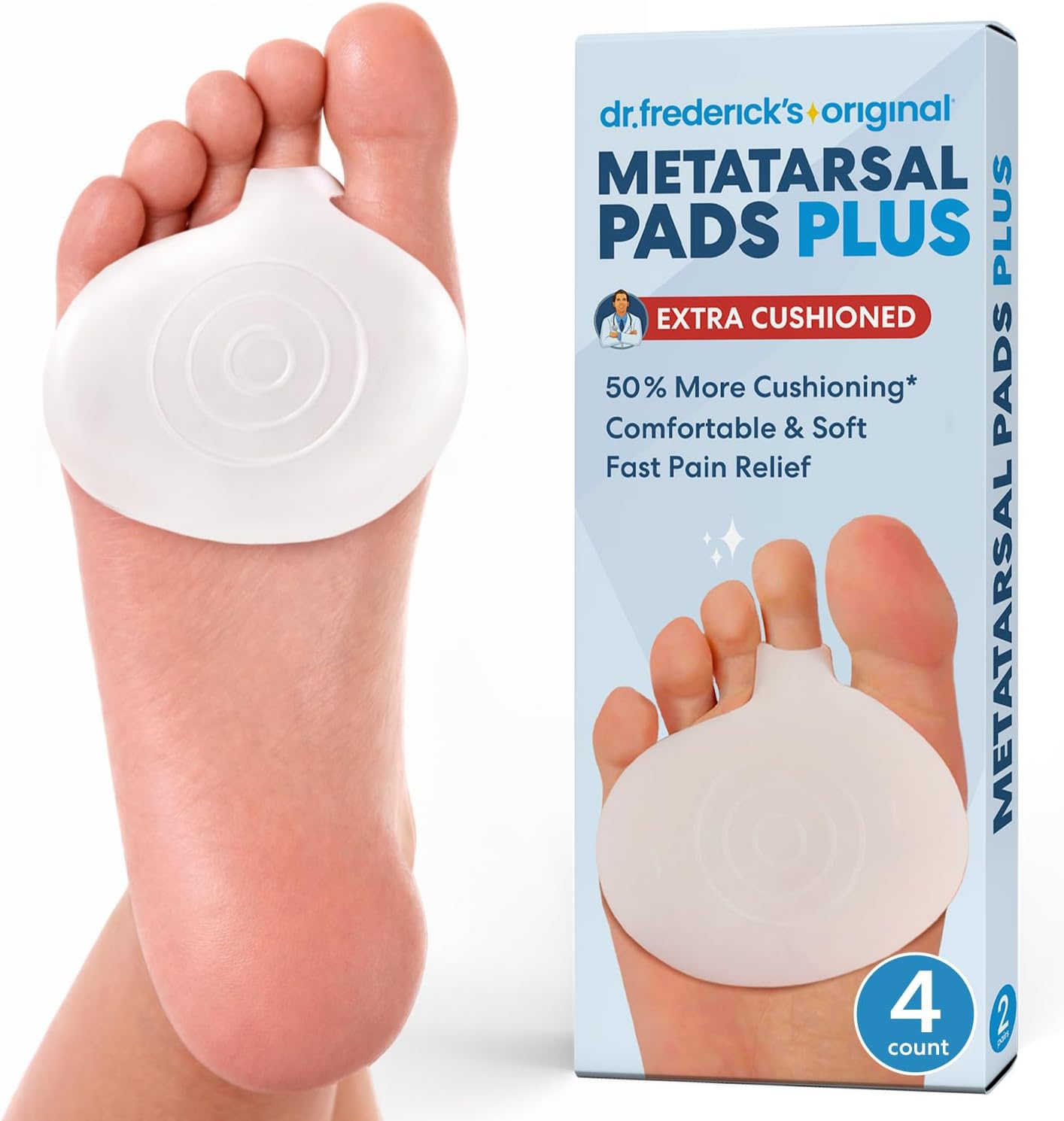
Dr. Frederick's Metatarsal Pads Plus
Dr. Frederick's
$12-$20
Why this accessory
Offloads metatarsal head pressure reducing nerve compression
Gel pad positioned just behind the ball of the foot offloads metatarsal head pressure
Adhesive backing keeps the pad in the correct anatomical position
Reduces the nerve compression that causes Morton's neuroma pain
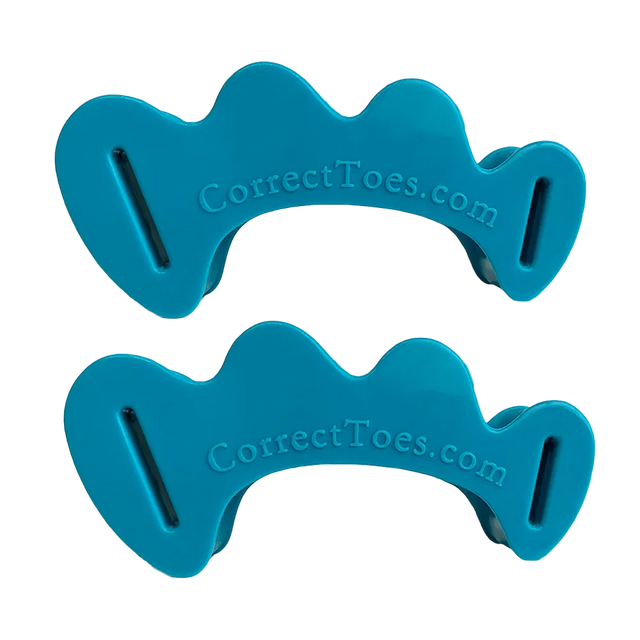
Correct Toes Toe Spacers
Correct Toes
$25-$75
Why this accessory
Separates toes to reduce interdigital nerve compression
Podiatrist-designed silicone spacers separate all five toes simultaneously
Wearable inside wide toe box shoes for continuous correction during activity
Gradually realigns the big toe toward its natural position over time
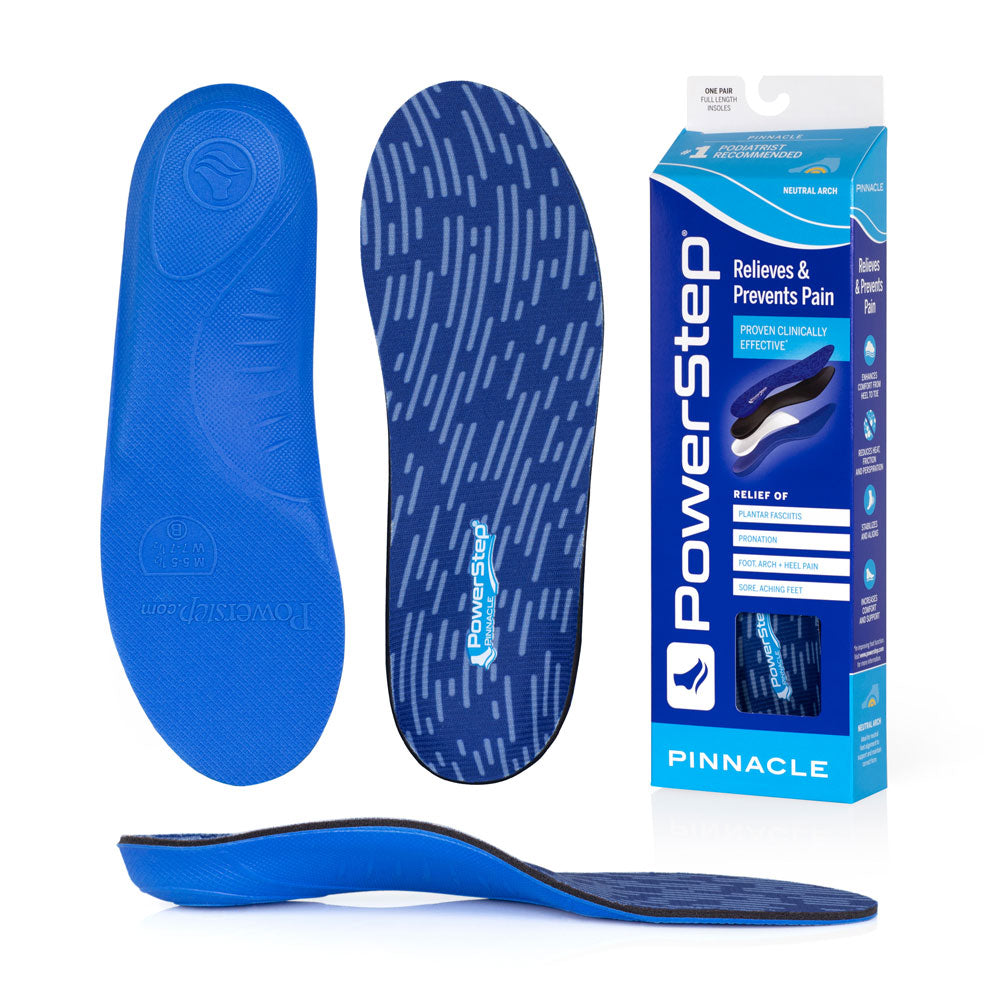
Powerstep Pinnacle Maxx Support Insoles
Powerstep
$45-$55
Why this accessory
Arch support redistributes forefoot pressure away from nerve
Number one podiatrist recommended OTC insole in the USA
Double-layer cushioning with semi-rigid arch support controls overpronation
Deep heel cradle stabilizes and cushions the calcaneus on every step
What Is Happening in Your Foot
Morton's neuroma is not actually a tumor despite its name. It is a thickening of the fibrous tissue surrounding the interdigital nerve - most commonly the nerve running between the third and fourth metatarsal heads. This thickening develops in response to chronic irritation and compression of the nerve, typically from lateral forefoot squeezing by narrow footwear or from repetitive forefoot impact in running. The thickened tissue makes the nerve more sensitive and more vulnerable to further compression, creating a self-reinforcing cycle of irritation and enlargement.
Biomechanics
The interdigital nerves run between the metatarsal heads in the forefoot and branch to supply sensation to adjacent toes. In a naturally splayed foot, these nerves have adequate space in the inter-metatarsal tunnels. When the forefoot is compressed laterally by a narrow shoe, the metatarsal heads are squeezed together, reducing the tunnel space and pinching the nerve between them. This pinching is amplified during the push-off phase of gait when body weight is fully loaded onto the forefoot and the toes are dorsiflexed. High heels worsen this by shifting body weight onto the forefoot for the entire stance phase. A wide toe box allows the metatarsals to spread naturally, restoring inter-metatarsal tunnel space and relieving nerve compression.
Why Symptoms Behave the Way They Do
Unlike plantar fasciitis and Achilles tendinitis, Morton's neuroma pain is not typically worse in the morning after rest. It characteristically worsens progressively throughout the day as footwear compression accumulates, and is often at its worst after prolonged walking or standing in shoes. Removing the shoe and massaging the forefoot typically provides immediate but temporary relief - a pattern that reflects the mechanical compression mechanism rather than an inflammatory morning stiffness pattern.
What Makes It Worse
Narrow or pointed toe boxes that compress the forefoot laterally throughout the day
High heels that shift full body weight onto the compressed forefoot
Prolonged walking or standing in unsupportive footwear
Running, which repetitively loads the forefoot at impact forces several times body weight
Tight socks or stockings that add circumferential forefoot compression
Foot deformities such as bunions or hammertoes that alter metatarsal spacing
What Helps
Wide or extra-wide toe box shoes that immediately eliminate lateral forefoot compression
Removing shoes and massaging the forefoot to manually splay the metatarsals apart
Metatarsal pads placed just behind the metatarsal heads to splay the metatarsals and reduce nerve compression
Avoiding high heels entirely to prevent forefoot weight concentration
Ice applied to the forefoot for 10 minutes after prolonged activity
Custom orthotics with metatarsal support prescribed by a podiatrist for chronic cases
Common Misconceptions
Myth: Morton's neuroma requires surgery to resolve.
Research suggests that conservative treatment - primarily wide toe box footwear, metatarsal pads, and activity modification - resolves Morton's neuroma symptoms in the majority of patients without surgery. Corticosteroid injections are a second-line intervention when conservative measures are insufficient. Surgery to remove the thickened nerve tissue is reserved for cases that do not respond to all conservative options and typically results in permanent numbness in the affected toes.
Myth: The pain from Morton's neuroma is always between the third and fourth toes.
While the third and fourth interdigital space is the most common location for Morton's neuroma, the condition can occur between any adjacent metatarsal heads. The second and third interdigital space is the second most common location. Symptoms can also radiate more broadly across the forefoot, making precise localization difficult without clinical examination.
Myth: Only women get Morton's neuroma.
Morton's neuroma is significantly more common in women, largely because women's footwear styles - particularly high heels and narrow toe boxes - create the compressive forefoot environment that drives neuroma development. However, men develop Morton's neuroma as well, particularly those who run in narrow shoes or who have foot structure that reduces inter-metatarsal space. The condition is not exclusive to women.
Sources: Journal of Foot and Ankle Surgery, Vol. 51, 2012; Foot and Ankle International, Vol. 34, 2013; APMA
Morton's Neuroma by Occupation
How this condition presents differently depending on how you spend your day.
office professionals
Morton's neuroma is disproportionately common in professional women whose dress codes require narrow or heeled footwear.
Office environments that require dress shoes create sustained forefoot compression across an entire workday. Women in professional roles who wear heeled or narrow-toe dress shoes five days a week accumulate significant inter-metatarsal nerve compression over weeks and months. The combination of narrow toe box and elevated heel - both of which increase forefoot pressure - makes this the highest-risk footwear category for Morton's neuroma development.
Shoe Priority
APMA-accepted dress shoe with a wide toe box and minimal heel elevation. Several professional brands now produce office-appropriate footwear with adequate forefoot room. A metatarsal pad inside any dress shoe provides meaningful additional relief.
runners
Runners who train in narrow shoes or transition to minimalist footwear are at elevated risk for Morton's neuroma development.
Running multiplies the forefoot impact forces that compress the interdigital nerve. In a narrow running shoe, each footstrike compresses the metatarsal heads laterally while simultaneously loading them with forces several times body weight. The transition to minimalist or zero-drop running shoes - which typically have narrower toe boxes than traditional trainers - is a well-documented trigger for Morton's neuroma onset in runners.
Shoe Priority
Wide toe box running shoe with maximum forefoot cushioning. Brands that produce roomy forefoot designs are the priority. Metatarsal pads in the running shoe provide additional nerve space during footstrike.
nurses
Nurses who stand and walk for 12-hour shifts in unsupportive footwear accumulate significant forefoot stress that can trigger or worsen Morton's neuroma.
Extended walking on hard floors in shoes with inadequate forefoot cushioning places the interdigital nerve under sustained repetitive loading. Many slip-resistant work shoes prioritize outsole grip over forefoot cushioning and toe box width. Nurses with Morton's neuroma frequently report that symptoms are worst at the end of a shift.
Shoe Priority
Slip-resistant shoe with a wide toe box and maximum forefoot cushioning. A metatarsal pad positioned just behind the metatarsal heads provides meaningful in-shoe relief during long shifts.
standing workers
Retail and restaurant workers who stand on hard floors for extended periods in narrow work shoes face elevated Morton's neuroma risk.
Static forefoot loading during prolonged standing differs from walking in that the forefoot compression is sustained rather than rhythmic. This creates continuous nerve compression during standing periods. Work footwear in retail and food service environments is frequently chosen for appearance or safety rather than forefoot width.
Shoe Priority
Wide toe box work shoe with forefoot cushioning. Compression from narrow work shoes is the primary risk factor to eliminate. A metatarsal pad is a low-cost addition to any work shoe that meaningfully reduces inter-metatarsal pressure.
travelers
Travel days involving significant walking in dress or fashion footwear are a common trigger for Morton's neuroma symptom flares.
Travelers frequently walk far more than they anticipate - particularly during city sightseeing - in footwear chosen for appearance rather than forefoot width. Fashion footwear and travel shoes often have narrower toe boxes than athletic footwear. The combination of unfamiliar distances and suboptimal footwear creates the conditions for acute neuroma flares.
Shoe Priority
Wide toe box walking shoe that can handle sightseeing distances without forefoot compression. Prioritizing a roomy forefoot over fashion considerations on travel days prevents the post-trip flares that many Morton's neuroma patients experience.
Frequently Asked Questions
Local Foot Health
Morton's Neuroma by City
Environmental factors, terrain, and climate affect how common this condition is across different cities. Find local podiatrist resources near you.
Related Guides and Resources
Shoe Guides
Walk Into Your Appointment With Answers
Before Your Next Appointment
Take Your Results to Your Podiatrist
Answer a few quick questions. Takes under 2 minutes. Get personalized shoe recommendations.
Not Sure Which Shoe Is Right?
Take our guided quiz and get a personalized recommendation based on your specific foot condition and lifestyle.
Start the Quiz