Disclosure: We may earn a small commission if you purchase through links on this page. No additional cost to you, and we only recommend products we trust. This helps us keep MySoleMatch free and ad-free. Thank you for your support!
Achilles Tendinitis
Achilles tendinitis is one of the most common running and walking injuries, affecting the tendon that connects your calf muscles to your heel bone. Pain and stiffness along the back of the heel and lower leg are the hallmark symptoms. Shoes with proper heel drop, cushioning, and support reduce strain on the tendon and are essential for both recovery and prevention.
Signs You May Have Achilles Tendinitis
Pain and stiffness along the back of the heel in the morning
Pain that improves with mild activity but worsens with intense activity
Swelling or thickening of the tendon
Tenderness when touching the tendon
Reduced range of motion in the ankle
Walk Into Your Appointment With Answers
Before Your Next Appointment
Take Your Results to Your Podiatrist
Answer a few quick questions. Takes under 2 minutes. Get personalized shoe recommendations.
Best Shoes for Achilles Tendinitis | MySoleMatch
Look for shoes with an elevated heel drop of 8mm or more, which reduces strain on the Achilles. Cushioning and stability in the heel and midfoot are essential. Avoid minimalist or zero-drop shoes.

New Balance Fresh Foam X More v6
$159-$175
Why this shoe
Elevated rocker platform reduces Achilles stretch angle while maximum cushioning absorbs impact that stresses the tendon.
Maximum Fresh Foam X cushioning with rocker sole geometry
Maximalist stack height for superior shock absorption
Ultra-plush ride ideal for fat pad atrophy and arthritis
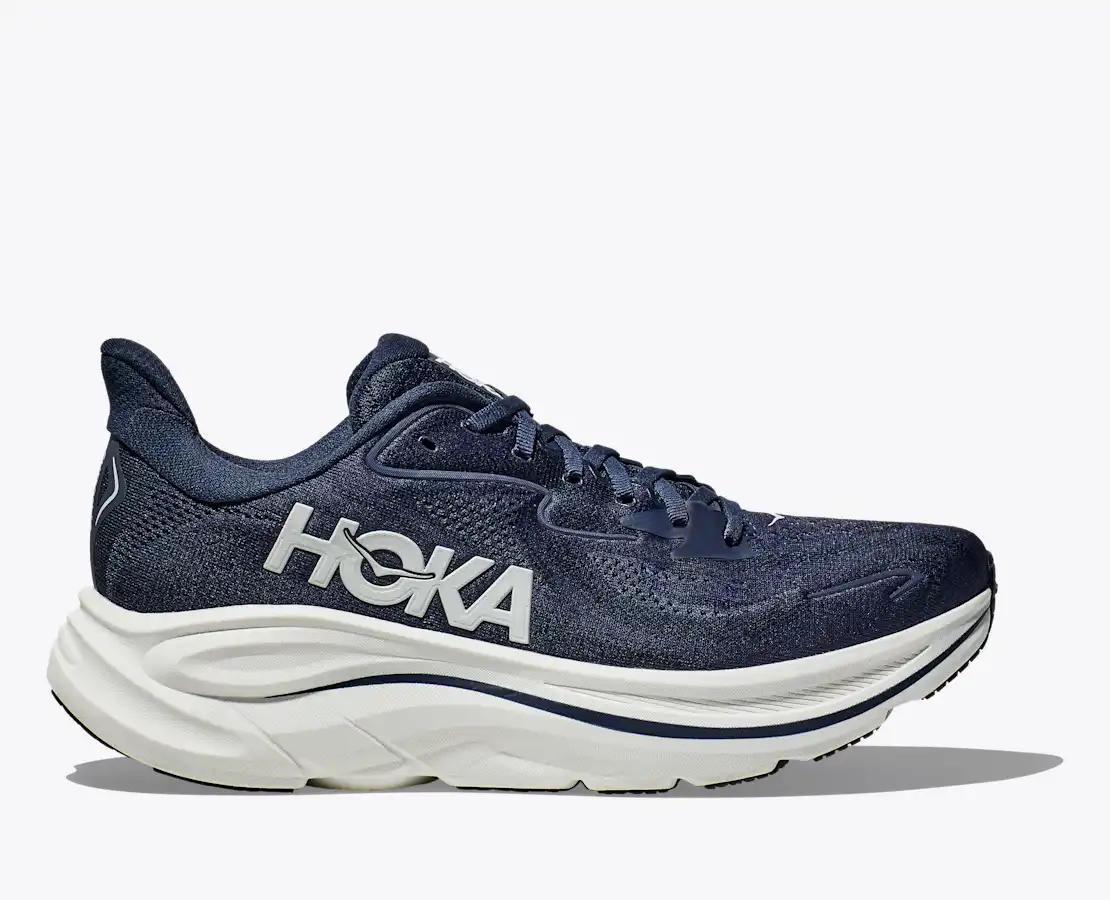
HOKA Clifton 10
$145-$160
Why this shoe
8mm heel drop reduces Achilles stretch angle while CM EVA cushioning absorbs impact - among the highest heel drops in the HOKA everyday-trainer lineup, shared with the Clifton 11.
CM EVA midsole for plush responsive cushioning
8mm heel drop reduces Achilles and calf strain
APMA Seal of Acceptance pid=9032 - lightweight daily trainer verified directly from APMA Seal Database May 2026

New Balance Fresh Foam X 860v15
$145-$155
Why this shoe
10mm heel drop reduces Achilles tendon strain while Stability Plane technology supports proper foot alignment.
Fresh Foam X midsole with Stability Plane technology
Engineered mesh upper for breathability
Described by New Balance as a stability shoe

Brooks Ghost 17
$140-$155
Why this shoe
10mm heel drop reduces Achilles stretch load while DNA Loft v3 cushioning absorbs impact - APMA accepted neutral daily trainer ideal for Achilles recovery.
DNA Loft v3 nitrogen-infused foam for soft responsive cushioning
APMA Seal of Acceptance pid=9077 - PDAC A5500 diabetic shoe certified - verified directly from APMA Seal Database May 2026
Segmented crash pad for smooth heel-to-toe transitions

New Balance Fresh Foam X 880v15
$145-$155
Why this shoe
6mm heel drop and Fresh Foam X cushioning distribute pressure evenly and reduce Achilles tendon strain.
Fresh Foam X midsole with approximately 3% bio-based content for cushioned ride
Structured yet breathable engineered mesh upper
Structured, breathable engineered mesh upper, per New Balance

ASICS GT-2000 14
$135-$145
Why this shoe
8mm heel drop reduces Achilles stretch load - FF Blast Max cushioning absorbs impact while trampoline forefoot pod reduces push-off stress on the Achilles.
FF Blast Max cushioning for energized responsive ride
Trampoline-inspired forefoot pod for better stability and balanced toe-off
Asymmetric tongue wing reduces movement for secure midfoot fit
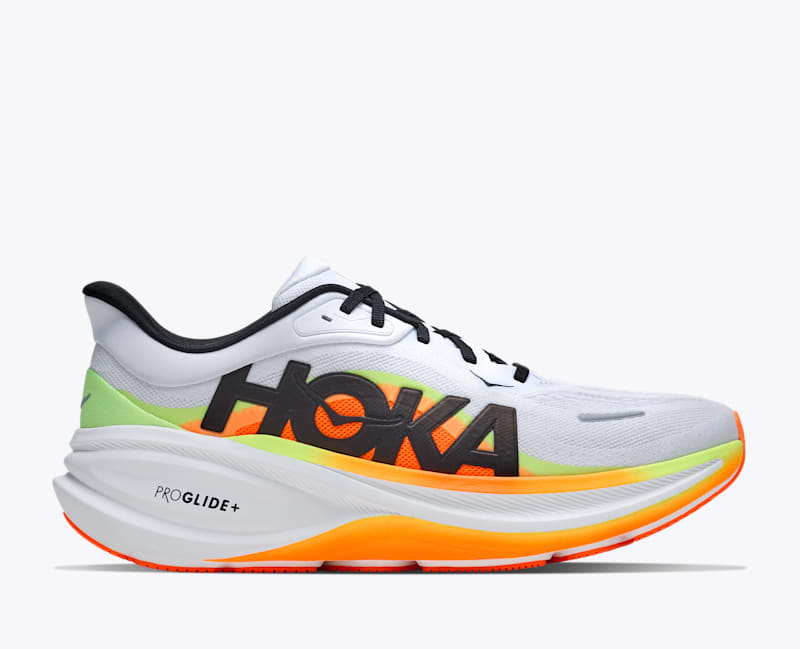
HOKA Clifton PRO
$165
Why this shoe
8mm heel-to-toe drop reduces the stretch angle on the Achilles tendon during gait, matching the drop measurement that makes the Clifton 10 a top HOKA recommendation for Achilles tendinitis.
PROGLIDE+ series midsole with SCF foam and an aggressive MetaRocker geometry for a smoother, faster-feeling ride
Breathable engineered mesh upper with a padded comfort collar
J-Frame technology built into the Clifton line guards against overpronation without overcorrecting a neutral gait
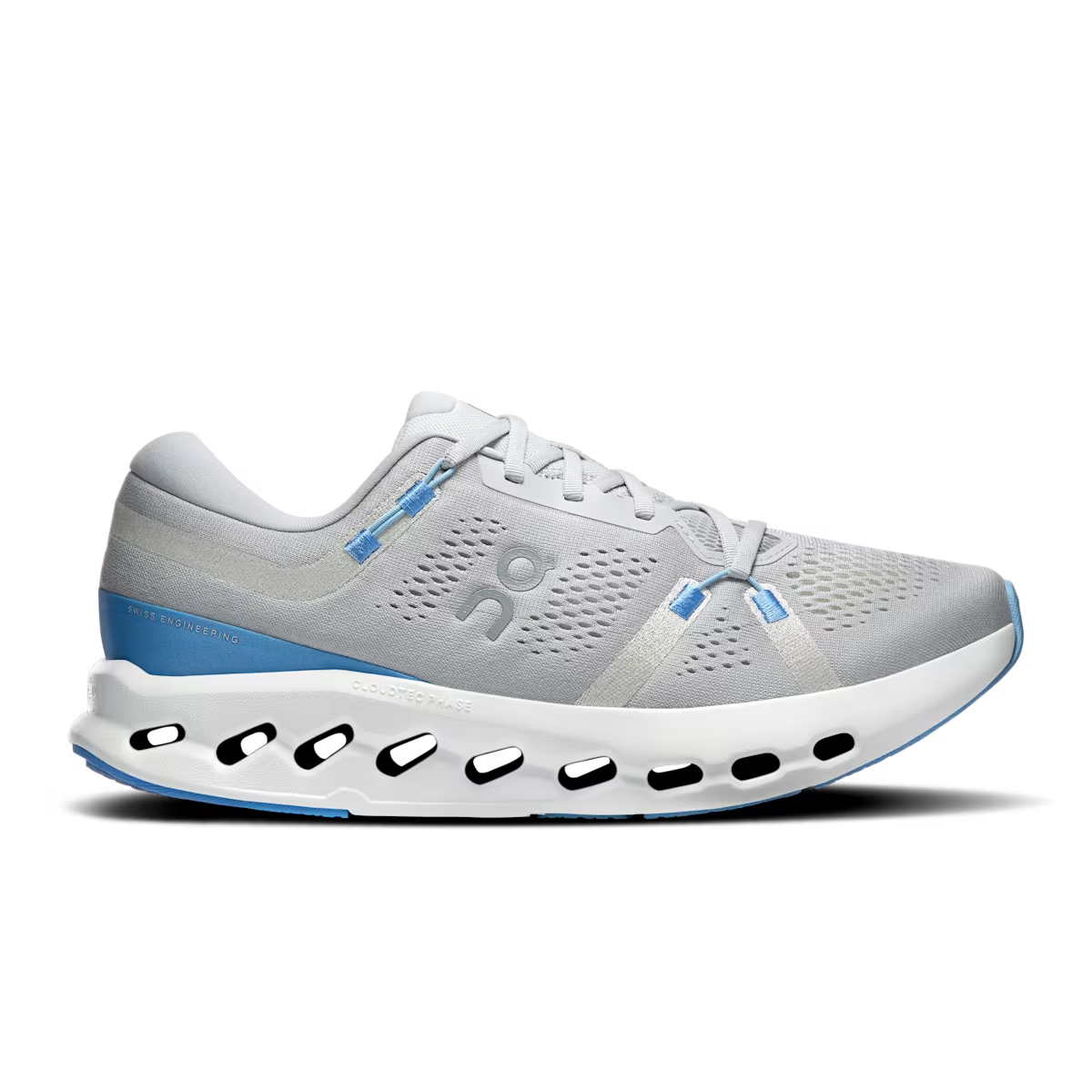
On Cloudsurfer 2
$160
Why this shoe
9mm heel-to-toe drop reduces the range of ankle dorsiflexion required during stance, shortening the Achilles tendon's working length and easing tensile load with every stride.
CloudTec Phase midsole with soft Helion superfoam delivers a smooth, cushioned ride for daily miles
9mm heel-to-toe drop suits heel-strike-dominant runners looking for cushioned impact absorption
Subtle rocker geometry supports an efficient, effortless heel-to-toe transition
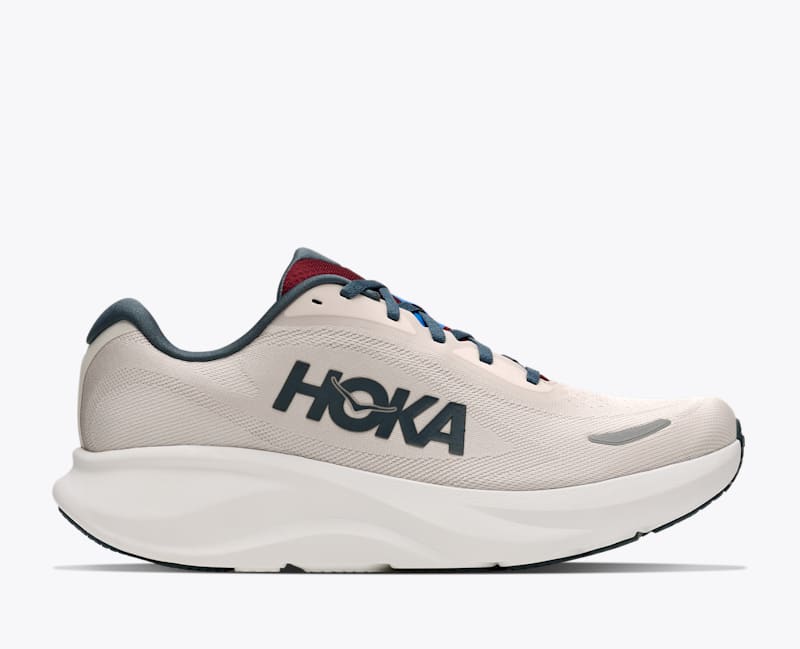
HOKA Rincon 5
$125
Why this shoe
The higher 8mm drop shortens the Achilles tendon's working length during stance, reducing tensile load compared to the prior generation's more minimal 5mm setup.
Updated midsole foam with increased stack height delivers a more built-up, guided ride than prior Rincon generations
Heel-to-toe drop increased from 5mm to 8mm, shifting the shoe toward a more supported, forgiving ride for daily miles
Smooth HOKA MetaRocker geometry promotes efficient heel-to-toe transitions
Saucony Guide 19
$150
Why this shoe
6mm heel drop reduces Achilles stretch load - rocker geometry reduces push-off demand on the Achilles while CenterPath corrects the overpronation that stresses the tendon.
CenterPath technology uses a wide base platform, high sidewalls approximately 8mm tall, and uniform foam density to guide foot positioning without any medial post or dual-density insert. Geometry-based stability that feels invisible underfoot
Softer compression-molded PWRRUN EVA midsole delivers a more cushioned ride than the Guide 18 while maintaining the stable platform runners and walkers with overpronation need
6mm drop confirmed at exactly 6mm in independent RunRepeat lab testing, matching the official Saucony specification precisely. A rare result that validates the spec
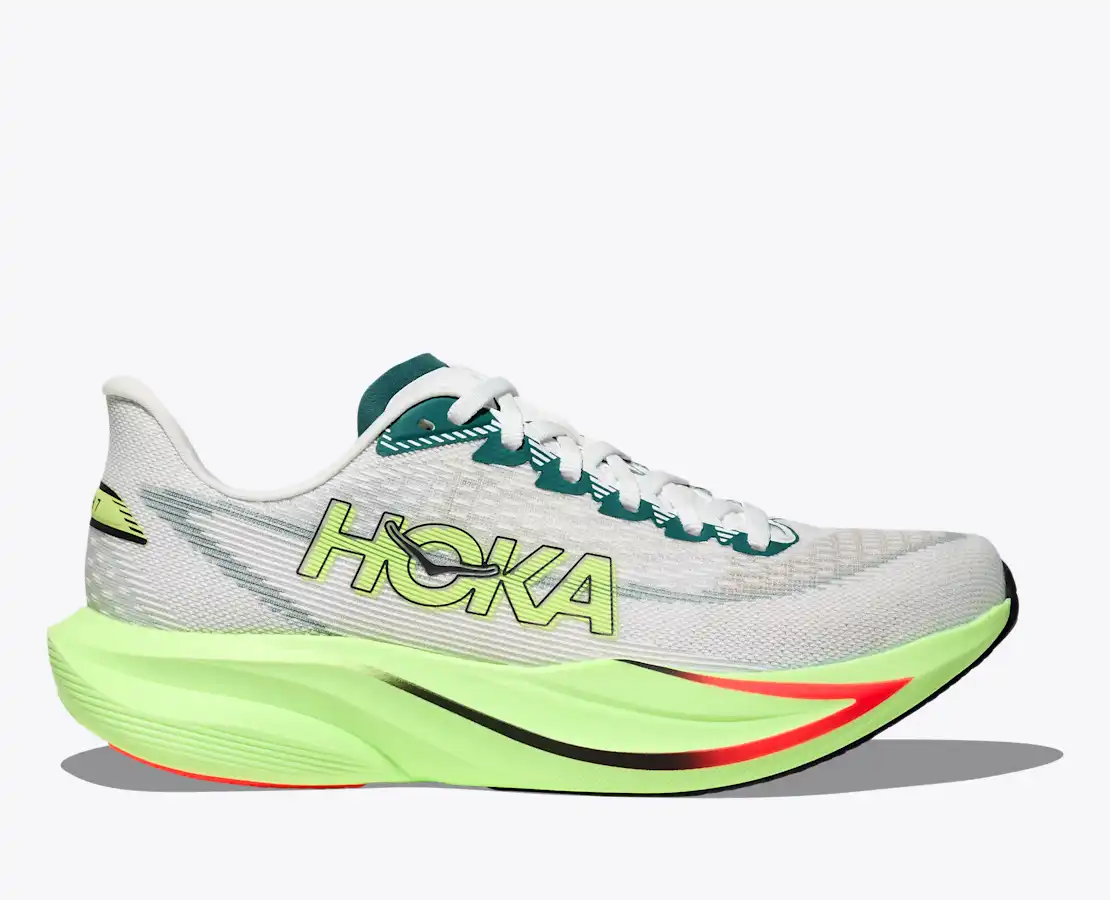
HOKA Mach 7
$145
Why this shoe
5mm heel-to-toe drop moderately reduces Achilles tendon stretch angle during gait, while the J-Frame guards against the overpronation that can aggravate tendon strain.
Supercritical EVA midsole with Early Stage MetaRocker geometry for a lightweight, responsive daily-trainer ride
J-Frame technology guards against overpronation without overcorrecting a neutral gait
Creel jacquard woven upper with internal gusset for a secure, breathable fit
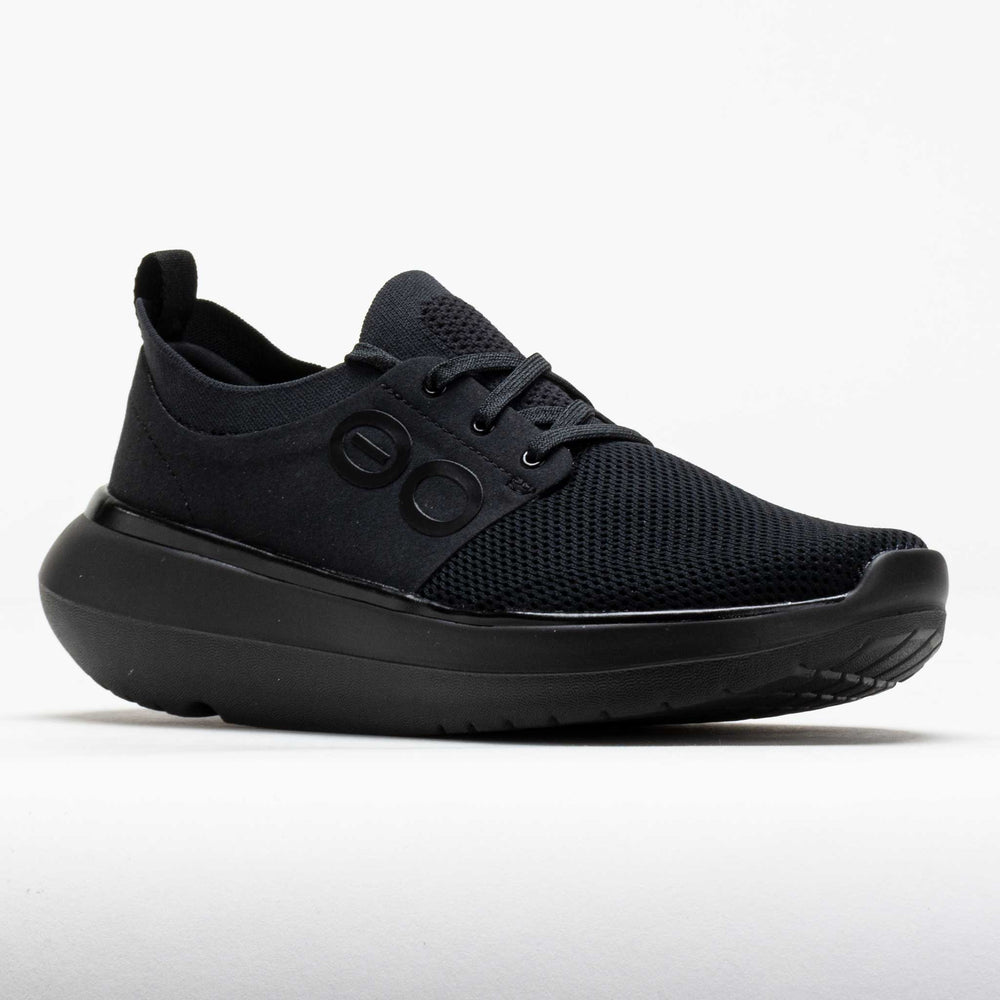
OOFOS OOmy Stride
$80-$95
Why this shoe
OOFoam absorbs 37% more impact than standard foam reducing Achilles tendon stress during recovery - biomechanical footbed limits the range of motion that aggravates an inflamed tendon between activity sessions.
OOFOS's current closed-toe recovery shoe - direct successor to the OOrunner
OOFoam absorbs 37% more impact than traditional foam reducing Achilles and shin stress
APMA Seal of Acceptance pid=8542 - verified directly from APMA Seal Database May 2026

Skechers Go Recover Refresh
$45-$65
Why this shoe
Zero-drop, ultra-responsive recovery footbed reduces Achilles tendon stress between training sessions, offered as a budget alternative to OOFOS recovery slides. APMA accepted.
APMA Seal of Acceptance pid=8165 - Go Recover Refresh - verified directly from APMA Seal Database May 2026
Ultra-responsive foam footbed with arch-contoured base - budget alternative to OOFOS at roughly half the price for the same recovery function
Zero heel-to-toe drop promotes natural foot alignment and reduces plantar fascia tension during post-activity recovery

Brooks Ghost 18
$140-$160
Why this shoe
12mm heel drop reduces Achilles tendon stretch load during running and walking - DNA LOFT v3 cushioning absorbs impact that would otherwise stress the tendon insertion.
DNA LOFT v3 cushioning delivers a soft, smooth ride for daily running and walking
Flat-knit tongue and two-colored air-mesh upper provide superior breathability and comfort
Balanced cushioning platform works for neutral arches and all foot types

Brooks Glycerin 23
$160-$180
Why this shoe
Maximum cushioning and 10mm heel drop reduce Achilles tendon load during high-mileage training - ideal for runners managing chronic Achilles tendinitis.
Nitrogen-infused DNA LOFT v3 foam provides a plush floating sensation with every step
Brooks' premium flagship neutral shoe with maximum cushioning for long distances
Engineered mesh upper wraps the foot in breathable structure for all-day comfort
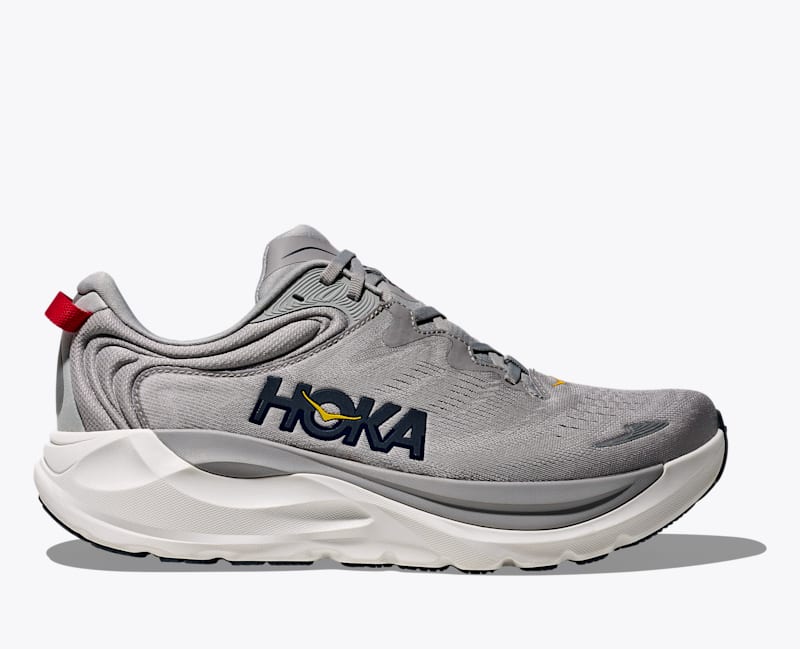
HOKA Gaviota 6
$175-$195
Why this shoe
Maximum cushioning reduces Achilles tendon load during high-mileage training while H-Frame stability controls overpronation that commonly drives Achilles tendinitis.
H-Frame stability base provides maximum motion control with premium HOKA cushioning
More cushioning than the Arahi 8, ideal for overpronators who need maximum protection
Meta-Rocker geometry reduces forefoot and plantar fascia load during long runs and walks

HOKA Ora Recovery Slide 3
$55-$75
Why this shoe
Post-activity recovery slide reduces Achilles tendon stress between training sessions - rocker geometry and arch support prevent fascial and tendon tightening during rest periods.
Thick OrthoLite foam footbed provides arch support and pressure relief after intense activity
Rocker-bottom geometry reduces forefoot and plantar fascia stress during post-workout recovery
Lightweight single-strap design for easy on and off after long shifts or workouts

ASICS GEL-Cumulus 27
$130-$150
Why this shoe
8mm heel drop and FF BLAST PLUS cushioning reduce Achilles tendon load during daily training - lighter than the GEL-Nimbus for runners who prefer a more responsive feel.
FF BLAST PLUS ECO cushioning provides a lightweight, responsive ride for daily training
Lighter and more versatile than the GEL-Nimbus - ideal for everyday running and walking
PureGEL technology in the heel delivers soft shock absorption without added weight

Nike Pegasus 42
$135-$150
Why this shoe
10mm heel-to-toe drop reduces Achilles tendon stretch angle, carrying forward the same geometry that made Pegasus 41 effective for Achilles management. APMA accepted.
Current generation Pegasus - updated ReactX foam platform with improved cushioning integrity over long distances
APMA Seal of Acceptance pid=9689 - Nike Pegasus 42 - verified directly from APMA Seal Database May 2026
Dual Air Zoom units provide targeted cushioning for heel and forefoot impact zones
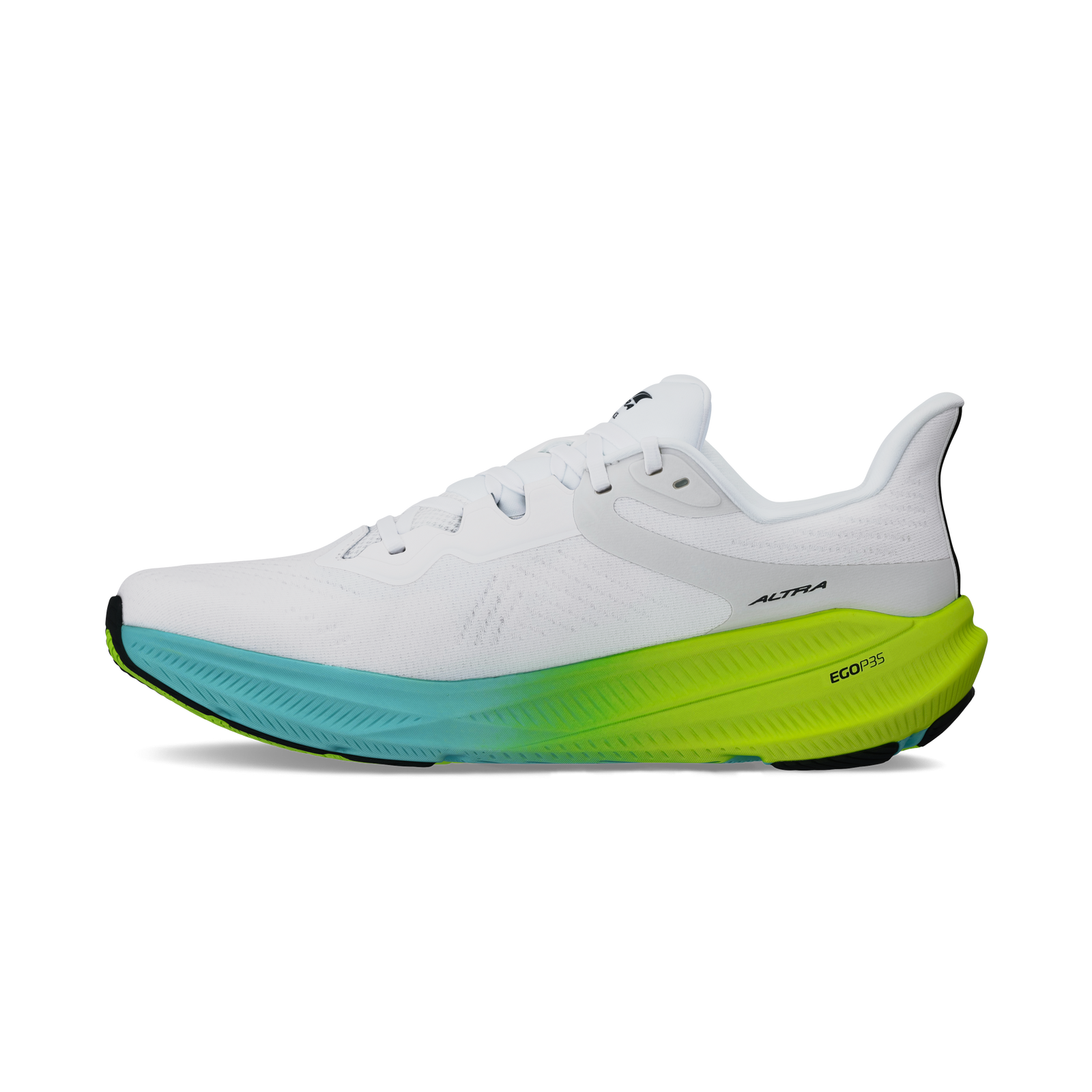
Altra Experience Flow 2
$140-$150
Why this shoe
4mm drop offers a middle ground between traditional heel-elevated shoes and Altra's usual zero-drop platform, easing the transition for Achilles tendons accustomed to more elevation. APMA accepted.
RunRepeat top-rated Altra road shoe with 68.1% forefoot energy return - the most responsive Altra in the catalog and significantly lighter than the Torin 8 at 8.3oz
4mm drop rather than zero-drop - the most accessible Altra for runners transitioning from traditional heel-elevated shoes without going fully zero-drop immediately
FootShape toe box allows natural toe splay while the low drop encourages midfoot and forefoot striking that reduces heel impact - ideal for plantar fasciitis transition
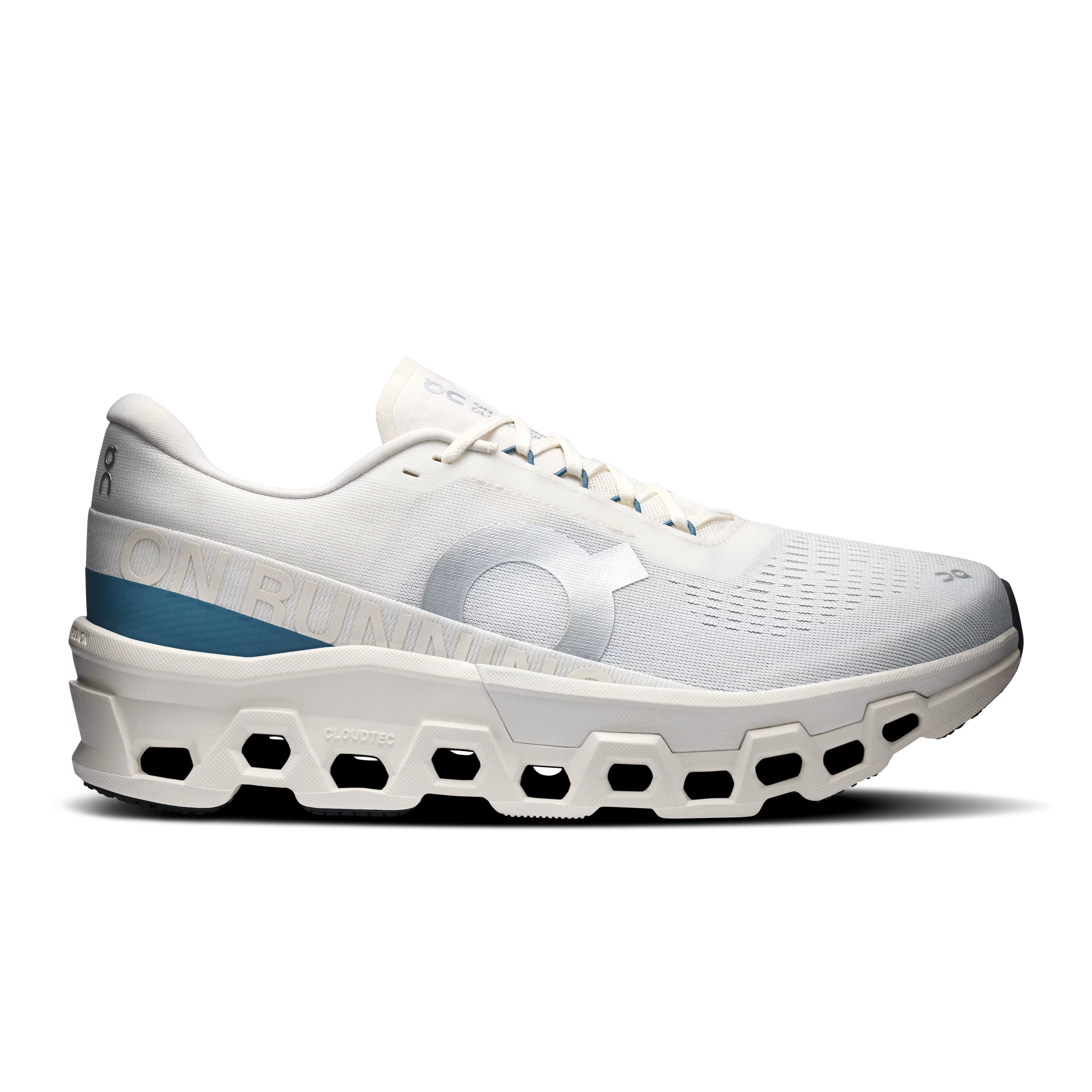
On Cloudmonster 2
$170-$180
Why this shoe
6mm heel drop with rocker geometry reduces the Achilles stretch angle during the heel-to-toe transition.
Dual-density Helion foam with CloudTec pods delivers a cushioned yet firm and stable ride
6mm heel drop with rocker geometry for smooth heel-to-toe transition
Speedboard nylon plate provides structured forward propulsion through the gait cycle

On Cloudmonster 3
$185-$195
Why this shoe
6mm heel drop with a rebuilt, more aggressive rocker geometry reduces Achilles load during the heel-to-toe transition.
Triple-layer CloudTec cushioning with dual-density Helion foam for cushioned yet firm ride
Rebuilt aggressive rocker geometry for smooth heel-to-toe transition and forward propulsion
Speedboard nylon plate stores and returns energy at toe-off
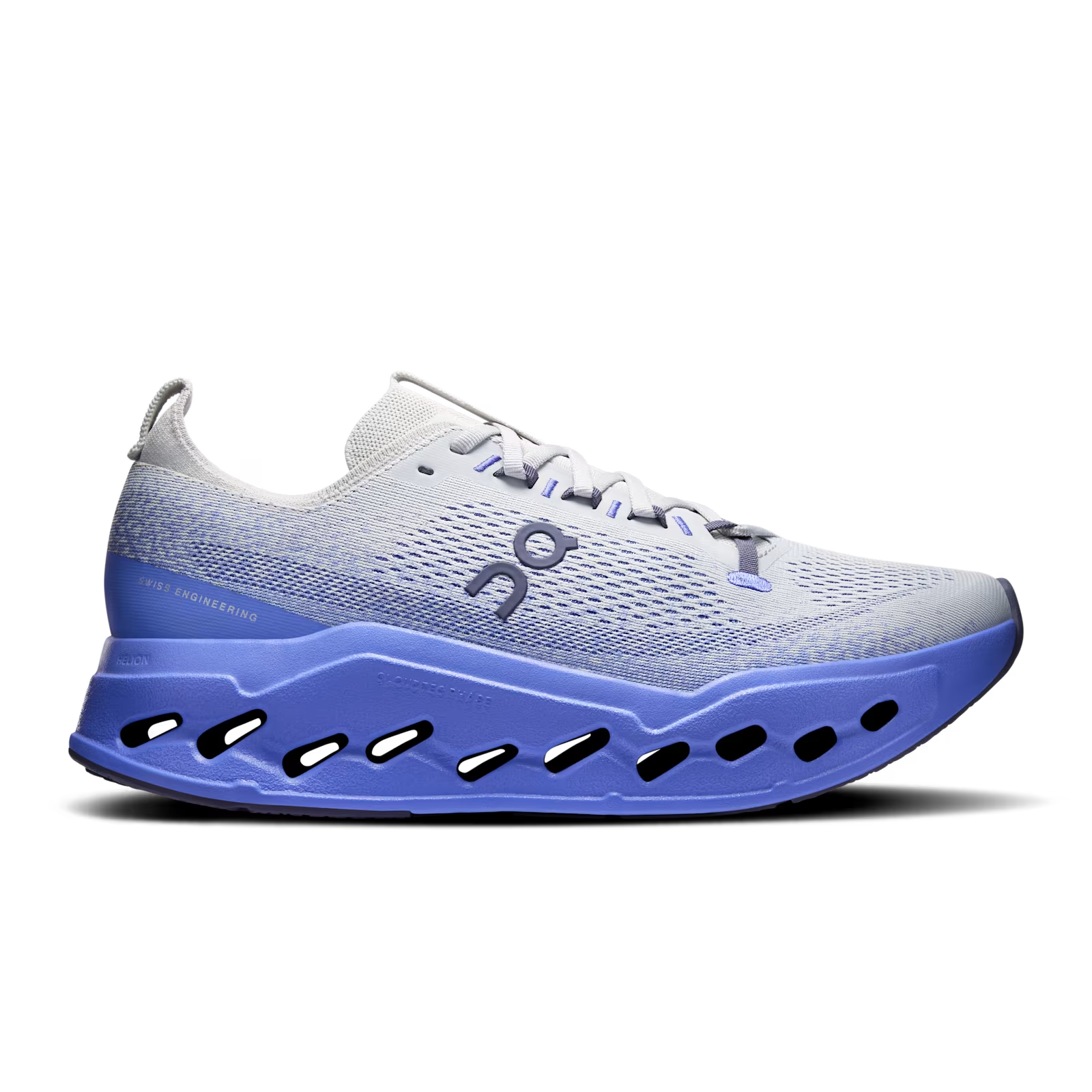
On Cloudsurfer Max
$175-$185
Why this shoe
6mm heel drop with moderate rocker geometry reduces forefoot loading and Achilles strain during long runs and extended standing.
Double-layer CloudTec Phase cushioning compresses sequentially for smooth heel-to-toe transitions
6mm heel drop with moderate rocker geometry reduces forefoot loading during long runs and extended standing
No Speedboard plate delivers a softer more natural feel than other Cloudmonster models
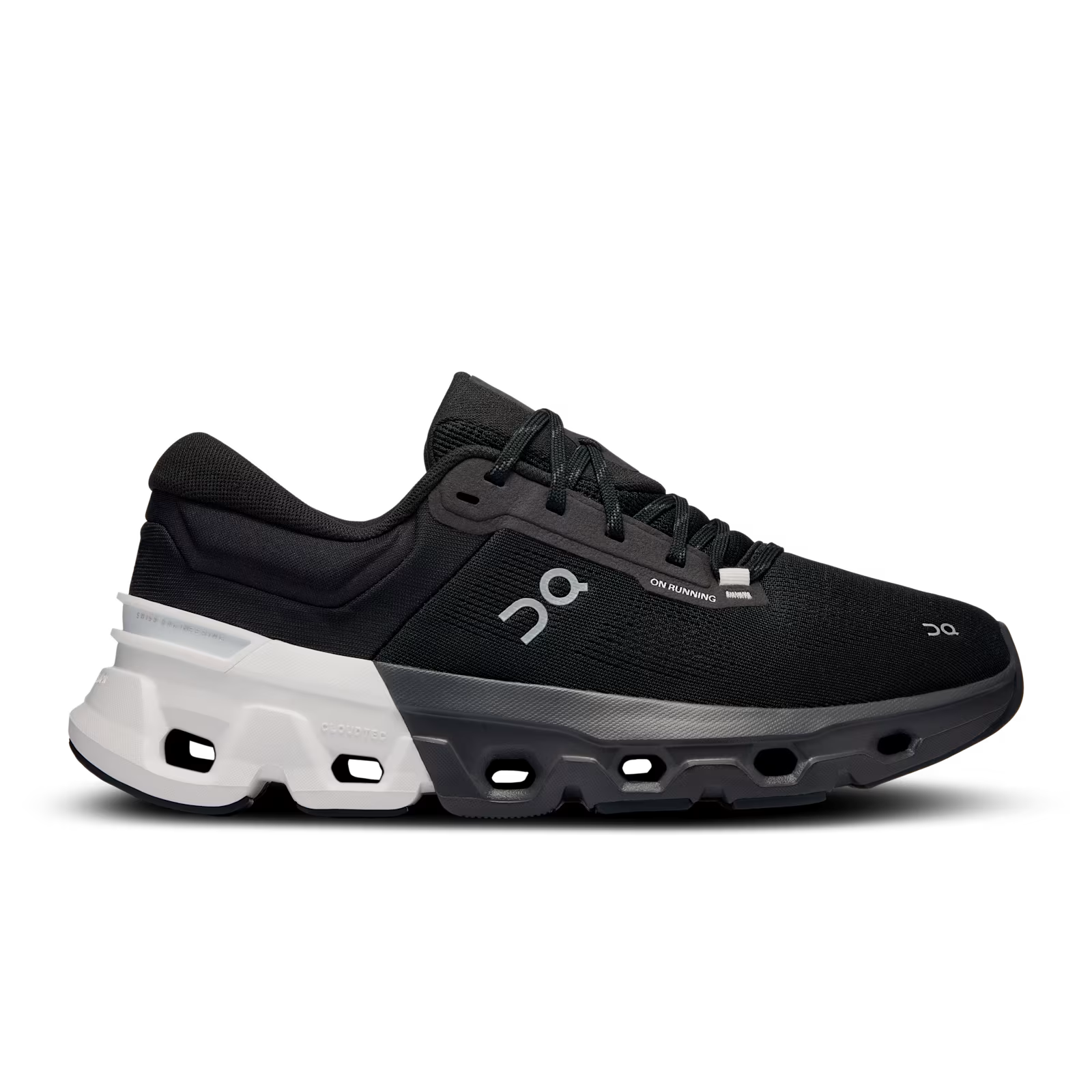
On Cloudflyer 5
$165-$175
Why this shoe
10mm heel drop, the highest in the On Running lineup, is explicitly designed to reduce Achilles strain for heel-strike-dominant runners.
Dual-density Helion foam with J-shaped firmer medial section resists inward rolling for overpronation control
10mm heel drop reduces Achilles and plantar fascia strain while supporting heel strikers
Extra-wide base platform with sole flare keeps the foot centered during walking and running

Vionic Restore Slide and Thongs
$70-$90
Why this shoe
Zero-drop platform promotes natural foot alignment during post-activity recovery without the Achilles shortening caused by elevated-heel footwear. APMA accepted.
APMA Seal of Acceptance pid=9423 - Vionic Restore III - verified directly from APMA Seal Database May 2026
The only APMA-accepted recovery slide in the catalog with genuine built-in arch support - VioMotion footbed provides plantar fascia offloading that flat recovery slides like OOFOS cannot match
Deep heel cup cradles the calcaneus and reduces morning plantar fascia tension - the critical window when plantar fasciitis pain is highest
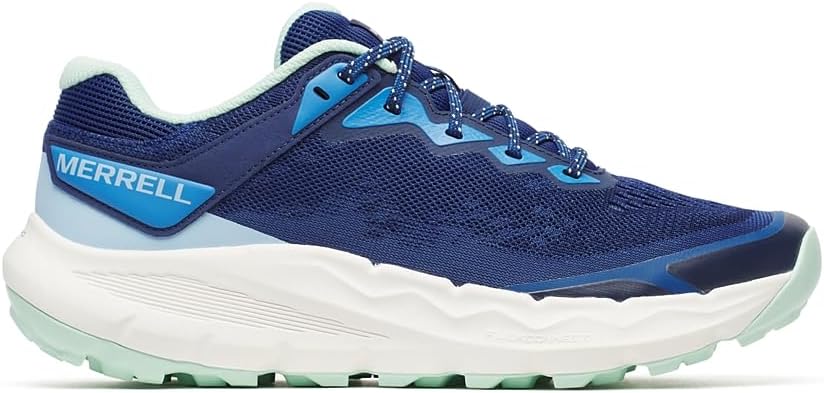
Merrell Nova 4 Trail Running Shoes - Men
$130-$140
Why this shoe
8mm heel-to-toe drop reduces Achilles tendon stretch angle during hikes and trail runs on varied terrain. APMA accepted.
APMA Seal of Acceptance pid=8344 - Merrell Nova 4 - verified directly from APMA Seal Database September 2026
FloatPro foam midsole provides lightweight cushioning that lasts through long hikes
FLEXconnect dual-directional flex grooves enhance ground connection and natural foot movement
Merrell Antora 4 Trail Running Shoes - Women
$130-$140
Why this shoe
8mm heel-to-toe drop reduces Achilles tendon stretch angle during hikes and trail runs on varied terrain. APMA accepted.
APMA Seal of Acceptance pid=8340 - Merrell Antora 4 - verified directly from APMA Seal Database September 2026
FloatPro foam midsole provides lightweight cushioning with 29mm heel and 21mm forefoot stack height
FLEXconnect dual-directional flex grooves enhance ground connection and natural foot movement
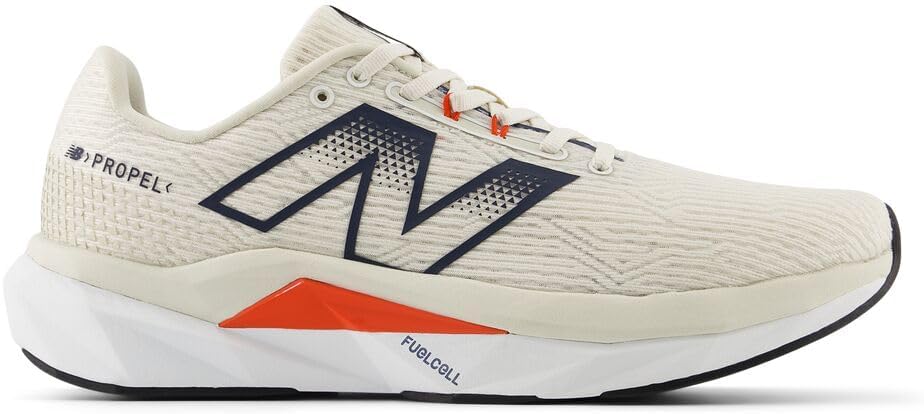
New Balance FuelCell Propel v5
$110-$120
Why this shoe
6mm heel drop with a TPU plate provides mild structure and a smooth transition that reduces Achilles tendon stretch load during daily miles.
FuelCell foam with bio-based content delivers responsive, propulsive cushioning with a soft bouncy feel
TPU plate adds smooth transition and mild structure for daily miles and tempo runs
35mm heel stack with forefoot rocker for comfortable heel-to-toe transitions
Saucony Triumph 24
$165-$175
Why this shoe
10mm heel drop, the highest in the Triumph line, substantially reduces Achilles tendon stretch angle, though APMA status is pending for this new release.
IncrediLUX supercritical ATPU foam delivers the highest cushion-to-weight ratio in Triumph history
43mm heel stack with 10mm drop for maximum passive reduction of plantar fascia stretch length
Rocker geometry for smooth heel-to-toe transitions alongside maximum impact absorption
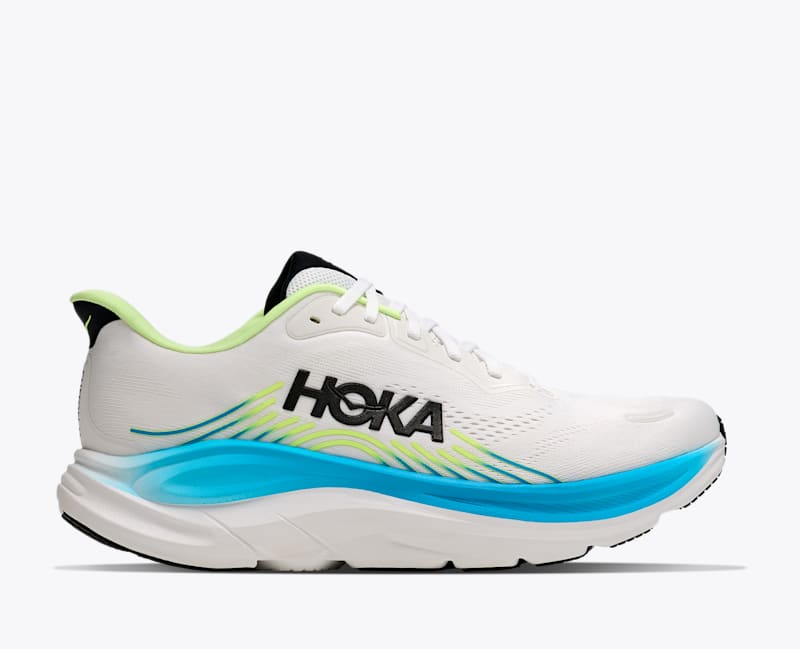
HOKA Clifton 11
$150-$165
Why this shoe
8mm heel drop reduces Achilles stretch angle while CM EVA cushioning absorbs impact - shares the same drop and cushioning platform as the Clifton 10, HOKA's highest heel drop within the everyday-trainer lineup.
APMA Seal of Acceptance - Clifton 11 not yet individually listed in the live APMA Seal Database as of August 2026 (verified directly against HOKA's full 22-product listing); HOKA's own marketing pages and retailer listings claim the seal, but only Clifton 10 (pid=9032) and Clifton 9 (pid=8533) currently appear filed. Feature-based match pending independent APMA re-verification.
Compression-molded EVA foam midsole with Smooth MetaRocker geometry for plush cushioning and effortless heel-to-toe transitions
8mm heel-to-toe drop, consistent with Clifton 10
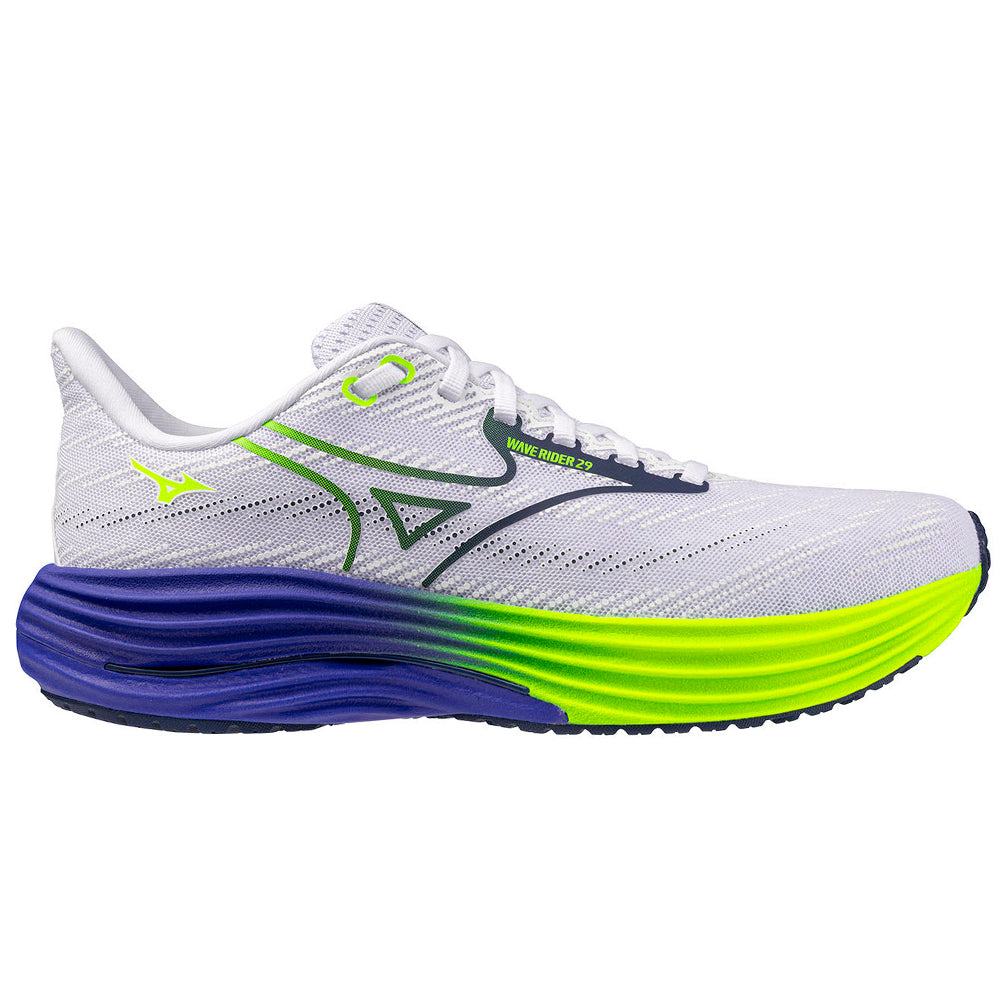
Mizuno Wave Rider 29
$140-$150
Why this shoe
A board-certified podiatric surgeon names this shoe specifically for the 10mm heel-to-toe drop, above the 8mm threshold that reduces Achilles tension, paired with a Wave plate that keeps heel-strike cushioning consistent without bottoming out.
Podiatrist recommended: Dr. Tom Biernacki, DPM, FACFAS, board-certified podiatric foot and ankle surgeon at Balance Foot & Ankle (Howell & Bloomfield Hills, MI), names the Mizuno Wave Rider as his primary Mizuno recommendation for plantar fasciitis in neutral feet - source: michiganfootdoctors.com, June 2026
Not APMA-verified - Mizuno does not currently appear in the live APMA Seal Database. This is a construction-based and podiatrist-endorsed match, not an APMA-verified entry
Dr. Biernacki's stated reasoning: the drop reduces Achilles and plantar fascia tension, and the Wave plate provides consistent heel-strike cushioning without bottoming out
What to Look for in a Shoe
Evidence-based footwear criteria specific to this condition.
Heel Drop
Recommended: 8-12mm
Elevated heel drop is the single most important footwear variable for Achilles tendinitis. A higher heel position reduces the angle of dorsiflexion required at the ankle during the stance phase of gait, shortening the functional length the Achilles tendon must span with every step. Research published in the Scandinavian Journal of Medicine and Science in Sports supports heel lift as a primary conservative intervention for Achilles tendinopathy.
Avoid below 6mm
Cushioning
moderate_to_maximum
Moderate to maximum cushioning in the heel absorbs the impact forces that would otherwise travel through the calcaneus and into the Achilles tendon insertion point. A well-cushioned heel counter also reduces the mechanical loading on the tendon during the initial contact phase of gait.
Avoid: minimal, barefoot-style, zero-drop, hard-soled
Stability vs. Neutral
neutral_to_stability
Neutral to mild stability shoes are appropriate for most Achilles tendinitis patients. Overpronation increases the rotational stress on the Achilles tendon, so patients with flat feet or significant inward roll benefit from mild medial support. However, aggressive stability features or motion control shoes can alter gait mechanics in ways that increase Achilles load for patients with neutral or supinating gait.
Exception: Patients with confirmed supination or high arches may experience increased Achilles strain in stability shoes. A neutral cushioned shoe with a high heel drop is often more appropriate for this population. Gait analysis is particularly valuable for Achilles tendinitis patients given the sensitivity of the tendon to footwear-induced gait changes.
Width
Recommended: D, 2E
Standard fit is appropriate for most Achilles tendinitis patients. The critical width consideration is the heel counter - it must fit snugly without creating a pressure point at the Achilles insertion. A heel counter that is too loose allows the foot to slide and creates friction at the tendon. A heel counter that is too tight creates direct pressure on an already-inflamed structure.
Insoles and Orthotics
Heel lift insoles that add 6 to 12mm of elevation are a well-established conservative treatment for Achilles tendinitis when the shoe's built-in heel drop is insufficient. They can be used inside existing footwear to immediately reduce Achilles tendon tension without replacing shoes. Custom orthotics addressing any underlying overpronation or biomechanical asymmetry are recommended for chronic or recurrent cases.
Sources: Scandinavian Journal of Medicine and Science in Sports; APMA Clinical Practice Guidelines
Recommended Accessories for Achilles Tendinitis
Insoles, heel cups, compression socks, and braces that complement your shoe recommendation and provide additional targeted relief.
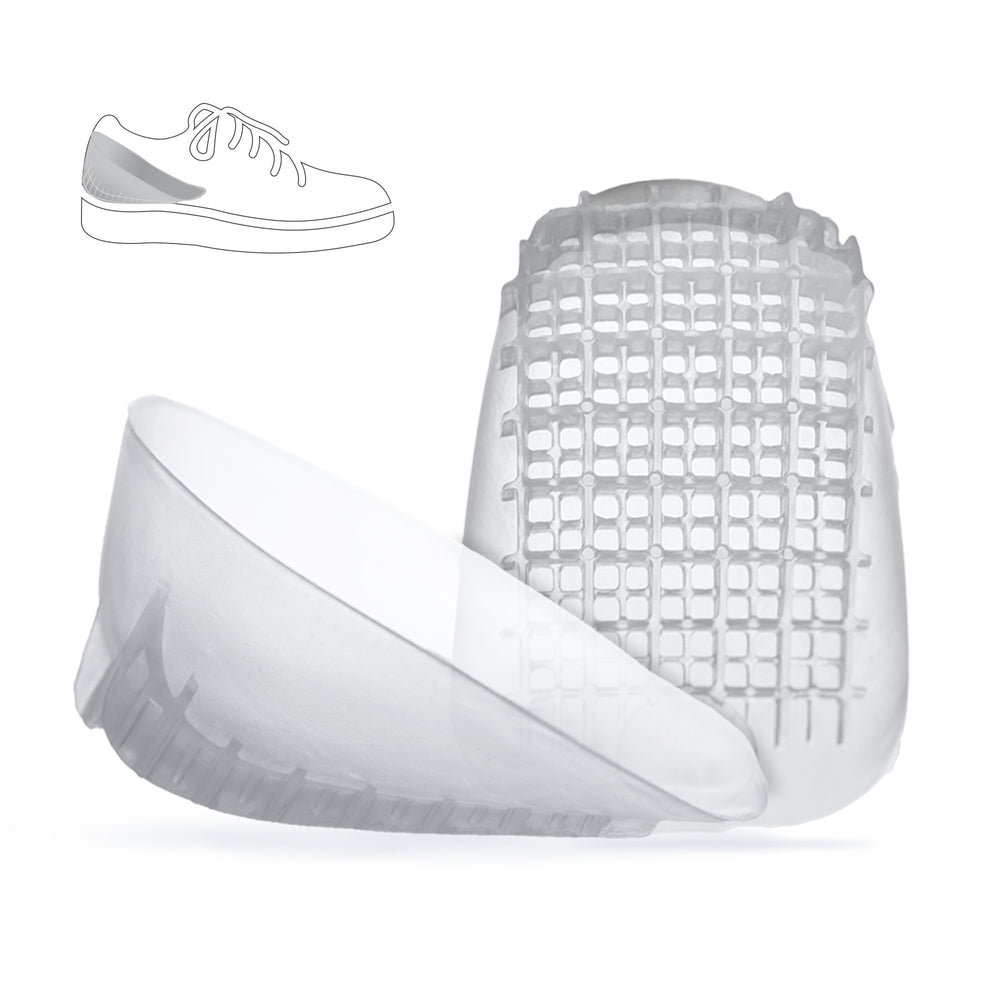
Medi-Dyne Plantar Fasciitis Heel Cups by Tuli's
Medi-Dyne
$14-$30
Why this accessory
Heel elevation reduces Achilles stretch angle on every step
Dual-density construction - firm outer shell with soft gel center
Slight heel elevation reduces Achilles tendon and plantar fascia tension
Anatomical design cradles the heel bone for maximum stability

Tuli's Classic Heel Cup
Tuli's
$15-$25
Why this accessory
Slight heel elevation reduces Achilles tendon tension
Waffle-pattern design compresses on impact and springs back to absorb shock
Most podiatrist-prescribed heel cup for heel spur pain relief
Fits inside most shoe types without modification
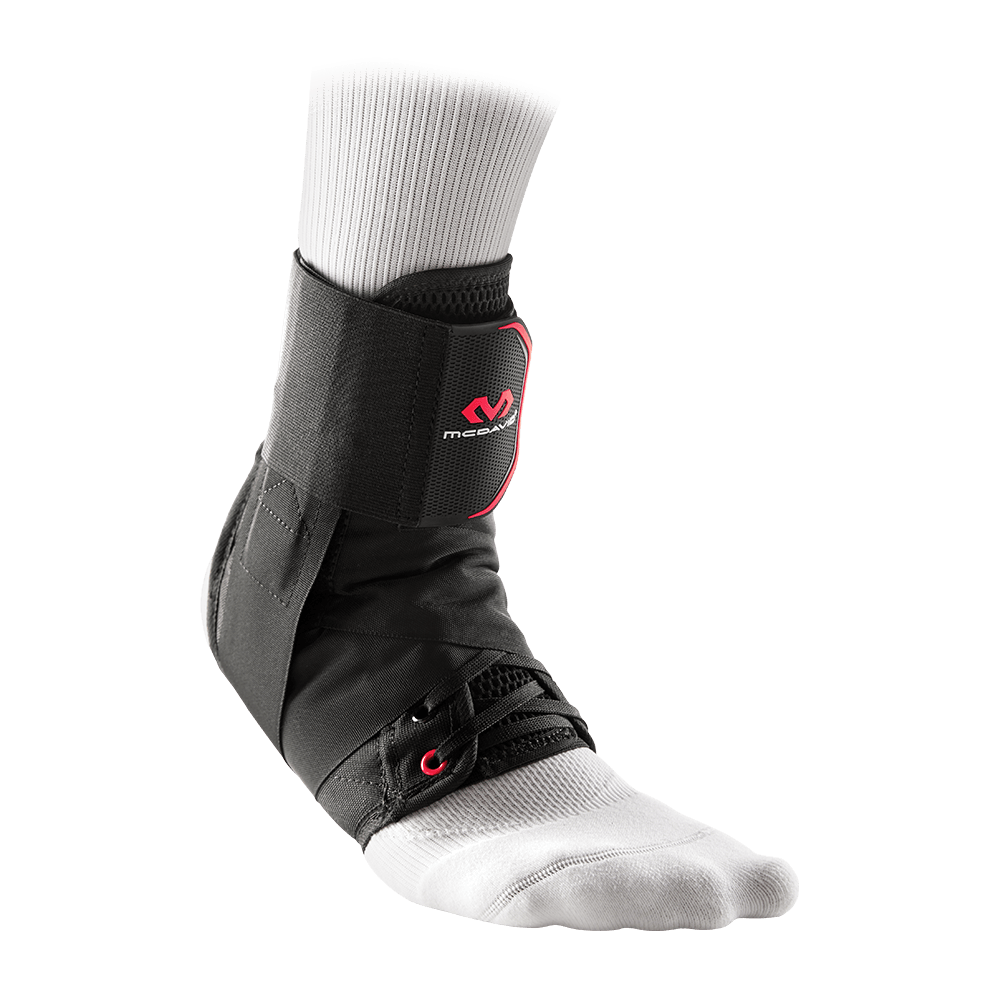
McDavid Ankle Brace with Strap Support
McDavid
$20-$50
Why this accessory
Ankle support reduces the stress on the Achilles tendon
Figure-8 strapping system mimics athletic taping for lateral ankle support
Fits inside most athletic shoes without modifying fit
Lightweight breathable construction for all-day wear

Apolla Shocks Compression Performance Sock
Apolla
$30-$40
Why this accessory
APMA compression with ankle stabilization reduces tendon load
APMA accepted - patented targeted compression technology reviewed by podiatrists
Built-in orthotic-like arch support reduces plantar fascia strain
Ankle stabilization targets key ligament insertion points like a brace

CEP Progressive+ Compression Run Socks
CEP
$50-$65
Why this accessory
Medical-grade compression reduces Achilles inflammation
20-30 mmHg medical-grade graduated compression for serious athletes
Reduces muscle oscillation that causes shin splint and stress fracture risk
Anatomically shaped for left and right feet - not interchangeable
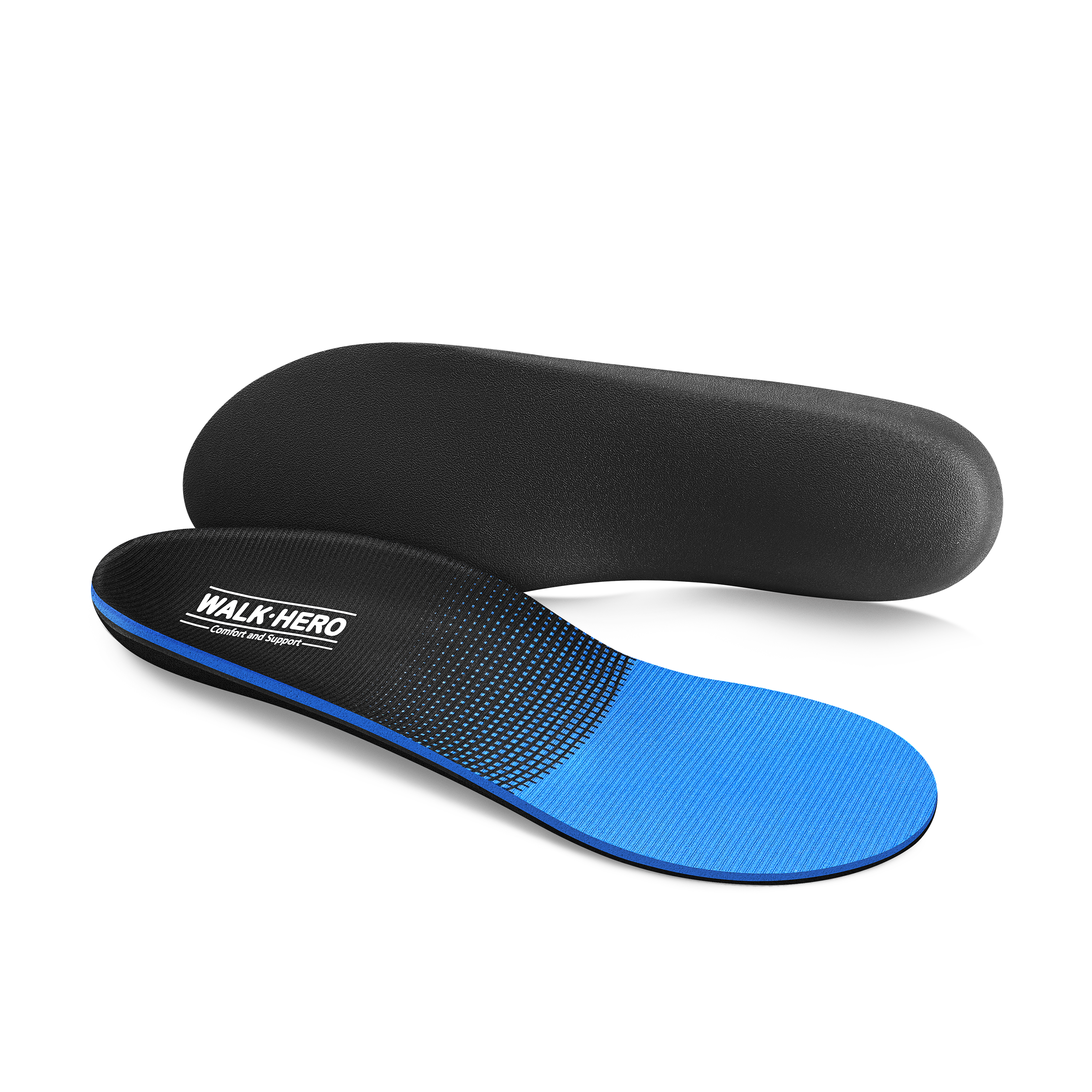
Walk Hero Arch Support Insoles
Walk Hero
$20-$40
Why this accessory
Heel elevation and arch support reduce Achilles tendon load
Patented deep heel cup maintains proper positioning for motion control and lateral stability
Clinically cited to reduce plantar fascia strain with anatomical arch support
EVA foam base provides lightweight shock absorption from heel to toe
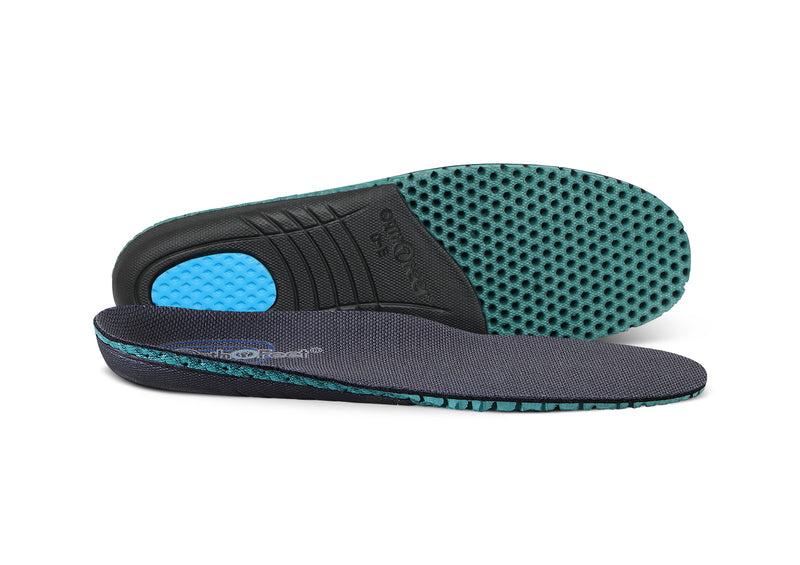
Orthofeet OFG Men's Orthotic Insoles
Orthofeet
$45-$55
Why this accessory
Contoured heel seat reduces Achilles stretch angle on every step
Anatomical arch support controls overpronation and improves foot and leg alignment from heel to hip and back
Adjustable Arch Booster system allows additional support to be added under the insole for custom-level correction
Contoured heel seat with advanced cushioning foam alleviates plantar fasciitis and heel spur pain
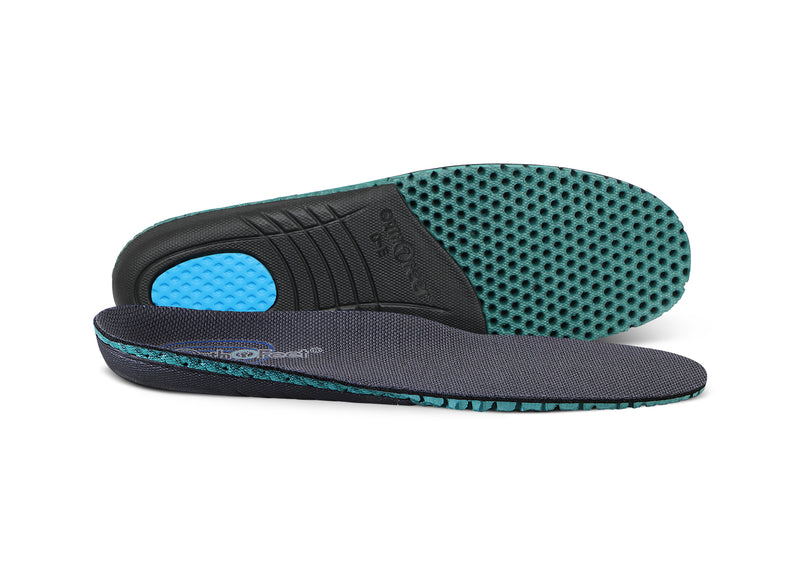
Orthofeet OFG Women's Orthotic Insoles
Orthofeet
$45-$55
Why this accessory
Women's contoured heel seat reduces Achilles stretch angle
Anatomical arch support controls overpronation and improves foot and leg alignment from heel to hip and back
Adjustable Arch Booster system allows additional support to be added under the insole for custom-level correction
Contoured heel seat with advanced cushioning foam alleviates plantar fasciitis and heel spur pain
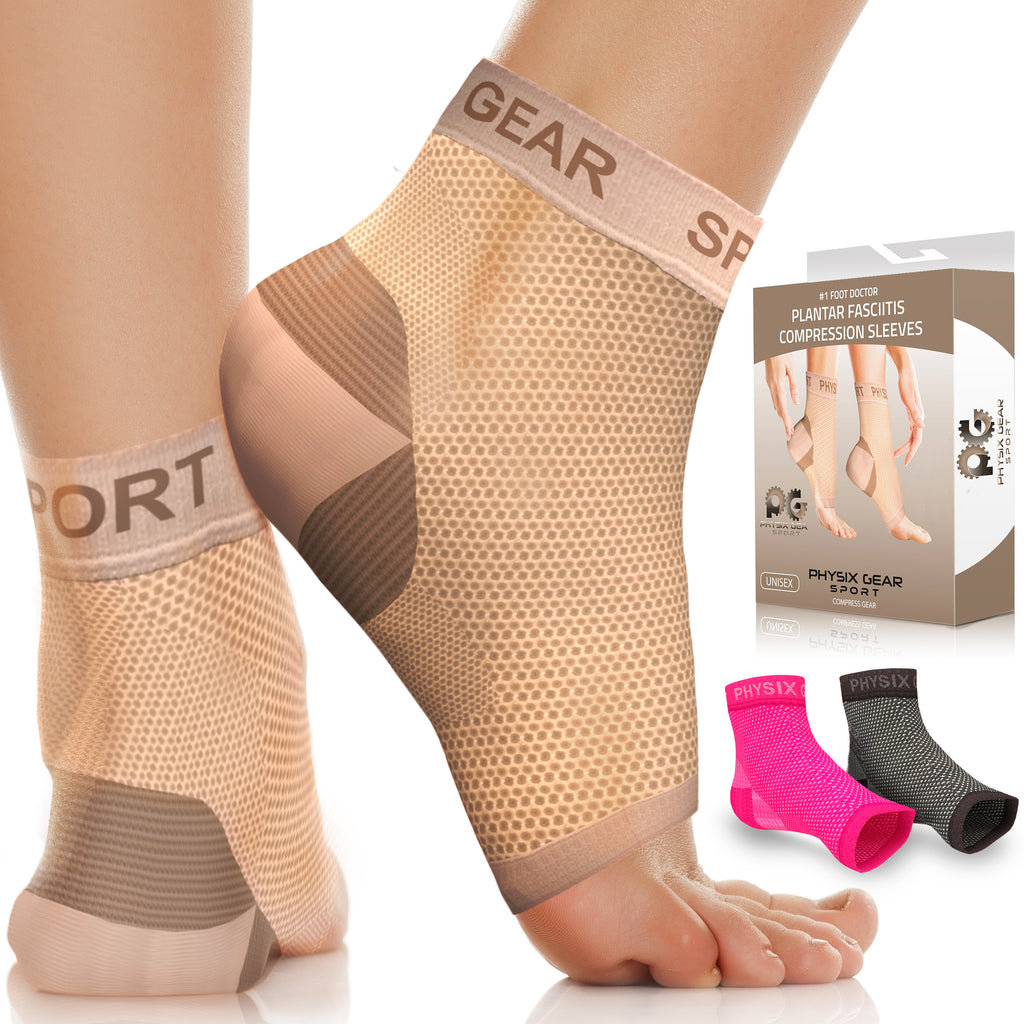
Physix Gear Sport Plantar Fasciitis Socks
Physix Gear
$12-$18
Why this accessory
Ankle compression reduces Achilles tendon inflammation during activity
Targeted compression zones apply graduated pressure to the plantar fascia and arch for immediate pain relief
Ankle and arch banding stabilizes the foot and reduces morning heel pain on first steps
Moisture-wicking breathable fabric keeps feet dry and comfortable during all-day wear
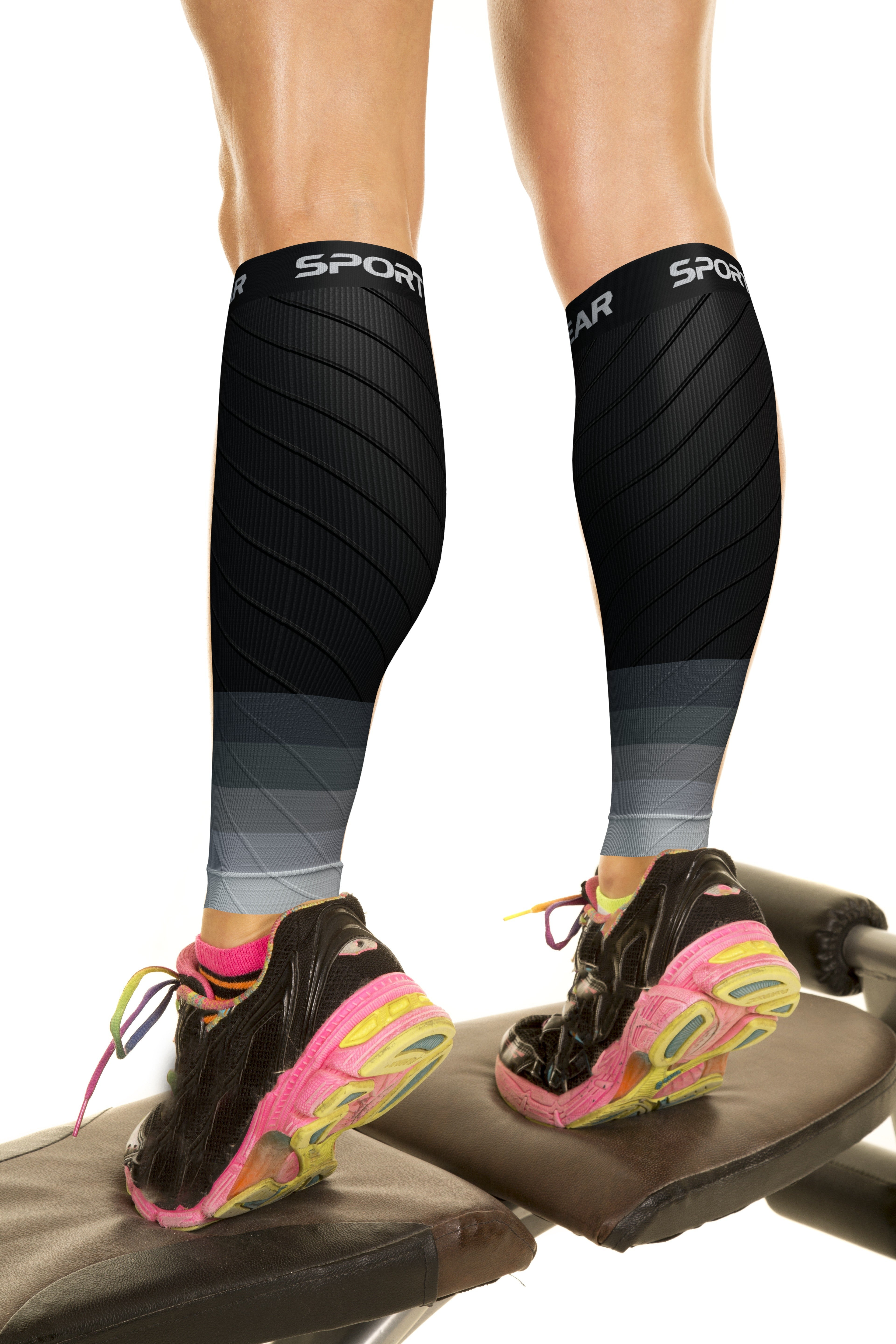
Physix Gear Sport Calf Compression Sleeves
Physix Gear
$12-$15
Why this accessory
Calf compression directly reduces load on the Achilles tendon
Graduated compression from ankle to knee improves circulation and reduces calf muscle fatigue
Open-toe and open-heel design fits any shoe and allows the sleeve to be worn day or night
Moisture-wicking breathable knit prevents overheating and skin irritation during extended wear

Aetrex L2200 Memory Foam Orthotics - Men
Aetrex
$40-$50
Why this accessory
Deep heel cup and arch alignment reduce the strain that irritates the Achilles tendon
APMA accepted - reviewed and approved by the American Podiatric Medical Association
AeroCell PU base provides high energy return with lasting cushioning
IQ150 memory foam forepart molds to the exact shape of your foot over time

Aetrex L2200 Memory Foam Orthotics - Women
Aetrex
$40-$50
Why this accessory
Women's deep heel cup and arch alignment reduce strain on the Achilles tendon
APMA accepted - reviewed and approved by the American Podiatric Medical Association
AeroCell PU base provides high energy return with lasting cushioning
IQ150 memory foam forepart molds to the exact shape of your foot over time
What Is Happening in Your Foot
The Achilles tendon is the largest and strongest tendon in the body, connecting the calf muscles to the heel bone. It transmits the contractile force of the gastrocnemius and soleus muscles to propel the body forward with every step. Achilles tendinitis - more accurately called Achilles tendinopathy in chronic cases - occurs when this tendon is subjected to more repetitive load than it can repair between bouts of activity. The result is micro-damage to the tendon collagen structure, inflammation, and progressive degeneration if loading continues without adequate recovery.
Biomechanics
During walking and running, the Achilles tendon is loaded eccentrically during the stance phase as the calf muscles contract to control the rate of ankle dorsiflexion, then concentrically at push-off to propel the body forward. In shoes with a low heel drop, the ankle must dorsiflex further during stance, placing the Achilles under greater tensile strain across a longer portion of the gait cycle. Elevated heel drop reduces the range of dorsiflexion required, shortening the tendon's working length and reducing the tensile load it must manage with every stride. This is why heel drop is the primary footwear variable for Achilles tendinitis management.
Why Symptoms Behave the Way They Do
Achilles tendinitis is characteristically worse with the first steps of the morning because the tendon shortens during sleep in a plantarflexed foot position. When weight is first applied, the shortened tendon is abruptly loaded under full body weight, stressing the already-damaged collagen at the most vulnerable point in the tendon's daily cycle. A brief warm-up routine before rising, combined with wearing supportive footwear immediately rather than going barefoot, significantly reduces this morning loading spike.
What Makes It Worse
Sudden increases in training volume or intensity without adequate recovery time
Running uphill, which dramatically increases Achilles tendon loading compared to flat running
Transitioning to lower heel drop shoes too quickly without a gradual adaptation period
Tight calf muscles and limited ankle dorsiflexion range, which increase compensatory Achilles tendon strain
Returning to full training too soon after a period of rest, when the tendon has not fully recovered
Barefoot walking on hard surfaces, particularly in the morning when the tendon is at its shortest
What Helps
Shoes with a heel drop of 8mm or higher worn consistently, including recovery footwear between training sessions
Eccentric calf strengthening exercises - specifically the Alfredson protocol - which research supports as the most effective conservative treatment for Achilles tendinopathy
Heel lift insoles that immediately reduce Achilles tendon tension without requiring new footwear
Calf flexibility work to increase ankle dorsiflexion range and reduce compensatory tendon strain
Load management - reducing training volume and intensity to allow tendon remodeling
Ice applied to the tendon for 10 to 15 minutes after activity to reduce acute inflammation
Common Misconceptions
Myth: Rest is the best treatment for Achilles tendinitis.
Complete rest is rarely the optimal approach for Achilles tendinopathy. Research strongly supports eccentric loading - specifically controlled eccentric calf exercises - as the most effective conservative treatment. The tendon needs controlled mechanical stimulation to remodel properly. Total rest allows the tendon to weaken further without the mechanical stimulus needed for collagen remodeling.
Myth: Stretching the Achilles tendon will help it heal.
Static Achilles stretching during an acute flare can increase tensile stress on already-damaged tendon tissue. Gentle calf flexibility work is appropriate, but aggressive Achilles stretching is not recommended during active tendinitis. Eccentric loading exercises, which load the tendon in a controlled way, are better supported by research than passive stretching.
Myth: If the pain goes away during a run, the tendon has recovered.
Achilles tendinopathy characteristically warms up during activity and feels better mid-run. This symptom pattern is misleading - the tendon is still damaged and continued loading without recovery accelerates degeneration. Pain that resolves during activity but returns afterward is a warning sign of ongoing tendinopathy, not resolution.
Sources: Scandinavian Journal of Medicine and Science in Sports, Vol. 22, 2012; British Journal of Sports Medicine, Vol. 48, 2014; Journal of Orthopaedic and Sports Physical Therapy, Vol. 41, 2011; APMA
Achilles Tendinitis by Occupation
How this condition presents differently depending on how you spend your day.
runners
Runners account for the majority of Achilles tendinitis cases, with a lifetime risk estimated at 52 percent in competitive runners.
Mileage increases, hill training, speed work, and inadequate recovery footwear between sessions are the primary triggers. Many runners continue training through early Achilles symptoms, converting an acute tendinitis into chronic tendinopathy that takes months longer to resolve. Transitioning to lower heel drop shoes without a gradual adaptation period is one of the most common acute triggers seen clinically.
Shoe Priority
Running shoe with a heel drop of 8mm or higher, moderate to maximum heel cushioning, and a firm heel counter. Recovery footwear - supportive sandals or slides rather than barefoot - between training sessions is equally important and frequently overlooked.
standing workers
Workers who stand for long periods on hard floors are at elevated risk for Achilles tendinitis, particularly if their footwear has a low heel drop.
Flat work shoes place the Achilles tendon in a lengthened position across an entire shift. For workers already developing tendinopathy, the sustained low-drop position prevents the tendon from recovering between loading cycles. Workers who switch between a high-heeled work environment and flat home footwear also experience repeated adaptation stress on the tendon.
Shoe Priority
Work shoe with a heel drop of 8mm or higher and adequate heel cushioning. Heel lift insoles are a practical way to increase effective heel drop in existing work footwear without replacing shoes.
nurses
Healthcare workers who transition between different footwear during long shifts create repeated mechanical adaptation demands on the Achilles tendon.
Nurses who wear different shoes between shifts, or who alternate between clogs and athletic shoes, subject the Achilles tendon to repeated changes in effective heel drop. Each transition requires the tendon to adapt to a new functional length, which accumulates mechanical stress over weeks and months. Hospital floors with varying surface materials also alter gait mechanics unpredictably.
Shoe Priority
Consistent slip-resistant shoe with a heel drop of 8mm or higher worn across the full shift. Footwear consistency between shifts is as important as footwear choice - the Achilles tendon benefits from predictable, stable loading patterns.
seniors
Achilles tendon elasticity declines with age, making older adults more vulnerable to tendinopathy from activities that younger people tolerate without injury.
Tendon collagen stiffens and becomes less resilient with age, reducing the tendon's capacity to absorb and release energy during walking. Older adults who increase activity levels - particularly those who begin walking programs - frequently develop Achilles tendinopathy when their tendon load exceeds age-reduced capacity. Footwear with adequate heel drop is especially important for this population.
Shoe Priority
Stable shoe with a heel drop of 8mm or higher, maximum heel cushioning, and a firm heel counter. Easy entry design is an important secondary consideration for seniors with reduced ankle flexibility.
walkers
Fitness walkers who rapidly increase daily step counts are a frequently overlooked high-risk group for Achilles tendinitis onset.
Step count goals - particularly those driven by physician advice or fitness trackers - can lead to rapid walking volume increases that exceed Achilles tendon recovery capacity. Walking in flat or worn shoes compounds the risk. Many walkers are unaware that their footwear heel drop significantly affects Achilles tendon load.
Shoe Priority
Walking shoe with a heel drop of 8mm or higher and substantial heel cushioning. Gradual step count increases of no more than 10 percent per week are as important as footwear choice for Achilles tendinitis prevention in walkers.
Frequently Asked Questions
Local Foot Health
Achilles Tendinitis by City
Environmental factors, terrain, and climate affect how common this condition is across different cities. Find local podiatrist resources near you.
Related Guides and Resources
From the MySoleMatch Journal
Walk Into Your Appointment With Answers
Before Your Next Appointment
Take Your Results to Your Podiatrist
Answer a few quick questions. Takes under 2 minutes. Get personalized shoe recommendations.
Not Sure Which Shoe Is Right?
Take our guided quiz and get a personalized recommendation based on your specific foot condition and lifestyle.
Start the Quiz