Disclosure: We may earn a small commission if you purchase through links on this page. No additional cost to you. We just want to be transparent about how we fund this site.
HOKA Arahi 8 vs Brooks Adrenaline GTS 25 for Overpronation
Lightweight H-Frame cushioned stability versus broadly prescribed GuideRails stability. Two APMA-accepted approaches to correcting inward roll.
We don't just recommend shoes. We explain why they work for your feet.
What You Need to Know First
Overpronation places cumulative stress on the plantar fascia, posterior tibial tendon, medial knee, and hip by allowing the foot to roll inward excessively with each stride. Both the Arahi 8 and Adrenaline GTS 25 address this at the foot level before the torque travels up the kinetic chain. The clinical distinction between them is not which shoe corrects overpronation but how aggressively and through which mechanism. H-Frame geometry corrects through structural enclosure, guiding the foot into alignment by surrounding it rather than resisting it. GuideRails correct through reactive bumpers that only engage when rotation exceeds a natural threshold. Runners who find traditional stability shoes too firm or too intrusive tend to do better in the Arahi 8. Runners who want the most broadly prescribed and clinically validated stability system tend to do better in the Adrenaline GTS 25.
The HOKA Arahi 8 and Brooks Adrenaline GTS 25 are among the most recommended stability shoes for overpronation by podiatrists and they represent two genuinely different stability philosophies that suit different runners. Both are APMA accepted. Both correct overpronation. But they feel completely different underfoot. The Arahi 8 is described by running specialists as the stability version of the Clifton 10, delivering HOKA's signature cushioned ride through an H-Frame stability system that wraps around both sides of the heel and arch, providing gentle guidance without the intrusive feel of traditional medial posts. The Adrenaline GTS 25 uses Brooks' GuideRails, reactive foam bumpers that engage when the foot over-rotates, applied on a more structured platform with a firmer heel lockdown and a broader five-width fit range. The drop difference between them is significant: 5mm on the Arahi 8 versus 10mm on the Adrenaline GTS 25. For runners choosing between these two, that number shapes the clinical calculus more than almost any other spec.
Specs Compared
Factual specs only. No brand is favored. You decide what matters most for your feet.
Which One Is Right for You?
Both are excellent. Here is the honest case for each based on your specific situation.
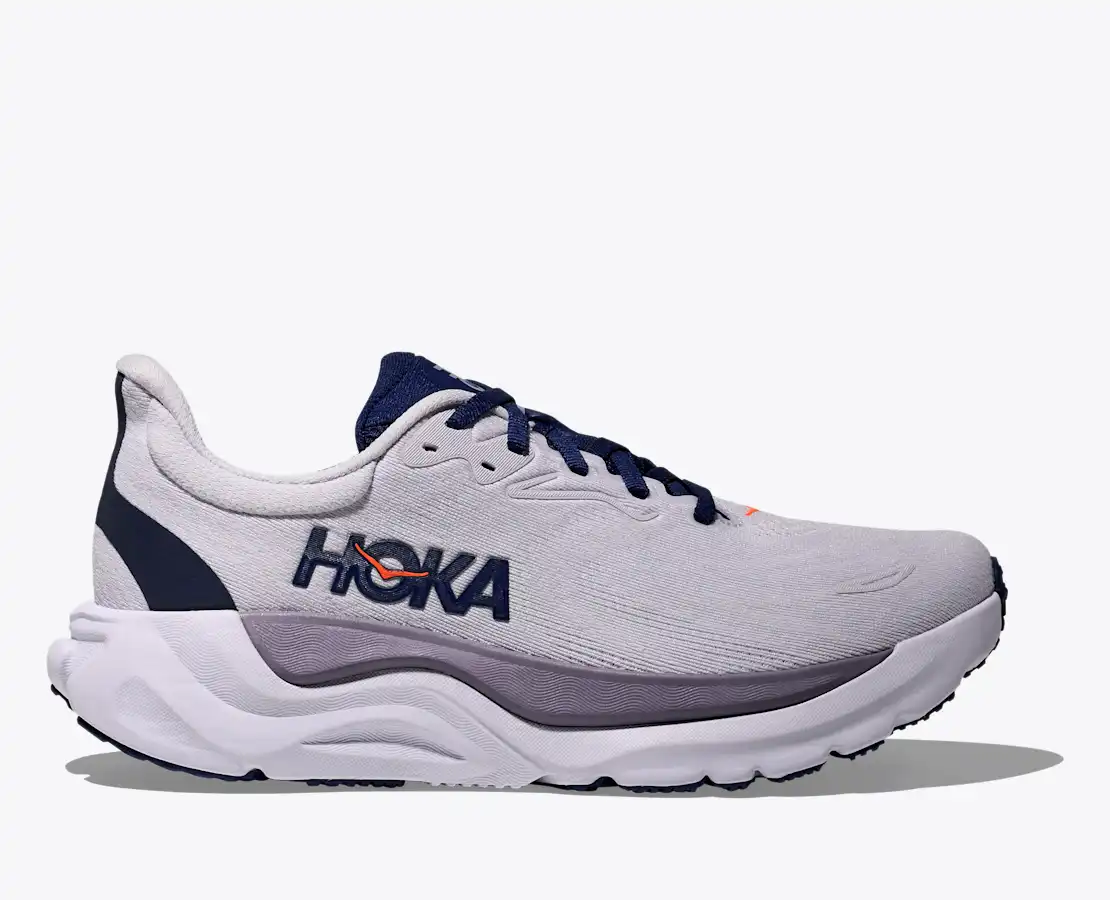
HOKA Arahi 8
$140-$155
Choose this when
You want HOKA's cushioned ride alongside overpronation correction and have found traditional stability shoes too rigid or too heavy. Running specialists describe the Arahi 8 as the stability version of the Clifton 10, with a wider toe box feel and higher stack height paired with a soft cushion feel, using H-Frame stability to keep the foot in a central position. At approximately 9oz it is lighter than the Adrenaline GTS 25, making it the stronger choice for performance-focused runners who need stability without sacrificing pace. Its 5mm drop alongside rocker geometry also makes it clinically appropriate for runners whose overpronation is accompanied by Achilles sensitivity, where the lower drop reduces tendon strain. It is APMA accepted at PID 9030 and the stronger choice for mild to moderate overpronators who prioritize a natural cushioned feel.
H-Frame technology controls overpronation without overcorrecting
Lightweight stability at only 9 oz
Ideal for flat feet and overpronation

Brooks Adrenaline GTS 25
$150-$160
Choose this when
You need the most broadly clinically validated stability system with the widest fit range. Dr. Tom Biernacki, DPM, describes Brooks Adrenaline GTS as the go-to stability shoe for overpronators, with GuideRails controlling excess motion without forcing the foot into an unnatural posture, and notes it is among the most podiatrist-recommended stability shoes globally. The Adrenaline GTS 25 offers five widths from narrow AA to extra wide 4E, while the Arahi 8 caps at 2E with no narrow or extra wide options. It also carries PDAC A5500 diabetic shoe certification that the Arahi 8 does not, making it the clinically mandated choice when overpronation coexists with diabetic neuropathy. Its 10mm drop provides more passive heel elevation, which is advantageous when overpronation is accompanied by plantar fasciitis requiring higher drop correction.
GuideRails holistic support system controls excess movement without overcorrecting
DNA Loft v3 nitrogen-infused cushioning for lightweight plush comfort
APMA Seal of Acceptance pid=9201 - PDAC A5500 diabetic shoe certified - verified directly from APMA Seal Database May 2026
The Honest Verdict
Both shoes are APMA accepted and clinically appropriate for overpronation. The Arahi 8 is the stronger choice for runners who want HOKA's cushioned platform with gentle H-Frame guidance, prefer a lighter shoe with a lower drop, and have mild to moderate overpronation. The Adrenaline GTS 25 is the stronger choice for runners who want the most broadly prescribed stability system, need narrow or extra wide width options, require PDAC diabetic certification, or have moderate to severe overpronation that benefits from the higher 10mm drop and more structured GuideRails platform. For first-time stability shoe wearers who are uncertain, the Adrenaline GTS 25's stronger podiatric prescription history makes it the safer starting point.
Answer These. Then Decide
Four quick questions that point you toward the right shoe for your specific situation.
Do you want HOKA's cushioned feel and a lighter shoe alongside your stability correction?
Do you need narrow AA or extra wide 4E width options?
Do you have diabetic neuropathy alongside your overpronation?
Is your overpronation accompanied by Achilles sensitivity where a lower drop is preferred?
Do you want the most broadly podiatrist-prescribed stability system as your starting point?
Frequently Asked
Which is better for overpronation, HOKA Arahi 8 or Brooks Adrenaline GTS 25?
Both are APMA accepted and clinically effective for overpronation. The Arahi 8 is better for runners who want HOKA's cushioned platform with lightweight H-Frame guidance, particularly for mild to moderate overpronation and runners sensitive to traditional stability shoe rigidity. The Adrenaline GTS 25 is better for runners who want the most broadly prescribed stability system with the widest fit range and PDAC diabetic certification. Dr. Tom Biernacki DPM specifically recommends the Adrenaline GTS as the go-to stability shoe for overpronators globally.
What is the difference between HOKA H-Frame and Brooks GuideRails?
H-Frame is HOKA's stability system in the Arahi 8 that uses a firmer foam structure wrapping around both the heel and arch on the medial and lateral sides, providing stability through structural enclosure and keeping the foot centered without constant medial pressure. Brooks GuideRails are reactive foam bumpers on both sides of the midsole that only engage when the foot over-rotates beyond its natural motion path. H-Frame delivers a softer, more cushioned stability feel. GuideRails deliver a more structured, planted stability feel. Both correct overpronation without rigid medial posts.
Is the HOKA Arahi 8 good for flat feet?
Yes. The HOKA Arahi 8 carries the APMA Seal of Acceptance at PID 9030 and is specifically designed for overpronation, the most common consequence of flat feet. Its H-Frame stability system provides gentle correction that feels more natural than traditional stability shoes, making it particularly appropriate for flat-footed runners who have found conventional stability shoes too rigid. It is most effective for mild to moderate overpronation. For severe flat feet with significant overpronation, the Brooks Adrenaline GTS 25, ASICS Gel-Kayano 32, or HOKA Gaviota 5 provide more aggressive correction.
Does the drop difference between 5mm and 10mm matter clinically for overpronation?
Yes. The drop difference between the Arahi 8 at 5mm and the Adrenaline GTS 25 at 10mm is clinically meaningful for two reasons. First, a higher drop passively reduces plantar fascia and Achilles stretch length, which matters when overpronation is accompanied by plantar fasciitis or Achilles tendinitis. Second, a lower drop with rocker geometry like the Arahi 8 reduces toe-off fascial demand through a different mechanism. If your overpronation is accompanied by plantar fasciitis with morning heel pain, the Adrenaline GTS 25's 10mm drop is clinically advantageous. If it is accompanied by Achilles sensitivity, the Arahi 8's lower drop is the safer choice.
Related Comparisons
Still Not Sure Which Is Right for You?
Take our guided quiz and get a personalized recommendation based on your specific foot condition, activity level, and concerns. We explain exactly why each shoe fits your feet.