Disclosure: We may earn a small commission if you purchase through links on this page. No additional cost to you. We just want to be transparent about how we fund this site.
HOKA Bondi 9 vs Brooks Glycerin 23 for Plantar Fasciitis
Rocker geometry versus heel elevation. Two premium cushion philosophies, one heel pain condition. Here is how to choose.
We don't just recommend shoes. We explain why they work for your feet.
What You Need to Know First
Plantar fasciitis occurs when cumulative stress on the plantar fascia exceeds the tissue's ability to recover, causing inflammation at its calcaneal attachment point. Two footwear mechanisms have strong clinical evidence for reducing that stress. The first is rocker geometry, which shifts the center of pressure forward during gait and reduces the mechanical demand on the fascia during toe-off, the phase when fascial tension peaks. The second is heel elevation, which reduces the stretch length of the plantar fascia and the Achilles tendon with every step by tilting the foot slightly forward. A higher heel drop physically shortens the distance the fascia must travel across the gait cycle. The Bondi 9 and Glycerin 23 each lead with one of these mechanisms, making the clinical choice between them a matter of matching the mechanism to the patient.
Both shoes carry the APMA Seal of Acceptance, both are premium cushion neutral trainers, and both are consistently recommended by podiatrists for plantar fasciitis. But the HOKA Bondi 9 and Brooks Glycerin 23 reduce plantar fascia load through fundamentally different mechanisms, and understanding that difference is what makes this comparison clinically useful rather than just a specs rundown. The Bondi 9 uses rocker geometry and a 5mm heel drop to actively roll the foot through the gait cycle, reducing the demand placed on the plantar fascia during toe-off. The Glycerin 23 uses an 8mm heel drop and DNA TUNED nitrogen-infused dual-cell foam on a traditional platform to passively shorten the working length of the plantar fascia with every step, reducing the stretch load that causes inflammation. Both approaches are evidence-based. The right choice depends on whether your plantar fasciitis responds better to active gait redirection or passive heel elevation, and whether you prefer a rocker ride or a conventional running shoe feel.
Specs Compared
Factual specs only. No brand is favored. You decide what matters most for your feet.
Which One Is Right for You?
Both are excellent. Here is the honest case for each based on your specific situation.
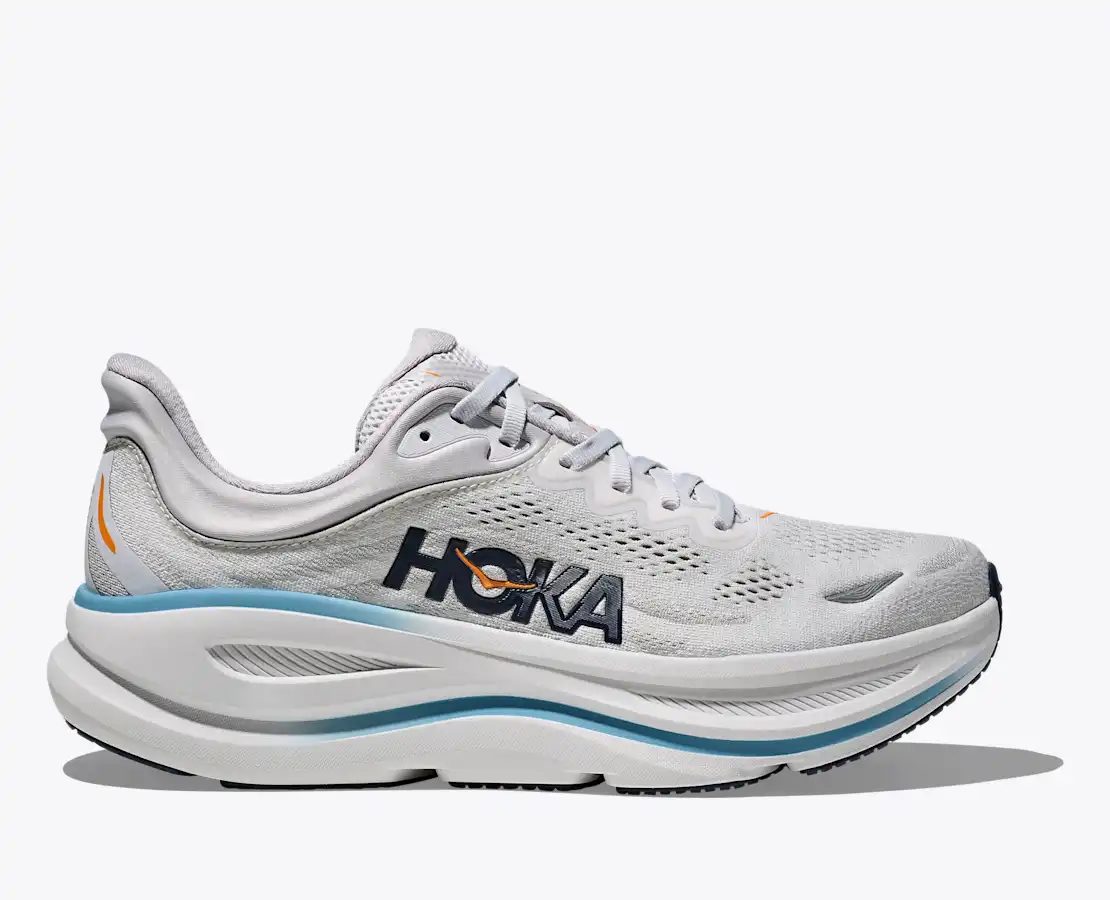
HOKA Bondi 9
$165-$180
Choose this when
Your plantar fasciitis responds to gait redirection rather than heel elevation, or you have not found relief in higher heel drop shoes. The Bondi 9's Meta-Rocker geometry actively reduces fascial tension during toe-off by rolling the foot forward without requiring the plantar fascia to generate push-off force directly. Board-certified podiatrist Dr. Bobby Pourziaee specifically noted that the Bondi 9's rocker sole reduces stress on the plantar fascia during the push-off phase of gait. It is also the stronger choice for patients over 55 with thinning plantar fat pads, standing professionals who spend long hours on hard floors, and anyone whose primary symptom is sharp heel strike pain rather than morning stiffness. The Active Foot Frame cradles the heel inside the midsole rather than on top of it, adding a stability dimension that the Glycerin 23's more traditional construction does not replicate.
Supercritical EVA foam for maximum plush cushioning
Meta-Rocker geometry reduces plantar fascia stress
APMA Seal of Acceptance pid=9031 - podiatrist top recommendation for heel pain - verified directly from APMA Seal Database May 2026

Brooks Glycerin 23
$160-$180
Choose this when
Your plantar fasciitis is driven by fascial tension from insufficient heel elevation, or you find the Bondi 9's rocker geometry too pronounced for your natural stride. The Glycerin 23's 8mm heel drop is meaningfully higher than the Bondi 9's 5mm, providing passive reduction of plantar fascia stretch length with every step. Dr. Priya Parthasarathy, APMA Communications Committee Chair, recommends the Glycerin line for plantar fasciitis patients with neutral arches specifically for its wide toe box and plush midsole. The DNA TUNED nitrogen-infused dual-cell foam delivers a consistently cushioned ride that high-mileage runners describe as a floating sensation, and its more conventional platform feel transitions naturally for runners who find rocker geometry disorienting. It is also the stronger choice for high-mileage training as the Glycerin 23 is Brooks' flagship distance trainer built for long run durability.
Nitrogen-infused DNA LOFT v3 foam provides a plush floating sensation with every step
Brooks' premium flagship neutral shoe with maximum cushioning for long distances
Engineered mesh upper wraps the foot in breathable structure for all-day comfort
The Honest Verdict
Both shoes are APMA accepted and clinically appropriate for plantar fasciitis in neutral-gaited patients. The Bondi 9 is the stronger choice when active rocker geometry and maximum impact absorption are the primary clinical needs, particularly for standing professionals and patients with severe heel strike pain. The Glycerin 23 is the stronger choice when higher heel elevation and a conventional platform feel are preferred, particularly for high-mileage runners managing plantar fasciitis during training. If you have previously worn a higher drop shoe without adequate relief, the Bondi 9's rocker geometry offers a genuinely different clinical mechanism worth trying. If you have previously worn a rocker shoe without adequate relief, the Glycerin 23's 8mm drop addresses the condition through a different pathway.
Answer These. Then Decide
Four quick questions that point you toward the right shoe for your specific situation.
Is your primary symptom sharp heel strike pain that builds through the day?
Do you prefer a conventional running shoe feel over rocker geometry?
Are you a high-mileage runner who needs a distance training shoe alongside plantar fasciitis relief?
Do you primarily stand rather than run as your main daily activity?
Have you tried higher heel drop shoes without adequate plantar fasciitis relief?
Frequently Asked
Which is better for plantar fasciitis, HOKA Bondi 9 or Brooks Glycerin 23?
Both are APMA accepted and podiatrist recommended for plantar fasciitis, but they work through different mechanisms. The Bondi 9 uses rocker geometry to reduce fascial load during toe-off. The Glycerin 23 uses an 8mm heel drop to reduce fascial stretch length across the gait cycle. If your primary symptom is sharp heel strike pain and foot fatigue from standing, the Bondi 9 is the stronger clinical choice. If you are a high-mileage runner who prefers a conventional platform and needs higher heel elevation, the Glycerin 23 is more appropriate.
What is the difference between the HOKA Bondi 9 and Brooks Glycerin 23?
The most clinically significant difference is heel drop: the Bondi 9 has a 5mm drop while the Glycerin 23 has an 8mm drop. The Bondi 9 uses Meta-Rocker geometry with a 41mm heel stack to actively redirect gait and reduce toe-off demand. The Glycerin 23 uses DNA TUNED nitrogen-infused dual-cell foam on a traditional platform to deliver premium cushioning without rocker geometry. The Bondi 9 weighs approximately 10.8 oz and the Glycerin 23 weighs approximately 10.6 oz. Both have the same width options and both carry the APMA Seal of Acceptance.
Is the Brooks Glycerin 23 good for plantar fasciitis?
Yes. The Brooks Glycerin 23 carries the APMA Seal of Acceptance and is clinically appropriate for plantar fasciitis in neutral-gaited patients. Its 8mm heel drop reduces plantar fascia stretch length passively with every step, and its DNA TUNED nitrogen-infused dual-cell foam provides premium cushioning for heel impact absorption. Dr. Priya Parthasarathy recommends the Glycerin line for plantar fasciitis patients with neutral arches. It is most appropriate for high-mileage runners managing plantar fasciitis during training who prefer a conventional platform over rocker geometry.
Does heel drop matter for plantar fasciitis?
Yes, significantly. A higher heel drop of 8 to 12mm reduces the stretch placed on the plantar fascia and Achilles tendon with every step by shortening their effective working length. This is one reason the Brooks Glycerin 23's 8mm drop is clinically advantageous for fascia tension-driven plantar fasciitis. The HOKA Bondi 9's 5mm drop is lower but compensates through rocker geometry, which reduces fascial load during the toe-off phase rather than the stance phase. Both mechanisms are evidence-based. The right choice depends on which phase of gait is driving your symptoms.
Related Comparisons
Still Not Sure Which Is Right for You?
Take our guided quiz and get a personalized recommendation based on your specific foot condition, activity level, and concerns. We explain exactly why each shoe fits your feet.