Disclosure: We may earn a small commission if you purchase through links on this page. No additional cost to you, and we only recommend products we trust. This helps us keep MySoleMatch free and ad-free. Thank you for your support!
Haglund's Deformity
Haglund's deformity is a bony prominence that develops on the posterosuperior aspect of the heel bone, the calcaneus, where it meets the Achilles tendon. Colloquially called a pump bump because of its association with rigid-backed shoes like pumps, the prominence causes repeated friction against the shoe's heel counter, leading to inflammation of the retrocalcaneal bursa. The fluid-filled sac between the bone and the tendon. The result is a painful, swollen bump at the back of the heel that worsens with any shoe that has a firm, rigid heel counter. The footwear solution is the opposite of most heel conditions: avoid rigid heel backs entirely and choose shoes that do not contact the posterosuperior heel at all.
Signs You May Have Haglund's Deformity
Visible bony bump at the back of the heel above the Achilles tendon insertion
Pain and tenderness at the posterosuperior heel that worsens when wearing rigid-backed shoes
Swelling and redness over the bony prominence
Painful, inflamed bursa between the heel bone and Achilles tendon
Pain that improves when barefoot or wearing open-backed footwear
Walk Into Your Appointment With Answers
Before Your Next Appointment
Take Your Results to Your Podiatrist
Answer a few quick questions. Takes under 2 minutes. Get personalized shoe recommendations.
Best Shoes for Haglund's Deformity | MySoleMatch
The primary footwear principle for Haglund's deformity is the opposite of most heel conditions: avoid rigid heel counters entirely. Look for shoes with soft, flexible, or open heel construction that does not press against the posterosuperior calcaneal prominence. Heel lift inserts can reduce Achilles tendon tension and tilt the calcaneus slightly forward, reducing the prominence's contact angle with the shoe back.
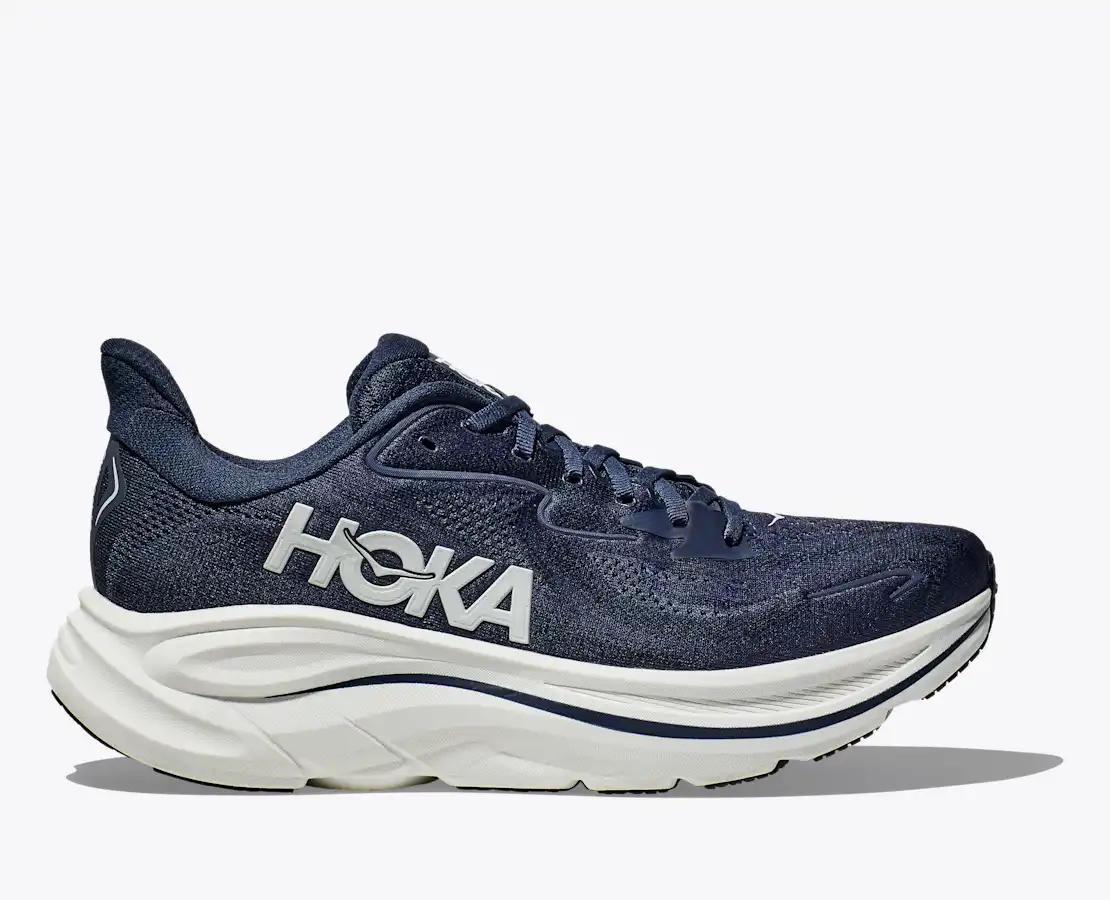
HOKA Clifton 10
$145-$160
Why this shoe
The Clifton 10 has one of the softest, most flexible heel collars in the catalog with no rigid posterior heel tab. The primary clinical requirement for Haglund's deformity management. The 8mm drop combined with cushioned heel construction reduces Achilles tension without a firm back pressing against the posterosuperior calcaneal prominence. APMA accepted.
CM EVA midsole for plush responsive cushioning
8mm heel drop reduces Achilles and calf strain
APMA Seal of Acceptance pid=9032 - lightweight daily trainer verified directly from APMA Seal Database May 2026
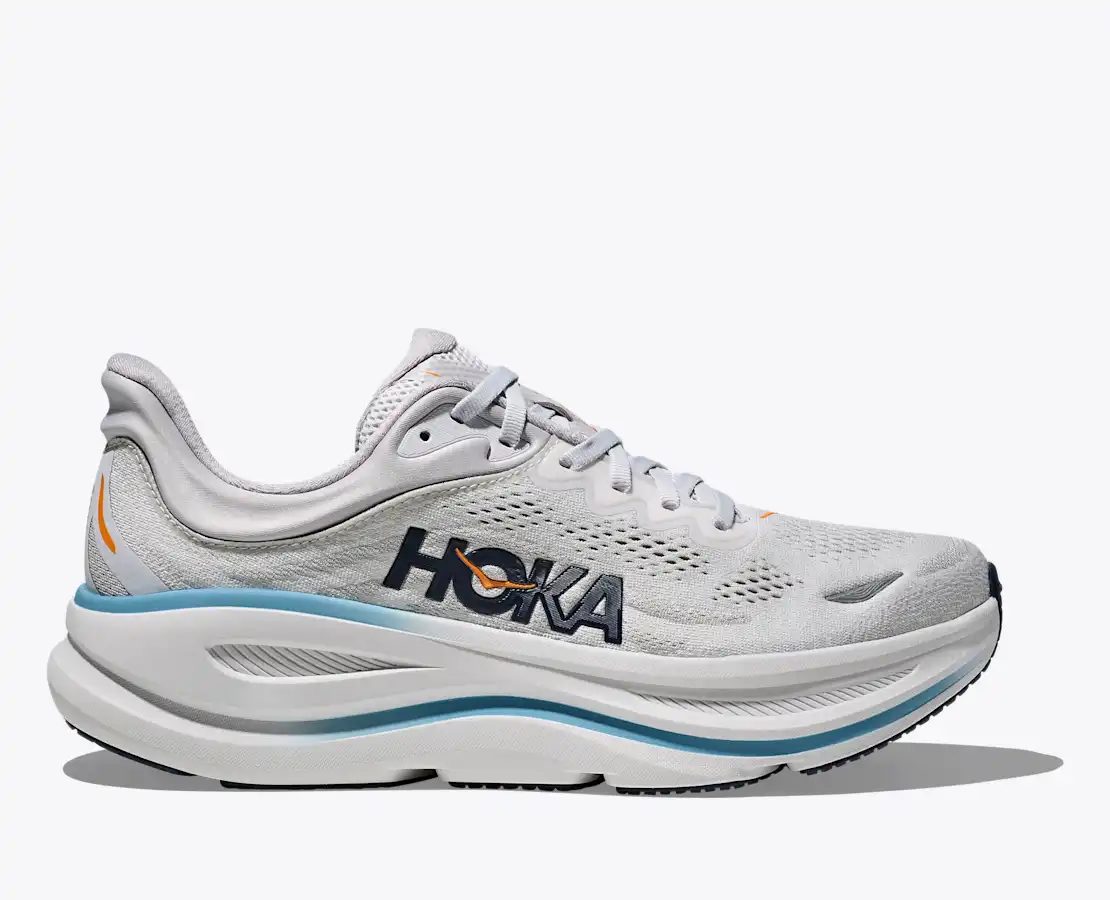
HOKA Bondi 9
$165-$180
Why this shoe
The Active Foot Frame heel construction is padded and cushioned rather than rigid, avoiding hard contact against the posterosuperior heel prominence. The 5mm drop with Meta-Rocker reduces Achilles tension load. Maximum cushioning around the heel area provides a buffer between the bony prominence and the shoe structure. APMA accepted.
Supercritical EVA foam for maximum plush cushioning
Meta-Rocker geometry reduces plantar fascia stress
APMA Seal of Acceptance pid=9031 - podiatrist top recommendation for heel pain - verified directly from APMA Seal Database May 2026

Brooks Ghost 17
$140-$155
Why this shoe
The Ghost 17's heel collar is specifically redesigned to flare away from the Achilles, verified in multiple independent reviews. This flare reduces contact pressure at the posterosuperior heel where the Haglund's prominence sits. The 10mm drop reduces Achilles tendon tension. DNA Loft v3 provides adequate heel cushioning. APMA accepted.
DNA Loft v3 nitrogen-infused foam for soft responsive cushioning
APMA Seal of Acceptance pid=9077 - PDAC A5500 diabetic shoe certified - verified directly from APMA Seal Database May 2026
Segmented crash pad for smooth heel-to-toe transitions
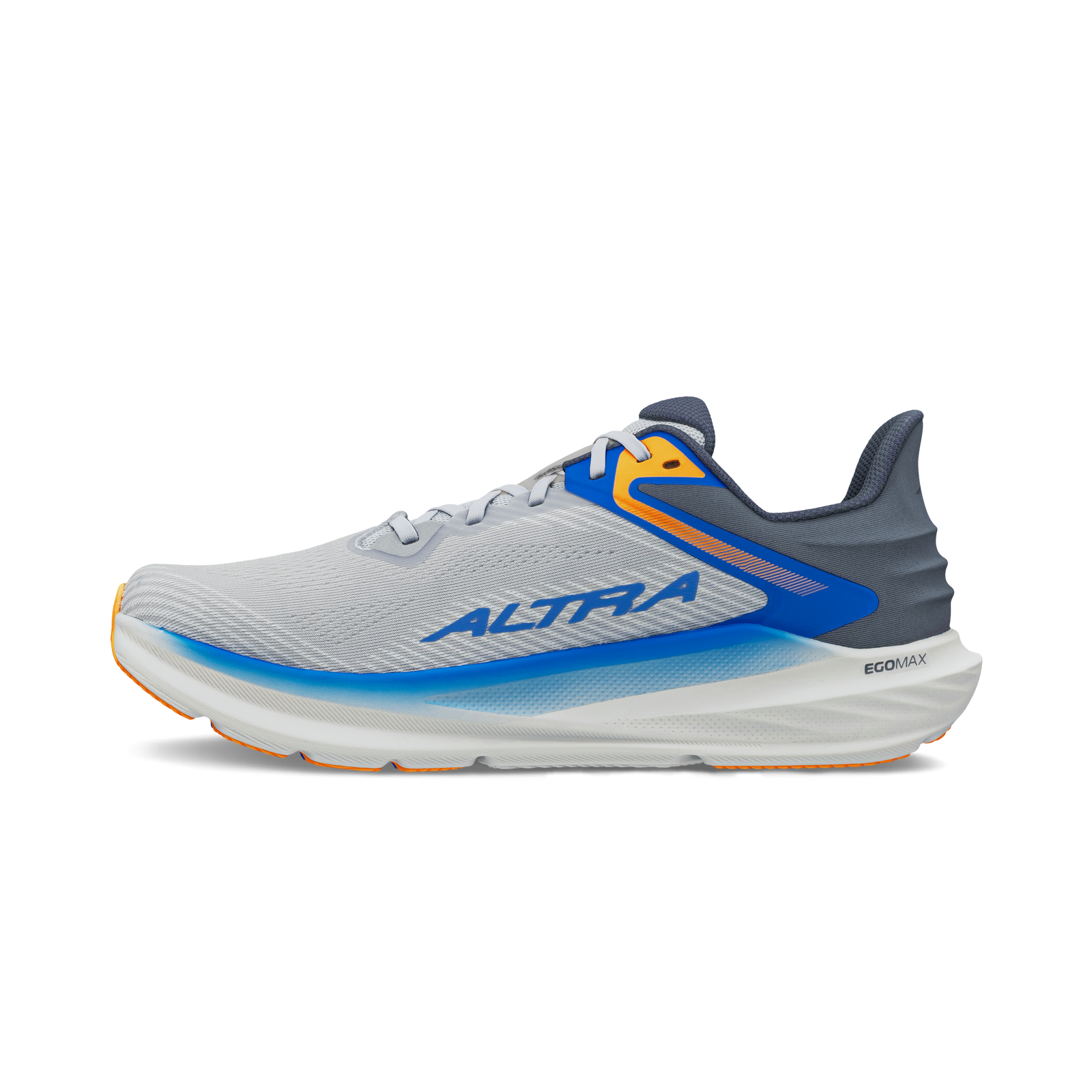
Altra Torin 8
$140-$150
Why this shoe
No rigid posterior heel tab and soft heel collar construction avoids contact against the bony prominence. Zero-drop may increase Achilles tension for some patients. A heel lift insert is recommended when wearing zero-drop shoes with Haglund's deformity. APMA accepted.
FootShape toe box with 104mm width at the ball of the foot - the widest toe box in the catalog, allowing full natural toe splay on every step
Zero-drop platform keeps heel and forefoot at equal height - promoting natural foot mechanics and reducing Achilles strain from elevated heels
APMA Seal of Acceptance pid=8835 - verified directly from APMA Seal Database May 2026
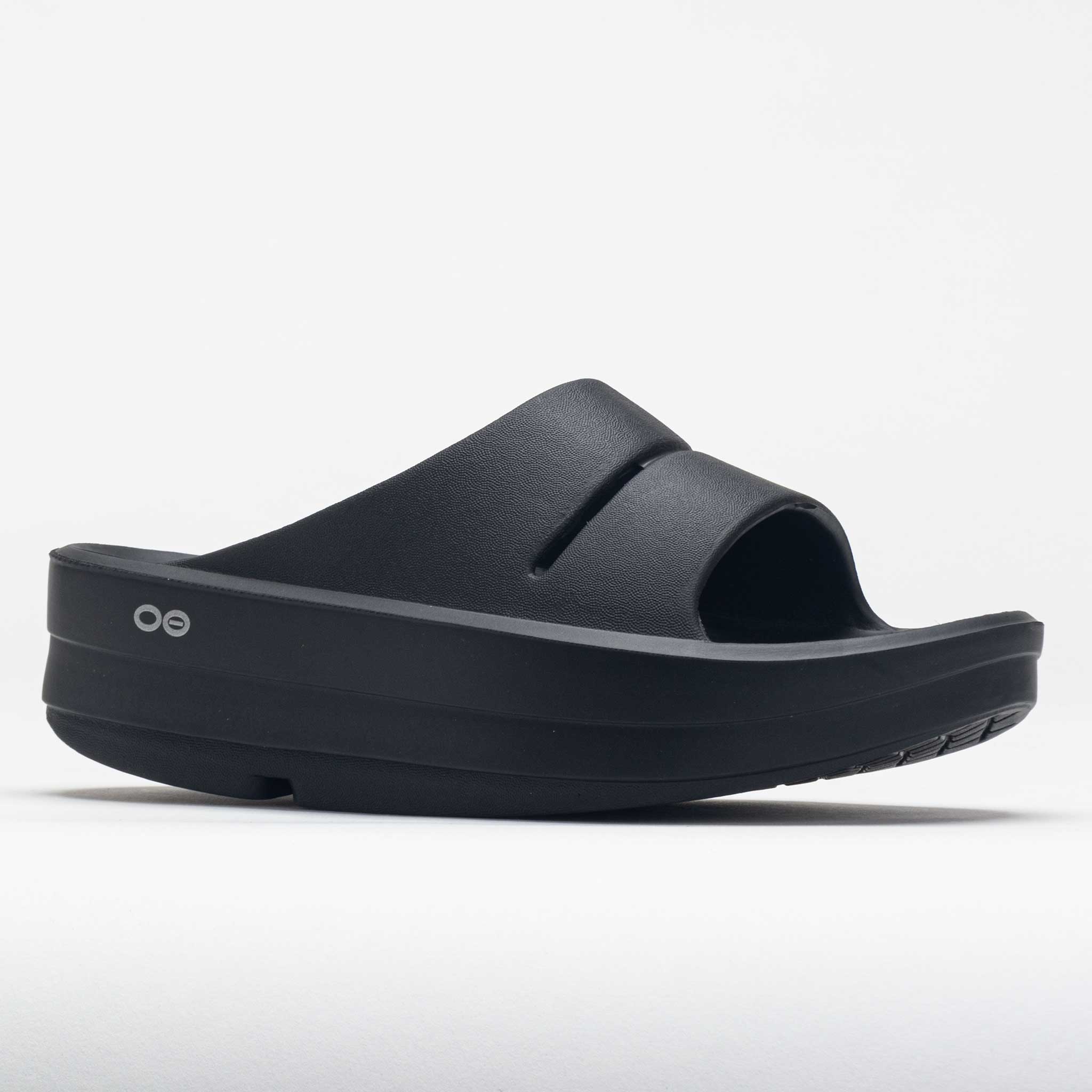
OOFOS OOmega OOahh Slide
$60-$75
Why this shoe
Open-backed slide design eliminates all heel contact entirely, making it the strongest choice for Haglund's deformity recovery and flare management. OOFoam absorbs 37% more impact than traditional foam. APMA accepted. Best used as a recovery and around-home option rather than primary activity shoe.
OOFoam technology absorbs 37% more impact than traditional footwear foam
APMA Seal of Acceptance pid=8716 - verified directly from APMA Seal Database May 2026
Closed toe design with biomechanical footbed reduces plantar fascia strain
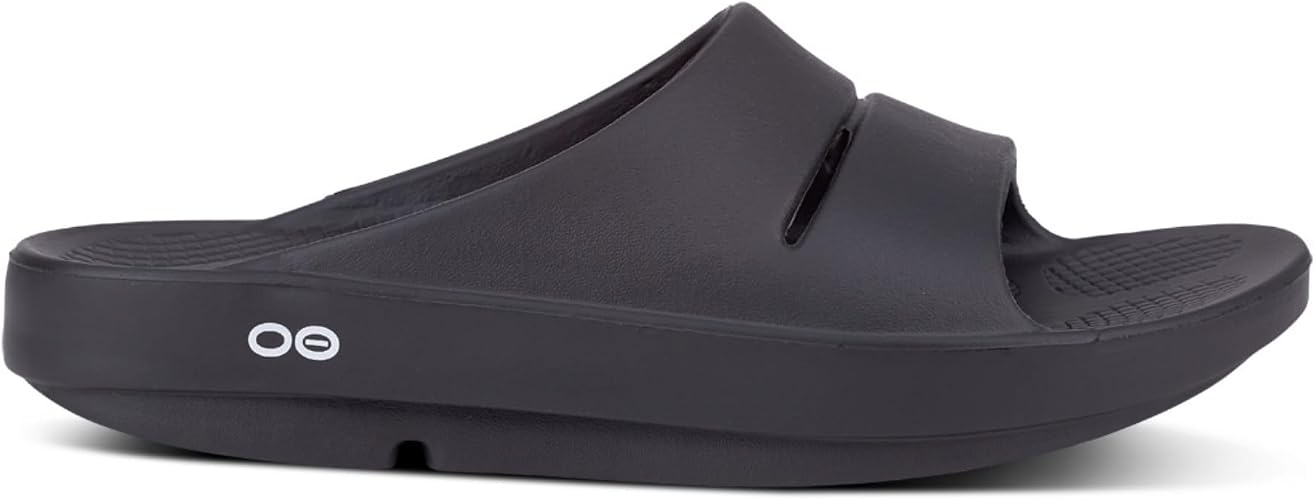
OOFOS OOahh Slide
$55-$65
Why this shoe
Open-backed recovery slide eliminates posterosuperior heel contact entirely. The best-selling OOFOS model with OOFoam absorbing 37% more impact than standard foam. APMA accepted. Ideal for post-activity recovery and transitional wear between more supportive footwear.
OOFOS best-selling recovery slide - most reviewed and most recommended OOFOS model
OOfoam technology absorbs 37% more impact than traditional EVA foam for immediate relief
APMA Seal of Acceptance pid=8711 - verified directly from APMA Seal Database May 2026

OOFOS OOriginal Sandal
$55-$65
Why this shoe
Open thong-sandal construction eliminates all contact against the posterosuperior heel prominence, avoiding the aggravation a closed heel counter would cause. APMA accepted.
OOFOS classic thong sandal - the original recovery flip-flop trusted by podiatrists worldwide
OOfoam technology absorbs 37% more impact than traditional footwear foam on every step
APMA Seal of Acceptance pid=8700 - verified directly from APMA Seal Database May 2026

OOFOS OOlala Sandal
$70-$80
Why this shoe
Open thong-sandal construction eliminates all contact against the posterosuperior heel prominence in a women's-specific fit. APMA accepted.
Women's fashion-forward recovery sandal - sleek thong design with full OOfoam cushioning
APMA Seal of Acceptance pid=8707 - verified directly from APMA Seal Database May 2026
OOfoam absorbs 37% more impact than traditional foam - recovery in a lifestyle silhouette

OOFOS OOcoozie Sport Mule
$100-$120
Why this shoe
Backless mule construction eliminates contact against the posterosuperior heel prominence while still providing closed-toe protection for cold weather. APMA accepted.
Closed-toe recovery mule - full OOfoam protection for cold weather and indoor recovery
APMA Seal of Acceptance pid=8154 - verified directly from APMA Seal Database May 2026
OOfoam absorbs 37% more impact than traditional foam with full toe coverage

Vionic Restore Slide and Thongs
$70-$90
Why this shoe
Open slide and thong construction avoids contact against the posterosuperior heel prominence while still providing genuine arch support during recovery.
APMA Seal of Acceptance pid=9423 - Vionic Restore III - verified directly from APMA Seal Database May 2026
The only APMA-accepted recovery slide in the catalog with genuine built-in arch support - VioMotion footbed provides plantar fascia offloading that flat recovery slides like OOFOS cannot match
Deep heel cup cradles the calcaneus and reduces morning plantar fascia tension - the critical window when plantar fasciitis pain is highest
What to Look for in a Shoe
Evidence-based footwear criteria specific to this condition.
Heel Drop
Recommended: 8-12mm
A moderate to high heel drop combined with a heel lift insert reduces Achilles tendon tension and alters calcaneal pitch, decreasing the degree to which the posterosuperior prominence contacts the shoe back. This is clinically opposite to conditions like Achilles tendinitis where lower drop is preferred.
Avoid below 4mm
Cushioning
high
Adequate heel cushioning reduces impact forces at the calcaneus and provides some buffer between the bony prominence and the shoe structure. The heel collar padding specifically is more important than total stack height for Haglund's management.
Avoid: minimal, barefoot-style, firm-heeled
Stability vs. Neutral
neutral
Stability is not the primary clinical requirement for Haglund's deformity management. Heel counter softness and flexibility are the priority. Most stability shoes have rigid heel counters that aggravate the condition.
Exception: Patients with concurrent overpronation may need stability features but must verify that the stability shoe does not have a rigid posterior heel tab or firm heel counter that contacts the prominence.
Width
Recommended: D, 2E
Standard to wide fit is appropriate. Width is not the primary variable for Haglund's management. Heel counter softness is the decisive factor.
Insoles and Orthotics
Heel lift inserts of 6 to 12mm placed inside the shoe reduce Achilles tendon tension and tilt the calcaneus forward, decreasing contact between the posterosuperior prominence and the shoe back. This is one of the most effective and immediate conservative interventions for Haglund's deformity.
Sources: Journal of Foot and Ankle Surgery; podiatric clinical practice consensus
What Is Happening in Your Foot
The calcaneus, or heel bone, has a posterosuperior corner where the Achilles tendon attaches. In Haglund's deformity, this corner is more prominent than normal, either due to hereditary bone shape or due to changes from chronic pressure. When a shoe with a rigid heel back presses against this prominence, it traps the retrocalcaneal bursa between the bone and the shoe, causing inflammation. The bursa swells, becomes painful, and the visible bump at the back of the heel develops.
Biomechanics
During normal gait, the heel bone undergoes a slight rocking motion inside the shoe. In a person with Haglund's deformity, the posterosuperior prominence contacts the heel counter of the shoe during this motion, creating repetitive friction. With every step in a rigid-backed shoe, the bursa is compressed and then released, causing progressive inflammation. Heel lifts alter this mechanics by changing the calcaneal pitch angle so the prominence contacts the shoe back less aggressively.
What Makes It Worse
Any shoe with a rigid, firm heel counter
High-heeled shoes that alter calcaneal pitch toward the shoe back
Running shoes with firm heel tabs or rigid posterior heel clips
Boots with rigid back structures
Prolonged walking or running in any footwear that contacts the posterosuperior heel
What Helps
Open-backed sandals or shoes that eliminate heel contact entirely
Soft, flexible heel collar running shoes or walking shoes
Heel lift inserts that alter calcaneal pitch and reduce prominence contact
Ice applied to the back of the heel after activity
Achilles and calf stretching to reduce posterior tension on the calcaneus
Common Misconceptions
Myth: Haglund's deformity requires a firm heel counter for support.
This is the opposite of clinical guidance. Firm heel counters are the primary aggravating factor for Haglund's deformity. Soft, flexible heel collars are the footwear priority.
Myth: The pump bump is purely a cosmetic issue.
While the bony prominence itself is not dangerous, the associated retrocalcaneal bursitis causes significant pain and can progress to Achilles tendon involvement if the mechanical cause is not addressed with appropriate footwear changes.
Sources: Journal of Foot and Ankle Surgery; APMA; podiatric clinical practice consensus
Haglund's Deformity by Occupation
How this condition presents differently depending on how you spend your day.
standing workers
Professional workers who wear dress shoes or formal footwear with rigid heel backs are at high risk for Haglund's deformity aggravation.
Dress codes requiring formal footwear force workers into rigid-backed shoes for full shifts. There are very few dress-appropriate options with soft heel collars.
Shoe Priority
Seek dress shoes with padded, flexible heel collars and avoid any model with a rigid back tab. Consider heel lift inserts inside dress footwear as an immediate intervention.
runners
Runners with Haglund's deformity must carefully evaluate heel collar construction before selecting training shoes.
Many performance running shoes have firm heel counters and rigid posterior heel clips designed for rearfoot stability that directly aggravate Haglund's deformity. Midsole wear also causes heel counter collapse that creates irregular pressure patterns on the prominence.
Shoe Priority
Running shoes with padded, flexible heel collars and no rigid posterior heel tab. HOKA Clifton 10 and Brooks Ghost 17 have softer heel collar construction compared to more structured models. Replace running shoes before heel counter breakdown creates irregular pressure.
Frequently Asked Questions
Related Guides and Resources
Shoe Guides
Walk Into Your Appointment With Answers
Before Your Next Appointment
Take Your Results to Your Podiatrist
Answer a few quick questions. Takes under 2 minutes. Get personalized shoe recommendations.
Not Sure Which Shoe Is Right?
Take our guided quiz and get a personalized recommendation based on your specific foot condition and lifestyle.
Start the Quiz