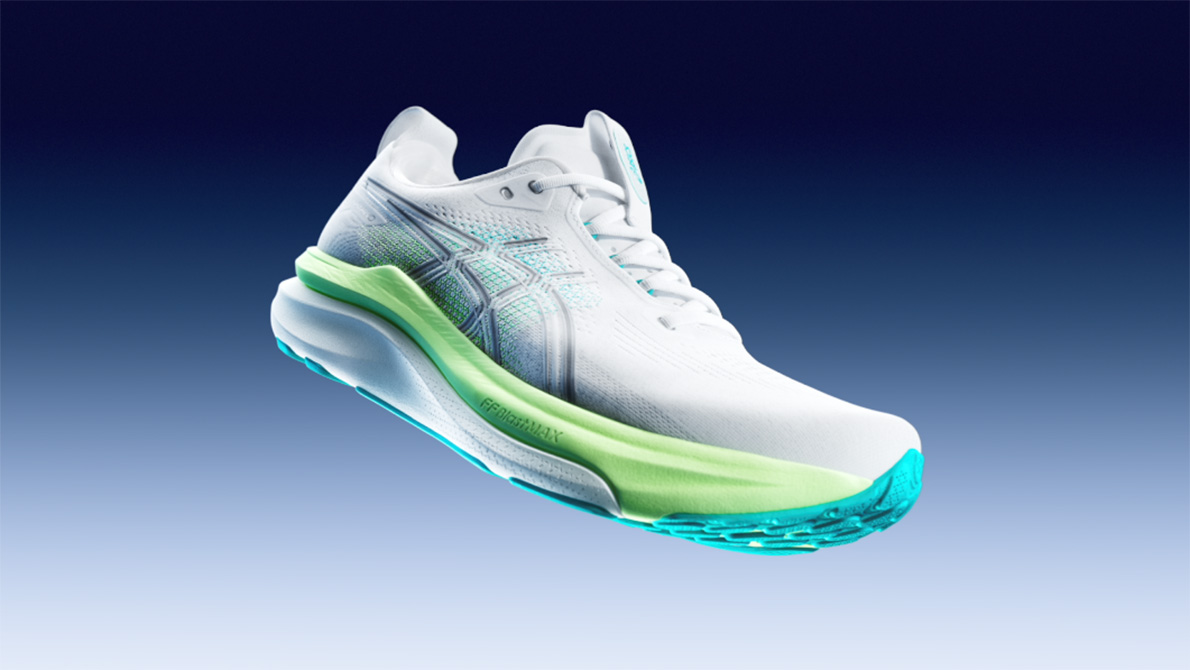
The ASICS GEL-Kayano has been the benchmark stability running shoe for 33 years. If you overpronate - if your foot rolls inward with each step - the Kayano was the answer podiatrists, running store staff, and footwear researchers reached for first. Not because it was exciting. Because it worked.
The Kayano 33, available today, changes the fundamental architecture of that answer. And if you have ever worn a stability shoe for overpronation or flat feet, what ASICS did here is worth understanding before your next purchase.
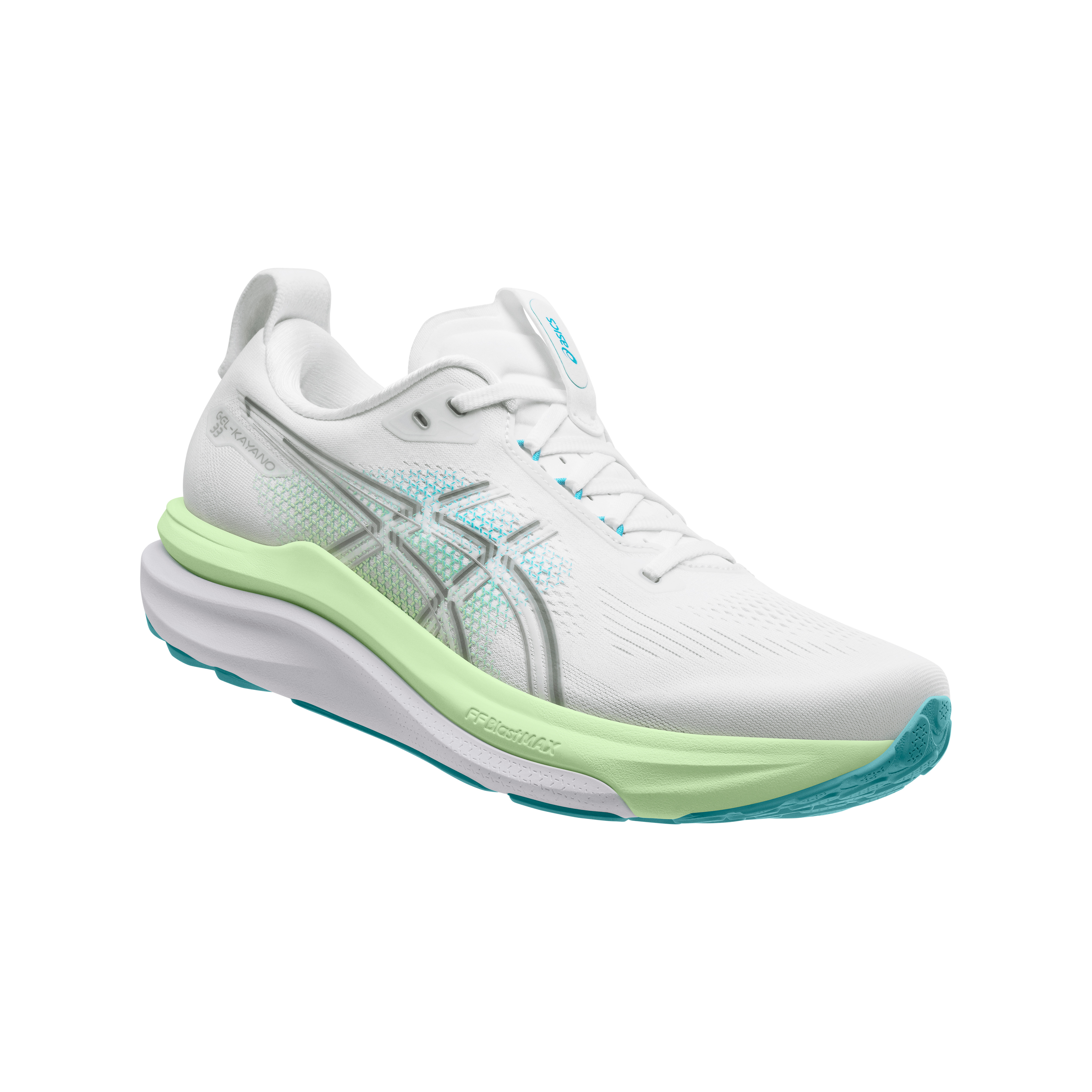
Who the GEL-KAYANO® 33 Is Built For?
Not every runner needs a stability shoe. But if your foot rolls inward during each stride or if you have spent years searching for a daily trainer that feels supportive without feeling stiff, the Kayano 33 was designed with you specifically in mind. ASICS built this shoe for runners who want cushioning and correction in the same package, without sacrificing one for the other. Thirty-three versions in, they finally found the balance.
If you are unsure whether overpronation affects your stride, ASICS pronation guide can help you identify your foot type before you buy.
What stability shoes were actually doing before
Traditional stability shoes - including every Kayano up through the 32 - used a physical correction system embedded in the midsole. In older designs this was a rigid medial post: a denser piece of material on the inner side of the shoe that resisted inward roll. The Kayano 32 evolved this with the 4D Guidance System, which used adaptive foam geometry to respond to foot pressure rather than applying a fixed block of resistance.
The underlying logic was the same across all of them: place a physical barrier or resistance structure where the foot wants to roll inward, and the shoe pushes back. This works. It has worked for decades. But it comes with a trade-off - the shoe is always correcting, whether your foot needs it at that moment or not. That constant correction is what gives traditional stability shoes their characteristic stiff, structured feel.
The shoe was always working against the foot. FluidSupport is the first system designed to work with it.
What FluidSupport actually is
FluidSupport is ASICS' new stability architecture, introduced exclusively in the Kayano 33. It replaces the 4D Guidance System entirely. The name is not marketing - it describes a genuine change in how stability is delivered.
Where previous systems used a distinct stability component as a separate layer or zone in the shoe, FluidSupport integrates stability through three elements working together:
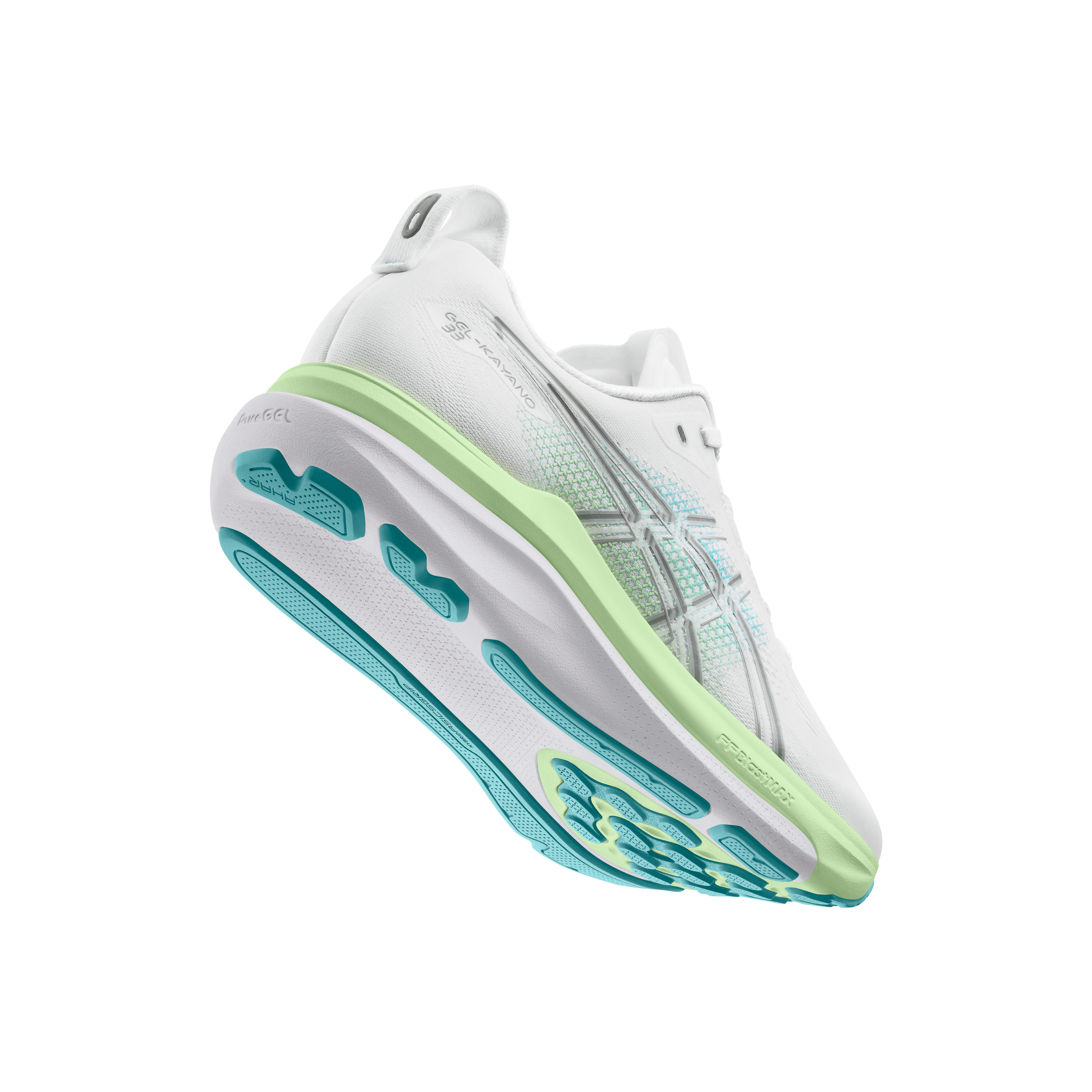
- Dual-layer foam - a first for the Kayano line. FF Blast Max foam sits directly underfoot. It is soft, responsive, and provides the cushioned feel you want at foot strike. Beneath it sits FF Blast Plus foam - the same foam that formed the core of the Kayano 32 midsole - which provides a firmer, structured base. The two foams together create a platform that cushions from above and stabilizes from below, without either foam having to compromise to do the other's job.
- Sculpted midsole geometry. Instead of a post or rail, the shape of the midsole itself guides the foot through each phase of the stride. Wider at the heel for landing stability, contoured through the midfoot to resist excessive inward roll, and shaped at the forefoot to support a natural push-off. Geometry as correction rather than embedded hardware.
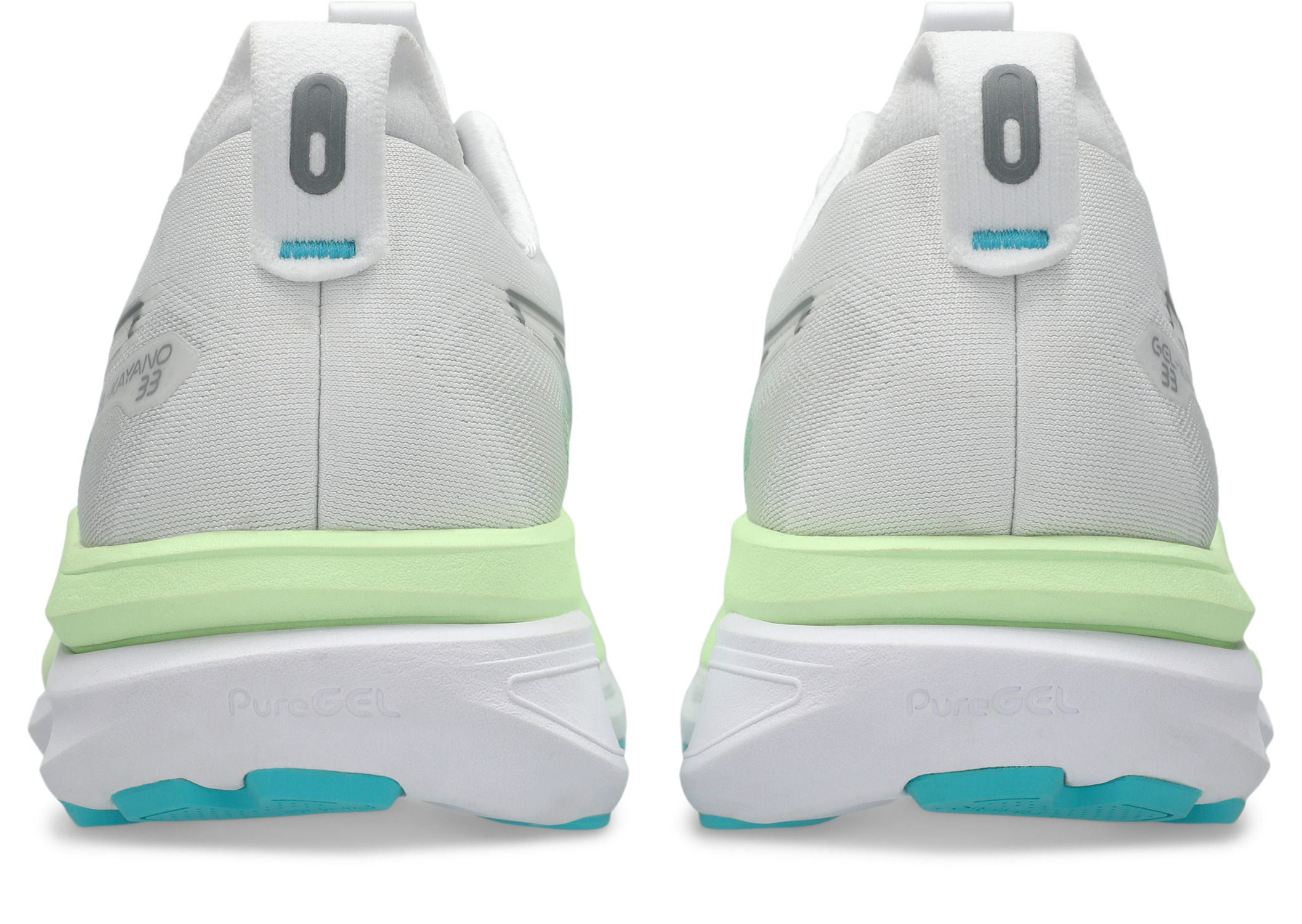
- PureGEL heel unit. Carried over from the Kayano 32, the PureGEL technology provides targeted shock absorption at initial heel contact - the moment of highest impact force for most runners. This reduces the peak loading that can irritate the plantar fascia and heel structures regardless of gait type.

An Upper Built for the Long Run.
The Kayano 33 does not just change what is underfoot - it rethinks what wraps around the foot entirely. The redesigned engineered mesh breathes where previous versions ran warm, stretches where older uppers held rigid, and fits with a precision that becomes more noticeable the longer you are out there. At mile one it feels like a good shoe. At mile ten it feels like the right one.
What this means for overpronation and flat feet
Two Foams. One Job. Done Better Than Ever.
If you wear stability shoes for overpronation or flat feet, the change matters in a specific way. The 4D Guidance System was adaptive but still fundamentally reactive - it responded to pressure you were already applying. FluidSupport attempts to be anticipatory, guiding the foot along the correct path before excessive pronation occurs rather than resisting it after.
For mild to moderate overpronators - which is the majority of people who choose stability shoes - this approach should feel noticeably more natural underfoot. Less push-back. Less of the slight stiffness in the midfoot that tells you the shoe is doing something. More of the sense that the shoe simply fits the way you move.
For severe overpronators, this is worth discussing with a podiatrist before making the switch. The Kayano 33 is still firmly a stability shoe and its correction capacity is clinically appropriate for most overpronation presentations. But if your gait analysis shows aggressive inward collapse that has historically required a firm medial post, the more progressive correction philosophy of FluidSupport warrants a proper fitting before committing.
The rest of the Kayano 33 - what changed, what stayed
The midsole architecture is the headline, but the Kayano 33 is not just a foam story. A few other changes worth noting:
- Upper redesign. The engineered mesh has been rebuilt to improve breathability, adaptive fit, and toe room. The Kayano 32 ran warm for some runners in warmer conditions. The 33 addresses this directly with a lighter mesh construction that also accommodates a wider natural toe splay during push-off.
- Outsole. The Hybrid ASICSGRIP outsole - combining ASICSGRIP rubber with AHARPLUS materials - carries over from the 32, though the geometry has changed. The longitudinal cutout is gone. Oval-shaped pods replace it. Traction and durability characteristics are comparable.
- Stack height and drop unchanged. 40mm heel stack, 8mm drop. Same as the 32. If you have been running in the 32 and your gait is dialed in at that geometry, you will not need to re-adapt to the 33.
- Weight unchanged. 298g for men's size 9, 259g for women's size 8. The dual-layer foam adds no measurable weight penalty over the 32.
- Price. $170 USD. Consistent with the Kayano 32 pricing tier.
Where the Landing Begins
The heel takes the first hit on every stride. PureGEL is placed exactly where that impact is highest - not spread across the midsole as a marketing feature, but targeted where the foot needs it most. Softer than standard GEL and more precise in its placement, it is the part of the Kayano 33 you will feel first and remember longest.
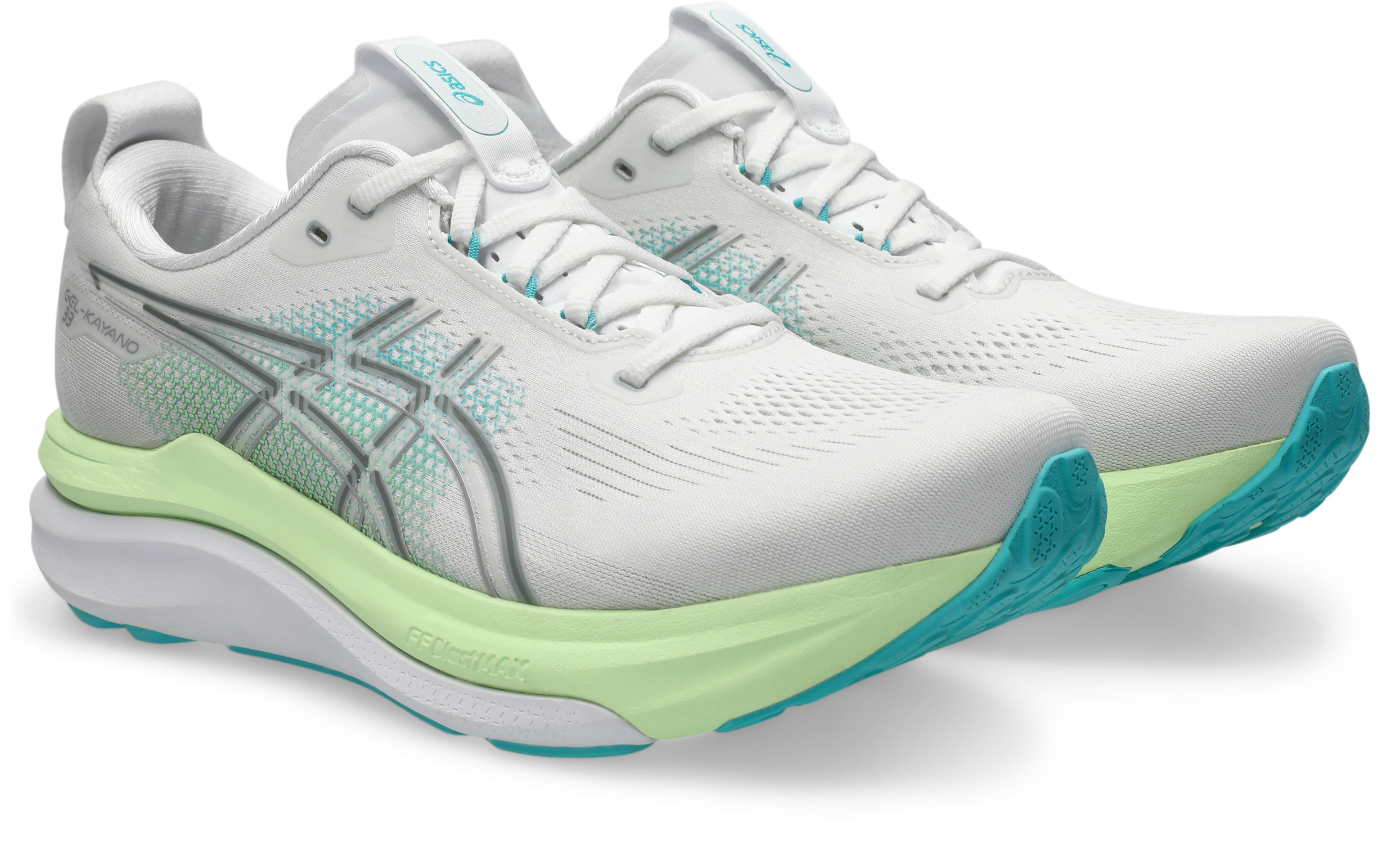
Two Systems. One Seamless Shoe.
The upper adapts to the foot. The outsole adapts to the ground. Neither fights the other. The engineered mesh moves with every flex while ASICSGRIP holds its grip across wet pavement, worn track, and everything in between. Most shoes get one of these right. The Kayano 33 gets both.
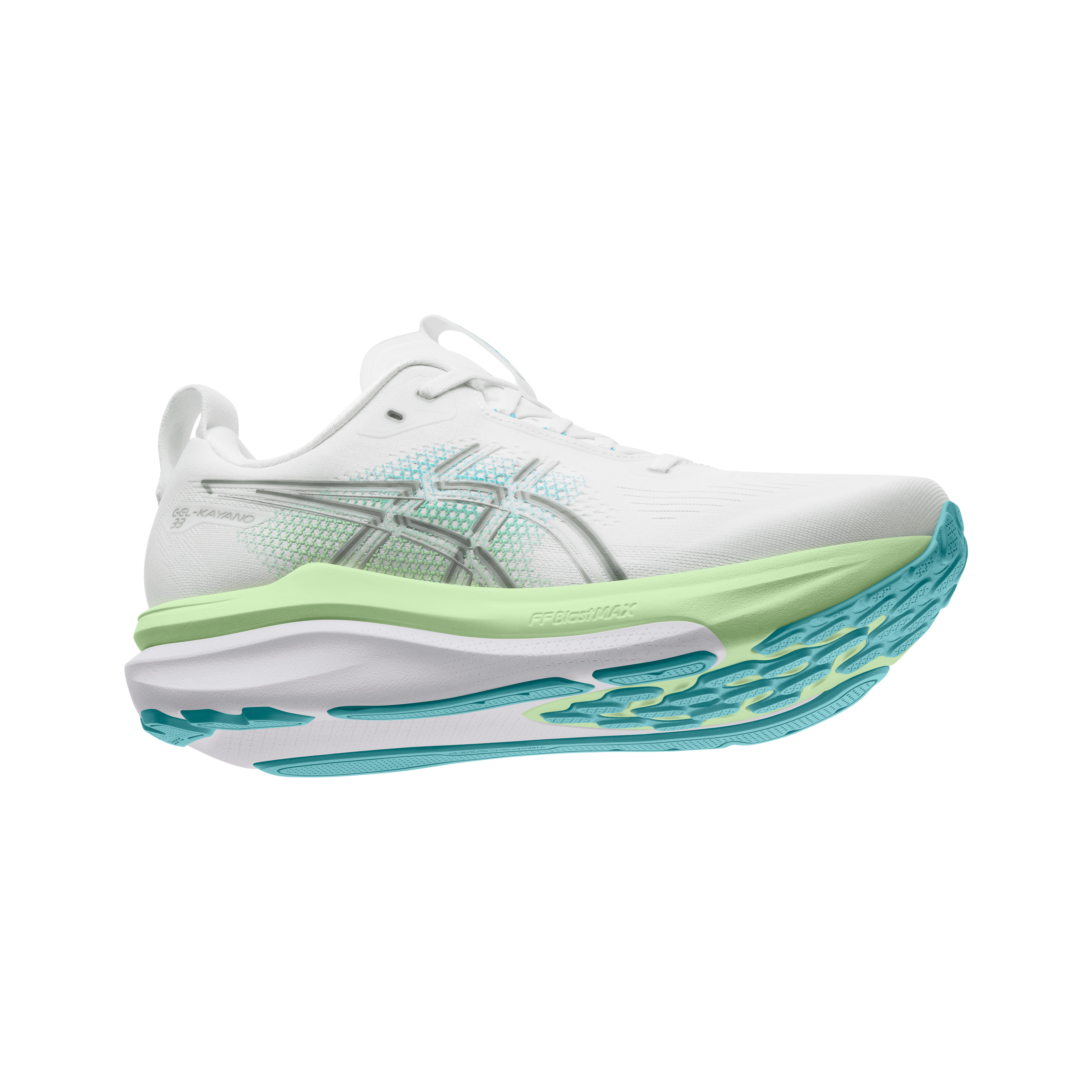
Grip That Does Not Ask Permission
Traction on a stability shoe is often an afterthought. The ASICSGRIP outsole is not. The new oval pod geometry replaced the longitudinal cutout of the 32 for a reason. Better flex, better ground contact, better durability across the mileage that stability shoe wearers actually put in. The ground does not choose when to be wet. Neither should your grip.
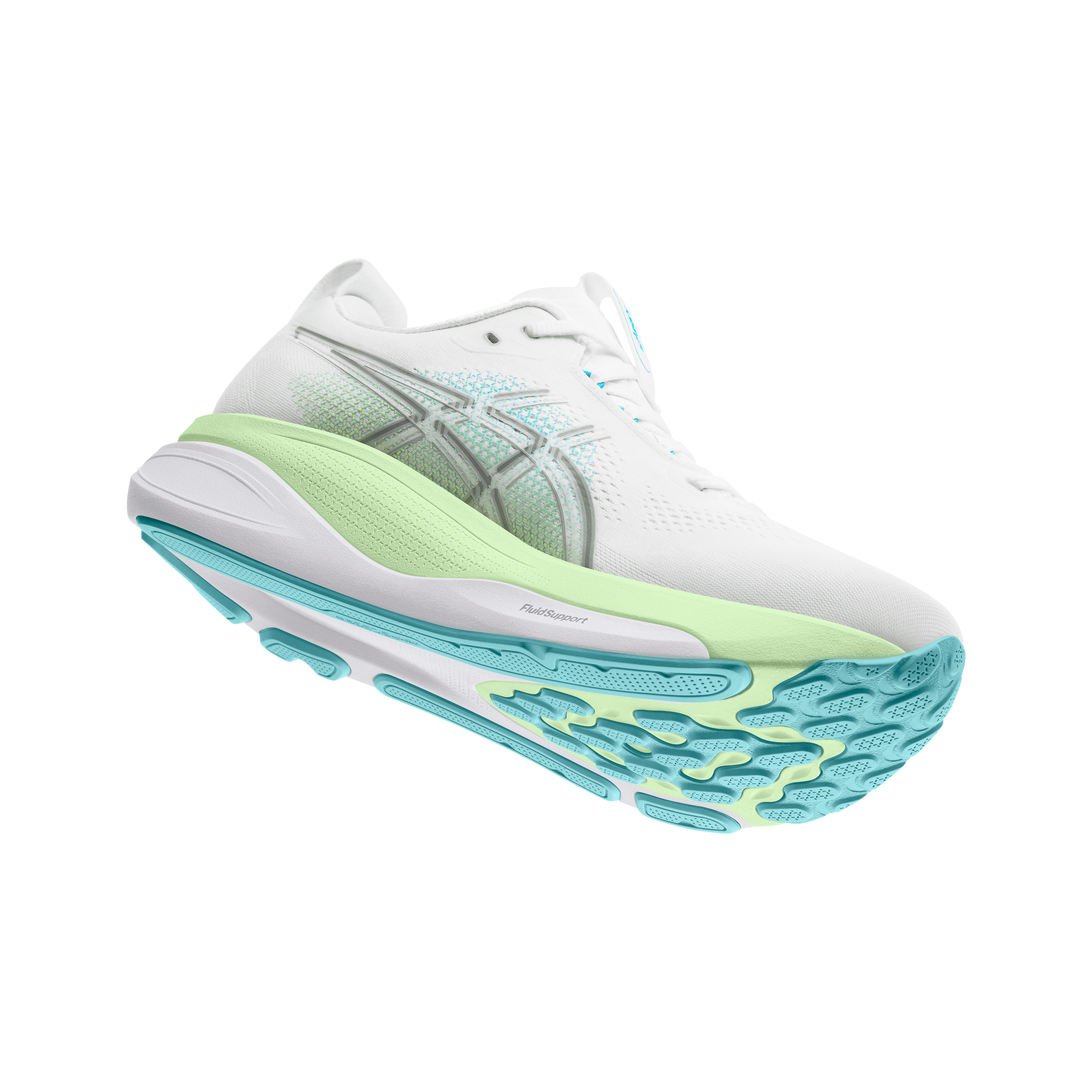
This Is What Guided Stability Looks Like
Not a post. Not a rail. Not a block of denser foam fighting your foot's natural movement. FluidSupport is built into the geometry of the shoe itself - visible in the shape of the midsole, the contour through the midfoot, the wider heel base. Stability you can see before you even put it on.
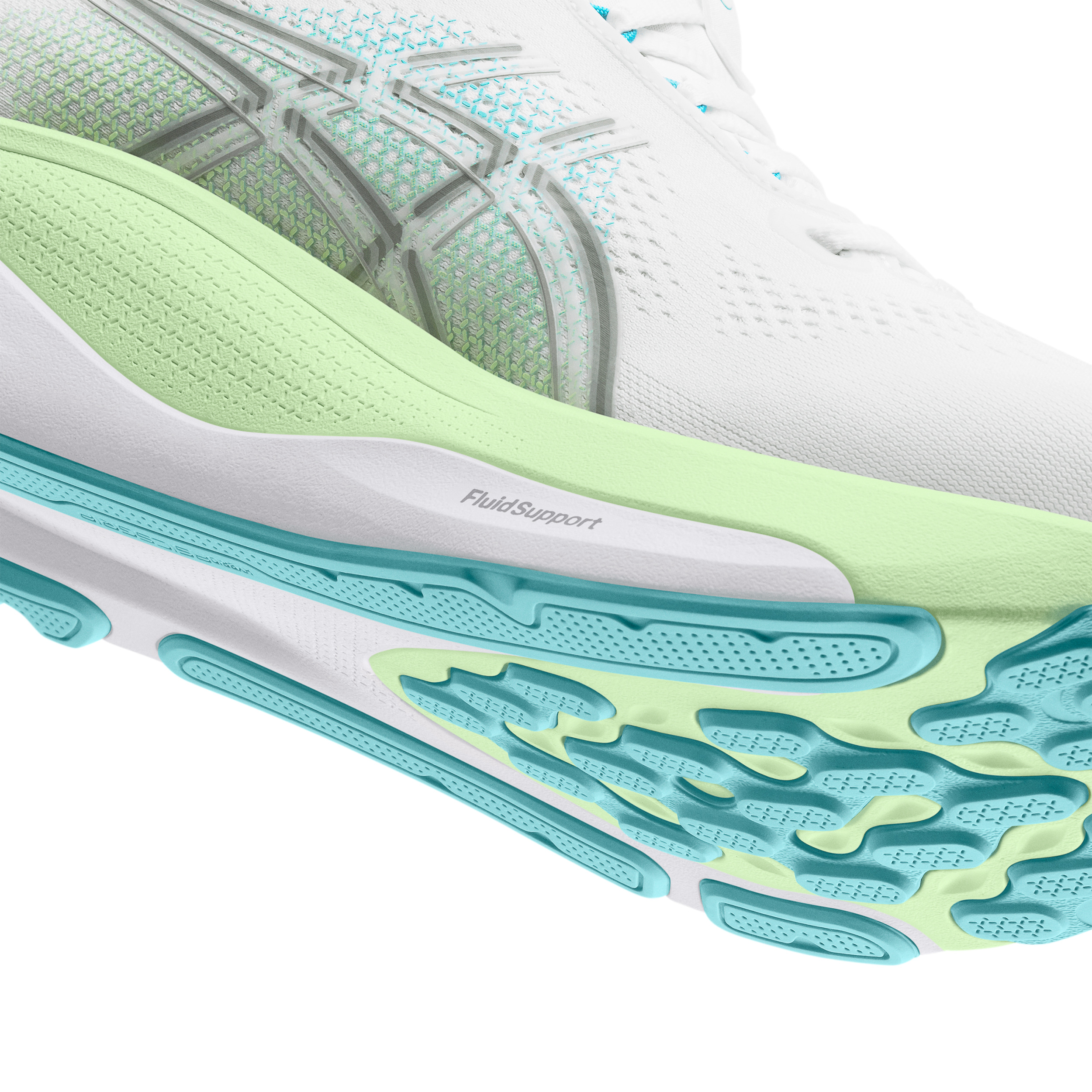
The End of Constant Correction.
For three decades, stability shoes operated on a simple premise - build something into the shoe that pushes back when the foot rolls inward. FluidSupport throws that premise out entirely. Instead of resistance, it uses geometry. Instead of correction after the fact, it uses guidance from the first step. The foot is not being managed. It is being supported the way it actually wants to move. That is not a small update to the Kayano line. That is a different philosophy about what a stability shoe is supposed to do.
For people managing chronic foot conditions, such as plantar fasciitis, flat feet, overpronation, or heel pain, APMA status is a useful baseline signal, because the Seal of Acceptance means a specific product was reviewed by a committee of podiatrists. As of October 2026, the Kayano 33 does not appear in the APMA Seal Database, so we do not claim APMA status for it. The earlier Kayano 32 does have a record there, but the Seal applies to the exact product reviewed, and the 33 replaces the 4D Guidance System with FLUIDSUPPORT, so we do not carry that listing over. We will update this article and the MySoleMatch shoe profile if APMA lists the 33.
If you are managing a specific foot condition and considering the Kayano 33 as part of a treatment plan, a podiatrist visit remains the right first step. FluidSupport is a meaningful advancement in stability footwear - but no shoe replaces a clinical evaluation for complex presentations.
Kayano 33 vs Kayano 32 - should you upgrade?
If you are currently in the Kayano 32 and running well, the honest answer is: not necessarily right now. The 32 remains a clinically excellent stability shoe. Its 4D Guidance System is effective and well-validated across multiple model generations. Running shoes do not expire with the launch of a successor.
The case for upgrading to the 33 is strongest if any of the following apply:
- Your Kayano 32 has significant mileage and is due for replacement regardless.
- You found the 32 slightly stiff in the midfoot and wanted a more natural feel.
- You ran warm in the 32 upper and wanted better breathability.
- You are buying a first stability shoe and want the current architecture.
The bottom line
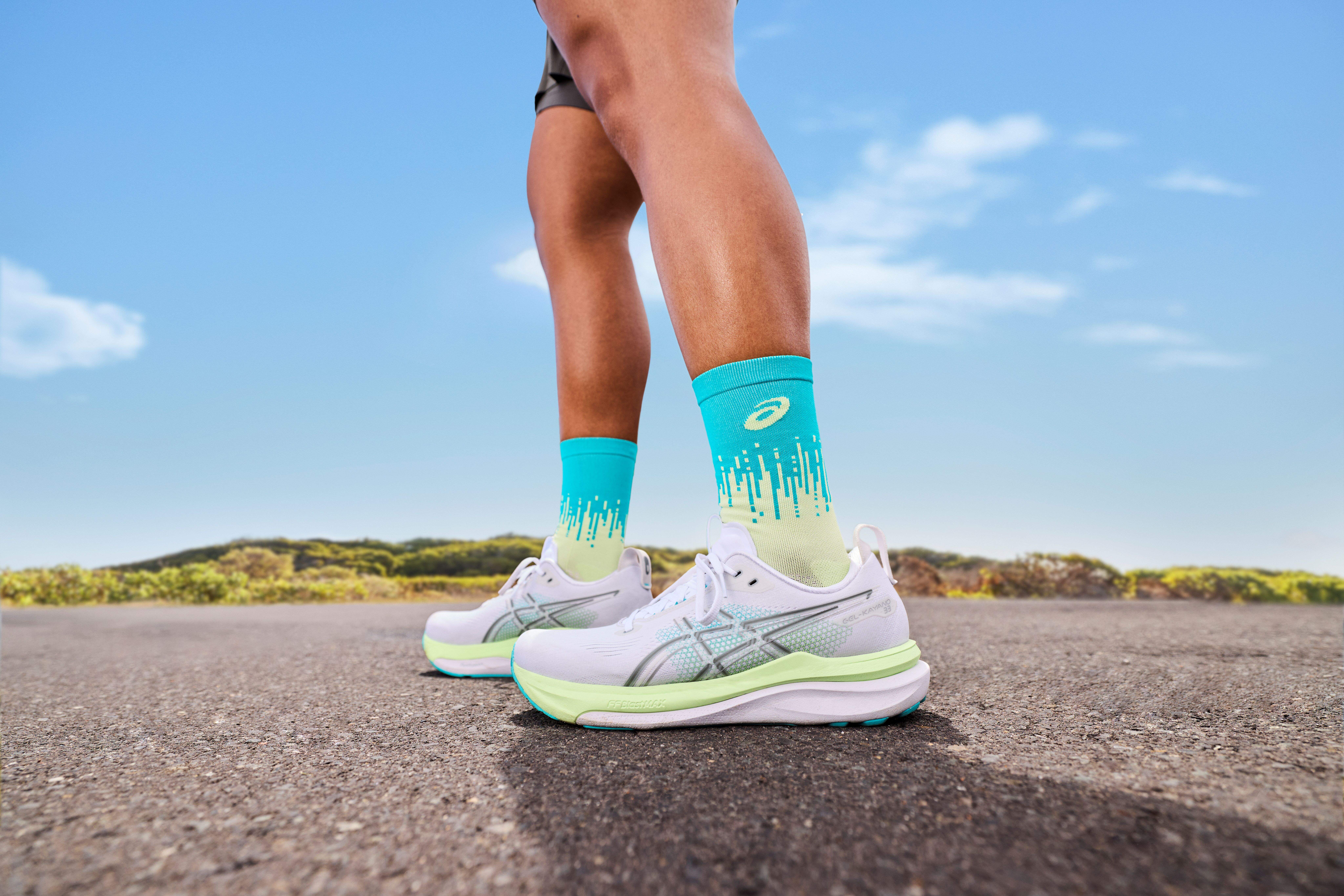
Fit That Earns Its Place at Mile Twelve.
Most running shoes fit well in a store. The Kayano 33 upper was designed to fit well when it matters - deep into a long run when feet have swelled, when heat has built up inside the shoe, and when every small discomfort becomes a large one. The stretch is there when you need it. The structure holds when you do not. That balance is harder to engineer than it sounds, and it shows in how differently this upper behaves compared to what came before it.
ASICS built 32 versions of the Kayano before changing the core stability architecture. That is not a company making change for its own sake. FluidSupport represents a genuine shift in how the industry's most proven stability franchise thinks about correction - from resistance to guidance, from constant intervention to geometry-driven support.
Whether that shift is right for your foot depends on your specific biomechanics. What is not in question is this: the Kayano 33 is the most technically advanced version of a shoe that has been the podiatric recommendation standard for three decades. If you are buying a stability shoe in 2026, this is the benchmark.
Use the MySoleMatch shoe finder quiz to see whether the Kayano 33 matches your specific condition and foot profile, or view the full Kayano 33 shoe detail page for complete specs, APMA status, and condition-matched recommendations.