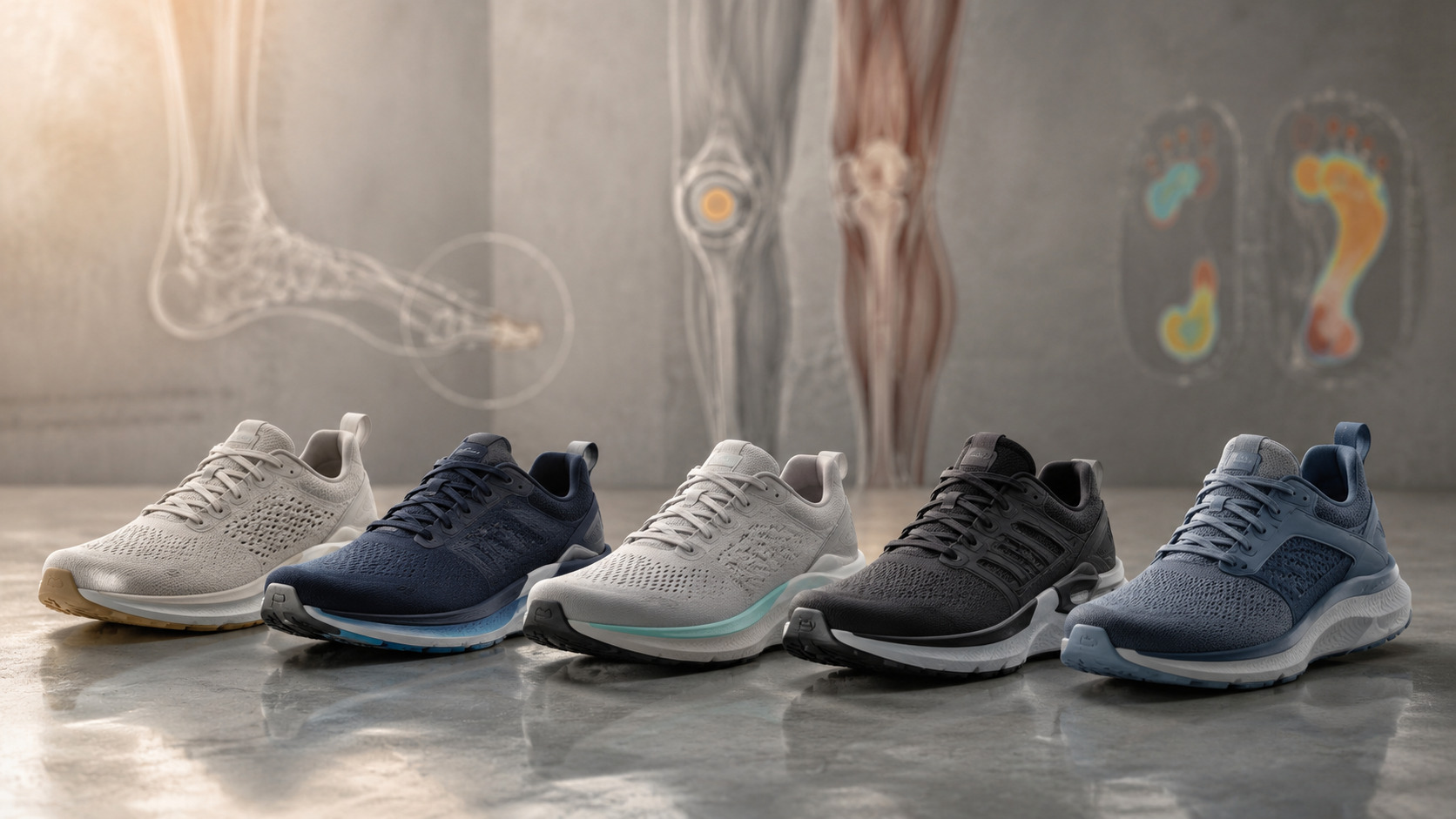
You did the research. You read the reviews. You went to the running store, described your symptoms, and walked out with a shoe that came highly recommended. You spent more than you wanted to. And your feet still hurt.
This is not a story about cheap shoes or bad advice. This is a story about a mismatch and it happens to people who did everything right.
A good shoe and the right shoe are not the same thing
The footwear industry talks about support, cushioning, stability, and comfort as though these are universal goods. Things that every foot needs more of. They are not. Every one of those features changes how force moves through your foot. And depending on your specific condition, those changes can help, be neutral, or actively make things worse.
A shoe that is genuinely excellent for one person can be genuinely harmful for another. Not because the shoe is defective. Because the foot wearing it has specific biomechanical needs that the shoe was never designed to meet.
The research supports this directly. A clinical study of plantar fasciitis patients found that 83.2% were wearing inappropriate shoes for their condition. Not uncomfortable shoes. Not worn-out shoes. Inappropriate ones, being shoes that failed to address what that specific condition actually required from footwear. Many of those patients believed they were wearing the right thing. They were not.
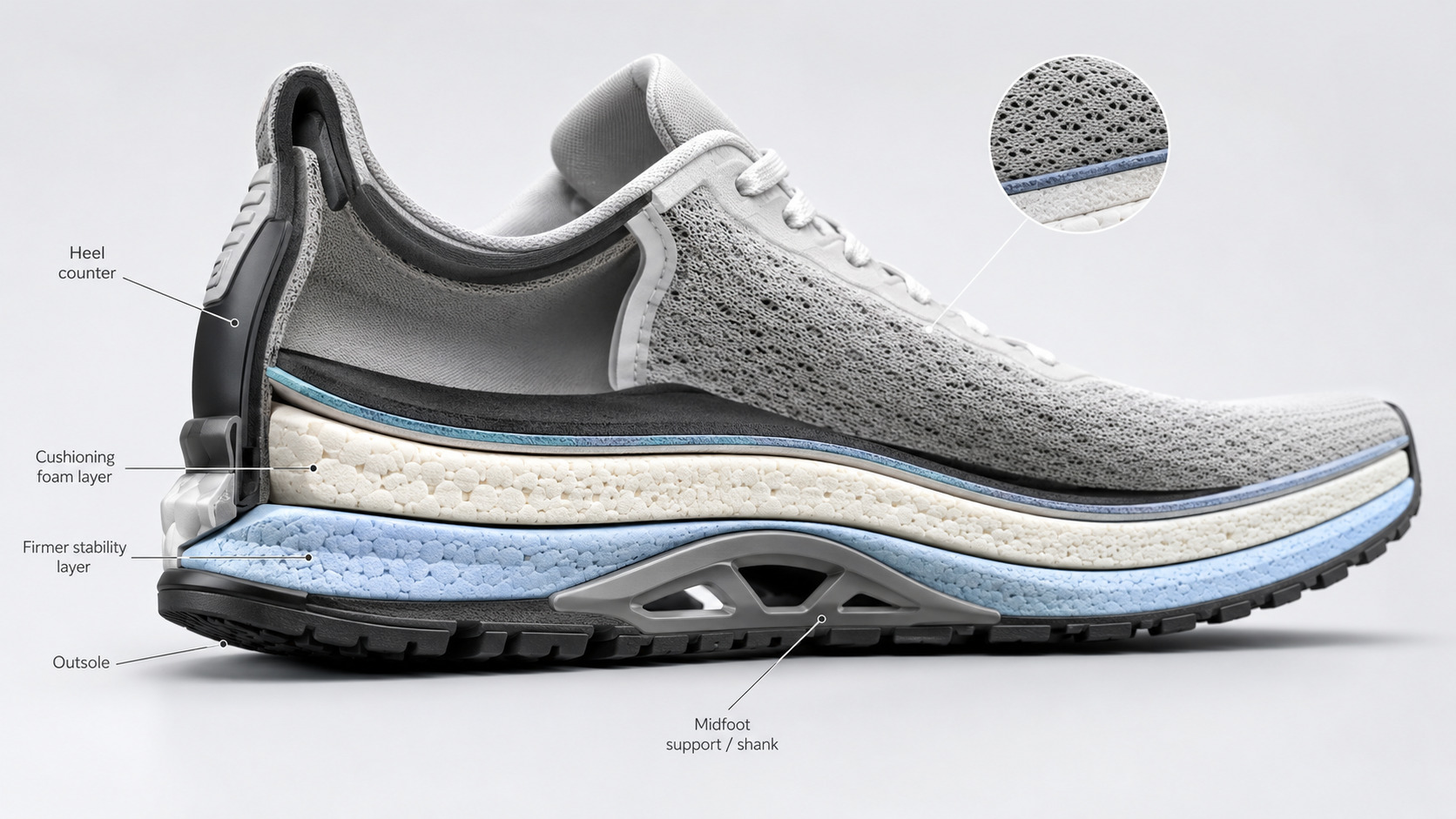
Two shoes can look identical from the outside and behave completely differently underfoot.
Stack height, midsole density, heel drop, medial post, and heel counter stiffness all determine what a shoe actually does to your foot with every step. These are not marketing variables. They are biomechanical ones.
The four mismatches that keep people in pain
These are not edge cases. They are the four patterns that show up most consistently when the shoe being worn does not match the condition being managed. If your feet are still hurting in shoes you were told would help, one of these is likely why.
The cushion trap
Maximalist cushioning shoes, the thick-soled, high-stack models that dominate the supportive footwear conversation, are genuinely excellent for a specific set of conditions. Standing all day on hard floors. General fatigue. Some presentations of plantar fasciitis. For those use cases, the additional shock absorption earns its place.
For Achilles tendinitis, the picture is more complicated. A high stack height changes the geometry of every step. It increases the ankle's range of dorsiflexion demand which is the forward bend of the ankle as the shin moves over the planted foot. More range of motion required means more eccentric load on a tendon that is already inflamed. The shoe feels luxurious underfoot. The Achilles does not agree.
The same logic applies to people with ankle instability. A very soft, compressible midsole allows the foot to sink and tilt with each landing. For a foot that already struggles to maintain a stable platform, that sink creates the very instability the shoe was supposed to prevent. Softness and stability are different things. A shoe can have one without the other.
The stability overcorrection
Stability and motion control shoes are built around a single assumption: that the foot wearing them overpronates, rolls inward excessively during the gait cycle. The medial post, the guide rails, the firmer inner midsole - all of it exists to counteract that inward roll.
Now put that shoe on a foot with high, rigid arches. That foot does not overpronate. It supinates and rolls outward. It already has more arch stiffness than average and a natural tendency to load the outer edge of the foot. A stability shoe built to prevent inward rolling actively fights the way this foot moves. Every step the foot takes, the shoe pushes back against its natural mechanics. The result is not support. It is resistance.
People with high arches managing metatarsalgia - ball-of-foot pain caused by concentrated pressure on the metatarsal heads, often need a neutral shoe with deep cushioning in the forefoot, not a stability platform that redirects load toward exactly where it hurts. A well-intentioned stability shoe recommendation can take a manageable condition and make it significantly worse.
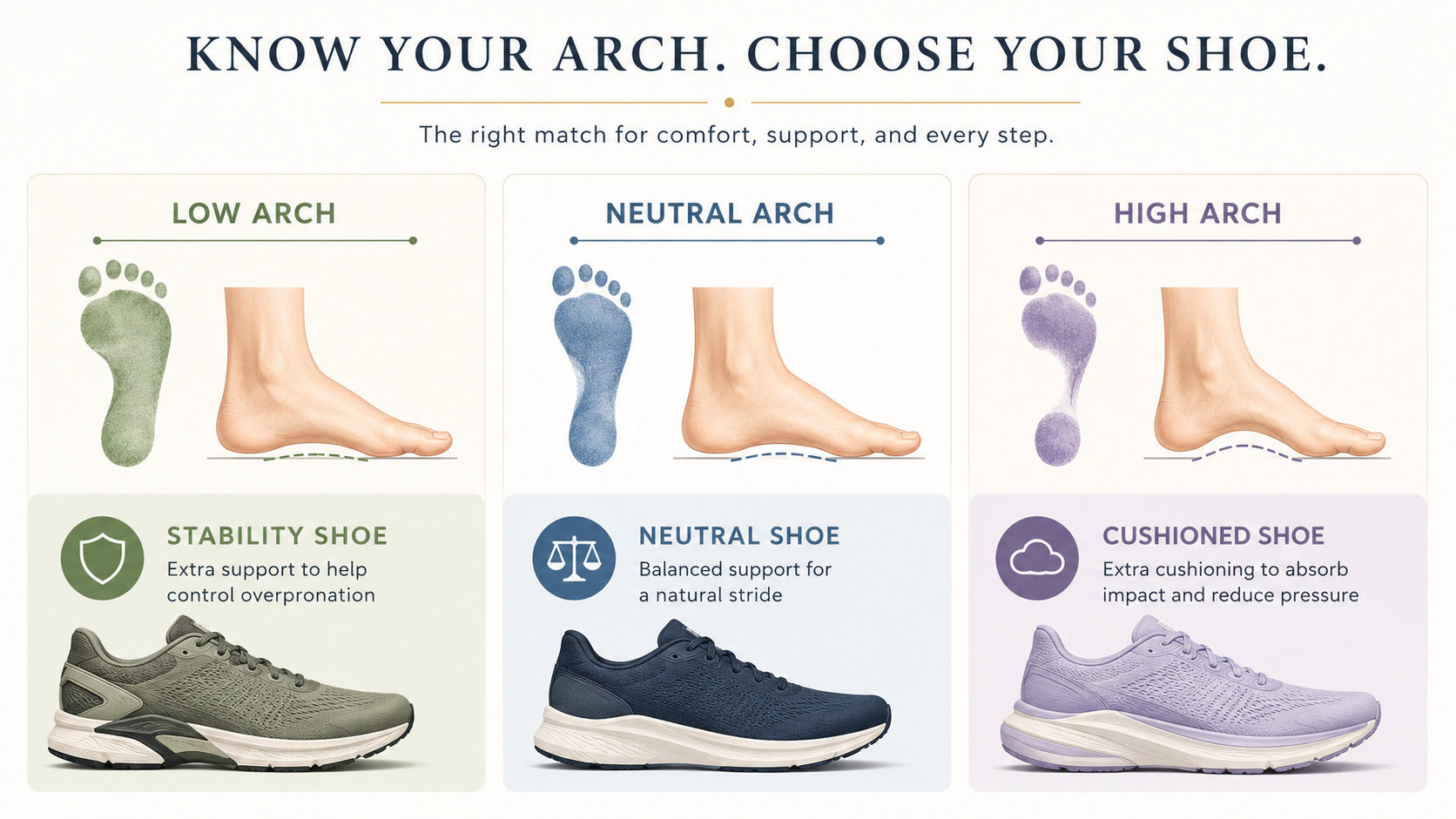
The same shoe category works for some feet and works against others.
Arch height, flexibility, and pronation pattern all determine which shoe features help and which ones create new problems. A stability shoe on the wrong foot type is not a neutral choice - it is an active one.
The softness illusion
When feet hurt, the instinct is to reach for the softest shoe available. It makes intuitive sense. Pain signals damage. Softness feels protective. The problem is that softness and support are not the same thing, and for several of the most common foot conditions, a soft shoe without structure is one of the worst things you can put on your feet.
Plantar fasciitis is the clearest example. The plantar fascia, which is the thick band of tissue running from heel to toe along the bottom of the foot, is under load every time weight is placed on the foot. What determines how much load it carries is largely how well the arch is supported. A soft, flexible shoe without meaningful arch support allows the arch to flatten with every step. The fascia stretches further. The inflammation is fed, not relieved.
The same mechanism applies to flat feet and overpronation. A flat foot needs structure to prevent that arch collapse. A maximally soft shoe offers comfort without control. The foot sinks into the cushioning and the arch drops further than it would on a firmer platform. The shoe that felt like relief in the store is the one sustaining the problem at home, one step at a time.
This does not mean soft shoes are wrong. It means soft shoes without adequate structure are wrong for these specific conditions. The difference matters enormously.
The heel drop blind spot
Heel drop. The difference in height between the heel and forefoot of a shoe, is one of the most clinically meaningful specifications in footwear. It is also one of the least understood by the people buying shoes and one of the least explained by the people selling them.
For plantar fasciitis and heel spurs, heel elevation during the acute and recovery phases serves a specific mechanical purpose. It reduces the tension on the plantar fascia at rest and during the first steps of the day, exactly when the pain is worst. A shoe with a higher heel drop, typically 8-12mm - keeps the fascia in a slightly shortened position, reducing the sharp snap of sudden stretch that causes that first-step stabbing pain.
Zero-drop and minimalist shoes have genuine benefits for certain populations. Healthy feet building strength. Runners with good form and no active injury. People transitioning carefully over a long period of time. For a foot in active plantar fasciitis recovery, switching to zero-drop removes one of the key mechanical accommodations that allows the tissue to calm down. The barefoot movement is real. The timing and context of when it applies is a clinical question, not a trend question.
The same logic applies to Achilles tendinitis in reverse. During the acute phase, a higher heel drop reduces load on the tendon by limiting dorsiflexion range. Moving to a low-drop shoe while the tendon is still inflamed increases that range and the eccentric load that comes with it. The shoe that is philosophically appealing may be clinically counterproductive for months.
Why this keeps happening to people who did everything right
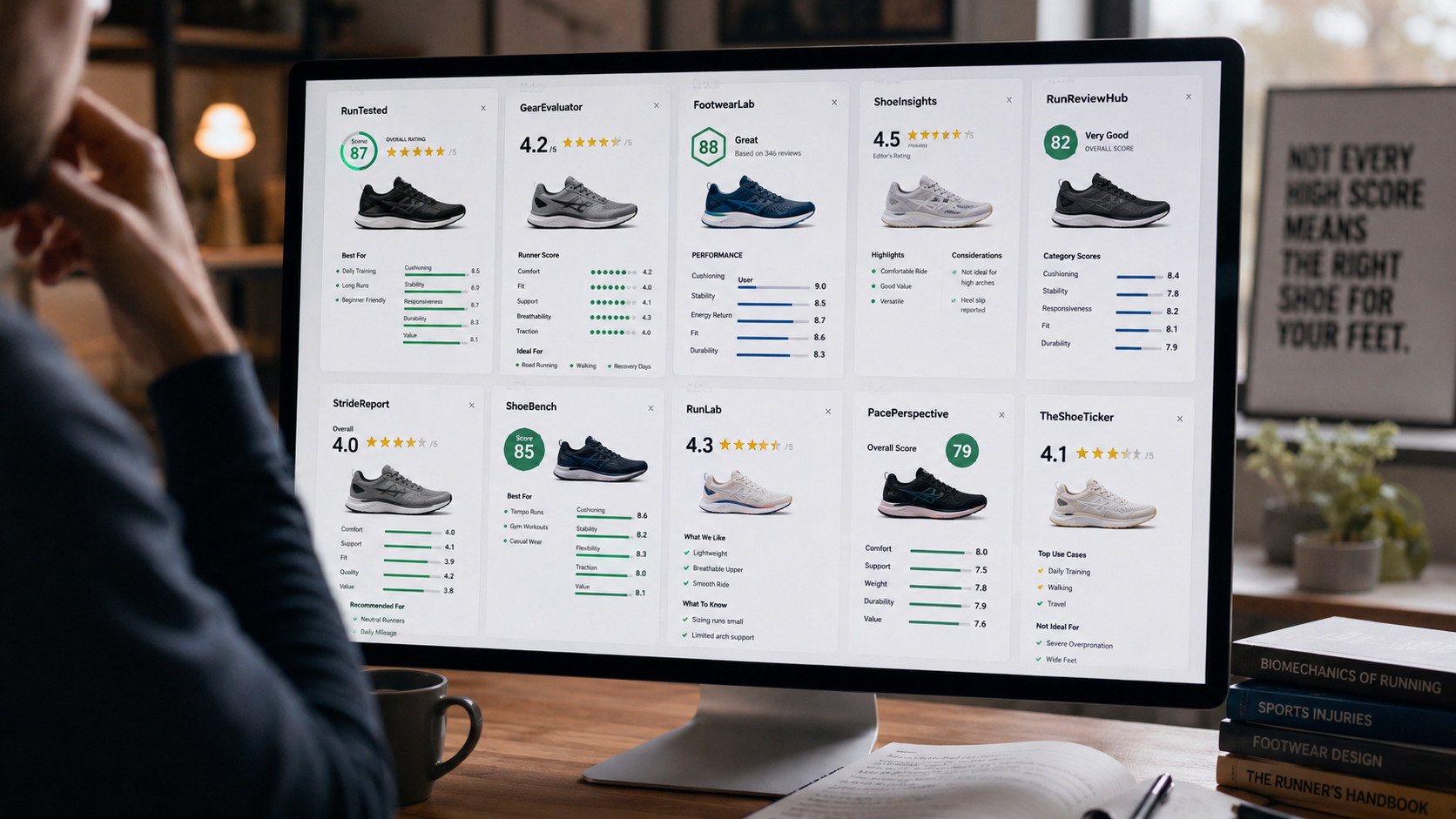
The review ecosystem was built for a different problem than the one you are solving.
Performance, comfort, durability, and style are legitimate things to evaluate in a shoe. They are not the same as clinical appropriateness for a specific foot condition. The gap between those two evaluation frameworks is where most bad shoe decisions happen.
Three things combine to make this problem nearly inevitable for people managing foot conditions.
The first is that the shoe review ecosystem was built around the wrong variables. Cushioning scores, ride feel, durability testing, style assessments. These are genuinely useful for a healthy person choosing a running shoe. They are largely irrelevant to someone asking whether this specific shoe will help or hurt their plantar fasciitis. The question those reviews answer and the question you are asking are completely different questions. The review that leads you to the shoe is not the review that tells you whether the shoe is right for your condition.
The second is that the word "supportive" has been emptied of clinical meaning. It is a marketing term now. Two shoes can both be described as supportive and have completely opposite effects on the same foot. A maximum-cushion neutral shoe is supportive. A firm motion-control stability shoe is supportive. They are built for different feet with different conditions. Calling both of them supportive without further qualification is like calling both ibuprofen and aspirin "pain relievers" and suggesting they are interchangeable for every patient.
The third is that even the experts disagree and not in a subtle way. Research published in the Journal of Science and Medicine in Sport found significant disagreement between podiatrists, physiotherapists, and shoe retailers on fundamental questions about how footwear affects the foot. 82% of shoe retailers believed footwear could reduce pronation. Only 55% of podiatrists agreed. Just 29% of coaches did. When the professionals dispensing advice hold fundamentally different beliefs about how shoes work, contradictory recommendations are not a failure of the system. They are the predictable output of it.
Three questions that change how you choose a shoe
The framework that most shoe shopping ignores is not complicated. It just requires asking different questions than the ones the review industry trained everyone to ask.
The first question is what the specific condition actually is not just "foot pain" or "sore heels," but the named condition with its specific biomechanical profile. Plantar fasciitis, flat feet, Achilles tendinitis, metatarsalgia, heel spurs, bunions. Each of these places different demands on footwear. Treating them as interchangeable because they all hurt is where the wrong shoe decision begins.
The second question is what that condition specifically needs from a shoe. Not what feels good in the store. What the biomechanics of that condition require. How much arch support. What heel drop range. Whether stability features help or hinder. Whether cushioning needs to be soft or structured. These are answerable questions with researched answers, but they require knowing the condition first.
The third question is whether the shoe being considered actually delivers those specific things. Not whether it is popular. Not whether it has a good review score. Whether the features of this specific shoe match the biomechanical needs of this specific condition. That alignment, or the absence of it, is the entire game.
Where to go from here
Answering those three questions well requires knowing what your condition actually needs from footwear and that is not always information that is easy to find clearly assembled in one place. The MySoleMatch quiz was built to close exactly that gap. It maps your specific condition to the biomechanical requirements that matter, then matches those requirements to shoes that have been evaluated against them. Five steps. Condition-specific results. No guessing based on star ratings.
If your symptoms are severe, persistent, or affecting your daily mobility, the right next step is a clinical evaluation before a shoe purchase. The MySoleMatch podiatrist finder can help locate a specialist in your area. A podiatrist can confirm your condition, assess your gait, and give you the specific footwear criteria that no quiz, however well designed can fully replace.
The right shoe exists for your condition. The problem has rarely been the quality of what is available. It has been the information connecting the condition to the shoe.