Disclosure: We may earn a small commission if you purchase through links on this page. No additional cost to you. We just want to be transparent about how we fund this site.
New Balance 928v3 vs Brooks Addiction Walker 2
Two motion control walking shoes built for severe overpronation. The difference is in the details that matter most for your feet.
We don't just recommend shoes. We explain why they work for your feet.
What You Need to Know First
Severe overpronation during walking places cumulative medial stress on the plantar fascia, posterior tibial tendon, medial ankle, and knee with every step. Unlike running, where stability corrections can be subtle, walking gait involves a slower, more deliberate heel-strike that places full body weight on the rearfoot for a longer duration, making the quality of the medial post and torsional control especially important. Both the 928v3 and Addiction Walker 2 are engineered specifically for walking gait, with outsole configurations designed around the walking strike path rather than the running gait cycle. This makes them categorically different from stability running shoes used for walking, and clinically more appropriate for patients whose primary activity is walking, standing, or working on their feet.
The New Balance 928v3 and Brooks Addiction Walker 2 occupy the same clinical tier. Maximum motion control walking shoes, both built on a 12mm heel drop for walkers who heel-strike hard and need aggressive stability. They are the two shoes podiatrists most commonly recommend side by side when a patient presents with severe overpronation, flat feet, or a history of ankle instability during walking. Yet they are meaningfully different shoes. The 928v3 is built on New Balance's SL-2 last, one of the roomiest walking lasts in the industry, with a deeper toe box, higher instep, and width options that go all the way to 6E. The Addiction Walker 2 uses Brooks' Extended Progressive Diagonal Rollbar, a dual-density medial post that earns the highest possible torsional rigidity score in independent lab testing, making it arguably the most structurally locked-down motion control walking shoe currently available. Both correct severe overpronation. Both accommodate custom orthotics. Both are appropriate for diabetic feet. The decision between them comes down to fit geometry, the role of breathability in your daily use, and whether maximum structural rigidity or maximum toe box volume is the more important clinical priority for your specific foot.
Specs Compared
Factual specs only. No brand is favored. You decide what matters most for your feet.
Which One Is Right for You?
Both are excellent. Here is the honest case for each based on your specific situation.
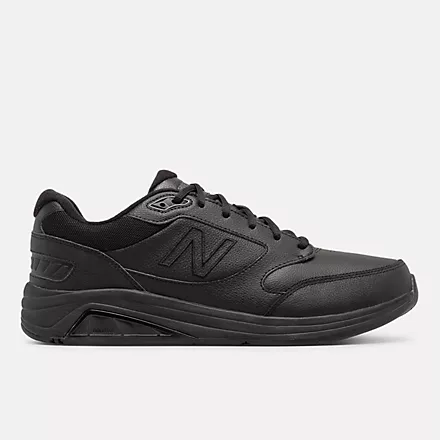
New Balance 928v3 Lace-Up Walking Shoe
$134-$145
Choose this when
Toe box volume and fit accommodation are the primary clinical requirements. The 928v3 is built on the SL-2 last, which features a deeper toe box, higher instep height, and a forefoot that is meaningfully wider than standard lasts. It is available in widths from B narrow all the way to 6E extra-extra-extra-wide, the widest selection of any walking shoe in the MySoleMatch catalog, making it the only clinical choice when overpronation coexists with severe bunions, hammertoes, significant foot swelling, or the need for thick custom orthotics with AFO compatibility. Its leather and mesh combination upper is also more breathable than the Addiction Walker 2's full leather construction, which matters significantly for diabetic patients where heat and moisture buildup create infection risk. Dr. Tom Biernacki DPM of Balance Foot and Ankle cites the 928v3 as the gold standard for elderly patients with balance problems and moderate to severe overpronation, specifically noting its ROLLBAR stability post, firm heel counter, and SL-2 last as the combination that addresses the most common mechanical causes of falls in older adults. For patients who need maximum orthotic accommodation depth alongside motion control, the 928v3's removable polyurethane footbed and extra-depth construction make it the more flexible clinical platform.
ROLLBAR motion control technology and Clinical-Grade Support: The signature ROLLBAR® motion control system minimizes rear-foot movement, keeping your stride aligned and reducing stress on the plantar fascia.
Reduces morning heel pain and keeps you moving comfortably all day, whether you're on your feet for work or walking for fitness.
Maximum Shock Absorption: Engineered with ABZORB® cushioning in the midfoot to absorb harsh impacts, protecting your heels from painful concrete and hard floors.

Brooks Addiction Walker 2
$130-$160
Choose this when
Torsional rigidity and structural motion control are the highest clinical priorities, particularly for walkers in occupational environments with slip hazard requirements. The Addiction Walker 2 earns a 5 out of 5 torsional rigidity score in RunRepeat independent lab testing, the highest possible rating, driven by its Extended Progressive Diagonal Rollbar running the full length of the medial midsole. This dual-density BioMoGo DNA post resists arch collapse under load more aggressively than the 928v3's ROLLBAR system, making it the stronger clinical choice for severe flat feet with significant arch collapse, posterior tibial tendon dysfunction, or cases where previous motion control shoes have proven insufficient. Its outsole carries ASTM F489-96 slip-resistance certification, making it the required choice for healthcare workers, food service professionals, and anyone working on wet, oily, or polished floors where the 928v3's standard rubber outsole is not certified for occupational slip safety. At 14.5oz it is also lighter than the 928v3's 15.5oz, which matters over 8 to 12 hour standing shifts where cumulative shoe weight compounds lower-limb fatigue.
Extended Progressive Diagonal Rollbar provides maximum motion control for severe overpronators
Full-grain leather upper offers durability and weather resistance for all-day wear
DNA midsole cushioning adapts to your stride for personalized comfort on hard surfaces
The Honest Verdict
Both shoes are clinically appropriate for severe overpronation and motion control needs during walking. For most patients the deciding factor is fit geometry: if you have a wide or deep foot, bunions, hammertoes, swelling, or require thick custom orthotics, the 928v3's SL-2 last and 6E width availability make it the more accommodating platform. If you have a standard to medium foot width and work in an environment requiring certified slip-resistant outsoles, or if maximum torsional rigidity is the clinical priority, the Addiction Walker 2's EPDRB system and ASTM-certified outsole make it the stronger choice. At $130 versus $155 to $165, the Addiction Walker 2 also represents the more accessible entry point into this tier of walking shoe.
Answer These. Then Decide
Four quick questions that point you toward the right shoe for your specific situation.
Do you need widths beyond 4E, or require a 6E extra-extra-wide fit for severe bunions, swelling, or AFO compatibility?
Do you work in a healthcare, food service, or occupational environment requiring ASTM-certified slip-resistant outsoles?
Is breathability a clinical priority, such as for diabetic patients at risk of heat and moisture buildup?
Do you have severe arch collapse or posterior tibial tendon dysfunction requiring maximum torsional rigidity?
Is budget a consideration between two otherwise comparable options?
Frequently Asked
Which is better for severe overpronation while walking, the New Balance 928v3 or Brooks Addiction Walker 2?
Both are maximum motion control walking shoes clinically appropriate for severe overpronation. The key difference is in how they correct it. The 928v3 uses ROLLBAR technology on the SL-2 last, which prioritizes fit accommodation with widths up to 6E and a deep roomy toe box alongside its medial posting. The Addiction Walker 2 uses the Extended Progressive Diagonal Rollbar, which earns the highest possible torsional rigidity score in independent lab testing, making it the more structurally locked shoe. For walkers with a wide or deep foot, the 928v3 is the better clinical fit. For walkers with a standard width foot who need maximum structural rigidity or a certified slip-resistant outsole, the Addiction Walker 2 is the stronger choice.
What is the difference between the New Balance ROLLBAR and the Brooks Extended Progressive Diagonal Rollbar?
Both are medial posting systems designed to prevent arch collapse and inward ankle rolling during walking, but they differ in construction and rigidity. The New Balance ROLLBAR is a thermoplastic posting bar embedded in the midsole that runs from the heel through the midfoot, providing firm but somewhat flexible medial resistance. The Brooks Extended Progressive Diagonal Rollbar, or EPDRB, is a dual-density BioMoGo DNA foam post that runs diagonally from the heel to the forefoot and earns the maximum 5 out of 5 torsional rigidity score in independent testing. In practical terms, the Addiction Walker 2 is the more rigid and structured of the two, while the 928v3 prioritizes fit accommodation alongside its motion control correction.
Which walking shoe is better for diabetic feet with overpronation?
Both feature removable insoles for custom orthotic accommodation, and the Addiction Walker 2 carries the APMA Seal of Acceptance. The 928v3 has a clinical edge for diabetic patients specifically because its leather and mesh upper is more breathable than the Addiction Walker 2's full leather construction, reducing the heat and moisture buildup that creates infection risk in diabetic feet. Its SL-2 last also accommodates foot swelling better than the tapered toe box of the Addiction Walker 2. For diabetic patients with overpronation who work in environments requiring slip-resistant outsoles, the Addiction Walker 2's ASTM F489-96 certification is the deciding factor.
Is the New Balance 928v3 good for seniors with balance problems?
Yes. Dr. Tom Biernacki DPM of Balance Foot and Ankle cites the 928v3 as the gold standard for elderly patients with moderate to severe balance issues in his 2026 clinical review. Its ROLLBAR stability post corrects overpronation-driven medial ankle collapse, its firm heel counter passes the clinical squeeze test, and its SL-2 last with widths up to 6E accommodates the foot swelling and deformities common in older adults. Its removable polyurethane footbed also accepts structured aftermarket insoles like the PowerStep Pinnacle that further improve proprioceptive feedback. The Addiction Walker 2 is also appropriate for seniors but is the secondary choice when a roomy fit and balance support are the primary clinical requirements.
Related Comparisons
Still Not Sure Which Is Right for You?
Take our guided quiz and get a personalized recommendation based on your specific foot condition, activity level, and concerns. We explain exactly why each shoe fits your feet.