Disclosure: We may earn a small commission if you purchase through links on this page. No additional cost to you. We just want to be transparent about how we fund this site.
On Cloud 6 vs Brooks Ghost 17 for Nurses and Teachers
One is a premium lifestyle shoe nurses reach for. The other is the daily trainer the nursing floor actually runs on. Here is the honest difference.
We don't just recommend shoes. We explain why they work for your feet.
What You Need to Know First
Nurses and teachers are among the highest-mileage standing professionals in any workforce. Research published in the Journal of Occupational Health consistently links prolonged standing to lower-back pain, varicose veins, and chronic lower-limb discomfort in healthcare workers. Bureau of Labor Statistics data projects registered nursing employment to grow roughly 6% through 2033, with 197,200 annual job openings, meaning millions of people are logging 8,000 to 16,000 steps per shift on tile and concrete surfaces three to four days a week. At that volume, the difference between 28mm of heel stack and 36mm of heel stack is not academic. Cushioning foam compresses under load throughout a shift, and a shoe that feels comfortable at hour one may feel meaningfully flatter by hour ten as the midsole foam reaches its compression limit. The clinical requirements for a shift-floor shoe are consistent across professions: all-day cushioning that does not pack out by month three, genuine arch support beyond what a standard insole provides, rearfoot lockdown to prevent heel slippage during fast directional changes, and enough width accommodation to handle the foot swelling that occurs naturally during extended standing.
The On Cloud 6 and Brooks Ghost 17 both show up on every list of shoes nurses and teachers love, and for genuinely different reasons. The Ghost 17 earns its place through two decades of shift-floor validation, an APMA Seal of Acceptance, PDAC A5500 diabetic certification, five width options, and a 36mm heel stack that holds up through hour eleven of a twelve-hour shift on hospital tile. The On Cloud 6 earns its place because it is one of the best-looking, lightest, and most effortless-feeling shoes on the market, and nurses and teachers are human beings who do not want to sacrifice style for function if they can avoid it. Both answers are legitimate. But they are not equal answers for every professional and every shift length, and the gap between them becomes clinically meaningful once you understand what each shoe is actually built to do. The Ghost 17 is a purpose-built daily trainer that happens to excel for standing professionals. The Cloud 6 is a premium lifestyle shoe that standing professionals reach for because of how it looks and how it feels for the first few hours. That distinction matters across a twelve-hour shift on concrete floors.
Specs Compared
Factual specs only. No brand is favored. You decide what matters most for your feet.
Which One Is Right for You?
Both are excellent. Here is the honest case for each based on your specific situation.
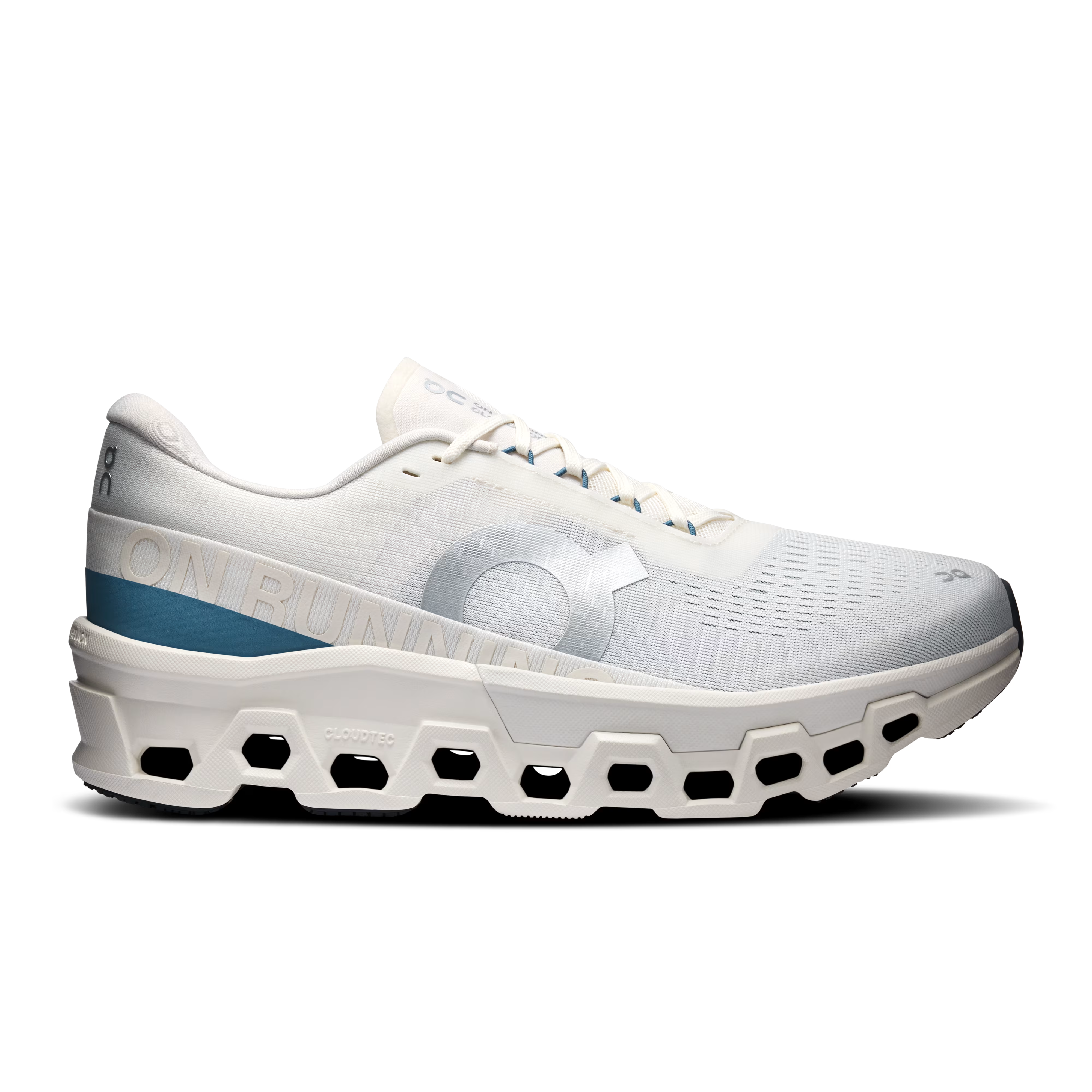
On Cloudmonster 2
$170-$180
Choose this when
Style matters alongside function, the shift is under eight hours or involves a mix of sitting and standing rather than continuous floor walking, and the professional wearing the shoe has a neutral gait with no overpronation, flat feet, or plantar fasciitis history. The On Cloud 6 is a genuinely excellent lifestyle shoe with a legitimately comfortable ride. Its Helion foam CloudTec pod system delivers a smooth, responsive feel that many wearers describe as energizing for the first several hours of wear. Its 8mm drop is lower than the Ghost 17's 10mm, which some professionals with Achilles sensitivity prefer. At 9.7oz it is lighter than the Ghost 17's 10.2oz, which matters to professionals who walk significant distances between standing duties rather than standing in one location. Its speed lace system allows hands-free entry and exit, which is genuinely convenient for nurses changing shoes between shifts or between the clinical floor and break areas. It is also unquestionably the more visually appealing shoe, which matters in professional environments where appearance is part of the job. For teachers who move between a seated desk environment and classroom walking, or nurses on lower-acuity units with more variation in activity, the Cloud 6 is a reasonable choice that will not compromise their shift if they enter it with realistic expectations about its cushioning depth. Note: On Running shoes do not currently carry the APMA Seal of Acceptance. MySoleMatch includes On Running products in select comparisons based on independent podiatrist commentary and verifiable clinical features. Consult your podiatrist before selecting footwear for a foot condition.
Dual-density Helion foam with CloudTec pods delivers a cushioned yet firm and stable ride
6mm heel drop with rocker geometry for smooth heel-to-toe transition
Speedboard nylon plate provides structured forward propulsion through the gait cycle

Brooks Ghost 17
$140-$155
Choose this when
The shift is ten hours or longer, the floor surface is primarily hard tile or concrete, the professional stands or walks for the majority of the shift rather than alternating between seated and standing work, or any foot condition is present including flat feet, overpronation, plantar fasciitis, or a history of lower-limb fatigue. The Ghost 17 is the more clinically appropriate shoe for professional standing environments by a meaningful margin. Its 36.2mm heel stack measured in independent RunRepeat lab testing is 8mm taller than the Cloud 6's 28.3mm stack, and that difference is not marginal over twelve hours of compressive load on hard floors. Its DNA Loft v3 nitrogen-infused foam maintains cushioning integrity over higher mileage than the Cloud 6's CloudTec pod system, which has received consistent feedback about the squish-then-snap sensation becoming fatiguing during extended wear. Its heel counter earns a 5 out of 5 rigidity score in independent lab testing, providing the rearfoot lockdown that prevents heel slippage during the rapid directional changes that characterize clinical nursing work. It carries the APMA Seal of Acceptance at PID 9077, PDAC A5500 diabetic shoe certification, and comes in five widths from narrow AA to extra wide 4E, making it the clinically appropriate choice across a far wider range of foot types than the Cloud 6, which is available in regular width only. Fleet Feet outfitters describe the Ghost as the shoe they can pull for almost any foot type. Real nurses on Reddit consistently cite it as the shoe that gets them through twelve-hour shifts without foot pain. Brooks itself lists the Ghost 17 as a top recommendation for healthcare workers on its nursing shoe guide. The Ghost 17 also costs $140 to $155 versus the Cloud 6's $160, making it both the better clinical choice and the more accessible one.
DNA Loft v3 nitrogen-infused foam for soft responsive cushioning
APMA Seal of Acceptance pid=9077 - PDAC A5500 diabetic shoe certified - verified directly from APMA Seal Database May 2026
Segmented crash pad for smooth heel-to-toe transitions
The Honest Verdict
Both shoes work for nurses and teachers in the right context. The Ghost 17 is the stronger clinical choice for twelve-hour shifts on hard floors, overpronators, anyone with a foot condition, wide feet, or professionals who need APMA verification and diabetic certification. The Cloud 6 is the stronger lifestyle choice for mixed-use professionals with neutral gait, shorter shifts, and a legitimate preference for a shoe that looks and feels less like a performance trainer. The honest answer for most nurses is that the Ghost 17 will serve their feet better across a full shift, and the honest answer for the nursing professional who genuinely loves how the Cloud 6 looks and feels is that it is a reasonable choice for lower-acuity shifts if they go in understanding its cushioning limits. Where the two shoes diverge most sharply is in width accommodation. If you have any foot width beyond standard medium, the Ghost 17 is the only choice between these two.
Answer These. Then Decide
Four quick questions that point you toward the right shoe for your specific situation.
Is your shift ten hours or longer with the majority of time spent standing or walking on hard floors?
Do you need wide widths, or have bunions, hammertoes, or any foot width beyond standard medium?
Do you have flat feet, overpronation, plantar fasciitis, or any diagnosed foot condition?
Is APMA acceptance or PDAC diabetic certification required or preferred?
Is your shift a mix of sitting and standing rather than primarily continuous floor walking, and do you have a neutral gait with no foot conditions?
Frequently Asked
Are On Cloud shoes good for nurses?
On Cloud shoes are popular with nurses because of their lightweight feel, stylish appearance, and comfortable ride during the first several hours of a shift. The On Cloud 6 specifically has a 28.3mm heel stack measured in independent lab testing, which is adequate for shorter shifts and mixed standing and sitting environments. However, for twelve-hour shifts with sustained standing on hard hospital tile, the 28mm stack is meaningfully lower than what dedicated nursing shoe recommendations typically provide, and multiple real-world reviews from nurses confirm the shoe becomes fatiguing during extended wear in ways that higher-stack options like the HOKA Clifton 10, HOKA Bondi 9, or Brooks Ghost 17 do not. On Cloud shoes also do not carry the APMA Seal of Acceptance, are available in regular width only, and are not slip-resistant certified for occupational environments. They are a legitimate choice for nurses on lower-acuity units or those with mixed-activity shifts who have neutral gait and no foot conditions. They are not the strongest clinical recommendation for a twelve-hour floor shift.
Is the Brooks Ghost 17 good for nurses?
Yes. The Brooks Ghost 17 carries the APMA Seal of Acceptance at PID 9077, PDAC A5500 diabetic shoe certification, and comes in five widths from narrow AA to extra wide 4E. Its 36.2mm heel stack provides meaningful cushioning depth for twelve-hour shifts on hard floors, and its DNA Loft v3 nitrogen-infused foam maintains integrity over higher cumulative mileage than most lifestyle shoes. Its 5 out of 5 heel counter rigidity in independent lab testing provides the rearfoot lockdown that prevents heel slippage during the rapid directional changes common in clinical nursing environments. Brooks lists the Ghost 17 as a top recommendation for healthcare workers on its own nursing shoe guide, and it consistently appears at the top of nurse-reviewed best-shoe lists across multiple independent platforms. The Ghost 17 is a neutral shoe, meaning it does not correct for overpronation. Nurses with flat feet or overpronation should consider the Brooks Adrenaline GTS 25, Saucony Guide 19, or HOKA Gaviota 6 instead.
What is the stack height difference between the On Cloud 6 and Brooks Ghost 17, and does it matter for nursing?
The On Cloud 6 has a 28.3mm heel stack measured in independent RunRepeat lab testing. The Brooks Ghost 17 has a 36.2mm heel stack measured in the same lab. That is an 8mm difference, which is clinically significant over the course of a twelve-hour nursing shift. Midsole foam compresses under body weight throughout a shift, so a shoe that starts with less foam under the heel has less cushioning reserve as the hours accumulate. Multiple nurses who have reviewed the Cloud 6 specifically note increased foot fatigue during extended wear compared to higher-stack options, while the Ghost 17 consistently receives feedback about remaining comfortable through hour eleven and twelve of a shift. For a teacher with a mixed standing and seated schedule, the 8mm difference is less decisive. For a floor nurse logging 10,000 to 16,000 steps per shift on concrete, it is one of the most important spec differences between these two shoes.
Which is better for teachers, On Cloud 6 or Brooks Ghost 17?
Teachers who stand for the majority of a school day on hard floors benefit from the same cushioning depth that nurses need, and the Ghost 17 is the stronger clinical recommendation for that context. However, teachers who split time between a seated desk environment and classroom walking, who have neutral gait and no foot conditions, and who value the style and lightweight feel of the On Cloud 6 will find it a comfortable and appropriate choice for a school day that involves less continuous impact loading than a hospital floor shift. The Ghost 17 wins on clinical credentials, width accommodation, APMA acceptance, and sustained cushioning depth. The Cloud 6 wins on style, weight, and the first-hour feel that many professionals prioritize when choosing between shoes that both work in their environment. If in doubt, the Ghost 17 is the safer recommendation for a full teaching day.
Does the On Cloud 6 have wide widths for nurses with wider feet?
No. The On Cloud 6 is available in regular width only. There is no wide or extra-wide option. For nurses and teachers with wide feet, bunions, hammertoes, foot swelling during shifts, or any condition requiring a wider last, the On Cloud 6 is not an appropriate choice. The Brooks Ghost 17 is available in five widths from narrow AA to extra wide 4E, making it the only option between these two shoes for the significant proportion of standing professionals whose foot width falls outside the standard medium range.
Related Comparisons
Still Not Sure Which Is Right for You?
Take our guided quiz and get a personalized recommendation based on your specific foot condition, activity level, and concerns. We explain exactly why each shoe fits your feet.