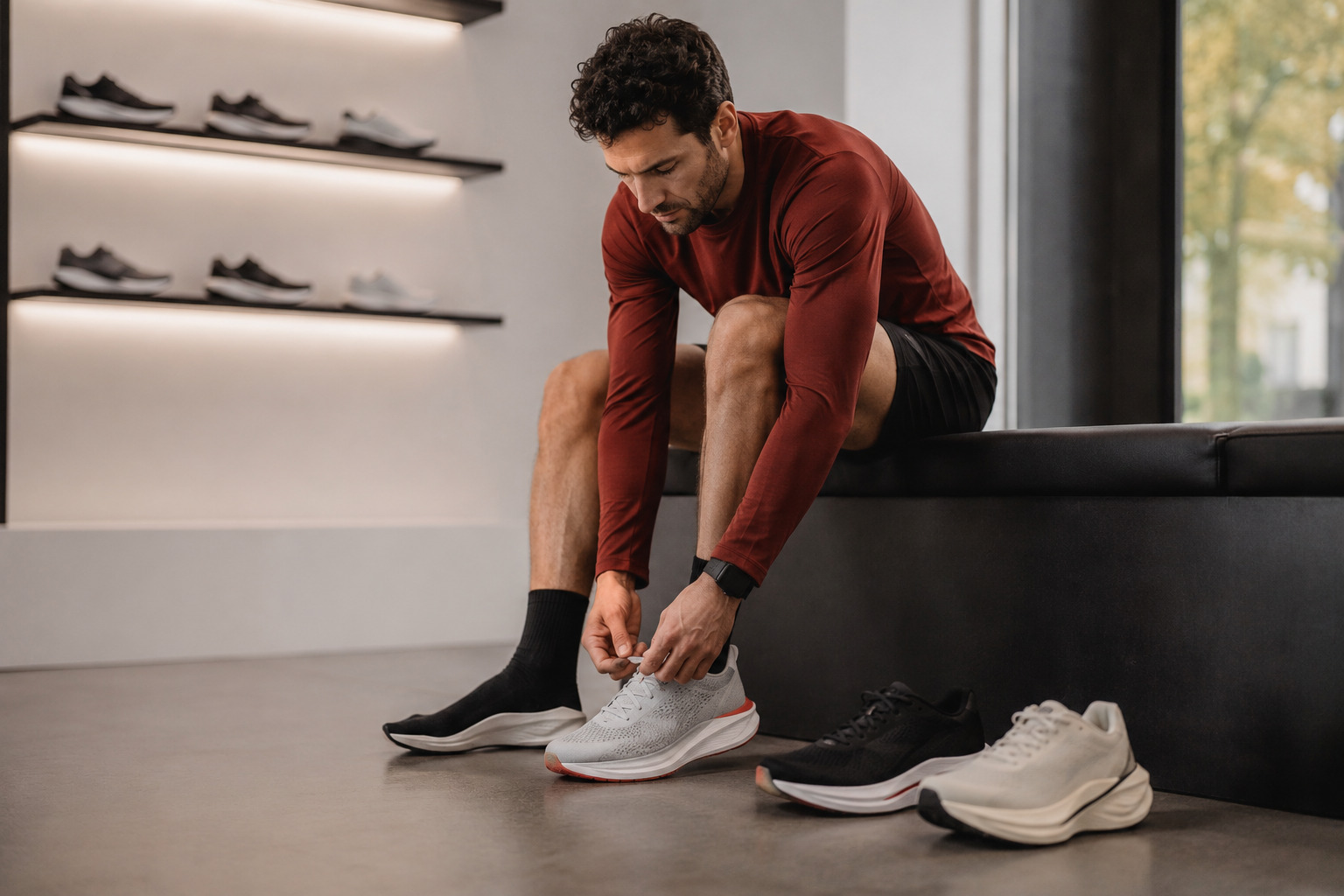
Ask any runner how to avoid getting hurt and you will hear some version of the same advice. Find your foot type. Get fitted for the right category of shoe. Match the shoe to the way you move. It is the foundation of how running shoes have been sold for decades, and it sounds reasonable enough that almost no one questions it.
But questioning it is exactly what a team of researchers did, using the highest tier of medical evidence available. What they found does not match the story most of us have been told.
What a Cochrane review actually is
Not all research carries equal weight. A single study can be interesting but limited, shaped by a small sample or a specific population that does not generalize. A Cochrane systematic review sits at the opposite end of that spectrum. Reviewers register their methods in advance, pool data from every qualifying randomized controlled trial they can find, and grade the certainty of each finding using a formal framework rather than a gut impression. This is the same standard used to evaluate medical treatments, not marketing claims. When a Cochrane review reaches a conclusion, it carries more weight than a brand's internal testing or a single university study, because it is built to correct for exactly the kind of bias that individual studies are prone to.

Not all evidence is created equal.
Systematic reviews that pool data from many randomized controlled trials sit above single studies and far above brand marketing claims. That hierarchy is why a Cochrane review carries different weight than a product page.
In 2022, a team led by Nicola Relph published a Cochrane review examining running shoes and lower limb injury prevention in adults. The review pooled data from twelve randomized controlled trials covering more than 11,000 runners. This is the kind of dataset that can actually answer the question everyone assumes has already been answered.
Finding one: prescribing by foot posture
The most common fitting model in running shoe retail sorts people into categories based on how their foot moves, often described as flat, neutral, or high arched, then matches that category to a corresponding shoe type. It is intuitive. It is also, according to the review, not well supported.
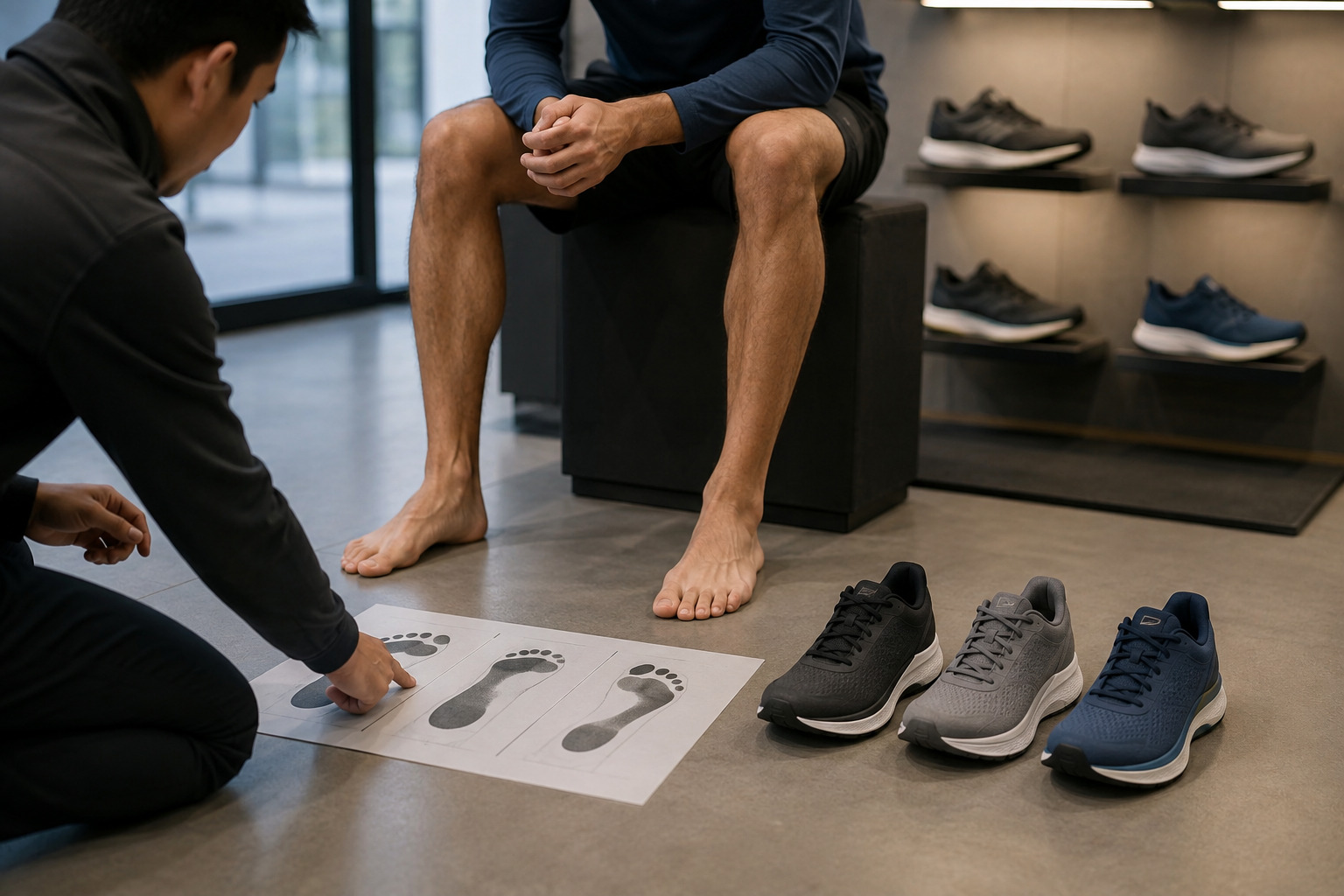
The traditional fitting model.
Sorting runners by foot posture and matching that posture to a shoe category has been standard practice for decades. The review put that specific practice to the test.
The review found that prescribing shoes by foot posture probably makes little or no difference to injury rates. The word probably matters here. In the language Cochrane reviews use to grade evidence, this reflects moderate certainty, meaning the finding is unlikely to change substantially with more research, but it is not an absolute statement that foot posture is irrelevant to every runner in every circumstance. What it does mean is that the confidence with which foot posture fitting has been sold as an injury prevention strategy is not backed by the kind of evidence that claim would require.
Finding two: motion control, stability, and neutral shoes
The second major comparison in the review looked at the three broad categories most running shoes are still sorted into: motion control, stability, and neutral. The review found uncertain effects on injury rates between these categories, with very low certainty evidence across the comparisons.
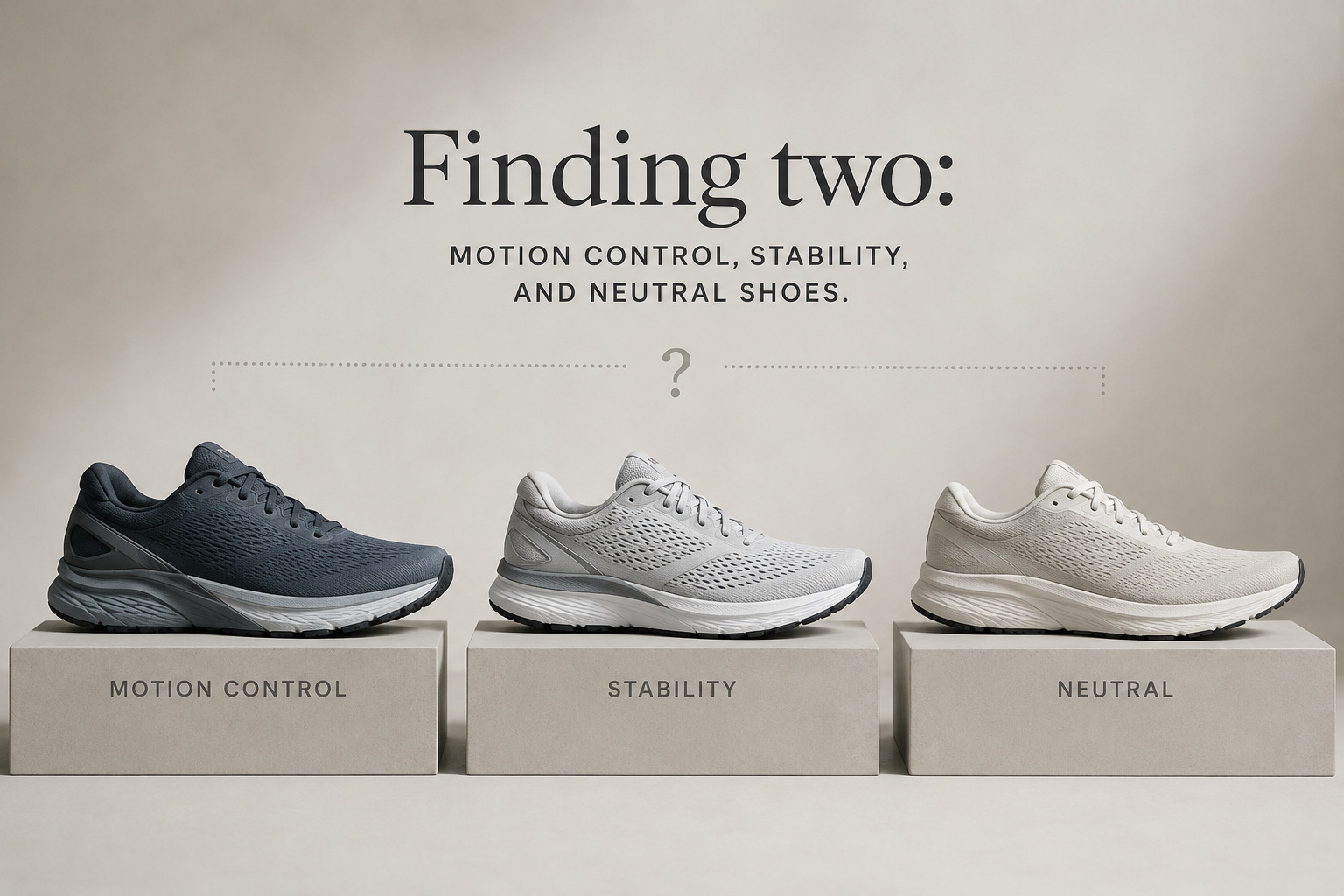
Three categories. Uncertain evidence for all three.
Motion control, stability, and neutral shoes are still the dominant way running shoes are marketed and sold. The review found the evidence connecting these categories to injury outcomes is very low certainty, not confirmed and not ruled out.
Very low certainty is a specific and different claim from no effect found, and the distinction is worth sitting with rather than skimming past. Think of it the way a home test and a lab test both give you information, just at very different levels of confidence. A finding of no effect would mean researchers looked closely and found nothing there. Very low certainty means the existing research cannot yet support a confident answer in either direction. Overstating this into shoe category does not matter would be just as inaccurate as the original overstatement that it does. The honest position is the uncomfortable one in the middle. We do not currently have strong evidence that sorting runners into these three categories prevents injury, and we do not have strong evidence that it does not.
A separate narrative review published in the Journal of Athletic Training reached a similar conclusion through a different lens. Researchers Laurent Malisoux and Daniel Theisen set out to examine whether the entire practice of prescribing appropriate footwear for injury prevention is evidence based, a logical fallacy, or simply a widely repeated belief. Their review reached the same conclusion this analysis did from a different angle, that a well established retail and clinical practice rests on a foundation considerably thinner than most people assume, including many of the professionals who recommend it in good faith.
What this does and does not mean for you
None of this means shoes do not matter or that any pair will do. It means the specific claim that matching shoe category to foot type prevents injury in healthy runners does not hold up under the best available evidence. That is a narrower and more precise statement than shoes do not matter, and the difference is worth keeping straight.
One thing the research does support is comfort as a selection signal. A shoe that feels wrong during a test run tends to change how a person moves in ways that create their own problems, quite apart from whatever category it belongs to. Choosing what genuinely feels good on your foot is not a lesser strategy than category matching. Current evidence suggests it may be a more reliable one.
The second point is where this article intersects directly with how MySoleMatch actually works, and it deserves its own space rather than a passing mention. Everything discussed above concerns injury prevention in runners who are not currently injured or managing a diagnosed condition. That is a different question entirely from matching a shoe to a condition someone already has. Plantar fasciitis, metatarsalgia, post surgical recovery, and diabetic foot care each come with their own separate and often better supported body of evidence about which footwear features help. A shoe chosen to accommodate a diagnosed condition is not the same decision as a shoe chosen to prevent a hypothetical future injury in a healthy runner, and the research reviewed here should not be mistaken for a statement about the former.
Why this is not the story you usually hear
Businesses built around fitting systems and category based recommendations have little incentive to lead with a Cochrane review's uncertainty ratings. That is not an accusation of bad faith. It is simply how incentives work. A confident narrative sells more easily than an honest one, and most of the running shoe industry, from retail to review sites to brand marketing, is built on the confident version.
Where MySoleMatch stands on this
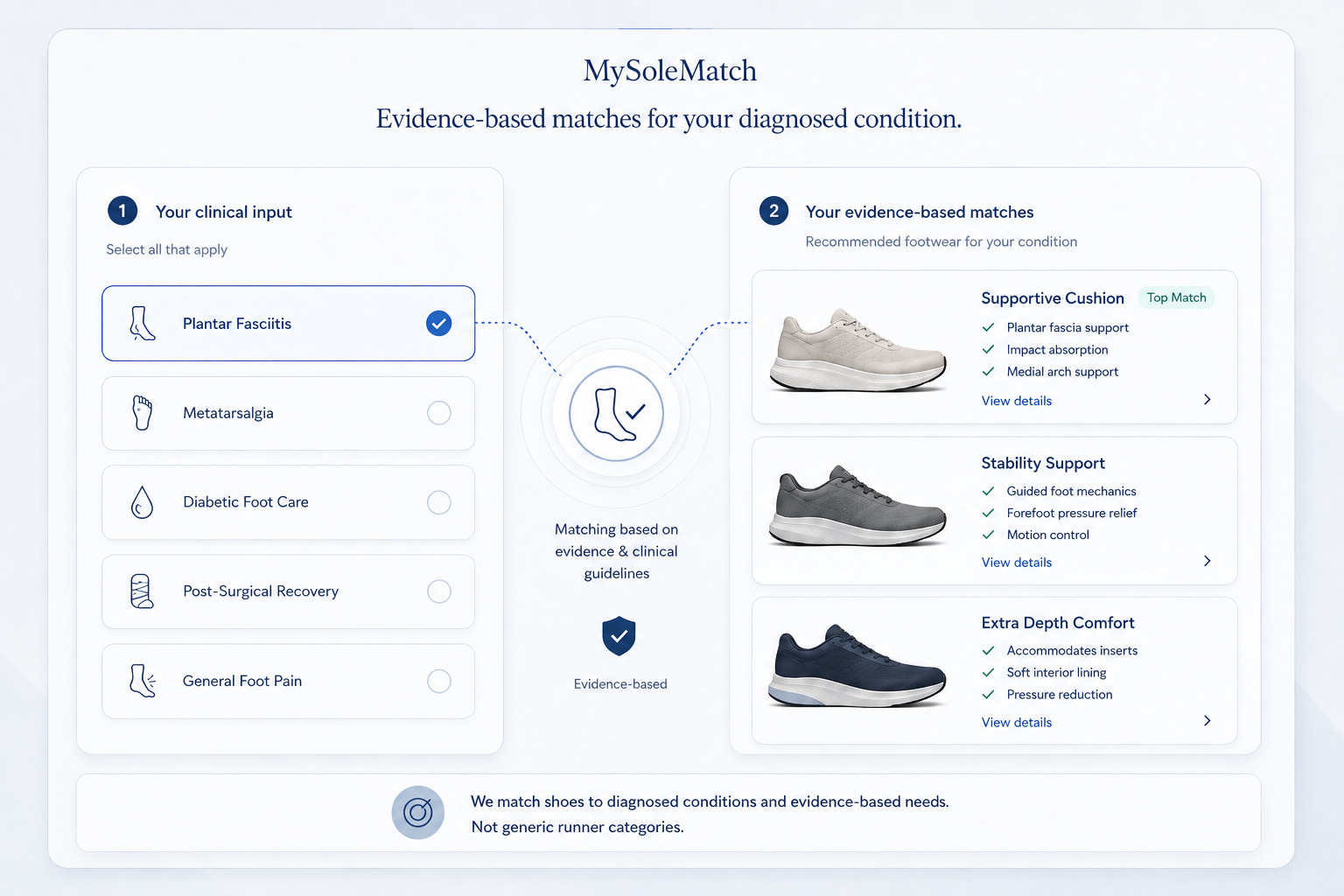
Condition-first, not category-first.
The MySoleMatch quiz matches shoes to diagnosed conditions using named, verifiable evidence, rather than sorting runners into broad categories the research cannot yet confirm or rule out.
This is the standard MySoleMatch holds itself to across the entire platform. The clinical condition matching in the shoe finder quiz is built around named, verifiable evidence for specific diagnosed conditions, not category based assumptions about what type of runner someone is. The APMA Seal of Acceptance claims shown for any shoe are checked against the live APMA Seal Database directly, not inferred from a brand's own marketing. Where the evidence is strong, that gets stated plainly. Where it is thin or uncertain, as it is here, that gets stated just as plainly. That is the whole premise of a platform built on clinical evidence rather than category based sales logic. The goal was never to have an answer for everything. It was to be honest about which answers actually exist.
This article is also the starting point for the MySoleMatch Runners Hub, where that same standard gets applied to specific pain points and conditions, not just to running shoes as a category.