Disclosure: We may earn a small commission if you purchase through links on this page. No additional cost to you, and we only recommend products we trust. This helps us keep MySoleMatch free and ad-free. Thank you for your support!
Claw Toes
Claw toes involve an abnormal bending pattern where toes curl both upward at the base and downward at the middle and end joints. Unlike hammertoe which affects one joint, claw toe deformity affects both the middle and end joints. It is often associated with neurological conditions and requires wide, deep toe box footwear.
Signs You May Have Claw Toes
Toes bent upward at the base and curled downward at the middle joints
Corns on top of the toe joints from shoe friction
Calluses under the ball of the foot
Pain and difficulty wearing standard shoes
Loss of flexibility in the toes
Walk Into Your Appointment With Answers
Before Your Next Appointment
Take Your Results to Your Podiatrist
Answer a few quick questions. Takes under 2 minutes. Get personalized shoe recommendations.
Best Shoes for Claw Toes | MySoleMatch
Extra depth and wide toe boxes are essential to accommodate the curled toe shape without friction. Soft, stretchy uppers are ideal.

New Balance 1080v15
$165-$175
Why this shoe
Men's sizing comes in widths up to 4E with a breathable mesh upper, and a wider width may leave more room for curled toes. At the standard D width, New Balance's fit data lists an average foot width, so check the toe area for rubbing.
Neutral support, a 6mm drop, and a weight of 261 grams (9.2 oz) for the men's version, per New Balance
Perforated mesh upper that New Balance describes as lightweight and breathable
Ultra Heel design for secure fit

New Balance 574
$89-$100
Why this shoe
Built on a wider last than New Balance's older racing shoes and sold in extended widths, which may leave more room for curled toes. It runs small according to New Balance, so size up and check the toe area for rubbing.
ENCAP midsole for cushioning and support
Built on a wider last than New Balance's earlier narrow racing shoes, per New Balance
Classic lifestyle design

New Balance Fresh Foam X 880v15
$145-$155
Why this shoe
Men's sizing comes in widths up to 4E, which may leave more room for curled toes. New Balance does not describe the toe box shape, so check the toe area for rubbing.
Fresh Foam X midsole with approximately 3% bio-based content for cushioned ride
Structured yet breathable engineered mesh upper
Structured, breathable engineered mesh upper, per New Balance
What to Look for in a Shoe
Evidence-based footwear criteria specific to this condition.
Heel Drop
Recommended: 4-10mm
Moderate heel drop is appropriate for claw toes. The primary footwear consideration is toe box depth and upper softness rather than heel geometry. A moderate heel drop reduces some forefoot loading during push-off, which can reduce the plantar callus pressure that claw toes create at the metatarsal heads and the tips of the curled toes.
Cushioning
moderate_to_maximum
Claw toes create abnormal plantar pressure distribution - the tips of the curled toes and the metatarsal heads bear disproportionate load as the normal weight-bearing surface is disrupted by the deformity. Moderate to maximum cushioning distributes this load more evenly and reduces the callus formation at these pressure points. A compliant, forgiving upper material over a cushioned midsole reduces both the plantar and dorsal friction generated by the deformity.
Avoid: rigid uppers, stiff leather, low toe box designs, thin-soled
Stability vs. Neutral
neutral
Claw toes do not inherently require stability features. A neutral shoe with adequate toe box depth and soft uppers addresses the core footwear needs. Stability features are relevant only when co-existing flat feet or neurological conditions driving the claw toe deformity are also producing overpronation.
Exception: Claw toes associated with Charcot-Marie-Tooth disease or other neurological conditions frequently co-exist with high arches and cavus foot, which may require lateral support rather than medial stability. The underlying neurological condition should guide footwear selection in these patients, and podiatrist assessment is essential.
Width
Recommended: 2E, 4E
Extra depth is the most critical dimension for claw toes - the shoe must accommodate the full vertical extent of the curled toe without the upper pressing against the dorsal prominence of the middle joint and the tip of the toe. Extra-wide toe boxes provide lateral room that prevents the claw toe from being squeezed against adjacent toes. Stretchable or soft knit uppers that conform to the toe shape rather than compressing it are preferable to structured leather or synthetic uppers.
Insoles and Orthotics
Toe crests - small pads that sit beneath the proximal phalanx of the affected toes, gently supporting the toe and reducing the plantar pressure at the toe tip - are effective accessories for claw toe pain management. Metatarsal pads that offload the metatarsal heads reduce the plantar callus pressure created by the disrupted weight-bearing pattern of claw toes. Custom orthotics that address any underlying biomechanical drivers are appropriate for patients with significant structural contributors to the deformity.
Sources: APMA Clinical Practice Guidelines; Journal of Foot and Ankle Surgery
Recommended Accessories for Claw Toes
Insoles, heel cups, compression socks, and braces that complement your shoe recommendation and provide additional targeted relief.
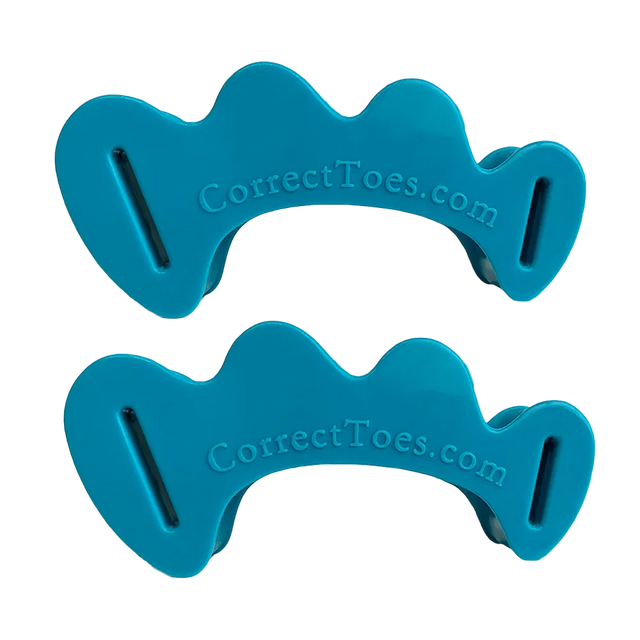
Correct Toes Toe Spacers
Correct Toes
$25-$75
Why this accessory
Separates and realigns contracted toes to reduce claw toe pressure
Podiatrist-designed silicone spacers separate all five toes simultaneously
Wearable inside wide toe box shoes for continuous correction during activity
Gradually realigns the big toe toward its natural position over time
What Is Happening in Your Foot
Claw toes are a deformity affecting one or more of the lesser toes, in which the toe bends upward at the metatarsophalangeal joint and downward at both the proximal and distal interphalangeal joints, creating a claw-like appearance. This distinguishes claw toes from hammertoes, which involve only the proximal interphalangeal joint. Claw toes are frequently associated with neurological conditions that weaken the intrinsic foot muscles - particularly Charcot-Marie-Tooth disease, peripheral neuropathy from diabetes, and stroke - because the intrinsic muscles are responsible for maintaining the correct balance between the metatarsophalangeal and interphalangeal joints. When these muscles are weakened, the extrinsic toe flexors and extensors act unopposed and produce the characteristic claw deformity.
Biomechanics
The toes are controlled by a balance of intrinsic muscles that flex the metatarsophalangeal joint and extend the interphalangeal joints, and extrinsic muscles that produce the opposite movements. In normal function, these opposing forces maintain the toe in a straight, ground-contacting position. When intrinsic muscle weakness disrupts this balance - from neurological disease, diabetes, or progressive denervation - the extrinsic flexors pull the interphalangeal joints into flexion while the extrinsic extensors pull the metatarsophalangeal joints into extension, producing the claw posture. The result is a toe that contacts the ground only at its tip rather than along its plantar surface, concentrating plantar pressure at the tip and creating dorsal prominences at the middle and end joints that rub against shoe uppers. Footwear with deep toe boxes and soft uppers eliminates this rubbing, while cushioned insoles redistribute the abnormal plantar pressure created by the tip-contact loading pattern.
Why Symptoms Behave the Way They Do
Claw toe pain does not typically follow a morning-worsening pattern. Pain is characteristically activity-related - worst during and after periods of wearing footwear that presses against the dorsal prominences or that applies pressure to the toe tips during walking. Morning stiffness may occur in rigid claw toes with associated joint inflammation, but the dominant pain mechanism is friction-driven and footwear-dependent rather than inflammatory.
What Makes It Worse
Shoes with low toe boxes that press against the dorsal prominence of the curled toe joints, causing corn formation and pain with every step
Shoes that are too short, compressing the toe tips against the front of the shoe and causing tip calluses and nail trauma
Narrow toe boxes that squeeze the claw toes against adjacent toes, creating inter-toe corns and pressure injuries
Neurological disease progression that weakens intrinsic foot muscles further and accelerates deformity development
Diabetes and associated neuropathy that removes the pain signals that would normally prompt the patient to address harmful footwear pressure before tissue damage occurs
What Helps
Extra-depth shoes with soft, flexible uppers that accommodate the full vertical extent of the claw toe without friction at the dorsal prominences
Toe crests placed beneath the proximal phalanx to support the toe and reduce tip pressure
Metatarsal pads that redistribute plantar pressure away from the metatarsal heads and toe tips
Toe stretching and passive range-of-motion exercises while the deformity remains flexible - these can slow progression and maintain what joint mobility remains
Podiatrist debridement of corns from the dorsal prominences and toe tips to remove the immediate pain source
Custom orthotics that address any underlying biomechanical contributors while accommodating the deformity
Common Misconceptions
Myth: Claw toes and hammertoes are the same condition.
Both involve bent toes but at different joints and with different underlying mechanisms. Hammertoes affect only the proximal interphalangeal joint and are primarily driven by muscle imbalance from footwear and forefoot mechanics. Claw toes affect both interphalangeal joints and are frequently associated with neurological conditions that weaken the intrinsic foot muscles. The distinction matters because claw toes warrant evaluation for underlying neurological disease, while hammertoes typically do not.
Myth: Toe exercises cannot help claw toes because the deformity is structural.
Toe exercises are effective for flexible claw toes where the joints can still be manually straightened. They help maintain intrinsic muscle strength, slow the rate of progression, and preserve joint flexibility that makes conservative management more effective. For rigid claw toes where joints cannot be passively straightened, exercises have limited structural benefit but may still help with surrounding muscle conditioning.
Myth: Claw toes are inevitable in older adults and cannot be prevented.
While claw toes are more common with age due to progressive intrinsic muscle weakening and neurological changes, they are not inevitable. Early footwear correction that prevents tight toe boxes from forcing the toes into claw positions, regular toe strengthening exercises, and prompt management of any underlying neurological or diabetic conditions all reduce the rate of deformity development. Prevention is most effective when started before significant deformity is established.
Sources: Journal of Foot and Ankle Surgery, Vol. 52, 2013; Foot and Ankle International, Vol. 35, 2014; APMA
Claw Toes by Occupation
How this condition presents differently depending on how you spend your day.
seniors
Claw toes are most prevalent in older adults, where the combination of decades of footwear compression, progressive intrinsic muscle weakness, and neurological changes converge.
Many older adults have had claw toe deformity developing gradually over years and have adapted to increasingly limited footwear options. Standard dress shoes, slip-ons, and casual footwear frequently lack adequate toe box depth for established claw toe deformity. Many seniors also have diabetes or peripheral neuropathy as co-existing conditions that eliminate protective sensation at the toe tips and dorsal prominences where claw toes create pressure.
Shoe Priority
Extra-depth shoe with the most accommodating toe box available, soft knit or stretchy upper material, easy entry design, and non-slip outsole. Custom orthotics with toe crests and metatarsal support address the abnormal pressure distribution of claw toes comprehensively.
diabetics
Claw toes in diabetic patients with neuropathy create high-risk pressure points at the toe tips and dorsal prominences that can progress to ulceration without the patient being aware.
The combination of claw toe deformity that creates new pressure points and diabetic neuropathy that eliminates the pain signals that would detect pressure injury is particularly dangerous. Toe tip ulcers and dorsal joint ulcers are well-documented complications in diabetic patients with claw toes. Extra-depth footwear that completely eliminates all upper contact with any part of the deformed toe is essential for this population.
Shoe Priority
Extra-depth seamless therapeutic shoe with a toe box tall enough to accommodate the full dorsal extent of the claw deformity without any upper contact. Custom-molded insoles with toe crests and metatarsal offloading. All diabetic patients with claw toes should have annual podiatric evaluation with specific attention to footwear adequacy.
standing workers
Workers who stand for extended periods in low toe box work shoes accumulate significant dorsal friction and toe tip pressure from claw toe deformity.
Work footwear - particularly boots and safety shoes - frequently has reinforced, low-profile toe boxes that provide insufficient clearance for claw toe deformity. Workers who cannot remove footwear during shifts have no opportunity to relieve the sustained pressure on dorsal prominences. Steel and composite toe caps further limit interior vertical space.
Shoe Priority
Work shoe with the highest available toe box in the safety-compliant category. Composite toe options often provide more interior toe space than steel toe designs at equivalent safety ratings. A toe crest accessory placed beneath the proximal phalanx inside the work shoe reduces tip pressure during standing shifts.
nurses
Nurses with claw toes accumulate significant dorsal toe friction across 12-hour shifts in closed clinical footwear.
Clinical environments require closed-toe slip-resistant footwear that presses against claw toe prominences throughout a full shift. The combination of required footwear type, shift duration, and the 10,000-plus steps of a nursing shift means nurses with claw toes experience more accumulated dorsal toe friction per week than almost any other occupational group. For diabetic nurses with claw toes, this represents a significant wound risk.
Shoe Priority
Slip-resistant shoe with the deepest available toe box in the required clinical footwear category. Soft knit or mesh upper material that flexes with the toe rather than pressing rigidly against it. A toe sleeve or toe crest worn over the prominent joints inside the shoe reduces friction during long shifts.
Frequently Asked Questions
Related Guides and Resources
MySoleMatch Picks
Top APMA Verified Shoes for Claw Toes
Every shoe below carries the APMA Seal of Acceptance. Reviewed by licensed podiatrists and confirmed to promote good foot health. Picks are matched specifically to Claw Toes based on clinical alignment strength.
New Balance 1080v15
new balance
$165-$175
Why it works for Claw Toes
Men's sizing comes in widths up to 4E with a breathable mesh upper, and a wider width may leave more room for curled toes. At the standard D width, New Balance's fit data lists an average foot width, so check the toe area for rubbing.
6mm
Heel Drop
maximum
Cushion
4
Widths
New Balance Fresh Foam X 880v15
new balance
$145-$155
Why it works for Claw Toes
Men's sizing comes in widths up to 4E, which may leave more room for curled toes. New Balance does not describe the toe box shape, so check the toe area for rubbing.
6mm
Heel Drop
high
Cushion
4
Widths
MySoleMatch is an independent platform. We are not affiliated with any shoe brand or the APMA. Shoe links are affiliate links through Amazon, HOKA, Brooks, and other partner programs. We may earn a small commission if you purchase through our links at no additional cost to you. These picks are editorially selected based on APMA acceptance and clinical alignment to Claw Toes. Not commission rates. Always consult a podiatrist for persistent foot pain.
Walk Into Your Appointment With Answers
Before Your Next Appointment
Take Your Results to Your Podiatrist
Answer a few quick questions. Takes under 2 minutes. Get personalized shoe recommendations.
Not Sure Which Shoe Is Right?
Take our guided quiz and get a personalized recommendation based on your specific foot condition and lifestyle.
Start the Quiz