Disclosure: We may earn a small commission if you purchase through links on this page. No additional cost to you, and we only recommend products we trust. This helps us keep MySoleMatch free and ad-free. Thank you for your support!
Corns and Calluses
Corns and calluses are the skin's natural defense against repeated friction and pressure. While not dangerous, they can become painful and indicate underlying footwear or biomechanical issues. Cushioned shoes that distribute pressure evenly across the foot reduce both the formation and discomfort of corns and calluses.
Signs You May Have Corns and Calluses
Hardened thick areas of skin on toes and soles
Tenderness or pain under the skin
Sharp pain when pressure is applied
Rough, waxy, or dry skin appearance
Flap of dead skin that may separate
Walk Into Your Appointment With Answers
Before Your Next Appointment
Take Your Results to Your Podiatrist
Answer a few quick questions. Takes under 2 minutes. Get personalized shoe recommendations.
Best Shoes for Corns and Calluses | MySoleMatch
Cushioned insoles that distribute pressure evenly across the entire foot are key. Look for shoes with adequate padding at the ball and heel. Avoid shoes with hard insoles.

New Balance 574
$89-$100
Why this shoe
New Balance describes the ENCAP midsole as soft foam with a durable polyurethane rim for all-day support. The 574 also comes in extended widths, which helps avoid the tight fit that can rub and cause corns and calluses.
ENCAP midsole for cushioning and support
Built on a wider last than New Balance's earlier narrow racing shoes, per New Balance
Classic lifestyle design

New Balance 1080v15
$165-$175
Why this shoe
Maximum Infinion cushioning reduces all pressure points that cause corn and callus formation.
Neutral support, a 6mm drop, and a weight of 261 grams (9.2 oz) for the men's version, per New Balance
Perforated mesh upper that New Balance describes as lightweight and breathable
Ultra Heel design for secure fit

New Balance 990v6
$185-$200
Why this shoe
ENCAP cushioning system provides consistent pressure distribution across the entire foot.
ENCAP® Structural Support: Built with a durable polyurethane rim that cradles the heel and arch, preventing the over-pronation that actively strains and inflames the plantar fascia ligament.
High-Rebound FuelCell Core: Infused with New Balance's premier performance foam to absorb heavy heel shock and deliver a responsive, bouncy feel that takes the pressure off your feet.
Dual-density foam for lasting comfort and support
What to Look for in a Shoe
Evidence-based footwear criteria specific to this condition.
Heel Drop
Recommended: 0-12mm
Heel drop is not a primary consideration for corns and calluses. The dominant footwear requirements are pressure distribution, adequate fit, and soft upper materials that eliminate friction points. Any heel drop is acceptable provided the shoe fits correctly and does not create friction or pressure hotspots.
Cushioning
moderate_to_maximum
Cushioned insoles that distribute plantar pressure evenly across the entire foot are the most important footwear feature for plantar calluses. When pressure is concentrated at specific points - the ball of the foot, the heel, or bony prominences - the skin thickens in response. A well-cushioned, contoured insole spreads that pressure over a broader surface area, reducing the peak pressure at any single point below the threshold that triggers callus formation.
Avoid: hard insoles, flat uncontoured footbeds, thin-soled shoes
Stability vs. Neutral
neutral
Corns and calluses do not require stability features unless co-existing overpronation is creating abnormal pressure distribution patterns across the forefoot. In those cases, stability features that correct overpronation also normalize forefoot pressure distribution and may reduce callus formation at medial forefoot sites.
Exception: Patients with flat feet who develop calluses consistently at the medial forefoot or first metatarsal head may benefit from stability features or custom orthotics that redistribute pressure away from the callus-forming sites.
Width
Recommended: D, 2E, 4E
Correct width fit is essential for corn and callus prevention. A shoe that is too narrow creates lateral compression friction at the fifth metatarsal head and between toes - primary sites for corn formation. A shoe that is too wide allows excessive foot movement inside the shoe, creating friction hotspots at different locations. The goal is a snug but non-compressive fit across the full width of the foot.
Insoles and Orthotics
Cushioned insoles with metatarsal support and heel padding are particularly effective for plantar calluses at the ball of the foot and heel. Moleskin padding applied directly over established corns reduces friction at the specific pressure point while treatment proceeds. Custom orthotics are appropriate for patients with structural foot deformities - bunions, hammertoes, flat feet - that create persistent abnormal pressure patterns that over-the-counter insoles cannot fully address.
Sources: APMA Clinical Practice Guidelines; American Academy of Dermatology
Recommended Accessories for Corns and Calluses
Insoles, heel cups, compression socks, and braces that complement your shoe recommendation and provide additional targeted relief.
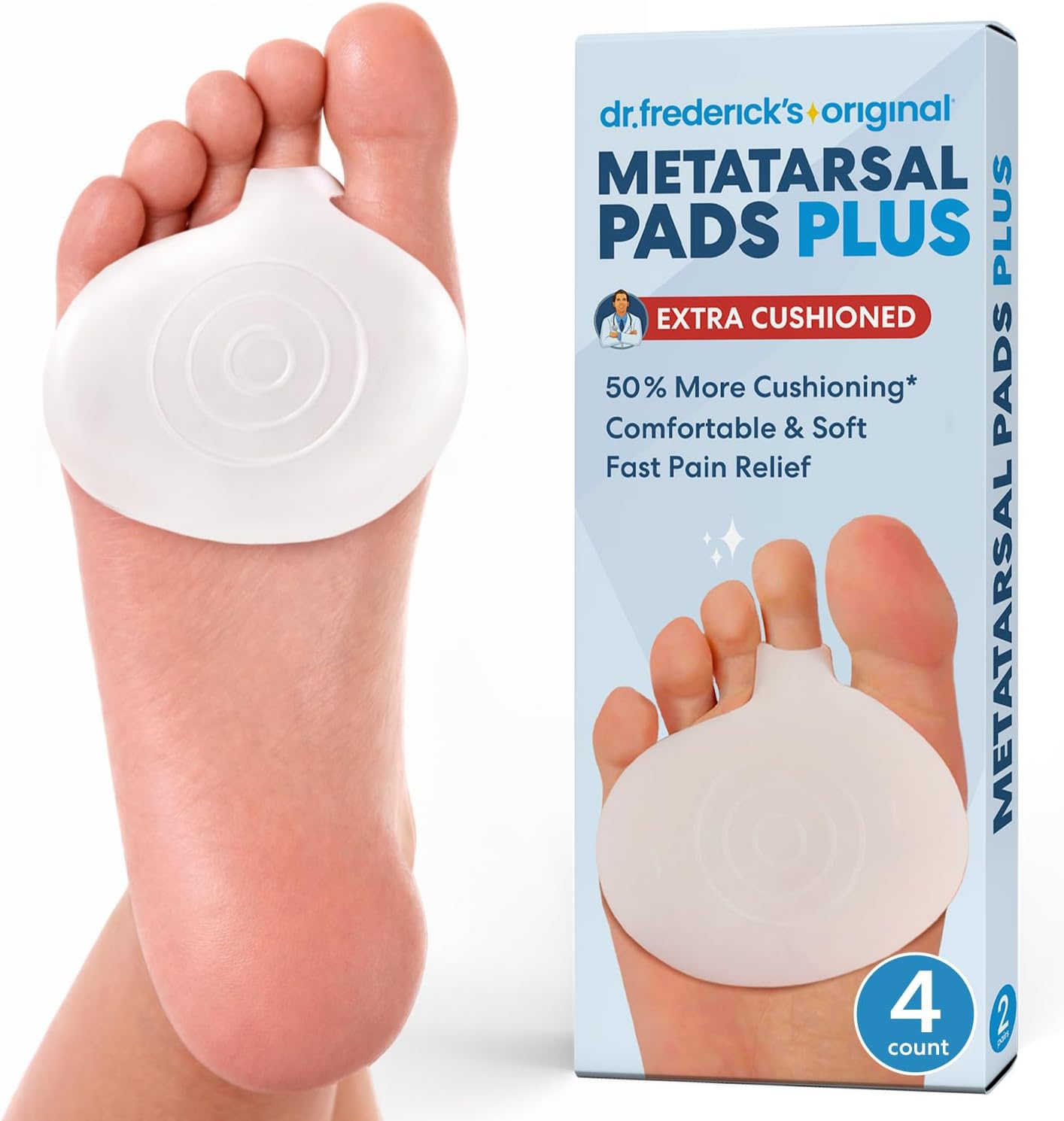
Dr. Frederick's Metatarsal Pads Plus
Dr. Frederick's
$12-$20
Why this accessory
Offloads the pressure that forms calluses under the ball of the foot
Gel pad positioned just behind the ball of the foot offloads metatarsal head pressure
Adhesive backing keeps the pad in the correct anatomical position
Reduces the nerve compression that causes Morton's neuroma pain

PediFix GelStep Heel Cup
PediFix
$12-$20
Why this accessory
Gel cushioning reduces friction that causes heel callus formation
Visco-elastic gel conforms to the exact shape of the heel
Softer than rubber cups - gentler on sensitive or diabetic heel skin
Reduces friction and pressure on the heel pad and spur site
What Is Happening in Your Foot
Corns and calluses are areas of thickened, hardened skin that develop as the body's protective response to repeated friction or pressure. A callus is a diffuse area of thickened skin typically found on the sole of the foot, particularly at the heel and ball of the foot. A corn is a smaller, more focal area of thickened skin with a hard central core, typically found on or between the toes. Both are caused by mechanical irritation - the skin thickens to protect the underlying tissue from sustained pressure or friction. While this is a protective response, the thickened tissue eventually becomes the source of pain as it creates a hard, inflexible surface that transmits pressure to the underlying sensitive tissue.
Biomechanics
The skin of the foot contains keratinocytes that respond to mechanical stress by increasing keratin production and thickening the stratum corneum - the outermost skin layer. This response is proportional to the intensity and duration of the mechanical stimulus. At moderate pressure, a protective callus forms. At high localized pressure, particularly over bony prominences, a corn with a central nucleated core develops. The core acts as a pressure concentrator - it is harder than the surrounding tissue and transmits the applied force to a smaller area, which is why the central core of a corn is often the most painful point. Footwear that distributes pressure evenly across a broader surface area reduces the peak pressure at any single point below the threshold that triggers this response.
Why Symptoms Behave the Way They Do
Corns and calluses do not typically follow a morning-worsening pattern. Pain is characteristically worst during and after periods of weight-bearing activity, when pressure is applied to the thickened skin. Many patients notice that pain is worst at the end of the day after sustained walking or standing. The skin may feel temporarily softer and less painful in the morning after a night without shoe pressure.
What Makes It Worse
Shoes that are too narrow, too short, or have stiff uppers that create friction against bony prominences
High heels that concentrate body weight onto the forefoot and ball of the foot, accelerating callus formation at the metatarsal heads
Foot deformities such as bunions, hammertoes, and claw toes that create new bony prominences against which shoes rub
Walking barefoot on hard surfaces, which applies direct friction to the plantar skin without the buffer of a shoe upper
Poorly fitted socks that bunch or create fold lines inside the shoe, generating friction against the skin
Diabetic neuropathy, which removes the pain signal that would normally prompt the patient to address the pressure source before a callus becomes serious
What Helps
Properly fitted shoes with cushioned insoles that distribute pressure evenly and eliminate friction at bony prominences
Moleskin or foam padding applied over established corns to reduce localized pressure while treatment proceeds
Regular gentle exfoliation with a pumice stone after soaking to reduce callus thickness - aggressive removal is counterproductive as it stimulates further thickening
Urea-based moisturizing cream applied nightly to soften callus tissue and slow the rate of skin thickening
Podiatrist debridement of painful corns - safe removal of the corn core that provides immediate pain relief
Addressing underlying foot deformities with orthotics or surgery to eliminate the structural pressure points driving persistent corn formation
Common Misconceptions
Myth: Cutting corns at home is an effective way to treat them.
Home cutting of corns with blades or corn removal tools is consistently associated with infection risk, particularly in diabetic patients where minor skin trauma can progress to serious wounds. The corn core regrows at the same rate regardless of how it is removed. Podiatrist debridement is safer, more precise, and addresses the corn core without damaging surrounding healthy skin.
Myth: Calluses should be completely removed.
The goal of callus management is reduction to a comfortable thickness, not complete removal. A thin callus at the heel and ball of the foot provides useful protection for the underlying tissue. Aggressive removal of all callus tissue leaves the skin over-sensitive and vulnerable to immediate reformation. Regular maintenance to keep callus thickness manageable is more effective than periodic aggressive removal.
Myth: Corns and calluses are the same thing.
Both are areas of thickened skin caused by friction and pressure, but they differ in structure and location. Calluses are diffuse areas of thickened skin typically on weight-bearing surfaces. Corns are focal, with a hard central core, and typically occur on or between toes at sites of concentrated pressure against bony prominences. Corns tend to be more painful than calluses because their nucleated core concentrates pressure on a smaller area of sensitive tissue.
Sources: American Academy of Dermatology Callus and Corn Guidelines; APMA; Journal of the American Podiatric Medical Association
Corns and Calluses by Occupation
How this condition presents differently depending on how you spend your day.
standing workers
Retail, warehouse, and factory workers who stand on hard floors for full shifts develop plantar calluses at among the highest rates of any occupational group.
Sustained static plantar pressure on hard floors creates the sustained mechanical stimulus that drives callus formation most rapidly. Workers who stand in one position for extended periods concentrate pressure at specific plantar sites - typically the heel and ball of the foot - that develop significant callus over weeks of continuous standing. Work footwear chosen for safety compliance rather than pressure distribution compounds this.
Shoe Priority
Cushioned insole with metatarsal support and heel padding inside a properly fitted work shoe. Anti-fatigue mats at standing workstations meaningfully reduce plantar pressure during static standing and are a worthwhile workplace accommodation for workers with persistent callus problems.
nurses
Healthcare workers develop calluses from the combination of sustained walking volume and footwear that may not distribute pressure optimally.
Nurses accumulate 10,000 or more steps per shift, applying sustained repetitive plantar pressure across a full workday. Slip-resistant work shoes frequently have flat, minimally contoured insoles that do not distribute pressure as effectively as contoured cushioned insoles. The repetitive nature of nursing gait - consistent step pattern on consistent surfaces - creates consistent pressure at the same plantar sites.
Shoe Priority
Slip-resistant shoe with a contoured, cushioned insole or the ability to accept a high-quality aftermarket insole. Replacing the factory insole with a cushioned, metatarsal-supported insole is one of the most cost-effective interventions for nurses with plantar calluses.
runners
Runners develop plantar calluses at the forefoot as a normal adaptive response to repetitive forefoot loading - but calluses that become painful indicate a pressure distribution problem.
Moderate plantar callus at the ball of the foot is expected and protective in runners. The concern is when calluses become thick enough to cause pain or when they develop at unexpected locations indicating abnormal pressure distribution. A painful callus under a specific metatarsal head often indicates that metatarsal is bearing disproportionate load - a biomechanical finding that warrants podiatrist evaluation.
Shoe Priority
Well-fitted running shoe with forefoot cushioning that matches the runner's gait pattern. A sudden change in callus location or thickness with new footwear is clinically useful information - it indicates a change in plantar pressure distribution that may or may not be beneficial.
seniors
Older adults develop corns and calluses more readily as skin elasticity decreases and foot deformities that create pressure points become more prevalent with age.
Aging skin has reduced elasticity and moisture content, making it more susceptible to the friction and pressure that cause corns and calluses. Foot deformities - bunions, hammertoes, claw toes - that accumulate over decades create new bony prominences against which shoes rub. Many seniors also have difficulty reaching their feet for regular moisturizing and pumice maintenance.
Shoe Priority
Wide toe box shoe with cushioned insole and soft upper that does not press against bony prominences. Easy entry design that allows the foot to be inserted without excessive shoe upper contact during the entry process.
construction workers
Construction workers develop heel and forefoot calluses from sustained hard-surface standing in work boots with limited cushioning.
Construction work involves sustained standing on concrete, asphalt, and uneven terrain in work boots that prioritize safety features over plantar pressure distribution. The hard, heavy nature of work boots combined with hard work surfaces creates sustained high plantar pressure. Workers who stand on scaffolding or uneven surfaces develop calluses at atypical locations as the foot adapts to non-planar contact patterns.
Shoe Priority
Work boot with a cushioned, contoured insole or the ability to accept an aftermarket insole. Replacing the factory insole in a work boot with a quality cushioned insole is a straightforward intervention that meaningfully reduces plantar pressure without affecting safety compliance.
Frequently Asked Questions
Related Guides and Resources
MySoleMatch Picks
Top APMA Verified Shoes for Corns and Calluses
Every shoe below carries the APMA Seal of Acceptance. Reviewed by licensed podiatrists and confirmed to promote good foot health. Picks are matched specifically to Corns and Calluses based on clinical alignment strength.
New Balance 1080v15
new balance
$165-$175
Why it works for Corns and Calluses
Maximum Infinion cushioning reduces all pressure points that cause corn and callus formation.
6mm
Heel Drop
maximum
Cushion
4
Widths
MySoleMatch is an independent platform. We are not affiliated with any shoe brand or the APMA. Shoe links are affiliate links through Amazon, HOKA, Brooks, and other partner programs. We may earn a small commission if you purchase through our links at no additional cost to you. These picks are editorially selected based on APMA acceptance and clinical alignment to Corns and Calluses. Not commission rates. Always consult a podiatrist for persistent foot pain.
Walk Into Your Appointment With Answers
Before Your Next Appointment
Take Your Results to Your Podiatrist
Answer a few quick questions. Takes under 2 minutes. Get personalized shoe recommendations.
Not Sure Which Shoe Is Right?
Take our guided quiz and get a personalized recommendation based on your specific foot condition and lifestyle.
Start the Quiz