Disclosure: We may earn a small commission if you purchase through links on this page. No additional cost to you, and we only recommend products we trust. This helps us keep MySoleMatch free and ad-free. Thank you for your support!
Gout
Gout is one of the most painful forms of arthritis, typically striking the big toe joint with sudden, intense pain, swelling, and redness. It is caused by elevated uric acid levels that form sharp crystals in joints. During and after flare-ups, ultra-soft and roomy footwear that minimizes pressure on the inflamed joint is essential.
Signs You May Have Gout
Sudden severe pain in the big toe joint
Intense swelling, redness, and warmth
Extreme tenderness - even light touch is painful
Limited joint movement during flare
Peeling skin around the joint after flare resolution
Walk Into Your Appointment With Answers
Before Your Next Appointment
Take Your Results to Your Podiatrist
Answer a few quick questions. Takes under 2 minutes. Get personalized shoe recommendations.
Best Shoes for Gout | MySoleMatch
During flares, any shoe that puts pressure on the big toe joint is intolerable. Soft, roomy uppers with cushioned midsoles that absorb impact are essential.

New Balance 1080v15
$165-$175
Why this shoe
New Balance lists the Infinion foam cushioning as Extra Soft, and men's sizing comes in widths up to 4E, which may leave more room around a swollen big toe joint. At the standard D width, New Balance's fit data lists an average foot width, so move to a wider width if the joint feels pressed.
Neutral support, a 6mm drop, and a weight of 261 grams (9.2 oz) for the men's version, per New Balance
Perforated mesh upper that New Balance describes as lightweight and breathable
Ultra Heel design for secure fit

New Balance 608v5
$74-$85
Why this shoe
Casual comfort cross-trainer with ABZORB cushioning and wide widths reduces joint pressure for gout sufferers.
ABZORB cushioning in heel
Casual cross-trainer comfort
Supportive design for everyday pain relief
What to Look for in a Shoe
Evidence-based footwear criteria specific to this condition.
Heel Drop
Recommended: 0-8mm
Low to moderate heel drop is preferred for gout management between flares. High heel drop concentrates body weight onto the forefoot and first metatarsophalangeal joint - the primary gout site - increasing mechanical stress on uric acid crystal deposits in the joint. During active flares, heel drop is secondary to achieving zero pressure on the inflamed joint by any means possible.
Cushioning
maximum
Maximum cushioning is essential for gout management at all times - during flares and between them. During an acute flare, the first MTP joint is so acutely inflamed that even the weight of a bed sheet touching it is intolerable. A maximally cushioned shoe that absorbs ground reaction forces before they reach the inflamed joint is the only footwear that can be worn at all during a moderate flare. Between flares, maximum cushioning reduces the mechanical stress on uric acid crystal deposits that can trigger the inflammatory cascade of a new flare.
Avoid: rigid-soled, thin-soled, minimal, tight-fitting
Stability vs. Neutral
neutral
Gout does not inherently require stability features. The primary footwear requirements are maximum cushioning, zero pressure on the first MTP joint, and a soft, roomy upper. Stability features are only relevant when co-existing flat feet or overpronation are altering first MTP joint loading between flares.
Exception: Patients with chronic tophaceous gout who have developed significant joint destruction at the first MTP joint may alter their gait mechanics to offload the affected joint, creating secondary biomechanical changes that warrant stability assessment by a podiatrist.
Width
Recommended: 2E, 4E
Wide and extra-wide toe boxes are essential for gout patients. The first MTP joint is swollen, tender, and larger than normal during and immediately after flares. Any lateral pressure from a narrow toe box on the inflamed joint is intensely painful. Between flares, tophi - deposits of uric acid crystals in the soft tissue around the joint - can permanently enlarge the first MTP joint, requiring extra width as a permanent accommodation.
Insoles and Orthotics
A first MTP joint offloading insole with a cutout or depression beneath the first metatarsal head and great toe base reduces direct joint compression during walking between flares. This is particularly useful for patients with chronic gout where the joint is persistently enlarged from tophi. During acute flares, walking should be minimized entirely regardless of footwear. Custom orthotics addressing any co-existing biomechanical factors are appropriate between flares under podiatric guidance.
Sources: American College of Rheumatology; APMA Clinical Practice Guidelines
Recommended Accessories for Gout
Insoles, heel cups, compression socks, and braces that complement your shoe recommendation and provide additional targeted relief.
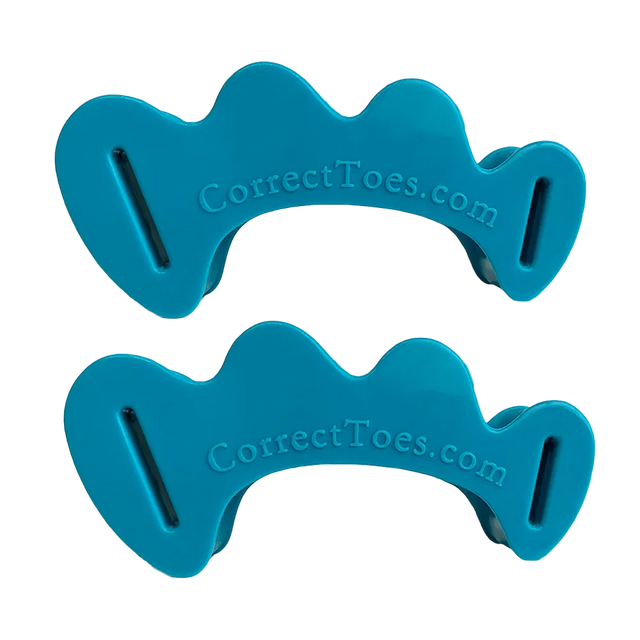
Correct Toes Toe Spacers
Correct Toes
$25-$75
Why this accessory
Toe separation reduces pressure on the inflamed big toe joint
Podiatrist-designed silicone spacers separate all five toes simultaneously
Wearable inside wide toe box shoes for continuous correction during activity
Gradually realigns the big toe toward its natural position over time
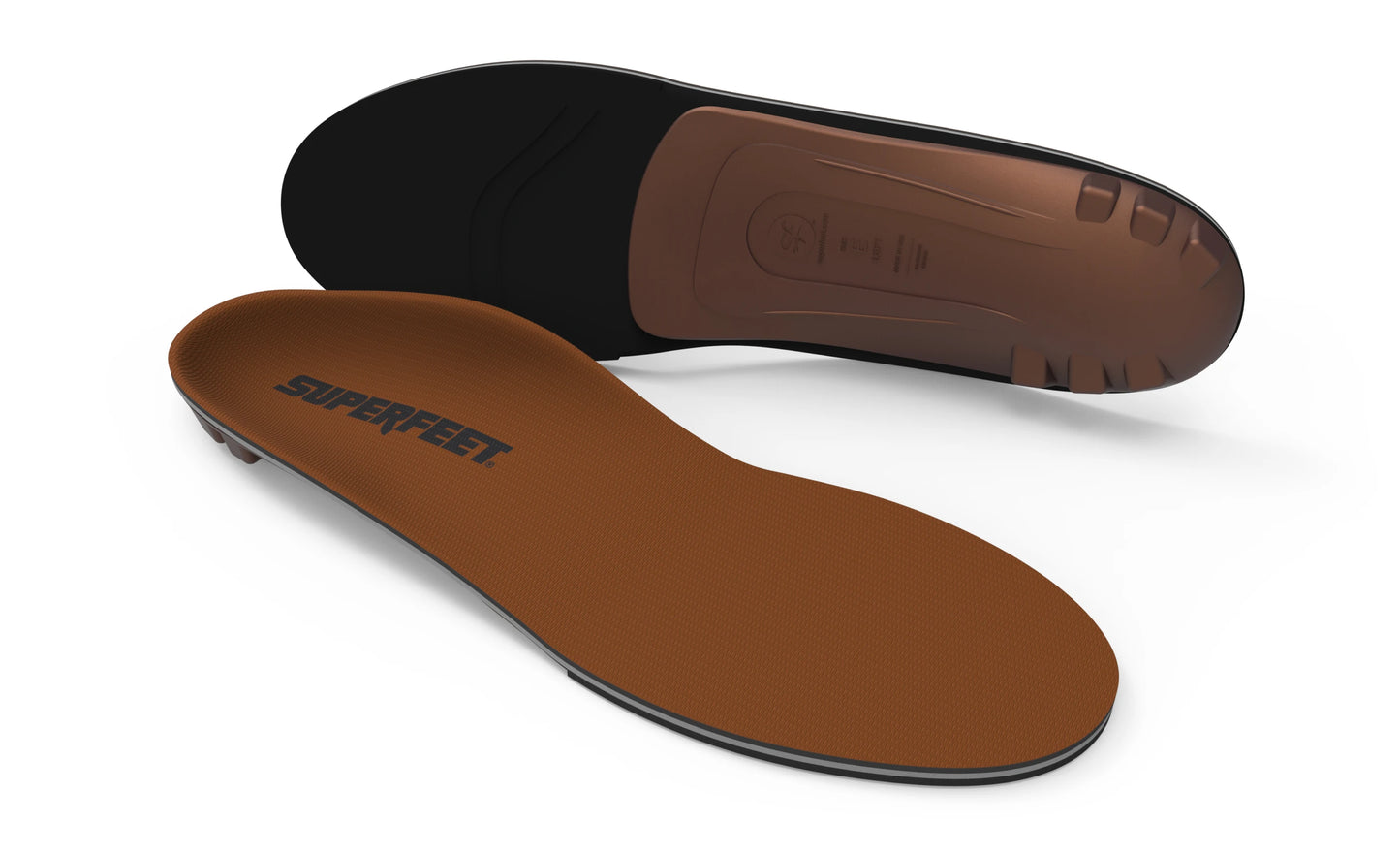
Superfeet COPPER Cushioned Support Insoles
Superfeet
$55-$65
Why this accessory
Memory foam cushioning minimizes pressure on gout-affected joints
Memory foam comfort layer molds to the shape of your foot over time
Moderate arch support suitable for a wider range of arch heights
Deep heel cup with extra cushioning for all-day standing comfort
What Is Happening in Your Foot
Gout is a form of inflammatory arthritis caused by the deposition of monosodium urate crystals in joints and surrounding tissues. These crystals form when blood uric acid levels exceed the saturation point at physiological temperatures, causing urate to crystallize out of solution. The first metatarsophalangeal joint - the joint at the base of the big toe - is affected in approximately 70 percent of gout cases, a predilection explained by the lower temperature of the distal extremities relative to core body temperature, which lowers the urate saturation threshold. A gout flare produces some of the most intense joint pain in medicine - the affected joint becomes exquisitely tender, hot, swollen, and red, often within hours of flare onset. Footwear management is critical because the first MTP joint must bear body weight during every step.
Biomechanics
Monosodium urate crystals that deposit in the first MTP joint are needle-shaped structures that physically penetrate synovial membrane cells and trigger an acute inflammatory response mediated by interleukin-1 beta and neutrophil influx. This inflammatory cascade produces the characteristic extreme tenderness, warmth, and swelling of an acute gout flare. Mechanically, the inflamed joint has dramatically reduced tolerance for compression - the same forces that the joint manages normally during walking become intolerable during a flare. Between flares, established tophi in the periarticular soft tissue create fixed enlargements of the joint that permanently alter its shape and require accommodating footwear even in the absence of acute inflammation. Footwear with maximum cushioning, wide toe boxes, and soft uppers that do not apply direct pressure to the joint addresses both the acute and chronic mechanical challenges of gout.
Why Symptoms Behave the Way They Do
Gout flares characteristically reach peak intensity in the early morning hours and are often worst between 2am and 6am. This nocturnal and early-morning pattern is driven by multiple physiological mechanisms - body temperature drops during sleep, lowering the urate saturation threshold and promoting crystal deposition. Cortisol levels, which have anti-inflammatory properties, are at their lowest in the early morning hours. Relative dehydration during sleep concentrates synovial fluid and increases the urate concentration within the joint. The result is that gout patients frequently awaken to the most intense pain of a flare, which may partially improve during the day as cortisol rises and temperature normalizes.
What Makes It Worse
High-purine foods including red meat, organ meats, shellfish, and anchovies that increase uric acid production
Alcohol consumption - particularly beer and spirits - which increases uric acid production and reduces renal uric acid excretion simultaneously
Dehydration that concentrates uric acid in the blood and synovial fluid
Diuretic medications including thiazides and loop diuretics that reduce renal uric acid excretion
Footwear that applies direct pressure to the first MTP joint, mechanically stressing uric acid crystal deposits and potentially triggering the inflammatory cascade
Sudden changes in uric acid levels - either increases from dietary triggers or decreases from initiating urate-lowering therapy - which can destabilize existing crystal deposits and trigger flares
What Helps
Maximum cushioning shoes with wide, soft toe boxes that completely avoid pressing against the first MTP joint
Urate-lowering therapy - allopurinol or febuxostat - prescribed by a physician to reduce serum uric acid below the saturation threshold and prevent crystal formation
Colchicine, NSAIDs, or corticosteroids prescribed for acute flare management to suppress the inflammatory response
Adequate hydration that maintains uric acid dilution in blood and joint fluid
Dietary modification reducing high-purine foods and alcohol, particularly beer
Complete rest of the affected joint during acute flares - even walking in maximum cushioning footwear may not be tolerable at peak flare intensity
Common Misconceptions
Myth: Gout is caused entirely by diet and is the patient's fault.
While diet contributes to serum uric acid levels, research demonstrates that genetic factors account for the majority of gout risk. Variants in uric acid transporter genes that determine renal uric acid excretion capacity are the primary determinant of who develops hyperuricemia and gout. Many gout patients maintain low-purine diets and still develop flares because their genetic renal uric acid handling is impaired. Diet modification is useful but rarely sufficient as a sole intervention.
Myth: Once a gout flare resolves, no treatment is needed until the next flare.
Research by the American College of Rheumatology and European League Against Rheumatism supports continuous urate-lowering therapy rather than episodic flare treatment for patients with recurrent gout. Without sustained urate reduction, crystal deposits accumulate silently between flares, causing progressive joint damage and increasing flare frequency over time. Treating only acute flares while allowing chronic hyperuricemia to continue is an inadequate management strategy for recurrent gout.
Myth: Gout only affects older men.
While gout is most common in men over 40 - reflecting the uricosuric effect of estrogen in premenopausal women - gout affects women, particularly after menopause when estrogen protection is lost, and increasingly affects younger adults as obesity and metabolic syndrome rates rise. Research indicates rising gout incidence across all demographic groups. Gout in women is often underdiagnosed because it is less clinically expected.
Sources: American College of Rheumatology Gout Management Guidelines, 2020; Arthritis and Rheumatology, Vol. 67, 2015; New England Journal of Medicine, Vol. 367, 2012; APMA
Gout by Occupation
How this condition presents differently depending on how you spend your day.
office professionals
Office workers and professionals with gout face particular challenges when dress codes require formal footwear that conflicts with the wide, soft toe box requirements of gout management.
Dress shoes - particularly men's Oxford styles and women's professional heels - typically have narrow toe boxes and structured uppers that apply direct pressure to the first MTP joint. For gout patients with persistent tophi or chronic joint enlargement, finding professional footwear that accommodates the affected joint without causing pain is a significant ongoing challenge. Gout flares triggered by pressure from dress shoes are well-documented in the clinical literature.
Shoe Priority
Wide or extra-wide toe box professional footwear with a soft upper that does not contact the first MTP joint. Several manufacturers produce dress shoes in extra-wide widths. A custom insert with first MTP joint offloading is a practical addition to any dress shoe for gout patients.
seniors
Gout prevalence rises sharply with age, affecting an estimated 12 percent of men over 70 as renal function declines and uric acid excretion decreases.
Age-related decline in renal function reduces uric acid excretion capacity, making hyperuricemia and gout progressively more common in older adults. Many elderly patients take multiple medications including diuretics that further impair uric acid excretion. Older adults with gout frequently have co-existing conditions - osteoarthritis, bunions - that already require accommodating footwear, compounding the footwear challenge.
Shoe Priority
Wide or extra-wide toe box shoe with maximum cushioning, soft upper, and easy entry design. Velcro or elastic closures eliminate the need to force a tight shoe over an inflamed or tophi-enlarged joint. Podiatrist coordination with the patient's rheumatologist or internist is valuable for comprehensive gout management.
standing workers
Workers who stand for extended periods place sustained compressive load on the first MTP joint, increasing the mechanical stress on uric acid crystal deposits between flares.
Sustained standing applies continuous mechanical stress to the first MTP joint with every minute of weight-bearing. For gout patients with established tophi or persistent joint inflammation, this sustained loading can maintain low-grade inflammation between flares and trigger acute episodes. Work footwear chosen for safety compliance rather than first MTP joint accommodation is a common source of ongoing joint aggravation.
Shoe Priority
Wide toe box work shoe with maximum cushioning and a first MTP joint offloading insole. Workers in environments that allow it should use anti-fatigue mats to reduce the static loading force transmitted to the first MTP joint during sustained standing.
runners
Runners with gout face a challenging combination - the first MTP joint is the primary push-off joint in running and is simultaneously the most common gout site.
Running subjects the first MTP joint to forces several times body weight during push-off. For gout patients, this loading stresses uric acid crystal deposits in the joint with every stride. Post-run joint inflammation and the metabolic effects of intense exercise - including temporary uric acid elevation from lactate competition for renal excretion - can both trigger gout flares in susceptible runners.
Shoe Priority
Maximum cushioning running shoe with a wide toe box. Running during an active gout flare is not recommended regardless of footwear. Between flares, a first MTP joint offloading insole inside the running shoe reduces push-off stress on crystal deposits. Maintaining adequate hydration during training is particularly important for gout-prone runners.
Frequently Asked Questions
Related Guides and Resources
MySoleMatch Picks
Top APMA Verified Shoes for Gout
Every shoe below carries the APMA Seal of Acceptance. Reviewed by licensed podiatrists and confirmed to promote good foot health. Picks are matched specifically to Gout based on clinical alignment strength.
New Balance 1080v15
new balance
$165-$175
Why it works for Gout
New Balance lists the Infinion foam cushioning as Extra Soft, and men's sizing comes in widths up to 4E, which may leave more room around a swollen big toe joint. At the standard D width, New Balance's fit data lists an average foot width, so move to a wider width if the joint feels pressed.
6mm
Heel Drop
maximum
Cushion
4
Widths
MySoleMatch is an independent platform. We are not affiliated with any shoe brand or the APMA. Shoe links are affiliate links through Amazon, HOKA, Brooks, and other partner programs. We may earn a small commission if you purchase through our links at no additional cost to you. These picks are editorially selected based on APMA acceptance and clinical alignment to Gout. Not commission rates. Always consult a podiatrist for persistent foot pain.
Walk Into Your Appointment With Answers
Before Your Next Appointment
Take Your Results to Your Podiatrist
Answer a few quick questions. Takes under 2 minutes. Get personalized shoe recommendations.
Not Sure Which Shoe Is Right?
Take our guided quiz and get a personalized recommendation based on your specific foot condition and lifestyle.
Start the Quiz