Disclosure: We may earn a small commission if you purchase through links on this page. No additional cost to you, and we only recommend products we trust. This helps us keep MySoleMatch free and ad-free. Thank you for your support!
Sesamoiditis
Sesamoiditis involves inflammation around the two small sesamoid bones beneath the big toe joint. These bones act as a pulley for the tendons that move the big toe. Overuse, high-impact activity, and high-heeled or thin-soled shoes are common triggers. Cushioned shoes that offload pressure from the forefoot are the primary footwear intervention.
Signs You May Have Sesamoiditis
Pain under the big toe joint
Swelling or bruising in the forefoot
Pain that worsens with activity
Difficulty bending the big toe
Dull aching pain that may become sharp
Walk Into Your Appointment With Answers
Before Your Next Appointment
Take Your Results to Your Podiatrist
Answer a few quick questions. Takes under 2 minutes. Get personalized shoe recommendations.
Best Shoes for Sesamoiditis | MySoleMatch
Forefoot cushioning that offloads pressure from the sesamoid bones is essential. Metatarsal pads can help redistribute pressure.

New Balance Fresh Foam X 860v15
$145-$155
Why this shoe
Fresh Foam X cushioning minimizes forefoot impact on the sesamoid bones.
Fresh Foam X midsole with Stability Plane technology
Engineered mesh upper for breathability
Described by New Balance as a stability shoe

New Balance Fresh Foam X 840v1
$109-$120
Why this shoe
Fresh Foam X technology with spacious toe box offloads sesamoid pressure effectively.
Fresh Foam X cushioning
Spacious toe box
Supportive design for diabetic foot care
What to Look for in a Shoe
Evidence-based footwear criteria specific to this condition.
Heel Drop
Recommended: 8-12mm
A higher heel drop shifts body weight posteriorly away from the forefoot and sesamoid bones, directly reducing the compressive and tensile load at the first metatarsophalangeal joint during the push-off phase. This is the most mechanically direct footwear intervention for sesamoiditis. Zero or low heel drop maximizes forefoot loading and is contraindicated during sesamoiditis management.
Avoid below 6mm
Cushioning
maximum
Maximum forefoot cushioning is essential for sesamoiditis. The sesamoid bones are embedded in the flexor hallucis brevis tendon beneath the first metatarsophalangeal joint and bear significant compressive load during the push-off phase of gait. A thick, compliant forefoot midsole attenuates the ground reaction forces transmitted to the sesamoids with every step. Rocker sole designs that reduce the range of first MTP joint motion during push-off provide additional sesamoid offloading.
Avoid: minimal, thin-soled, barefoot-style, high-heeled, rigid forefoot without cushioning
Stability vs. Neutral
neutral
Sesamoiditis does not inherently require stability features. The primary footwear goals are forefoot cushioning and heel drop elevation to offload the sesamoids. A neutral shoe with maximum forefoot cushioning and a higher heel drop addresses the sesamoid loading mechanism directly.
Exception: Patients with high arches who develop sesamoiditis due to concentrated forefoot pressure may benefit from a cushioned neutral shoe with a custom orthotic featuring a sesamoid offloading cutout beneath the affected bone. Patients with flat feet and sesamoiditis may benefit from mild medial support alongside forefoot cushioning.
Width
Recommended: D, 2E
Standard to wide fit is appropriate. A toe box wide enough to allow the first toe to sit in its natural position without lateral compression reduces torsional loading at the first MTP joint and sesamoid complex. Narrow footwear that compresses the forefoot medially can alter the sesamoid tracking beneath the first metatarsal head.
Insoles and Orthotics
A sesamoid offloading orthotic - a custom insole with a cutout or depression precisely beneath the affected sesamoid bone - is the most clinically targeted footwear intervention for sesamoiditis. It redistributes plantar pressure away from the sesamoid while maintaining normal loading elsewhere in the foot. A podiatrist can prescribe and fabricate this orthotic based on the specific sesamoid affected and the patient's individual pressure distribution. Metatarsal pads placed just proximal to the first metatarsal head also reduce sesamoid loading by shifting pressure posteriorly.
Sources: APMA Clinical Practice Guidelines; Foot and Ankle International; American Journal of Sports Medicine
Recommended Accessories for Sesamoiditis
Insoles, heel cups, compression socks, and braces that complement your shoe recommendation and provide additional targeted relief.
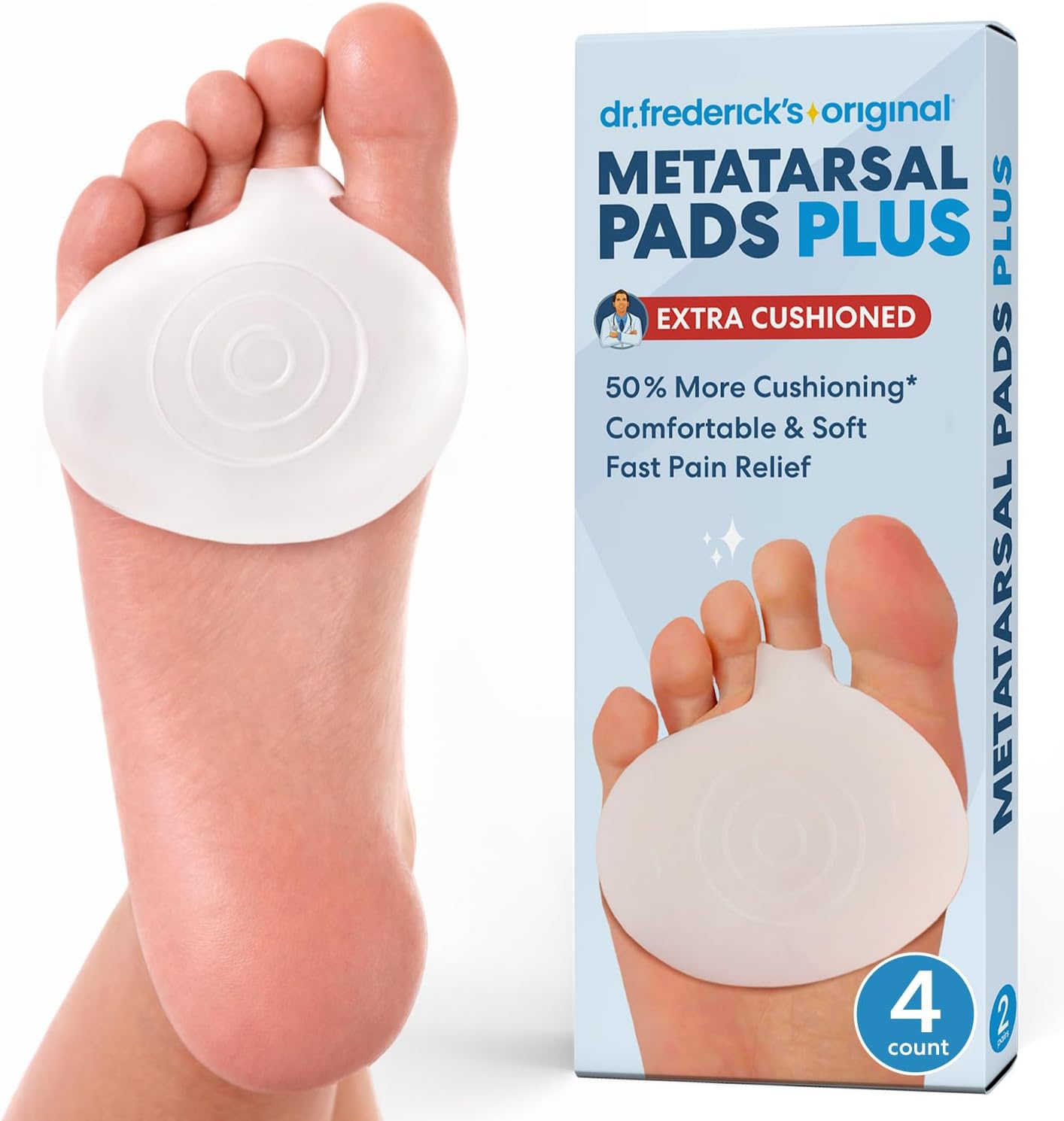
Dr. Frederick's Metatarsal Pads Plus
Dr. Frederick's
$12-$20
Why this accessory
Offloads sesamoid bone pressure under the big toe joint
Gel pad positioned just behind the ball of the foot offloads metatarsal head pressure
Adhesive backing keeps the pad in the correct anatomical position
Reduces the nerve compression that causes Morton's neuroma pain
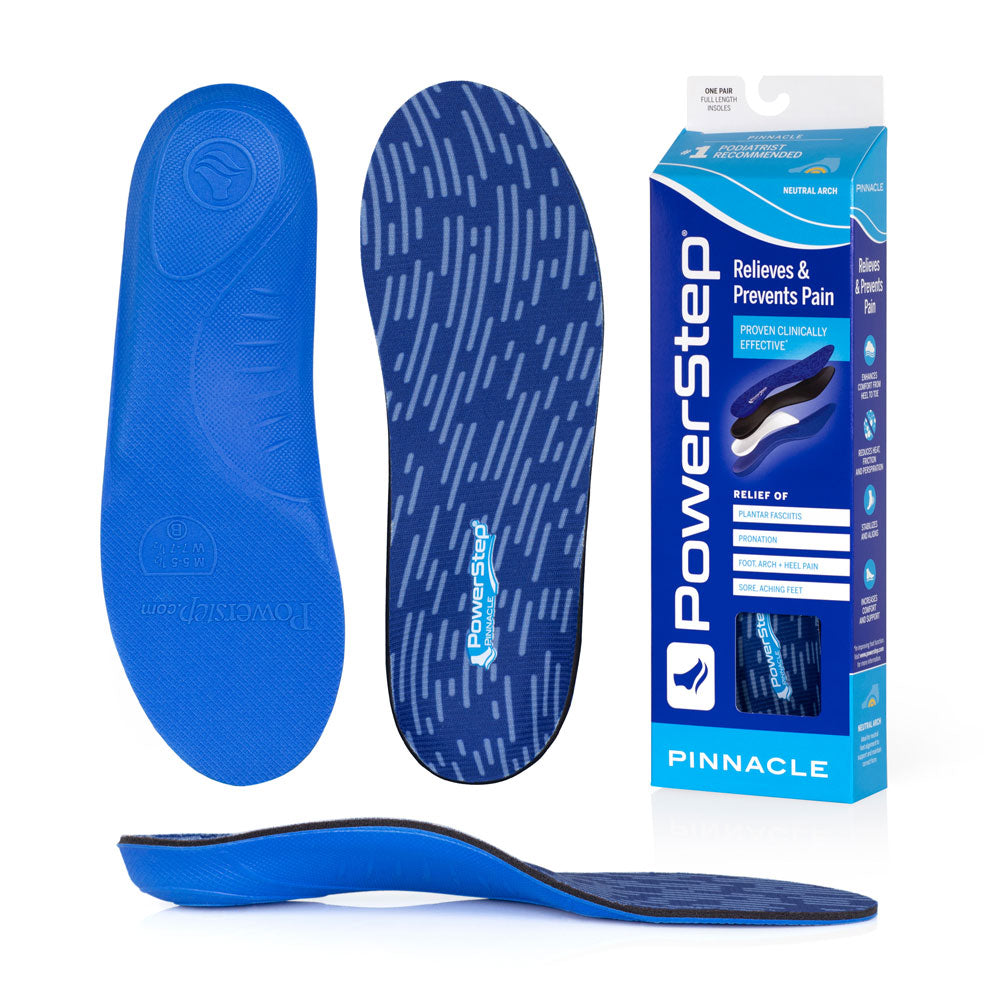
Powerstep Pinnacle Maxx Support Insoles
Powerstep
$45-$55
Why this accessory
Full arch support redistributes pressure away from sesamoid bones
Number one podiatrist recommended OTC insole in the USA
Double-layer cushioning with semi-rigid arch support controls overpronation
Deep heel cradle stabilizes and cushions the calcaneus on every step
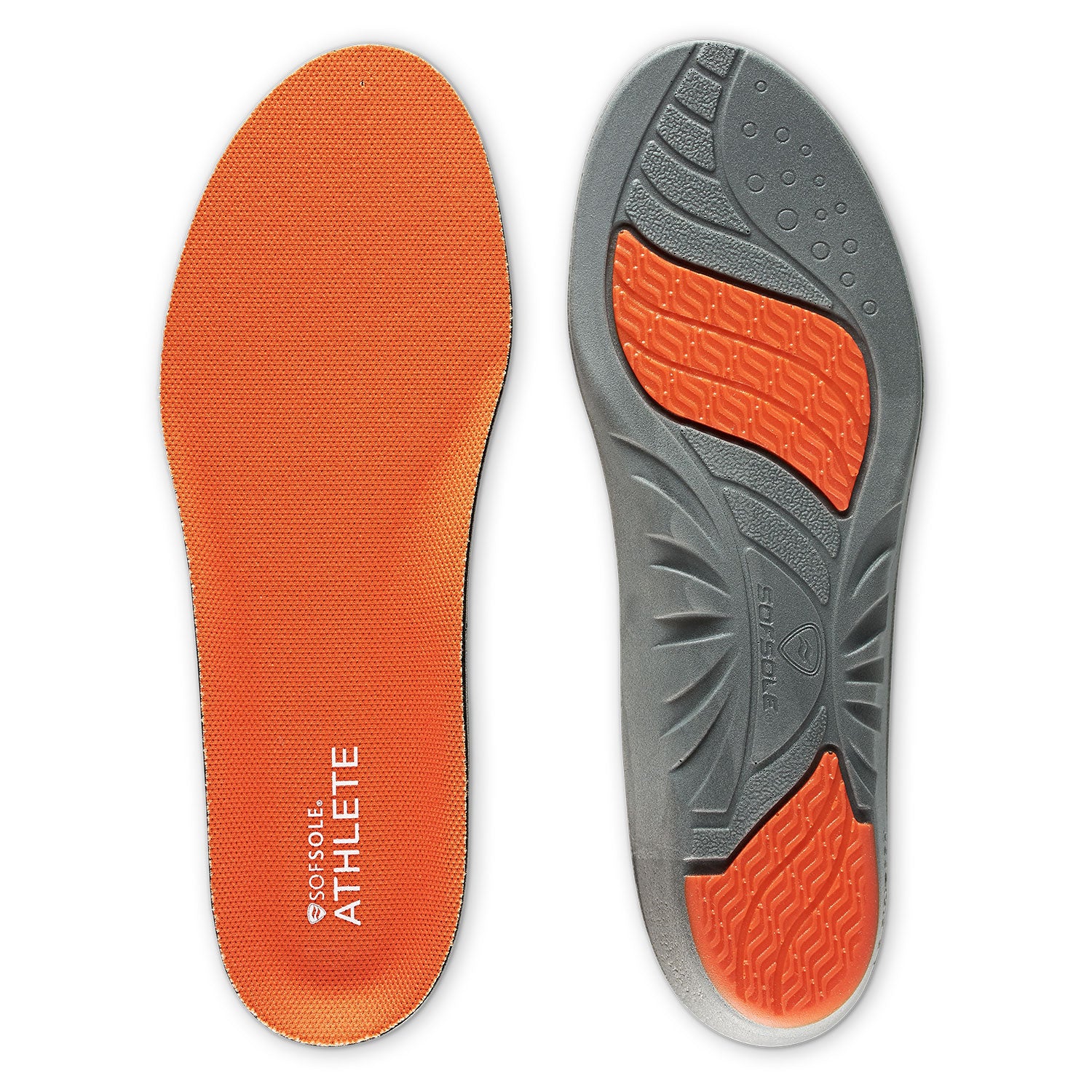
Sof Sole Athlete Performance Insoles
Sof Sole
$20-$45
Why this accessory
Gel forefoot cushioning absorbs sesamoid impact
Gel heel and forefoot pads absorb impact during high activity
Arch support channel reduces plantar fascia strain during running
Moisture wicking lining keeps feet dry during activity
What Is Happening in Your Foot
The sesamoid bones are two small pea-sized bones embedded within the flexor hallucis brevis tendon on the plantar surface of the foot, directly beneath the first metatarsophalangeal joint. They function as a pulley system, improving the mechanical advantage of the flexor hallucis brevis muscle and distributing the compressive forces placed on the first MTP joint during push-off. Sesamoiditis is inflammation of these bones and their surrounding tendons, caused by repetitive compressive and tensile overloading. Because the sesamoids bear significant force during every push-off movement, sesamoiditis can be a persistent and frustrating condition to manage without appropriate footwear offloading.
Biomechanics
During the push-off phase of walking and running, body weight is transferred entirely to the forefoot and the great toe dorsiflexes against the ground. This dorsiflexion draws the sesamoid bones distally beneath the first metatarsal head, placing them under simultaneous compressive load from above and tensile load from the flexor tendons below. In high-impact activities such as running and dancing, these forces are multiplied several times body weight with every push-off. High arches concentrate sesamoid pressure by reducing the surface area over which load is distributed. Footwear with elevated heel drop reduces the degree of first MTP dorsiflexion required during push-off, directly reducing sesamoid loading. Sesamoid offloading orthotics redistribute plantar pressure away from the bones entirely.
Why Symptoms Behave the Way They Do
Sesamoiditis pain typically follows an activity-related pattern that worsens progressively with loading rather than a classic morning-stiffness pattern. Pain builds during and after activity and is worst after high-load activities such as running or dancing. Some morning stiffness may occur as peritendinous inflammation accumulates overnight, but the dominant pattern is load-related. Pain that occurs from the very first step of the morning suggests significant sesamoid bone stress reaction or possible sesamoid fracture, which warrants imaging to distinguish from soft tissue sesamoiditis.
What Makes It Worse
High-impact forefoot loading activities - running, dancing, basketball - that place repeated compressive and tensile stress on the sesamoid bones
High-heeled footwear that shifts body weight onto the forefoot and dramatically increases sesamoid compression
Thin-soled or minimalist footwear that provides no attenuation of the ground reaction forces transmitted to the sesamoids
High-arched feet that concentrate plantar pressure over the first metatarsal head and sesamoid complex
Sudden increases in forefoot-loading activity without adequate adaptation time
Walking barefoot on hard floors, which eliminates all cushioning between the sesamoids and the ground
What Helps
Maximum forefoot cushioning footwear with a higher heel drop that reduces sesamoid compressive and tensile loading per step
Sesamoid offloading orthotics with a precise cutout beneath the affected bone, fabricated by a podiatrist
Metatarsal pads placed just proximal to the first metatarsal head to redistribute pressure away from the sesamoid region
Rest from high-impact forefoot activities to allow sesamoid inflammation to subside
Ice application to the plantar forefoot for 10 to 15 minutes after any weight-bearing activity
Dancer's padding - a felt or foam pad with a sesamoid cutout taped to the plantar forefoot for activity-specific offloading
Common Misconceptions
Myth: Sesamoiditis and a sesamoid stress fracture are the same condition.
Sesamoiditis is inflammation of the sesamoid bones and surrounding tendons without structural bone damage. A sesamoid stress fracture involves actual bone cracking from repetitive loading. Both present with pain beneath the first MTP joint, but sesamoid stress fractures require longer recovery periods, may need imaging to confirm, and carry a risk of non-union - particularly in the tibial sesamoid - if loading continues. Point-specific bone tenderness that worsens with direct palpation suggests fracture rather than soft tissue sesamoiditis.
Myth: Orthotics that support the arch will help sesamoiditis.
Generic arch support orthotics do not address sesamoiditis and may worsen it by increasing the forefoot contact pressure that loads the sesamoids. Effective orthotics for sesamoiditis require a specific sesamoid offloading cutout positioned precisely beneath the affected bone. A custom orthotic prescribed by a podiatrist who has identified the affected sesamoid clinically is the appropriate intervention - not over-the-counter arch supports.
Myth: Sesamoiditis only affects dancers and athletes.
While sesamoiditis is most common in activities involving repetitive forefoot loading - dancing, running, basketball - it can develop in anyone with high-arched feet, in people who wear high heels regularly, and in individuals who suddenly increase their forefoot-loading activity. The condition is not exclusive to athletic populations.
Sources: Foot and Ankle International, Vol. 32, 2011; American Journal of Sports Medicine, Vol. 44, 2016; APMA
Sesamoiditis by Occupation
How this condition presents differently depending on how you spend your day.
runners
Runners are the most common non-dancer population to develop sesamoiditis due to the repetitive forefoot impact forces of training.
Running subjects the sesamoid bones to compressive forces several times body weight with every forefoot contact. Runners who transition to forefoot or midfoot strike patterns, who train in minimalist shoes, or who run on hard surfaces without adequate forefoot cushioning accumulate sesamoid stress rapidly. Female runners with high arches are at particularly elevated risk due to concentrated plantar pressure at the first metatarsal head.
Shoe Priority
Maximum forefoot cushioning running shoe with a heel drop of 8mm or higher. A sesamoid offloading orthotic inside the running shoe is the most effective intervention for runners with active sesamoiditis. Avoid minimalist, zero-drop, or thin-soled running shoes entirely during recovery.
standing workers
Workers who stand on hard floors for extended periods in flat footwear accumulate sesamoid compressive stress that can develop into sesamoiditis over time.
Static standing on hard floors places sustained forefoot loading on the sesamoid bones without the rhythmic loading-unloading cycle of walking. Workers with high arches who stand in flat work shoes concentrate this pressure at the first metatarsal head and sesamoid region throughout every shift. Work footwear chosen for safety compliance rather than forefoot cushioning amplifies this risk.
Shoe Priority
Maximum forefoot cushioning work shoe with a moderate heel drop. A metatarsal pad placed just proximal to the first metatarsal head inside the work shoe provides practical sesamoid pressure relief during standing shifts.
office professionals
Professional women who wear high-heeled dress shoes are at elevated sesamoiditis risk from the forefoot concentration of body weight that heels produce.
High-heeled shoes shift body weight entirely onto the forefoot throughout the stance phase, dramatically increasing sesamoid compression compared to flat footwear. Women in professional environments who wear heels for full workdays five days per week accumulate significant sesamoid stress over time. The combination of heel height and a narrow toe box that alters the tracking of the sesamoids beneath the first metatarsal head is particularly problematic.
Shoe Priority
APMA-accepted professional footwear with minimal heel elevation and adequate forefoot cushioning. Transitioning from high heels to lower-heeled professional footwear is the single most impactful intervention for sesamoiditis in this occupational group.
Frequently Asked Questions
Related Guides and Resources
MySoleMatch Picks
Top APMA Verified Shoes for Sesamoiditis
Every shoe below carries the APMA Seal of Acceptance. Reviewed by licensed podiatrists and confirmed to promote good foot health. Picks are matched specifically to Sesamoiditis based on clinical alignment strength.
New Balance Fresh Foam X 860v15
new balance
$145-$155
Why it works for Sesamoiditis
Fresh Foam X cushioning minimizes forefoot impact on the sesamoid bones.
6mm
Heel Drop
high
Cushion
3
Widths
New Balance Fresh Foam X 840v1
new balance
$109-$120
Why it works for Sesamoiditis
Fresh Foam X technology with spacious toe box offloads sesamoid pressure effectively.
10mm
Heel Drop
high
Cushion
3
Widths
MySoleMatch is an independent platform. We are not affiliated with any shoe brand or the APMA. Shoe links are affiliate links through Amazon, HOKA, Brooks, and other partner programs. We may earn a small commission if you purchase through our links at no additional cost to you. These picks are editorially selected based on APMA acceptance and clinical alignment to Sesamoiditis. Not commission rates. Always consult a podiatrist for persistent foot pain.
Walk Into Your Appointment With Answers
Before Your Next Appointment
Take Your Results to Your Podiatrist
Answer a few quick questions. Takes under 2 minutes. Get personalized shoe recommendations.
Not Sure Which Shoe Is Right?
Take our guided quiz and get a personalized recommendation based on your specific foot condition and lifestyle.
Start the Quiz