Disclosure: We may earn a small commission if you purchase through links on this page. No additional cost to you, and we only recommend products we trust. This helps us keep MySoleMatch free and ad-free. Thank you for your support!
Ingrown Toenails
Ingrown toenails are one of the most common nail conditions, causing pain, swelling, and redness where the nail edge digs into the skin. Tight footwear is a primary trigger and aggravator. Roomy toe box shoes that reduce pressure on the nail edges are essential for both treatment and prevention.
Signs You May Have Ingrown Toenails
Pain and tenderness along the side of the nail
Redness and swelling around the nail
Skin growing over the nail edge
Discharge or infection in severe cases
Foul odor from infected tissue
Walk Into Your Appointment With Answers
Before Your Next Appointment
Take Your Results to Your Podiatrist
Answer a few quick questions. Takes under 2 minutes. Get personalized shoe recommendations.
Best Shoes for Ingrown Toenails | MySoleMatch
A roomy toe box that reduces pressure on the toenail edges is the top priority. Look for wide shoes with adequate toe height.

New Balance 1080v15
$165-$175
Why this shoe
Men's sizing comes in widths up to 4E, which may give the toes more room. At the standard D width, New Balance's fit data lists an average foot width, so choose a wider width if the toes feel crowded. More room around the toes may help ease pressure on the nail edges.
Neutral support, a 6mm drop, and a weight of 261 grams (9.2 oz) for the men's version, per New Balance
Perforated mesh upper that New Balance describes as lightweight and breathable
Ultra Heel design for secure fit

New Balance Fresh Foam X 880v15
$145-$155
Why this shoe
Men's sizing comes in widths up to 4E, which may give the toes more room and help ease pressure on the nail edges. New Balance does not describe the toe box shape, so check that nothing presses on the nail edges.
Fresh Foam X midsole with approximately 3% bio-based content for cushioned ride
Structured yet breathable engineered mesh upper
Structured, breathable engineered mesh upper, per New Balance

New Balance 574
$89-$100
Why this shoe
Built on a wider last than New Balance's older racing shoes and sold in extended widths, which can give crowded toes more room. It runs small according to New Balance, so size up and make sure nothing presses on the nail edges.
ENCAP midsole for cushioning and support
Built on a wider last than New Balance's earlier narrow racing shoes, per New Balance
Classic lifestyle design

New Balance 877
$99-$100
Why this shoe
A lower-cost walking shoe that OutdoorGearLab's review of the 877 V1 describes as comfortable and supportive for wider feet. New Balance no longer lists it on its own site, so confirm availability and check for toe room before you buy.
Good cushioning for everyday comfort
Classic walking shoe design
Affordable everyday option
What to Look for in a Shoe
Evidence-based footwear criteria specific to this condition.
Heel Drop
Recommended: 0-12mm
Heel drop is not a primary footwear consideration for ingrown toenails. The dominant requirement is adequate toe box height and length to prevent nail compression. Any heel drop is acceptable provided the shoe has sufficient toe box room.
Cushioning
moderate
Moderate cushioning with a soft, pliable upper is appropriate. The upper material at the toe box is more important than midsole cushioning for ingrown toenails - a soft mesh or knit upper that does not press against the nail edges is the priority. A cushioned insole that prevents the foot from sliding forward into the toe box during walking also reduces nail compression.
Avoid: rigid uppers, stiff leather toe boxes, pointed toe designs
Stability vs. Neutral
neutral
Ingrown toenails do not require stability features. Choose based on foot type and gait pattern. The toe box geometry is the sole footwear consideration specific to this condition.
Exception: Patients who require stability or motion control features for co-existing conditions such as flat feet should select those features in a shoe with an adequate toe box. The stability requirement does not conflict with the toe box requirement.
Width
Recommended: D, 2E, 4E
Adequate toe box width prevents lateral compression of the nail edges. The great toenail is most commonly affected, and lateral pressure from a narrow toe box forces the nail edge into the surrounding skin. Standard to wide fit ensures the nail has room to grow without contacting the upper. Toe box height is equally important - the shoe must not press down on the nail from above.
Insoles and Orthotics
A non-slip insole or insole with adequate heel grip prevents the foot from sliding forward during walking and downhill activity - a primary mechanism of nail compression against the toe box. Shoes that are even slightly too short create forward foot slide on every step, driving the nail into the front of the shoe. Ensuring both adequate length and width is essential.
Sources: APMA Clinical Practice Guidelines; American Family Physician
Recommended Accessories for Ingrown Toenails
Insoles, heel cups, compression socks, and braces that complement your shoe recommendation and provide additional targeted relief.
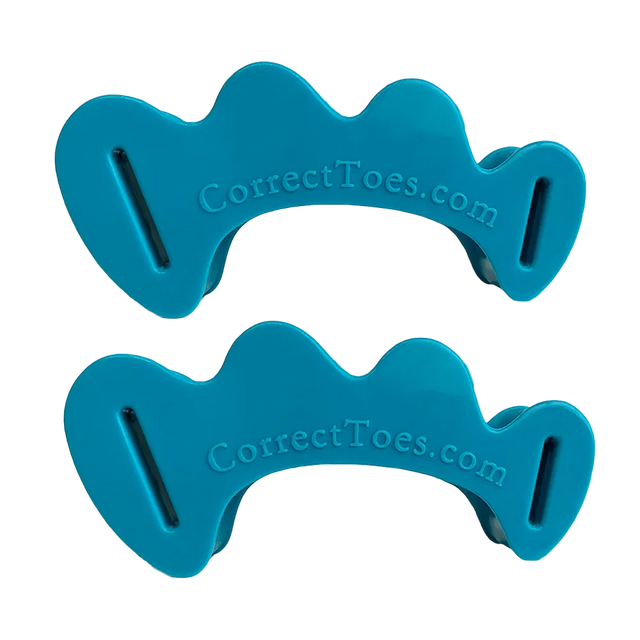
Correct Toes Toe Spacers
Correct Toes
$25-$75
Why this accessory
Toe separation reduces lateral pressure on the ingrown nail
Podiatrist-designed silicone spacers separate all five toes simultaneously
Wearable inside wide toe box shoes for continuous correction during activity
Gradually realigns the big toe toward its natural position over time
What Is Happening in Your Foot
An ingrown toenail, medically known as onychocryptosis, occurs when the edge or corner of a toenail grows into the surrounding skin rather than over it. The great toe is affected in the vast majority of cases. The result is pain, redness, swelling, and - if the nail punctures the skin - a risk of bacterial infection. Ingrown toenails are caused by a combination of nail shape genetics, improper trimming technique, and external pressure from footwear. Of these, footwear pressure is the most directly modifiable factor and the first intervention in conservative management.
Biomechanics
The toenail grows from the nail matrix at a rate of approximately 1.5mm per month. In a normal nail, the edges grow in a gentle curve that clears the surrounding skin. When the nail is trimmed in a curved or angled pattern at the corners, the regrowth can dig into the nail groove rather than clearing it. External pressure from a narrow or short shoe compounds this by pressing the soft tissue against the nail edge, reducing the clearance available for the nail to grow without penetrating the skin. During walking, the foot slides slightly forward in the shoe with every step, pressing the nail against the toe box. In a properly fitted shoe with adequate length and width, this compression is minimal. In a shoe that is too short, too narrow, or both, the compression accumulates into thousands of nail-compressing contacts across a walking day.
Why Symptoms Behave the Way They Do
Ingrown toenail pain does not typically follow a morning-worsening pattern. Pain is characteristically worst during and after periods of footwear wear and improves when shoes are removed and pressure is relieved from the nail edge. Swelling around the nail may be slightly reduced in the morning after a night without shoe pressure, making mornings the period of least discomfort.
What Makes It Worse
Shoes that are too short, causing the nail to press against the toe box with every step
Narrow toe boxes that apply lateral pressure to the nail edges and surrounding skin
Running or high-impact activity in shoes with insufficient toe box room, which amplifies forward foot slide and nail compression
Trimming toenails in a curved pattern or cutting the corners at an angle rather than straight across
Tight socks or stockings that compress the toe and apply additional pressure to the nail edges
High heels that drive the foot forward into the toe box with every step, dramatically increasing nail compression
What Helps
Shoes with adequate length - at least a thumb's width between the longest toe and the end of the toe box - and adequate width to prevent nail compression
Trimming nails straight across without rounding the corners, which prevents the nail edge from digging into the nail groove during regrowth
Soaking the affected toe in warm water for 15 to 20 minutes to soften the surrounding skin and reduce inflammation
Gently lifting the nail edge and placing a small piece of cotton or dental floss underneath to encourage the nail to grow over the skin
Topical antibiotic application if the skin around the nail shows signs of early infection
Podiatrist partial nail avulsion for recurrent or infected ingrown toenails - a minor in-office procedure with high success rates
Common Misconceptions
Myth: Cutting a V-shape into the center of the nail will relieve ingrown toenail pain.
The V-cut nail trimming technique has no clinical evidence supporting it and does not affect how the nail edges grow. Nail growth occurs from the matrix at the base of the nail and the nail edge shape is determined by how it is trimmed at the tip. Cutting a notch in the center does not change the trajectory of the nail edge into the skin.
Myth: Ingrown toenails always require surgery to resolve.
Most ingrown toenails resolve with conservative management including proper footwear, correct nail trimming technique, and soaking. Podiatrist-performed partial nail avulsion - removing the ingrown portion of the nail under local anesthetic - is a minor in-office procedure reserved for cases that do not respond to conservative care or that are recurrently infected. Full nail removal is rarely necessary.
Myth: Tight shoes are the only cause of ingrown toenails.
Footwear is a significant contributing factor but not the only cause. Nail shape genetics, improper trimming technique, toe trauma, and hyperhidrosis that softens the surrounding skin all independently contribute to ingrown toenail development. Proper footwear is the most directly modifiable risk factor, but patients with curved nail anatomy or a history of trauma may develop ingrown toenails even in properly fitted shoes.
Sources: Journal of the American Podiatric Medical Association, Vol. 102, 2012; American Family Physician, Vol. 85, 2012; APMA
Ingrown Toenails by Occupation
How this condition presents differently depending on how you spend your day.
runners
Runners are among the highest-risk groups for ingrown toenails due to repetitive nail compression against the toe box during training.
Every running stride involves the foot sliding slightly forward in the shoe, driving the nail against the front of the toe box. Over a 5-mile run, the great toenail may contact the shoe thousands of times. Running shoes that are even a half size too short create sustained nail trauma that progresses to ingrown toenail over training cycles. Downhill running dramatically amplifies forward foot slide and nail compression.
Shoe Priority
Running shoe with a thumb's width of clearance between the longest toe and the toe box end. Many runners size down for a snug fit and develop ingrown toenails as a consequence. Running shoe fit should be assessed with the foot in the same conditions as running - slightly swollen and measured at the end of the day.
construction workers
Steel-toe and composite-toe work boots create nail compression risk from the rigid toe cap pressing against the nail.
Safety toe caps in work boots limit both the vertical height and lateral width available for the toes. The rigid cap cannot flex or accommodate foot swelling, creating consistent nail compression throughout a shift. Workers who select work boots by safety rating rather than fit frequently develop nail problems over time.
Shoe Priority
Safety work boot with the most generous toe box available in the required protection category. Composite toe designs often provide more interior toe space than steel toe options at equivalent safety ratings. A half size larger than street shoe size is often appropriate for work boots worn with thick socks.
nurses
Nurses who wear closed-toe footwear for 12-hour shifts and perform significant walking accumulate considerable nail compression.
The volume of walking in a nursing shift - often 10,000 or more steps - means that even minor forward foot slide per step creates significant cumulative nail compression. Nurses who develop nail pain during shifts frequently attribute it to shoe fit without recognizing the specific mechanism of nail compression from inadequate toe box length.
Shoe Priority
Closed-toe slip-resistant shoe with adequate length - verified by checking that there is a thumb's width between the longest toe and the shoe tip when standing. This check is frequently omitted when purchasing work footwear and is the most important fit verification for ingrown toenail prevention.
travelers
Travel days involving more walking than usual in fashion or dress footwear are a common trigger for ingrown toenail pain flares.
Travelers frequently walk significantly more than their daily baseline during sightseeing days. Fashion and dress shoes chosen for travel often have less toe box length than athletic footwear. The combination of higher step counts and less adequate footwear creates the sustained nail compression that triggers or worsens ingrown toenails.
Shoe Priority
Walking shoe with verified adequate toe box length for anticipated sightseeing distances. Packing a wide toe box athletic shoe for high-step days alongside dress shoes for evenings prevents the nail trauma that accumulates during long travel days.
Frequently Asked Questions
Related Guides and Resources
MySoleMatch Picks
Top APMA Verified Shoes for Ingrown Toenails
Every shoe below carries the APMA Seal of Acceptance. Reviewed by licensed podiatrists and confirmed to promote good foot health. Picks are matched specifically to Ingrown Toenails based on clinical alignment strength.
New Balance 1080v15
new balance
$165-$175
Why it works for Ingrown Toenails
Men's sizing comes in widths up to 4E, which may give the toes more room. At the standard D width, New Balance's fit data lists an average foot width, so choose a wider width if the toes feel crowded. More room around the toes may help ease pressure on the nail edges.
6mm
Heel Drop
maximum
Cushion
4
Widths
New Balance Fresh Foam X 880v15
new balance
$145-$155
Why it works for Ingrown Toenails
Men's sizing comes in widths up to 4E, which may give the toes more room and help ease pressure on the nail edges. New Balance does not describe the toe box shape, so check that nothing presses on the nail edges.
6mm
Heel Drop
high
Cushion
4
Widths
MySoleMatch is an independent platform. We are not affiliated with any shoe brand or the APMA. Shoe links are affiliate links through Amazon, HOKA, Brooks, and other partner programs. We may earn a small commission if you purchase through our links at no additional cost to you. These picks are editorially selected based on APMA acceptance and clinical alignment to Ingrown Toenails. Not commission rates. Always consult a podiatrist for persistent foot pain.
Walk Into Your Appointment With Answers
Before Your Next Appointment
Take Your Results to Your Podiatrist
Answer a few quick questions. Takes under 2 minutes. Get personalized shoe recommendations.
Not Sure Which Shoe Is Right?
Take our guided quiz and get a personalized recommendation based on your specific foot condition and lifestyle.
Start the Quiz