Disclosure: We may earn a small commission if you purchase through links on this page. No additional cost to you, and we only recommend products we trust. This helps us keep MySoleMatch free and ad-free. Thank you for your support!
Turf Toe
Turf toe is a sprain of the main joint of the big toe, typically caused by the toe being forcibly bent upward beyond its normal range. Common in athletes on artificial turf surfaces, it causes pain, swelling, and limited toe movement. Stable forefoot shoes that limit excessive toe dorsiflexion aid recovery.
Signs You May Have Turf Toe
Pain and swelling around the big toe joint
Limited movement of the big toe
Pain that worsens when pushing off
Tenderness at the base of the big toe
Bruising in severe cases
Walk Into Your Appointment With Answers
Before Your Next Appointment
Take Your Results to Your Podiatrist
Answer a few quick questions. Takes under 2 minutes. Get personalized shoe recommendations.
Best Shoes for Turf Toe | MySoleMatch
A stable forefoot that limits excessive toe dorsiflexion is key. Look for shoes with firm midsoles in the forefoot area.

New Balance Fresh Foam X More Trail v3
$139-$150
Why this shoe
Stable forefoot limits excessive toe dorsiflexion - directly protecting the sprained big toe joint.
Maximum Fresh Foam X cushioning for trail use
Stable forefoot limits excessive toe dorsiflexion
Vibram outsole for traction
What to Look for in a Shoe
Evidence-based footwear criteria specific to this condition.
Heel Drop
Recommended: 8-12mm
A moderate to higher heel drop reduces the degree of first metatarsophalangeal joint dorsiflexion required during the push-off phase of gait. Since turf toe is a hyperextension injury of this joint, any footwear feature that reduces the range of big toe extension during walking and running reduces stress on the damaged ligaments and capsule during recovery. A higher heel drop shifts the push-off mechanics proximally and reduces the demand placed on the first MTP joint.
Avoid below 4mm
Cushioning
moderate
Moderate overall cushioning with a firm, rigid forefoot is the most important midsole characteristic for turf toe. A forefoot that is too compliant allows the first MTP joint to dorsiflex excessively during push-off - the precise movement that caused and continues to aggravate the injury. A firm forefoot plate or carbon fiber insert that limits metatarsophalangeal joint extension is more important than overall midsole softness for turf toe management.
Avoid: flexible forefoot, minimalist, highly compliant forefoot midsoles
Stability vs. Neutral
neutral
Turf toe does not inherently require stability features. The primary footwear requirement is forefoot rigidity that limits big toe dorsiflexion. Stability features are only relevant if co-existing overpronation is altering first MTP joint loading mechanics.
Exception: Players with both turf toe and flat feet may benefit from mild medial support to normalize the loading pattern at the first MTP joint. Excessive pronation can alter the axis of the first MTP joint and change the direction of hyperextension forces during athletic movements.
Width
Recommended: D, 2E
Adequate toe box width prevents lateral compression on the big toe joint, which is already inflamed and sensitive from the sprain. A wide enough toe box also ensures the shoe upper does not contact and irritate the swollen first MTP joint during activity.
Insoles and Orthotics
A Morton's extension - a rigid insole extension under the first metatarsal and great toe that limits first MTP dorsiflexion - is the most clinically effective insole intervention for turf toe. It directly blocks the hyperextension movement that caused the injury and aggravates it during recovery. A podiatrist or sports medicine physician can fabricate or prescribe a Morton's extension as part of conservative turf toe management. Shoes with removable insoles provide the interior depth needed to accommodate this insert.
Sources: American Journal of Sports Medicine, Vol. 44, 2016; Sports Health, Vol. 5, 2013; APMA
Recommended Accessories for Turf Toe
Insoles, heel cups, compression socks, and braces that complement your shoe recommendation and provide additional targeted relief.
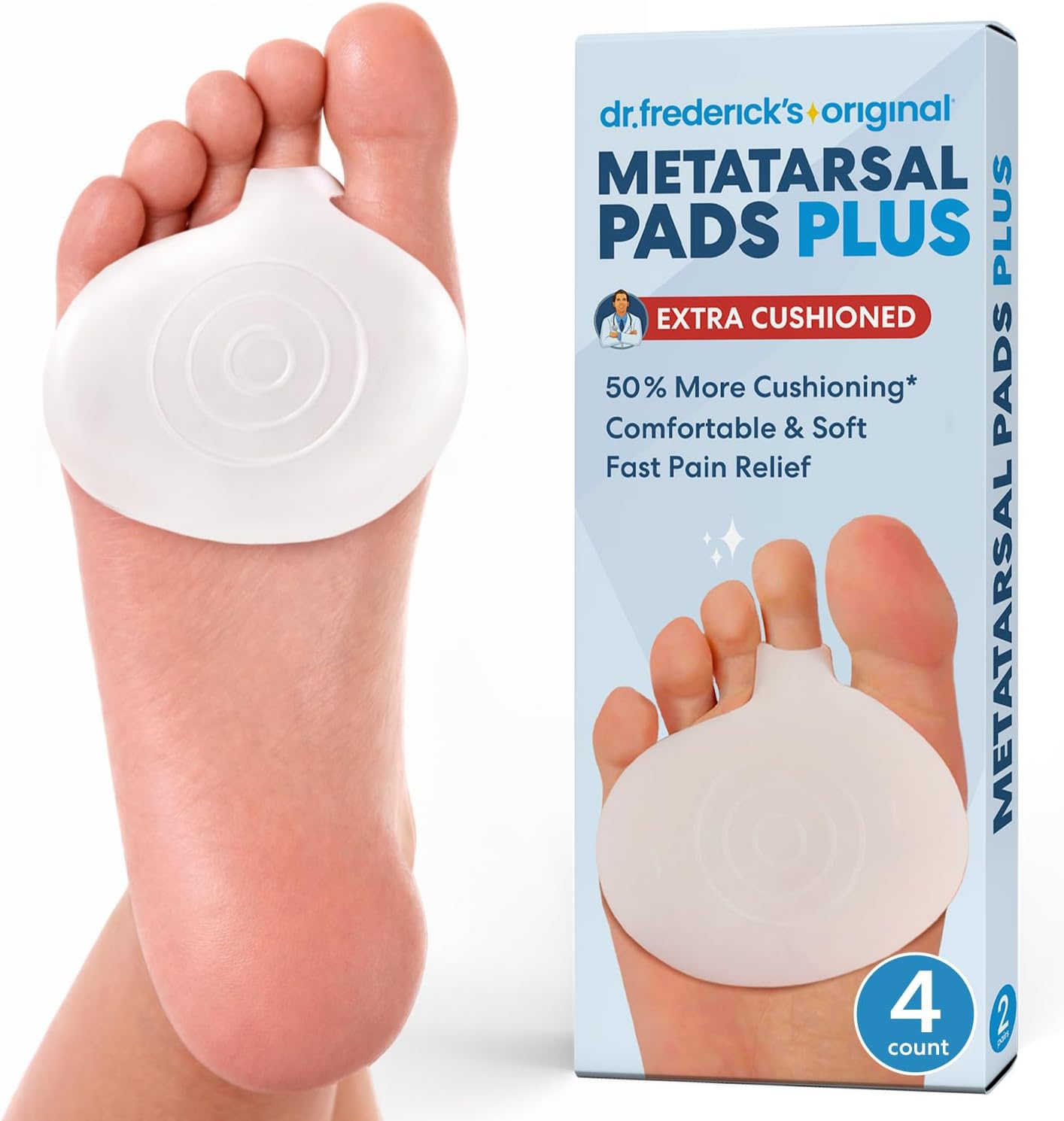
Dr. Frederick's Metatarsal Pads Plus
Dr. Frederick's
$12-$20
Why this accessory
Offloads big toe joint pressure during turf toe recovery
Gel pad positioned just behind the ball of the foot offloads metatarsal head pressure
Adhesive backing keeps the pad in the correct anatomical position
Reduces the nerve compression that causes Morton's neuroma pain
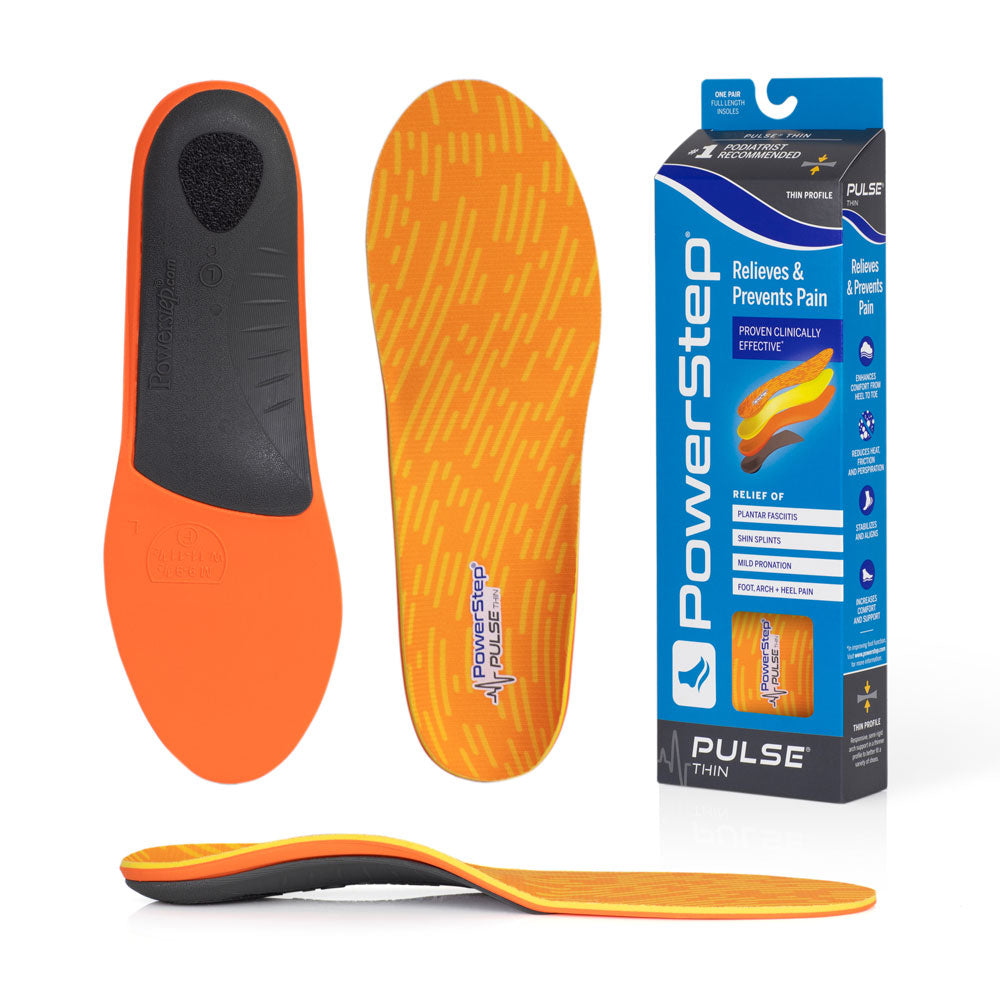
Powerstep Pro Thin Flexible Insoles
Powerstep
$40-$50
Why this accessory
Firm forefoot reduces toe dorsiflexion stress during push-off
Low-profile design fits athletic and performance shoes without crowding
Flexible shell moves with the foot for a more natural feel
Ventilated top cover reduces moisture and fungal growth risk
What Is Happening in Your Foot
Turf toe is a sprain of the plantar capsule and ligaments surrounding the first metatarsophalangeal joint - the joint at the base of the big toe. It occurs when the big toe is forced into hyperextension beyond its normal range of motion, typically when the forefoot is planted and the heel is raised while force is applied from behind. The injury is named for its association with play on artificial turf, which provides less shock absorption and more grip than natural grass, creating the surface conditions that produce this mechanism. Despite its association with professional athletes, turf toe occurs in recreational athletes, dancers, and anyone who subjects the first MTP joint to hyperextension forces.
Biomechanics
The first metatarsophalangeal joint normally dorsiflexes approximately 65 to 70 degrees during the push-off phase of running and cutting movements. The plantar capsule and associated ligaments limit dorsiflexion beyond this range. When a force drives the joint into dorsiflexion beyond 70 degrees - typically when an athlete falls forward over a planted foot - the plantar structures are stretched beyond their elastic limit, causing graded sprains ranging from mild capsule stretching to complete ligament tears. Artificial turf compounds this risk because the toe grips the turf surface while the body continues to move forward, creating a larger hyperextension moment arm than natural grass, which provides more slip at the foot-surface interface. Shoes with rigid forefoot soles - particularly carbon fiber plates - reduce the hyperextension moment by limiting how far the toe can dorsiflex within the shoe during athletic movements.
Why Symptoms Behave the Way They Do
Turf toe pain typically follows an acute injury pattern rather than a chronic morning-stiffness pattern. Immediately after the injury, pain and swelling are maximal. Over days to weeks, morning stiffness from overnight joint capsule tightening may occur as the acute inflammation subsides. This morning stiffness is similar to other joint sprains and reflects capsular contraction during rest. Gentle range-of-motion exercises before rising, combined with supportive footwear worn immediately, reduce this stiffness.
What Makes It Worse
Returning to cutting, jumping, or push-off activities before the plantar capsule has adequately healed - the most common cause of chronic turf toe
Wearing flexible-soled athletic shoes that allow excessive first MTP dorsiflexion during push-off and cutting movements
Playing on artificial turf surfaces that provide high grip and reduce the foot slip that normally limits hyperextension forces
Activities that require repetitive push-off from the first MTP joint before healing is complete
Footwear that is too short, which positions the first MTP joint at an already-dorsiflexed resting angle inside the shoe
What Helps
Rigid forefoot footwear or a Morton's extension insole that limits first MTP dorsiflexion during push-off and athletic movement
Rest from push-off activities during the acute phase to allow plantar capsule healing
Ice applied to the joint for 15 minutes after any activity that loads the first MTP joint
Buddy taping the great toe to the second toe to limit dorsiflexion range during early return to activity
Gradual return to sport with a progressive loading protocol under sports medicine guidance
Taping techniques applied by a sports medicine professional that specifically limit first MTP dorsiflexion during athletic activity
Common Misconceptions
Myth: Turf toe is a minor injury that does not require rest.
Research classifies turf toe into three grades of severity, with grade 3 injuries involving complete plantar capsule rupture requiring 6 or more weeks of recovery and potential surgical evaluation. Even grade 1 sprains that are returned to sport too quickly can develop into chronic instability and persistent pain. The first MTP joint is under significant load during every push-off movement, and inadequate healing time converts a straightforward sprain into a chronic condition.
Myth: Turf toe only happens on artificial turf.
While the injury is associated with artificial turf - which provided the conditions for the original clinical descriptions - turf toe occurs on any surface where the foot is planted and a hyperextension force is applied to the big toe. It has been documented in athletes on natural grass, in dancers, in basketball players on hardwood, and in non-athletes who sustain the injury from falls or missteps. The surface affects risk but does not determine outcome.
Myth: Once turf toe heals, the joint returns to full normal function.
Research indicates that athletes who sustain significant turf toe injuries frequently have persistent reduced range of motion, subtle instability, and altered push-off mechanics even after clinical recovery. Hallux rigidus - progressive stiffening of the first MTP joint - is a recognized long-term complication of repeated or incompletely healed turf toe injuries. Adequate rest, appropriate footwear, and rehabilitation under sports medicine guidance during recovery reduce the risk of these long-term consequences.
Sources: American Journal of Sports Medicine, Vol. 44, 2016; Sports Health, Vol. 5, 2013; Foot and Ankle International, Vol. 34, 2013
Turf Toe by Occupation
How this condition presents differently depending on how you spend your day.
runners
Runners who train in flexible minimalist shoes or who perform trail running on uneven terrain face elevated turf toe risk.
Flexible-soled running shoes allow greater first MTP dorsiflexion than structured shoes, increasing the hyperextension forces during push-off on downhills or uneven terrain. Trail runners who catch a toe on an obstacle or plant on an unstable surface are at particular risk. Road runners who transition to minimalist footwear increase their first MTP joint loading significantly.
Shoe Priority
Running shoe with a firm forefoot midsole that limits excessive first MTP dorsiflexion. During turf toe recovery, a rigid insert or Morton's extension inside the running shoe is essential for protecting the healing joint. Return to full training volume should be cleared by a sports medicine physician.
restaurant workers
Kitchen workers who kneel on one knee - a common position for accessing low storage areas - can sustain turf toe from the forced dorsiflexion this position places on the great toe.
The kneeling position with the toes dorsiflexed against the floor is one of the highest-load positions for the first MTP joint. Kitchen workers who repeatedly adopt this position in flat, flexible footwear accumulate significant joint stress that can produce gradual-onset turf toe. Slip-resistant kitchen clogs and flat kitchen shoes provide no forefoot rigidity to protect the joint in this position.
Shoe Priority
Slip-resistant work shoe with a firm forefoot construction. Kitchen workers with turf toe should avoid kneeling positions during recovery and use a step stool or alternative posture for low-level access tasks.
standing workers
Retail and warehouse workers who perform tasks requiring sustained forefoot weight-bearing or toe-extended positions accumulate first MTP joint stress.
Workers who stand on their toes to reach high shelves, squat with toes dorsiflexed, or push heavy carts from a forefoot-loaded position repeatedly stress the first MTP joint capsule. Work footwear chosen for safety or appearance rather than forefoot rigidity provides no protection against these forces.
Shoe Priority
Work shoe with adequate forefoot rigidity. For workers with active turf toe, modifying work tasks to avoid forefoot-loading postures during recovery is as important as footwear selection.
Frequently Asked Questions
Related Guides and Resources
Walk Into Your Appointment With Answers
Before Your Next Appointment
Take Your Results to Your Podiatrist
Answer a few quick questions. Takes under 2 minutes. Get personalized shoe recommendations.
Not Sure Which Shoe Is Right?
Take our guided quiz and get a personalized recommendation based on your specific foot condition and lifestyle.
Start the Quiz