Disclosure: We may earn a small commission if you purchase through links on this page. No additional cost to you, and we only recommend products we trust. This helps us keep MySoleMatch free and ad-free. Thank you for your support!
Tendinitis
Tendinitis in the foot most commonly affects the Achilles, posterior tibial, or peroneal tendons. It is caused by repetitive stress, overuse, or sudden increases in activity. Shoes that provide heel and arch support reduce strain on the affected tendon and are an essential part of conservative management.
Signs You May Have Tendinitis
Pain or stiffness in the affected tendon area
Swelling or tenderness near the tendon
Pain that worsens with activity
Creaking or crackling sensation with movement
Reduced range of motion
Walk Into Your Appointment With Answers
Before Your Next Appointment
Take Your Results to Your Podiatrist
Answer a few quick questions. Takes under 2 minutes. Get personalized shoe recommendations.
Best Shoes for Tendinitis | MySoleMatch
Heel and arch support to reduce tendon strain are the priorities. Look for stability shoes with cushioned midsoles and firm heel counters.

New Balance Fresh Foam X 860v15
$145-$155
Why this shoe
Heel and arch support reduce strain on inflamed tendons during activity.
Fresh Foam X midsole with Stability Plane technology
Engineered mesh upper for breathability
Described by New Balance as a stability shoe

New Balance 1080v15
$165-$175
Why this shoe
Infinion cushioning absorbs impact that would otherwise stress inflamed tendons.
Neutral support, a 6mm drop, and a weight of 261 grams (9.2 oz) for the men's version, per New Balance
Perforated mesh upper that New Balance describes as lightweight and breathable
Ultra Heel design for secure fit
What to Look for in a Shoe
Evidence-based footwear criteria specific to this condition.
Heel Drop
Recommended: 8-12mm
A higher heel drop is the most important footwear variable for foot and ankle tendinitis across all affected tendons. Elevated heel geometry reduces the range of ankle dorsiflexion required during the stance phase of gait, shortening the working length of the posterior chain tendons - Achilles, posterior tibial, and peroneal - and reducing the tensile load they must manage per step. This principle applies most directly to Achilles and posterior tibial tendinitis, the two most common tendinitis presentations in the foot.
Avoid below 6mm
Cushioning
moderate_to_maximum
Moderate to maximum cushioning reduces the ground reaction forces transmitted through the foot and ankle with every footstrike, reducing the impact component of tendon loading. A well-cushioned heel counter specifically reduces the repetitive compression and impact at the Achilles tendon insertion point during heel strike. Firm heel counter construction also reduces the pistoning effect that creates friction at the Achilles in poorly structured shoes.
Avoid: minimal, thin-soled, worn-out midsoles, rigid-soled
Stability vs. Neutral
stability
Mild to moderate stability features are indicated for most foot tendinitis patients because overpronation adds a torsional stress component to tendons that are primarily designed for tensile loading. The posterior tibial tendon is the most directly affected by overpronation - it is the primary dynamic arch support structure and is placed under chronic overload in patients with flat feet. Stability shoes with medial post support reduce this overpronation-driven overload. Peroneal tendinitis in patients with high arches and supination is an exception where lateral support rather than medial stability may be more appropriate.
Exception: Peroneal tendinitis in patients with high arches or supination requires lateral support rather than medial stability features. Extensor tendinitis on the top of the foot is driven by shoe tongue pressure rather than stability considerations. Tendinitis location and gait pattern must both be assessed to select appropriate footwear features.
Width
Recommended: D, 2E
Standard to wide fit is appropriate for most tendinitis patients. A shoe that fits correctly prevents compensatory gait changes from compression that can alter tendon loading patterns. For extensor tendinitis specifically, adequate width and a low-profile tongue reduce the upper pressure on the dorsal foot tendons.
Insoles and Orthotics
Heel lift insoles that add 6 to 12mm of elevation are effective for Achilles and posterior tibial tendinitis when the shoe's built-in heel drop is insufficient. They immediately reduce tendon working length and tensile load without requiring new footwear. Custom orthotics addressing overpronation or biomechanical asymmetry are the most appropriate intervention for chronic or recurrent posterior tibial tendinitis, where the structural driver of overload must be addressed directly.
Sources: Scandinavian Journal of Medicine and Science in Sports; APMA Clinical Practice Guidelines
Recommended Accessories for Tendinitis
Insoles, heel cups, compression socks, and braces that complement your shoe recommendation and provide additional targeted relief.
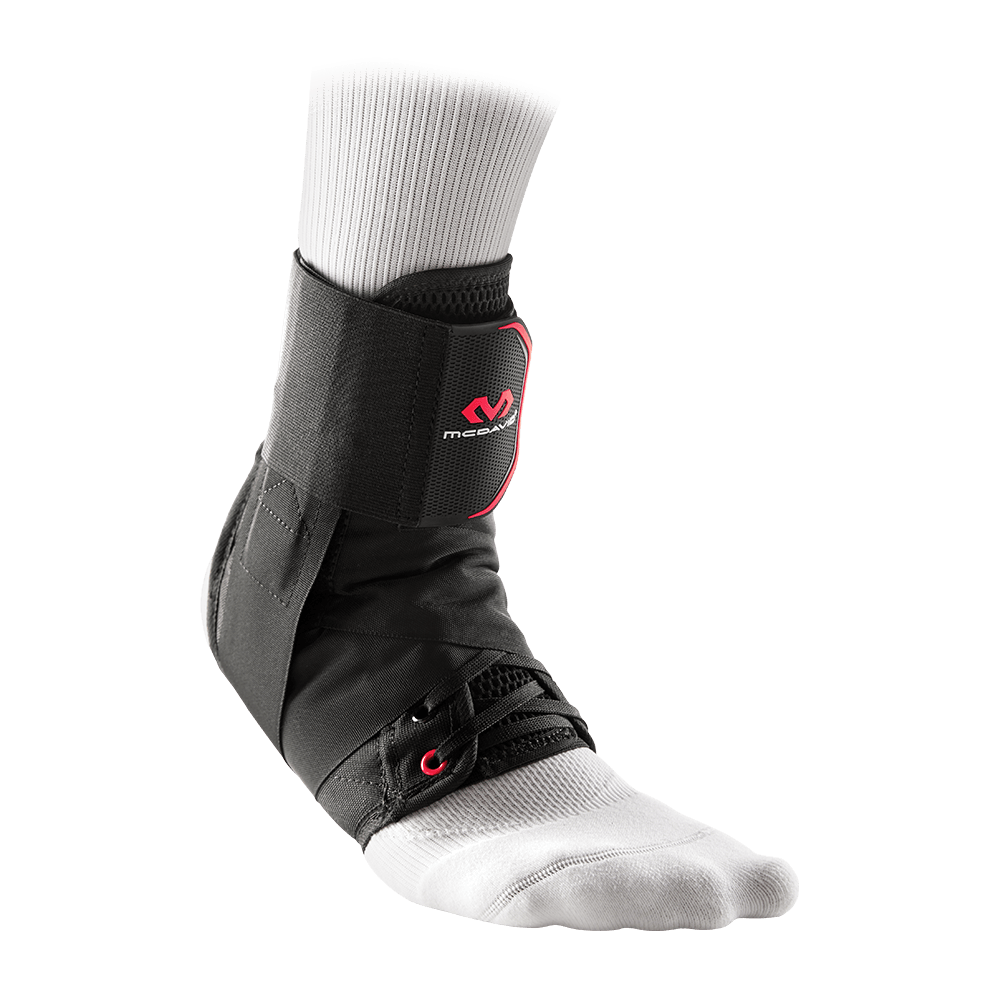
McDavid Ankle Brace with Strap Support
McDavid
$20-$50
Why this accessory
Ankle support reduces stress on inflamed tendons during activity
Figure-8 strapping system mimics athletic taping for lateral ankle support
Fits inside most athletic shoes without modifying fit
Lightweight breathable construction for all-day wear

Bauerfeind MalleoTrain Ankle Support
Bauerfeind
$80-$120
Why this accessory
Medical compression reduces tendon inflammation around the ankle
Medical-grade knit compression with anatomical massage pads
Massage inserts stimulate circulation and reduce swelling around the ankle
Worn by professional athletes and prescribed by orthopedic surgeons
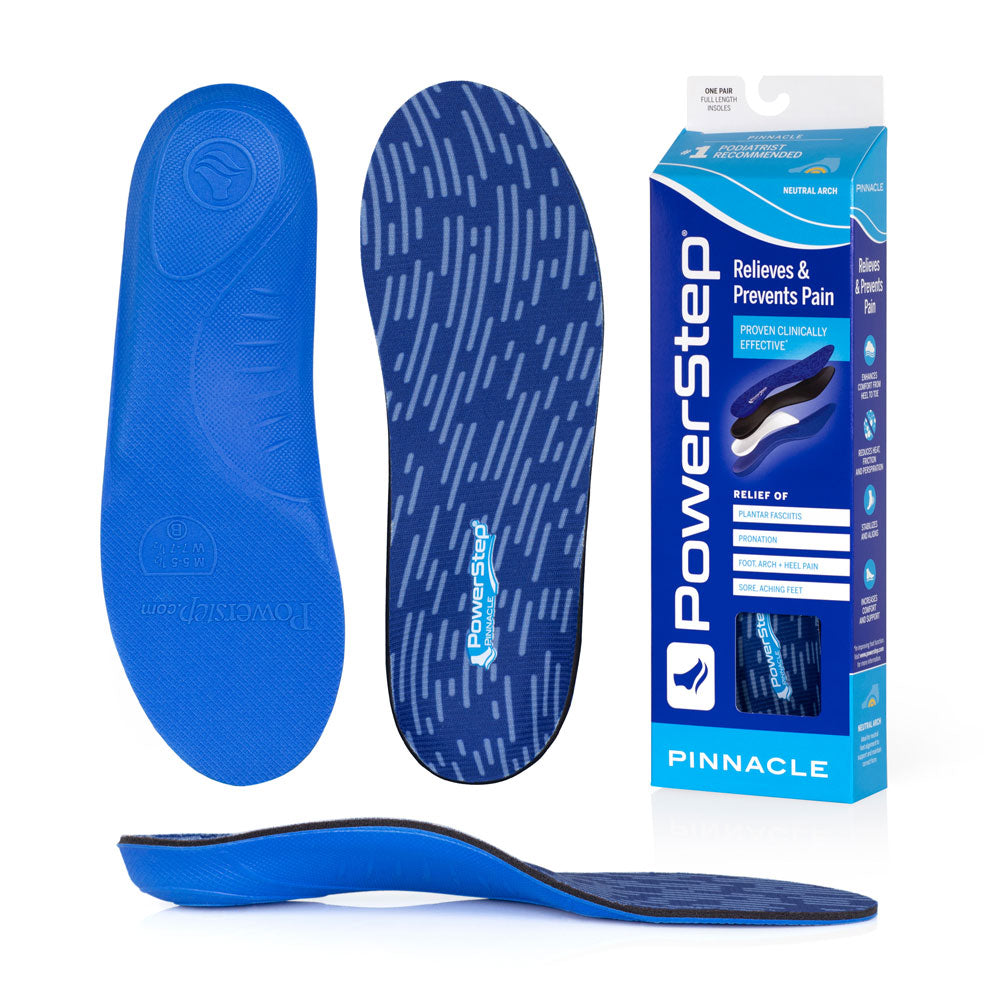
Powerstep Pinnacle Maxx Support Insoles
Powerstep
$45-$55
Why this accessory
Arch support reduces the mechanical stress on inflamed tendons
Number one podiatrist recommended OTC insole in the USA
Double-layer cushioning with semi-rigid arch support controls overpronation
Deep heel cradle stabilizes and cushions the calcaneus on every step
What Is Happening in Your Foot
Tendinitis refers to inflammation of a tendon - the fibrous connective tissue that connects muscle to bone. In the foot and ankle, the most commonly affected tendons are the Achilles tendon at the back of the heel, the posterior tibial tendon along the inner ankle, the peroneal tendons along the outer ankle, and the extensor tendons across the top of the foot. All four can develop tendinitis from the same root mechanism - repetitive loading that exceeds the tendon's capacity to remodel and repair between bouts of activity. The term tendinopathy is increasingly preferred in clinical literature for chronic cases, reflecting that the structural change in the tendon is degenerative collagen disorganization rather than pure inflammation. The distinction matters for treatment - anti-inflammatory approaches are most effective in acute tendinitis, while loading-based rehabilitation is more effective for chronic tendinopathy.
Biomechanics
Tendons transmit the contractile force of muscles to the skeleton to produce movement. They are loaded both concentrically - when the muscle shortens and the tendon is pulled taut - and eccentrically - when the muscle contracts to control a lengthening movement. Eccentric loading is the more damaging of the two and is the primary driver of tendinopathy in the Achilles and posterior tibial tendons. In footwear terms, a shoe with a higher heel drop reduces the eccentric Achilles loading during the stance phase by reducing the ankle dorsiflexion range required. A stability shoe reduces the eccentric posterior tibial tendon loading from overpronation by providing medial arch support that takes over some of the load the tendon normally manages alone.
Why Symptoms Behave the Way They Do
Tendinitis - particularly Achilles and posterior tibial tendinitis - is characteristically worse with the first steps of the morning because the tendon shortens and stiffens during sleep in the resting foot position. The first steps of the morning abruptly load the stiffened tendon, stressing already-damaged collagen. This morning stiffness pattern is one of the most diagnostically reliable signs of tendinopathy. It typically eases after 10 to 15 minutes of gentle walking as the tendon warms and elongates. Supportive footwear worn immediately upon rising reduces the abrupt loading of the morning's first steps.
What Makes It Worse
Sudden increases in training volume or intensity that exceed tendon remodeling capacity
Footwear with inadequate heel drop that places the posterior chain tendons in a chronically lengthened loading position
Worn-out shoes with degraded cushioning that increase the impact component of tendon loading
Tight calf muscles and limited ankle dorsiflexion range that increase compensatory tendon strain
Returning to full activity too soon after symptoms begin, converting acute tendinitis to chronic tendinopathy
Overpronation that adds torsional stress to tendons designed primarily for tensile loading
What Helps
Footwear with a heel drop of 8mm or higher worn consistently, including recovery footwear between training sessions
Eccentric loading exercises specific to the affected tendon - particularly the Alfredson protocol for Achilles tendinopathy
Heel lift insoles that immediately reduce tendon working length when existing footwear heel drop is insufficient
Activity modification to reduce tendon loading below the symptomatic threshold while maintaining some mechanical stimulus for remodeling
Custom orthotics for posterior tibial tendinitis driven by overpronation that address the biomechanical root cause
Stretching and flexibility work targeting the calf and ankle to reduce compensatory tendon strain
Common Misconceptions
Myth: Rest is the best treatment for tendinitis.
Complete rest is appropriate for acute tendinitis to allow initial inflammation to subside, but prolonged rest allows tendon degeneration to progress without the mechanical stimulus needed for collagen remodeling. Research strongly supports controlled eccentric loading as the most effective treatment for chronic tendinopathy - the tendon needs mechanical stimulation to remodel properly. The goal is load management, not load elimination.
Myth: All foot tendinitis is the same and requires the same treatment.
Achilles, posterior tibial, peroneal, and extensor tendinitis each affect different tendons with different biomechanical roles and different treatment priorities. Achilles tendinitis responds best to heel drop elevation and eccentric calf exercises. Posterior tibial tendinitis requires overpronation correction. Peroneal tendinitis may need lateral support in high-arched feet. Extensor tendinitis requires reduction of tongue pressure rather than heel or arch interventions. Identifying the specific tendon affected is essential for appropriate management.
Myth: Anti-inflammatory medication cures tendinitis.
Anti-inflammatory medication reduces acute pain and swelling but does not address the underlying collagen degeneration in chronic tendinopathy. Research indicates that NSAIDs are most beneficial in the first 2 weeks of acute tendinitis but may actually impair long-term tendon healing in chronic cases by suppressing the inflammatory signaling needed for tendon remodeling. They are a symptom management tool rather than a definitive treatment.
Sources: Scandinavian Journal of Medicine and Science in Sports, Vol. 22, 2012; Journal of Orthopaedic and Sports Physical Therapy, Vol. 41, 2011; British Journal of Sports Medicine, Vol. 48, 2014; APMA
Tendinitis by Occupation
How this condition presents differently depending on how you spend your day.
runners
Runners develop foot and ankle tendinitis from the repetitive eccentric tendon loading of training, particularly when mileage increases too rapidly.
Running subjects the Achilles and posterior tibial tendons to eccentric loading forces several times body weight with every stride. Mileage increases, speed work, hill training, and inadequate recovery footwear between sessions are the primary triggers. Many runners continue training through early tendinitis symptoms, converting an acute and readily treatable condition into chronic tendinopathy with a much longer recovery timeline.
Shoe Priority
Running shoe with a heel drop of 8mm or higher and moderate to maximum heel cushioning. Recovery footwear between sessions - supportive slides rather than barefoot - maintains tendon unloading during rest periods. Never use minimalist or zero-drop training shoes when managing active tendinitis.
standing workers
Workers who stand on hard floors for extended periods in flat or low-drop footwear accumulate posterior chain tendon stress that drives tendinitis development.
Flat work footwear places the Achilles and posterior tibial tendons in a chronically lengthened loading position across an entire shift. Workers who additionally have flat feet experience overpronation-driven posterior tibial tendon overload on top of the sustained length-based stress. The combination of hard floors, sustained standing, and inadequate heel drop creates cumulative tendon damage that manifests as chronic tendinitis.
Shoe Priority
Work shoe with a heel drop of 8mm or higher. Heel lift insoles added to existing work footwear are a practical first intervention when the shoe's built-in heel drop is insufficient. Posterior tibial tendinitis in flat-footed standing workers warrants custom orthotic evaluation.
seniors
Tendon elasticity declines with age, making older adults progressively more vulnerable to tendinitis from activity levels that younger people tolerate without injury.
Tendon collagen stiffens and becomes less resilient after age 40, with the rate of change accelerating in later decades. Older adults who begin new exercise programs or increase activity after periods of relative inactivity are at elevated tendinitis risk because their tendons have reduced capacity to absorb and release energy during loading. Posterior tibial tendinitis in older adults can progress rapidly to adult-acquired flatfoot deformity if not addressed early.
Shoe Priority
Stable shoe with a heel drop of 8mm or higher, moderate to maximum cushioning, and firm heel counter. For older adults with posterior tibial tendinitis and progressive arch collapse, podiatrist evaluation is urgent as the window for conservative management is time-limited.
walkers
Fitness walkers who increase step counts rapidly can develop posterior tibial or Achilles tendinitis from sudden tendon loading increases.
Walking applies lower tendon forces than running but the same overuse principle applies. Walkers who rapidly increase from low baseline step counts impose sudden loading increases on tendons that have not adapted to the new demand. Flat or worn walking shoes that lack heel drop compound the risk by placing tendons in a chronically lengthened loading position.
Shoe Priority
Walking shoe with a heel drop of 8mm or higher and adequate heel cushioning. Step count increases of no more than 10 percent per week allow tendon remodeling to keep pace with the new loading stimulus. Replace walking shoes when heel cushioning shows visible compression - typically every 6 to 12 months for regular walkers.
Frequently Asked Questions
Related Guides and Resources
MySoleMatch Picks
Top APMA Verified Shoes for Tendinitis
Every shoe below carries the APMA Seal of Acceptance. Reviewed by licensed podiatrists and confirmed to promote good foot health. Picks are matched specifically to Tendinitis based on clinical alignment strength.
New Balance Fresh Foam X 860v15
new balance
$145-$155
Why it works for Tendinitis
Heel and arch support reduce strain on inflamed tendons during activity.
6mm
Heel Drop
high
Cushion
3
Widths
New Balance 1080v15
new balance
$165-$175
Why it works for Tendinitis
Infinion cushioning absorbs impact that would otherwise stress inflamed tendons.
6mm
Heel Drop
maximum
Cushion
4
Widths
MySoleMatch is an independent platform. We are not affiliated with any shoe brand or the APMA. Shoe links are affiliate links through Amazon, HOKA, Brooks, and other partner programs. We may earn a small commission if you purchase through our links at no additional cost to you. These picks are editorially selected based on APMA acceptance and clinical alignment to Tendinitis. Not commission rates. Always consult a podiatrist for persistent foot pain.
Walk Into Your Appointment With Answers
Before Your Next Appointment
Take Your Results to Your Podiatrist
Answer a few quick questions. Takes under 2 minutes. Get personalized shoe recommendations.
Not Sure Which Shoe Is Right?
Take our guided quiz and get a personalized recommendation based on your specific foot condition and lifestyle.
Start the Quiz