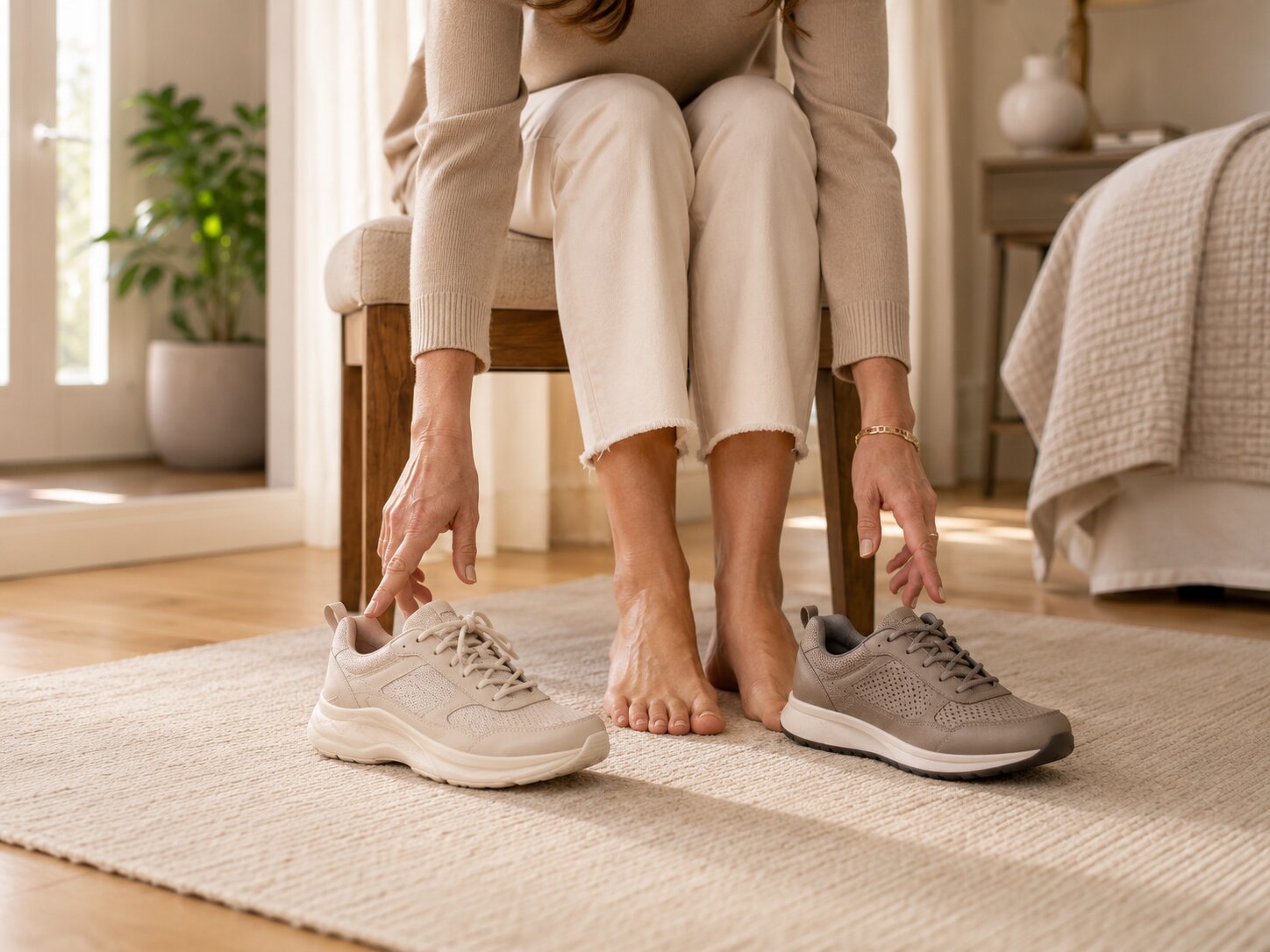
Her mother's new shoes were supposed to make her safer.
They looked the part. Thick, cushioned soles. A wide, stable base. The kind of shoe a daughter picks out specifically because it looks like it could not possibly let someone slip.
Six weeks later, her mother fell in the kitchen.
Not on a wet floor. Not on stairs. On flat, dry tile, in shoes that were supposed to be the safe choice.
Nobody had done anything wrong, exactly. The instinct behind the purchase was reasonable. More cushioning feels like more protection. A bigger sole feels like more stability. If a shoe is doing more, it should be doing more good.
Except footwear and fall risk do not actually work that way, and the research on this is clearer than most people assume, and less simple than most people would like.
Falls in older adults are not a minor topic. They are a leading cause of injury-related hospitalization and loss of independence, and footwear sits closer to the center of that risk than it gets credit for. But the shoe that reduces fall risk is not always the shoe that looks the most protective. Sometimes it is closer to the opposite.
This is the part of the fall-prevention conversation that rarely makes it into a shoe store, a well-meaning gift, or a quick recommendation from someone who means well but has not looked closely at what actually keeps an older adult steady on their feet.
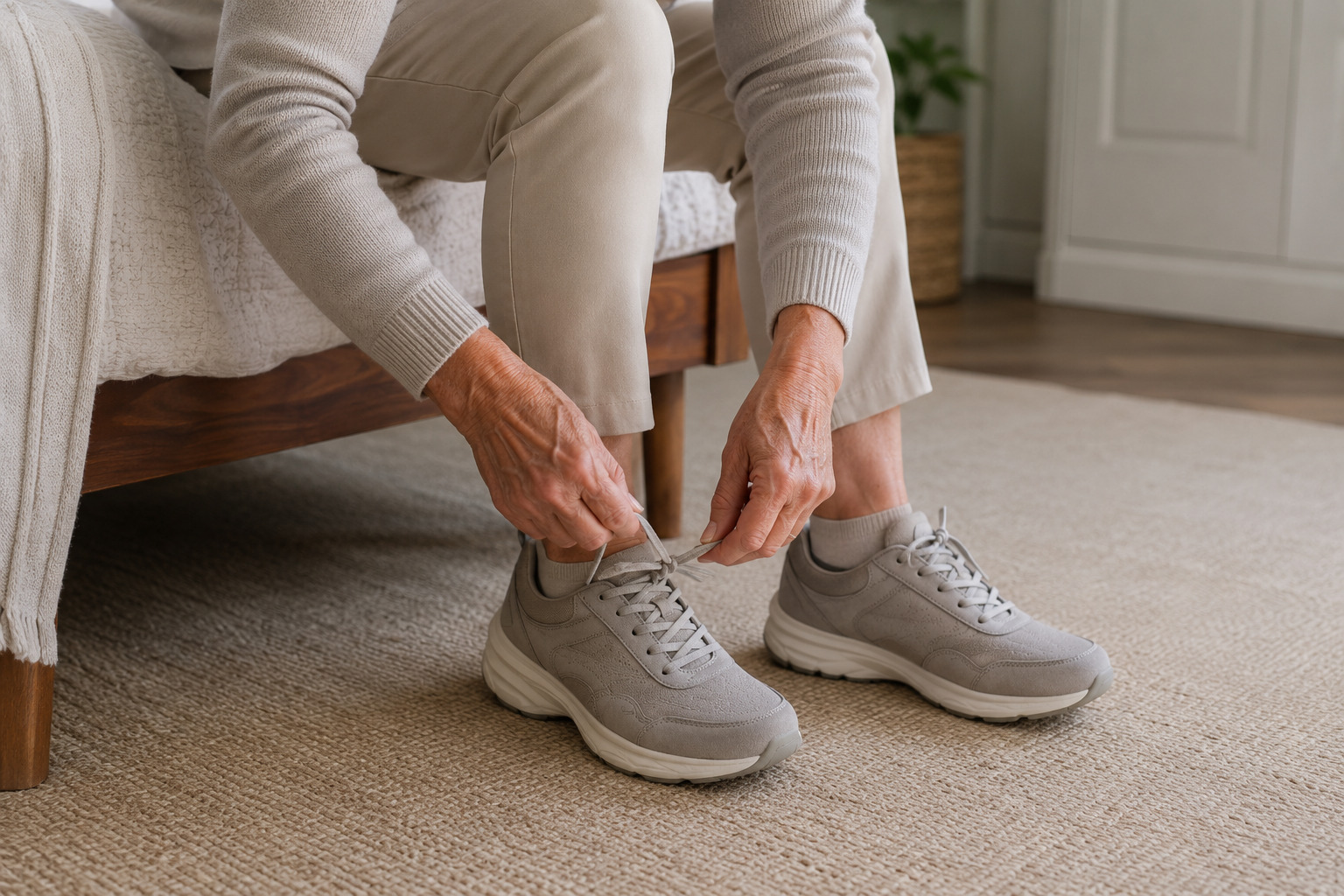
The Shoe That Looks Safest Is Not Always the Safest Shoe
Cushioning and bulk feel protective. The research on fall prevention tells a more specific, less intuitive story.
The feet themselves are often the first place fall risk starts.
Most fall-prevention advice focuses on the obvious things: loose rugs, poor lighting, uneven steps, a lack of grab bars. All genuinely important. All frequently discussed.
What gets discussed far less often is that the foot itself, independent of the floor beneath it, can be a meaningful source of fall risk.
A systematic review and meta-analysis of studies on community-dwelling older adults found that people who had fallen were significantly more likely to have foot pain, hallux valgus, and lesser toe deformity than people who had not. A related analysis, focused on falls in nursing home and hospital settings, found that older adults with foot pain had close to two and a half times the odds of falling compared to those without it. Chronic pain more broadly showed a similar pattern.
That is a striking number for a risk factor that almost never comes up in a typical fall-prevention conversation. Grab bars get installed. Rugs get removed. Foot pain gets treated, if it gets treated at all, as a separate and lower-priority complaint, disconnected from the fall-risk conversation happening around it.
It should not be treated that way. A painful bunion changes how someone distributes weight through a step. A stiff, arthritic big toe joint changes how the foot pushes off the ground. Reduced ankle flexibility changes how quickly someone can react to an unexpected shift in balance. None of these are dramatic on their own. Together, accumulated over years and combined with age-related changes in strength, vision, and reaction time, they meaningfully raise the odds of a fall.
This is also where footwear becomes more than a comfort question. The right shoe cannot fix hallux valgus or reverse joint stiffness. But it can either work with a compromised foot or work against it, and that distinction is where the next part of this gets more complicated than "buy the shoe with the most cushioning."
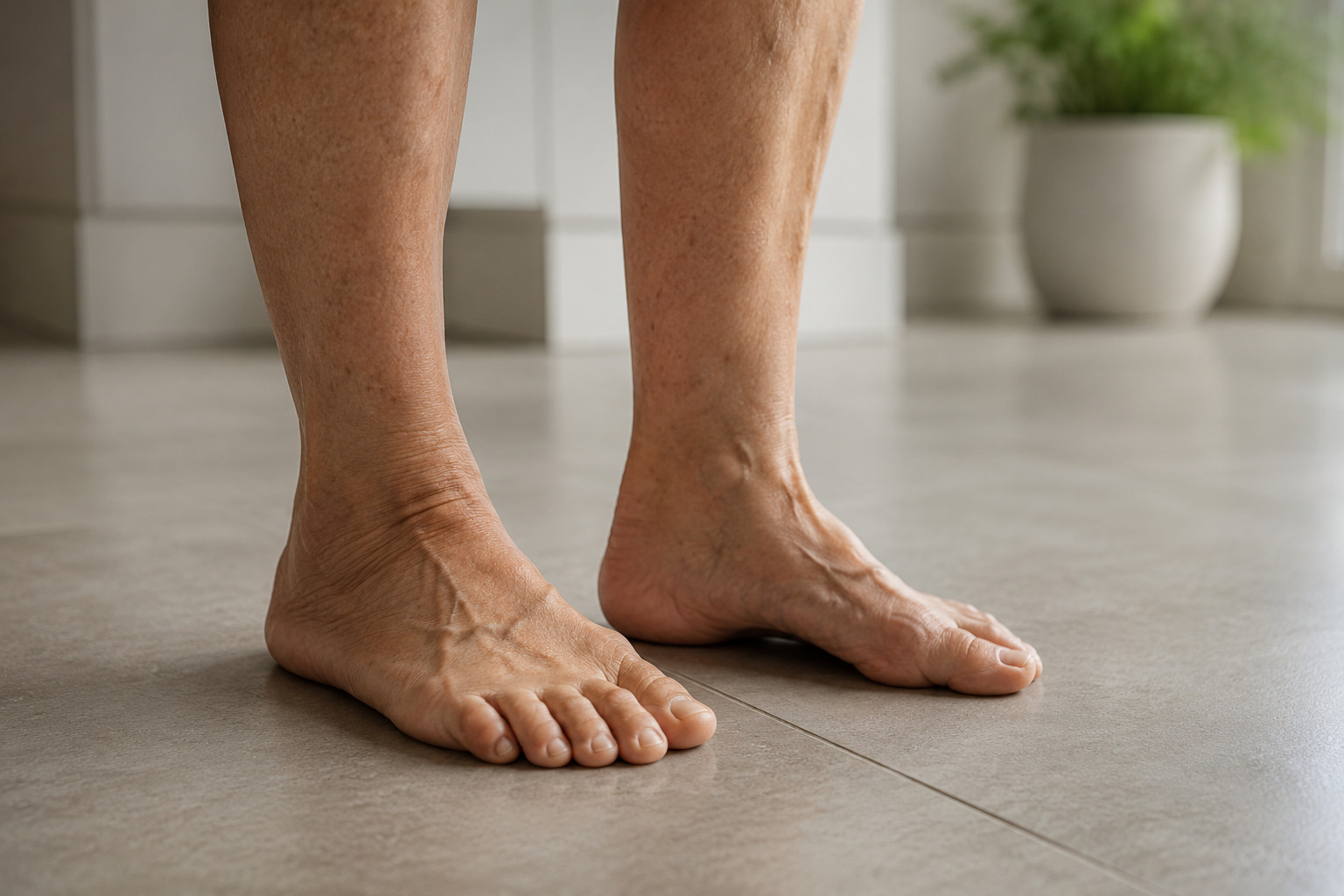
The Foot Itself Can Be Where Fall Risk Starts
Foot pain, joint stiffness, and toe deformities change how weight moves through every step - and the research connects that directly to fall risk.
Why "more support" is not the same question as "more balance."
Here is the part of this research that surprises most people, including well-meaning family members buying shoes for a parent, and including plenty of well-meaning shoe recommendations aimed at older adults generally.
Multiple systematic reviews looking specifically at footwear and balance in older adults have found that certain features consistently help: a thinner, more minimal outsole rather than a thick one, a textured insole surface, and a higher collar around the ankle for secure fixation. These features work by preserving something a maximally cushioned shoe tends to remove, sensory feedback from the ground.
Feet gather an enormous amount of balance-relevant information through pressure and texture sensed at the sole. A thick, heavily cushioned midsole, the kind that feels plush and protective in a shoe store, can dull that sensory signal. The foot still moves normally, but it receives less information about exactly where it is, how it is angled, and how much force is being applied. For someone whose balance systems are already working harder than they used to, thanks to age-related changes in vision, inner-ear function, and muscle strength, a duller sensory signal from the feet is one more system operating with less information than it needs.
This does not mean thin, minimal-cushioning shoes are automatically the right choice either. The same body of research is explicit about where the evidence runs out. Some more minimal or barefoot-style designs can also increase soft-tissue injury risk, gait variability, or the adjustment period needed to adapt, particularly for someone with an existing foot condition, reduced sensation, or limited time to acclimate to a new shoe. There is no single construction rule that reliably works for every older adult, and reviews on this topic are consistent in saying so.
What does hold up more consistently across the research is what does not help. Elevated heel height reduces stability. Walking indoors barefoot, or in socks or slippers without a proper sole, is associated with increased fall risk. And a shoe that is loose, unfastened, or lacks secure fixation around the foot undermines almost any other feature it might otherwise offer.
The honest summary is less satisfying than a single rule, but more useful than one. The safest shoe is not the one with the most cushioning, and it is not automatically the one with the least. It is the one that keeps the foot secure, keeps enough sensory feedback intact, and fits the specific person wearing it, not the general idea of what a "supportive" shoe is supposed to look like.
The barefoot-shoe pitch for seniors is not wrong. It is incomplete.
There is a genuine and growing conversation, some of it coming from minimalist and barefoot shoe brands, some of it coming from researchers themselves, about whether preserving sensory feedback through thinner, more minimal footwear could help older adults balance better. Based on the research already described, that conversation is not baseless. Textured insoles and thinner outsoles really have shown measurable benefits for certain balance outcomes in certain studies.
Where the pitch runs ahead of the evidence is in treating that finding as a complete answer rather than one piece of a more complicated picture.
The same research that supports minimal outsoles and textured surfaces also flags real tradeoffs that a simplified "go minimal for better balance" message tends to leave out. Reduced cushioning means reduced protection against hard or uneven surfaces, which matters for an older adult who may also be managing joint pain, reduced fat pad cushioning in the foot, or diabetic peripheral neuropathy. A person with diminished sensation in the feet may not benefit from a barefoot-style shoe's improved sensory feedback in the way a person with normal sensation would, because the sensory pathway the shoe is designed to preserve may already be compromised by the underlying condition. And an abrupt switch to a much more minimal shoe, without an adjustment period, has been associated in some research with changes in gait and increased strain, the opposite of the intended benefit.
None of this means barefoot or minimalist shoes are the wrong choice for every older adult. For someone with healthy sensation, reasonably strong feet, and no significant deforming foot conditions, the sensory benefits described in this research may be real and worth exploring, ideally introduced gradually rather than all at once.
But "more sensory feedback improves balance in some studies" is a different claim than "minimal shoes are the safest option for older adults in general," and the second claim is doing more work than the underlying research actually supports. The honest version of this conversation includes both the real benefit and the real caveats, which is more than either side of the debate tends to offer on its own.
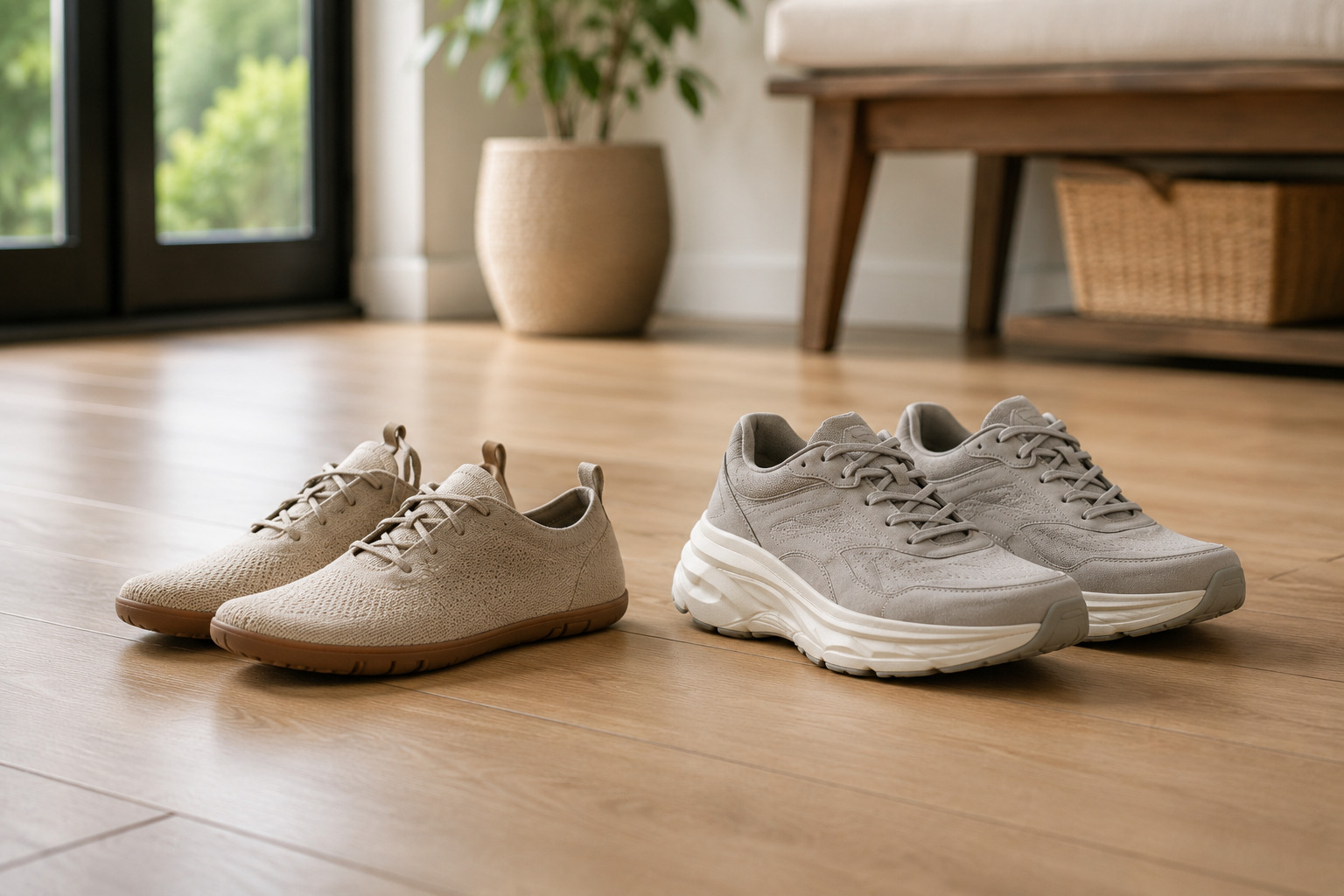
Neither Extreme Has the Whole Answer
Minimal shoes and heavily cushioned shoes each have real research behind them, and real limits. The right choice depends on the foot wearing it, not the trend.
What the evidence actually supports, in practical terms.
Strip away the debate over minimal versus maximal cushioning, and a shorter list of features shows up consistently across the research as genuinely protective, regardless of which side of that debate someone lands on.
A secure, well-fastened fit.
Laces, straps, or another adjustable closure that keeps the foot from shifting inside the shoe matters more than almost any other single feature. A loose shoe, however well designed, undermines its own stability the moment the foot inside it is not properly held.
A low, broad heel rather than an elevated one.
Elevated heel height consistently reduces stability in the research on this topic. A flat or minimally raised heel, paired with a wide enough base of support, performs better across balance measures than anything with meaningful lift.
Some tread, without excessive bulk.
Enough texture on the outsole to maintain grip on both indoor and outdoor surfaces, without a tread so aggressive or thick that it catches on carpet edges or uneven flooring, a real and underappreciated fall mechanism in its own right.
A collar that holds the ankle without restricting it.
A higher, snug-but-not-stiff collar around the ankle has shown benefits for stability by helping secure the foot's position, distinct from the midsole cushioning question entirely.
Never barefoot or in loose socks or slippers indoors.
This is one of the more consistent findings across multiple reviews. Walking indoors without proper footwear, including in slippers without a secure sole, is associated with increased fall risk, even in a familiar home environment.
A fit that matches the actual foot, not the general shoe size.
Swelling, changes in foot width, and shifts in shape are common with age. A shoe that fit well five years ago may no longer fit the same foot it was bought for.
None of these features require choosing a side in the minimal-versus-maximal debate. They apply whether someone is wearing a thin-soled, sensory-forward shoe or a more cushioned everyday shoe. What they require is attention to fit and construction details that are easy to overlook when a shoe simply looks protective.
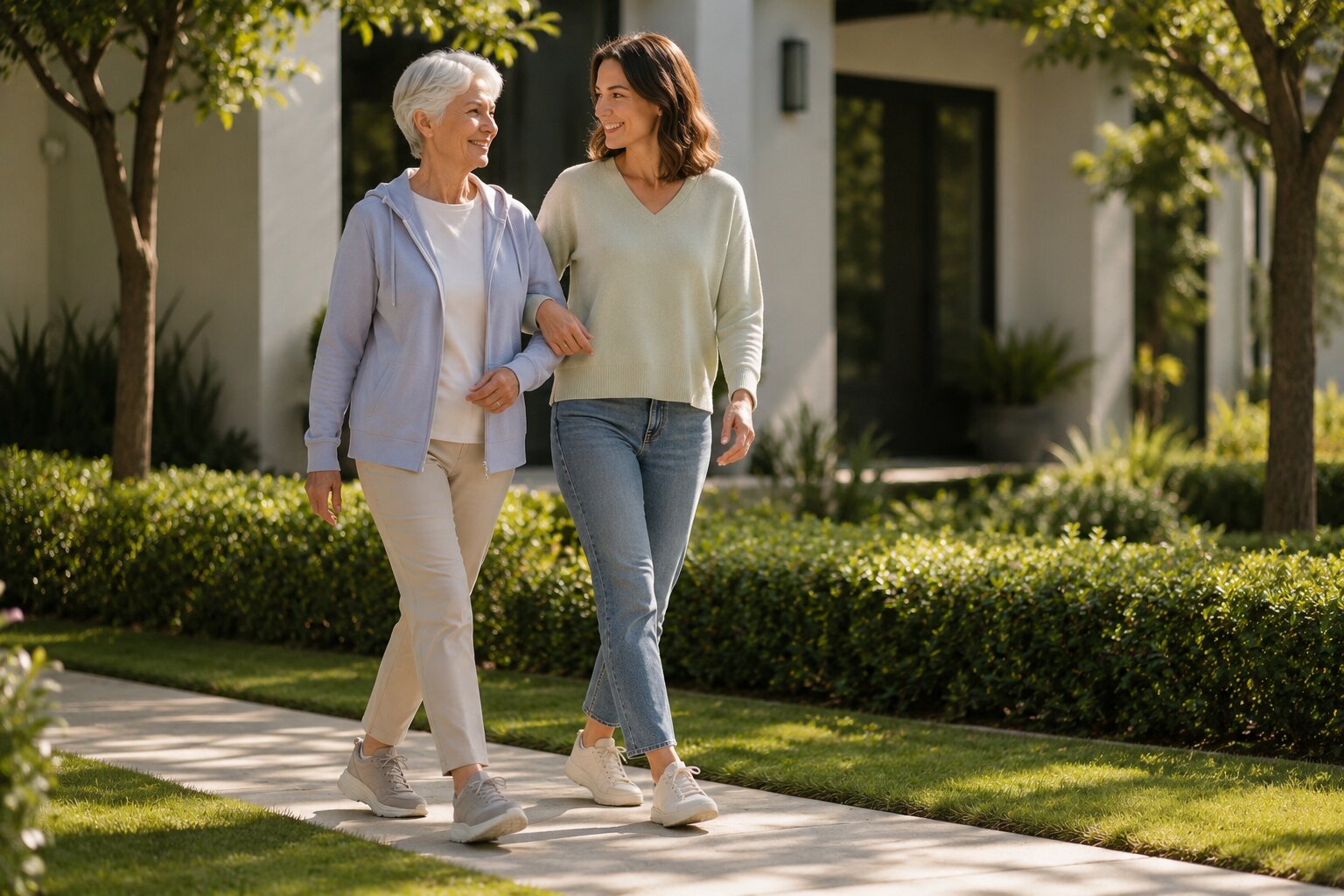
Stability Comes From the Details, Not the Bulk
Secure fit, a low heel, adequate tread, and proper collar support do more for balance than how thick or plush a shoe looks. In practice, those small design details are what make everyday walking feel steadier, safer, and easier to trust. Whether someone is moving through the house, running errands, or simply trying to stay active with confidence.
The safest shoe is rarely the one that looks the safest.
Her mother's shoes were not a poor choice because someone made a careless decision. They were a poor choice because "more cushioning, more support, more shoe" is a reasonable-sounding rule that the actual research on fall prevention does not fully support. That gap between instinct and evidence is exactly why this topic deserves more attention than it usually gets.
None of this is an argument for panic, or for throwing out every well-cushioned shoe in the house. Most falls are multifactorial, involving vision, medication, home hazards, muscle strength, and balance systems well beyond footwear alone. But footwear is one of the few fall-risk factors that can be changed quickly, affordably, and without a doctor's visit, which makes it worth getting right rather than defaulting to whichever shoe simply looks the most protective on a shelf.
The pattern worth remembering is not "soft is safe" and it is not "minimal is safe" either. It is fit, fixation, a low and broad heel, adequate but not excessive tread, and a foot that is never left barefoot or loosely covered on hard indoor flooring. Those details do more for stability than the overall bulk of a shoe ever will.
If foot pain, joint changes, or a specific condition are already part of the picture, the Seniors Guide on this platform goes further into matching footwear to those realities, rather than treating every older adult's feet as the same foot. And for anyone trying to find that starting point without guessing, the MySoleMatch shoe finder was built to match foot type, existing conditions, and daily needs to footwear that actually reflects what the evidence supports, not just what looks the safest on the shelf.
The right shoe for fall prevention is rarely the most obvious one. It is the one built around the foot actually wearing it.