
She changed her shoes four times before anyone asked about her legs.
New insoles first. Then a wider toe box, because the podiatrist she saw online mentioned bunions might be forming. Then a stability shoe, because someone at the running store thought her arch was collapsing. Then, finally, an expensive pair marketed specifically for foot pain, the kind with the cushioning everyone recommends when nothing else has worked.
None of it helped.
The pain was in her calf, not her foot. It showed up after a few blocks of walking and eased when she stopped. She assumed it was the shoes because that is what most people assume. Foot and leg pain gets blamed on footwear more often than almost anything else, and often that assumption is correct.
This time it was not.
It took nearly a year before anyone checked the pulses in her feet.
What she had was not a shoe problem. It was peripheral artery disease, a narrowing of the arteries that carry blood to the legs, and it had been quietly restricting circulation to her lower body the entire time she was searching for the right pair of sneakers.
This is not a rare story. It is a common one, and it is common specifically because the symptoms of poor circulation and the symptoms of ordinary foot pain can look almost identical from the inside. Cramping. Aching. Fatigue that sets in with walking. A foot that just does not feel right.
The difference is not always obvious. But it is almost always findable, if someone knows what to look for.
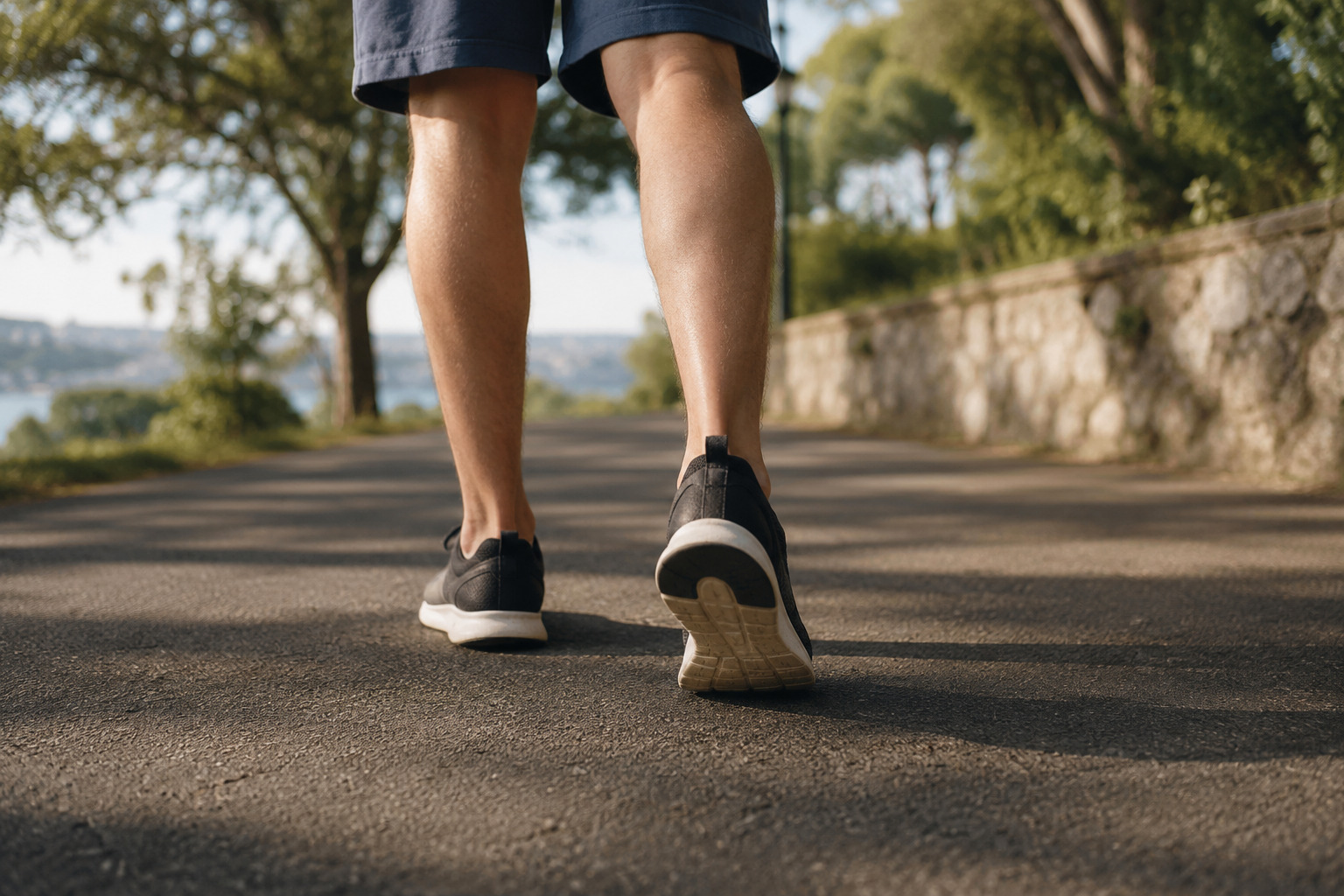
The Warning Sign You Cannot See
Peripheral artery disease rarely announces itself with anything dramatic. Most people who have it look, and often feel, completely normal - which is exactly what makes it dangerous.
Most people picture the wrong version of this disease.
Say "circulation problem" and most people imagine something dramatic. A sudden collapse. A hospital emergency. Something that announces itself.
Peripheral artery disease rarely works that way, at least not at first.
PAD develops when fatty deposits build up inside the arteries that supply blood to the legs and feet, the same process that narrows arteries around the heart. As those arteries narrow, less oxygen-rich blood reaches the muscles and tissue below. The legs and feet, being furthest from the heart, tend to feel it first.
The textbook symptom is called claudication: a cramping or aching pain in the calf, thigh, or buttock that appears during walking and resolves with rest. It is a genuinely useful pattern to know. It is also, according to research on how PAD actually presents, not what most people experience.
Estimates vary across studies, but the consistent finding is the same: somewhere between roughly 40 and 66 percent of people with PAD have no textbook claudication at all. Some feel nothing. Others feel something, just not the classic pattern, more of a vague heaviness, fatigue, or discomfort that does not fit neatly into "cramp that stops with rest." A smaller share experience pain even at rest, a sign of more advanced disease.
That gap between the textbook description and the lived reality is the whole problem. Most consumer health content, and most people's mental model of what a circulation issue feels like, is built around the minority presentation. The majority of people living with PAD do not recognize their own symptoms in the description, because the description does not match what is actually happening to them.
That mismatch is not a minor detail. It is the reason PAD is so often mistaken for something else, footwear included, and why it frequently goes undiagnosed until it has already progressed.
The signs that point away from the shoe and toward the artery.
None of these signs is a diagnosis. All of them are reasons to ask a doctor to check circulation before assuming the next shoe change will fix things.
A foot that is noticeably colder than the other.
Reduced blood flow means reduced warmth. A consistent temperature difference between feet, especially one that a person notices repeatedly rather than once, is one of the more specific signs of a circulation issue rather than a musculoskeletal one.
Color that changes with position.
A foot or leg that looks pale or bluish when elevated and turns red or deep purple when hanging down is describing a circulation problem, not a shoe-fit problem. This pattern, sometimes called dependent rubor, reflects how poorly the arteries are able to deliver blood against gravity.
Cramping that follows a predictable walking distance.
The classic pattern is worth restating even though it is the minority presentation: pain that shows up after a consistent distance of walking and eases within minutes of stopping, then returns at roughly the same distance next time. A shoe problem does not usually behave this predictably. A circulation problem often does.
A sore or wound that will not heal.
Cuts, blisters, and pressure sores on the feet or lower legs that heal slowly, or do not heal at all over several weeks, are a signal that tissue is not getting enough blood flow to repair itself normally. This is one of the most consequential signs on this list, because slow-healing wounds combined with reduced circulation carry real risk if left unaddressed.
Numbness or weakness that is not clearly nerve-related.
PAD and diabetic neuropathy can look similar and can also occur together, which is part of what makes self-diagnosis unreliable. A foot that feels numb, weak, or heavy, particularly if it is one-sided, is worth having checked for both circulation and nerve function rather than assumed to be either one.
Weak or absent pulses in the foot.
This one usually requires a clinician to check properly, but it is worth naming because it is one of the most direct physical findings in PAD. A primary care visit that includes a simple pulse check, or a test called the ankle-brachial index, can answer a question that months of shoe shopping cannot.
None of these signs, alone, confirms PAD. Together, or even one or two occurring consistently and asymmetrically, they describe a pattern that shoes were never going to solve.
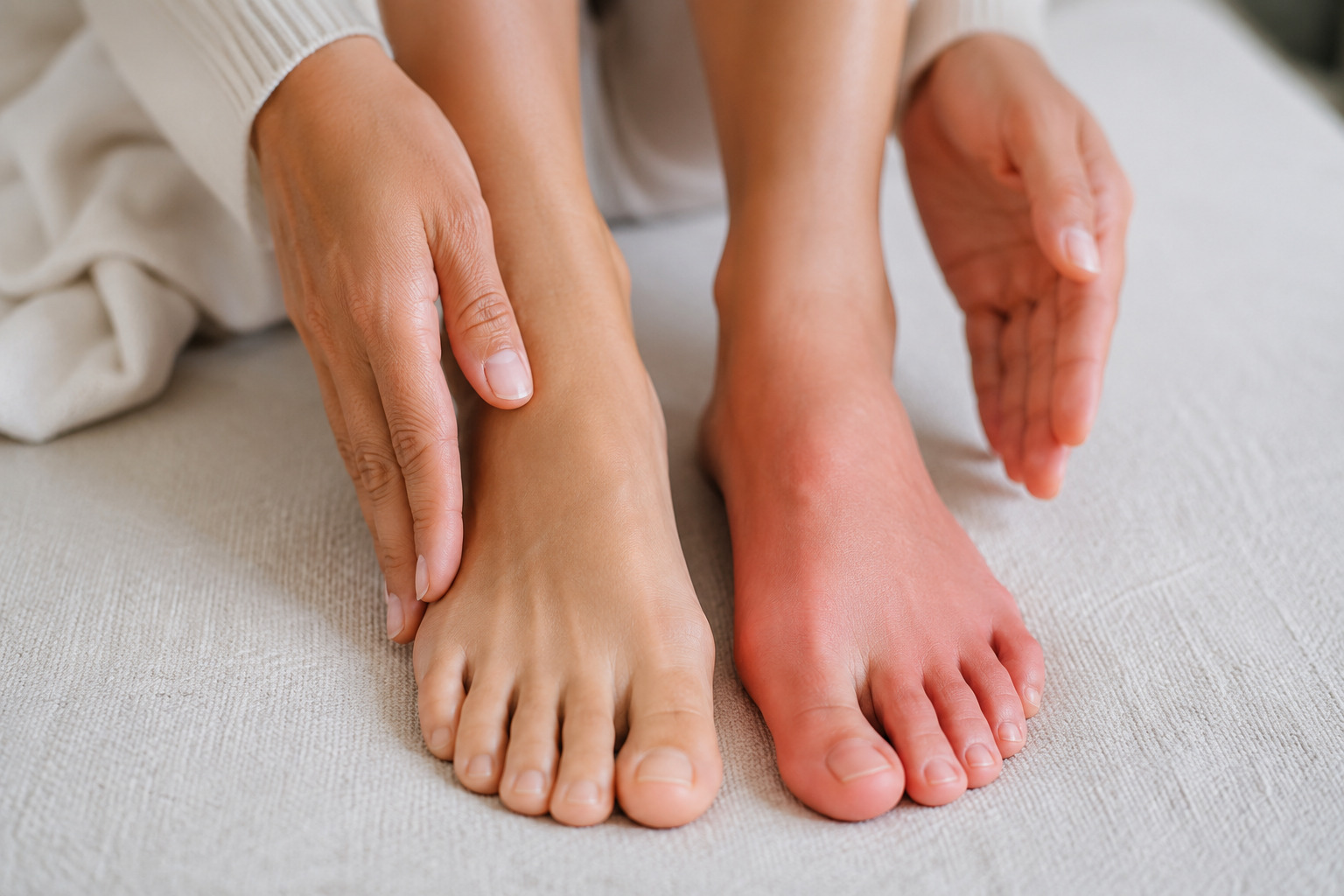
One Foot Colder Than the Other Is Not Nothing
A simple visual and temperature comparison between feet, done regularly, can surface a difference most people never think to look for.
Why this keeps getting mistaken for a footwear problem.
There is a reason the shoe gets blamed first, and it is not a foolish reason. Foot and leg pain that shows up with walking really is, most of the time, a footwear or biomechanical issue. Bad arch support, worn-out midsoles, a shoe that does not match someone's foot shape, these cause a huge share of the foot pain people experience, and changing the shoe genuinely fixes most of it.
That track record is exactly what makes PAD easy to miss. The instinct to try a different shoe is not irrational. It is usually correct. Which means the exceptions, the cases where the pain is circulatory rather than mechanical, get filtered through the same trial-and-error process that works for everything else, and that process is not built to catch them.
A person feels cramping with walking. They assume it is the shoe. They try a new pair. The pain does not fully resolve, or it comes back, so they assume they picked the wrong shoe rather than the wrong category of solution entirely. They try again. Months pass. Each unsuccessful shoe change is not neutral, it is time during which underlying arterial narrowing can continue progressing, and PAD is not only a leg problem. It is one of the clearest visible markers of atherosclerosis happening throughout the body, including in the arteries that supply the heart and brain. People with PAD carry a meaningfully higher risk of heart attack and stroke than people without it, independent of how their legs feel day to day.
That is the real cost of the delay. It is not just unresolved foot pain. It is a missed early signal for cardiovascular risk that a shoe was never going to address, no matter how many were tried.
This is also why the honest answer, when foot pain does not respond the way footwear-related pain normally does, is not "try a different shoe again." It is "ask whether the shoe was ever the right place to be looking."
Who this catches by surprise, and who should be paying closer attention.
PAD does not appear at random. It clusters around a specific, well-documented set of risk factors, and most of them will already be familiar because they overlap heavily with cardiovascular risk in general.
Smoking, current or former.
This is the single largest modifiable risk factor for PAD. Smoking damages blood vessel walls and accelerates the plaque buildup that narrows arteries. Even people who quit years ago carry elevated risk compared to those who never smoked.
Diabetes.
High blood sugar over time damages blood vessels as well as nerves, which means people managing diabetes are dealing with two separate threats to their feet simultaneously, circulatory and neurological, that can produce overlapping symptoms and mask each other.
Age.
Risk rises meaningfully after 50, and rises further after 65, though PAD is not exclusively an older person's condition, especially when combined with smoking or diabetes.
High blood pressure and high cholesterol.
Both contribute directly to the arterial changes that cause PAD, the same way they contribute to heart disease.
Family history and personal history of cardiovascular disease.
A personal or family history of heart attack, stroke, or known atherosclerosis elsewhere in the body raises the likelihood that similar changes are happening in the leg arteries, even without leg symptoms yet.
None of these factors guarantee PAD will develop, and their absence does not rule it out. But when someone with one or more of these risk factors also notices any of the signs described earlier, that combination is exactly the situation where a shoe change is the wrong first move.
Walking itself sits in an unusual place here. For people with diagnosed PAD, supervised walking is often part of treatment, since it can improve circulation and symptoms over time. For someone with undiagnosed PAD who is pushing through calf pain because they assume it is just needing to "break in" a new pair of shoes, that same instinct can mean walking further into a problem rather than out of one. The difference is not the walking. It is whether anyone has checked what is actually happening in the arteries first.
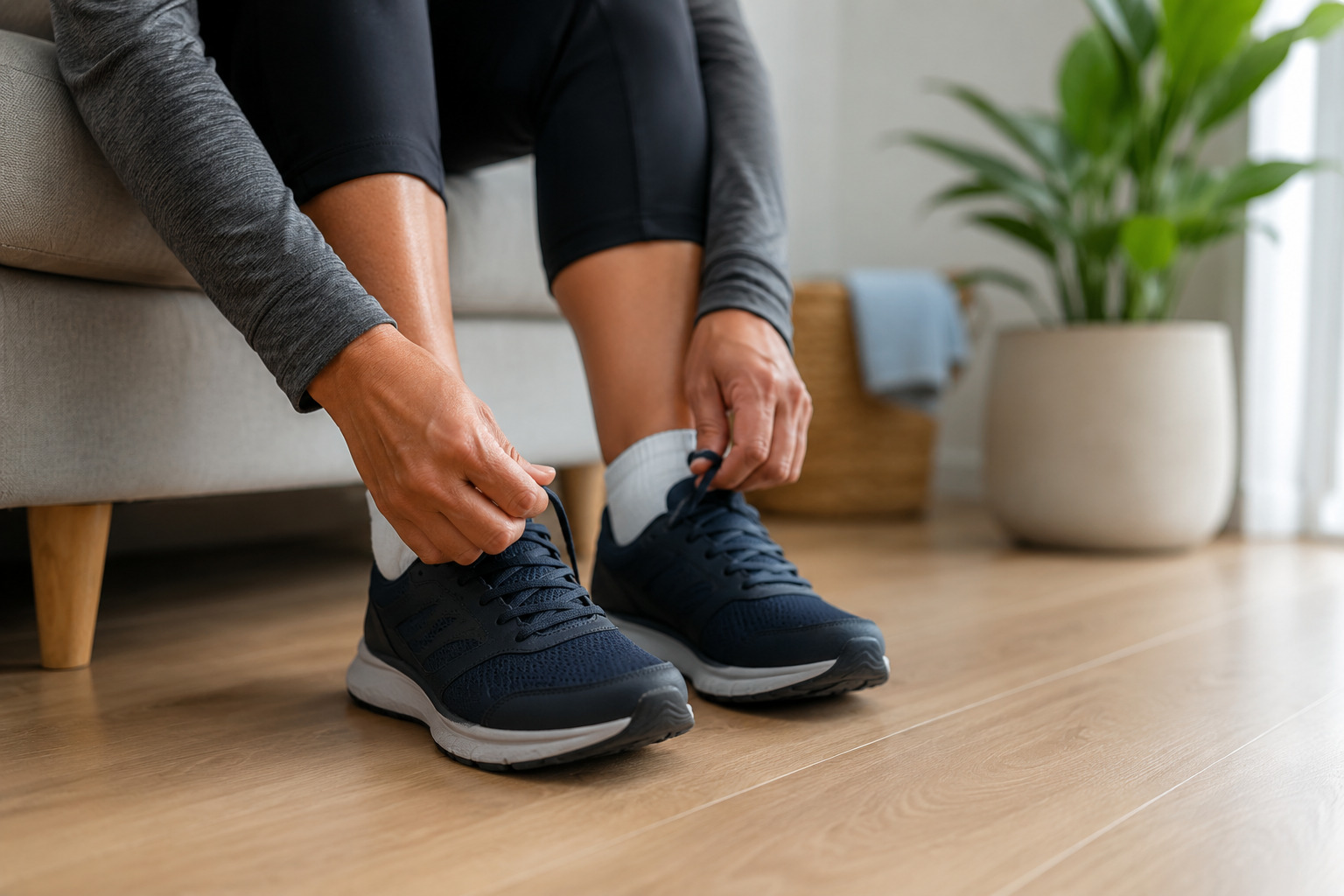
Walking Helps and Hurts, Depending on What Is Actually Happening
For people managing PAD, supervised walking is often part of treatment. For people with undiagnosed PAD, walking through the pain is often exactly the wrong instinct.
This is the second time this journal has told you the foot is not always where the problem starts.
The blood sugar article on this platform made a similar case, just from a different direction. Nerve damage from prediabetes and diabetes can begin quietly, years before a diagnosis, showing up first as subtle changes in the feet that most people never connect to blood sugar at all. PAD is the circulatory version of that same pattern. Different mechanism, same lesson: the feet are often the earliest place the rest of the body reveals a problem, precisely because they are furthest from the heart and most exposed to the daily wear of walking.
The two conditions are not just thematically related. They frequently travel together. Diabetes damages both nerves and blood vessels, which means a person managing diabetes can develop diabetic neuropathy, PAD, or both, sometimes without being able to tell the difference from symptoms alone. Numbness can mask the cramping pain that would otherwise be a warning sign. Reduced circulation can slow the healing of a wound that reduced sensation already prevented someone from feeling in the first place. Together, they are part of why diabetic foot complications remain one of the leading causes of preventable lower-limb amputation, and why regular foot checks matter more for that population than almost any other.
This is also why a single foot symptom rarely tells the whole story on its own. A cramping calf could be a shoe. It could be a nerve. It could be an artery. It could be more than one of those at once. That is not a reason for alarm every time a foot feels off. It is a reason to bring the actual pattern, not just the sensation, to someone qualified to sort it out, rather than trying to reason it out alone through another shoe purchase.

The Earlier This Gets Named, the Better It Goes
PAD is manageable, and often very treatable, when caught early. The hardest part is usually just recognizing that the problem was never really about the shoe.
The earlier this gets named, the better it goes.
PAD is not a diagnosis to panic over. It is, in most cases, a manageable condition, and it responds well to being caught early. Lifestyle changes, supervised exercise, medication to manage cholesterol and blood pressure, and in some cases procedures to restore blood flow can all meaningfully improve both symptoms and long-term risk. None of that requires the disease to be advanced before it works. Early detection is precisely what makes the mild version of this story so much more common than the severe one.
The hardest part is rarely the treatment. It is the recognition. It is the year someone spends convinced the answer is one more shoe, one more insole, one more brand everyone else swears by, when the real answer was a conversation with a doctor about circulation.
Who to call, and why it matters.
A primary care physician is the right first call for suspected PAD, not a podiatrist and not a shoe store, though both may become part of the picture later. A simple, painless test called the ankle-brachial index, comparing blood pressure at the ankle to blood pressure at the arm, can screen for PAD in a single visit. It is one of the most informative five minutes available in preventive medicine, and it is dramatically underused relative to how common and how consequential PAD actually is.
What should prompt that call sooner rather than later.
Any of the signs described earlier, especially in combination, especially alongside known risk factors like smoking, diabetes, or a family history of cardiovascular disease. A wound on the foot or lower leg that has not improved in two to three weeks deserves prompt attention regardless of any other symptoms.
Foot pain is common enough, and shoe-related foot pain is common enough, that the instinct to start with a shoe change will usually be the right one. This article is not an argument against that instinct. It is an argument for noticing when the pattern stops matching, when the pain does not behave the way footwear pain behaves, when it shows up with a cold foot or a wound that will not close or a cramp that arrives at the same distance every single time.
That is the moment to stop shopping and start asking a different question. Not which shoe. What is actually happening underneath it.
If foot pain is part of a larger picture that includes diabetes, nerve symptoms, or a condition already diagnosed, the conditions library on this platform is built to help connect footwear choices to the whole picture, not just the symptom in front of you. And if the next step is simply finding a shoe that will not make an already complicated situation worse while that larger picture gets sorted out, the MySoleMatch shoe finder was built for exactly that kind of question.
Some foot pain is a shoe problem. Some of it never was. Knowing the difference is the whole point.