Disclosure: We may earn a small commission if you purchase through links on this page. No additional cost to you, and we only recommend products we trust. This helps us keep MySoleMatch free and ad-free. Thank you for your support!
Plantar Warts
Plantar warts are viral growths on the sole of the foot caused by HPV entering through small cuts or breaks in the skin. Unlike warts elsewhere on the body, plantar warts are pushed inward by body weight, causing pain when walking. Cushioned shoes that redistribute pressure away from the wart provide significant relief.
Signs You May Have Plantar Warts
Small rough growths on the sole
Pain when walking or standing
Black pinpoint dots within the growth
Callus-like appearance over a wart
Tenderness when squeezed from the sides
Walk Into Your Appointment With Answers
Before Your Next Appointment
Take Your Results to Your Podiatrist
Answer a few quick questions. Takes under 2 minutes. Get personalized shoe recommendations.
Best Shoes for Plantar Warts | MySoleMatch
Soft cushioning that prevents direct pressure on the wart reduces pain significantly during treatment.

New Balance Fresh Foam X 880v15
$145-$155
Why this shoe
Soft cushioning distributes pressure away from the wart site reducing pain during treatment.
Fresh Foam X midsole with approximately 3% bio-based content for cushioned ride
Structured yet breathable engineered mesh upper
Structured, breathable engineered mesh upper, per New Balance
What to Look for in a Shoe
Evidence-based footwear criteria specific to this condition.
Heel Drop
Recommended: 0-12mm
Heel drop is not a primary consideration for plantar warts. The dominant footwear requirement is cushioning that redistributes pressure away from the wart location and breathable upper construction that reduces the moisture environment that HPV favors. Any heel drop is acceptable provided the shoe redistributes plantar pressure effectively.
Cushioning
maximum
Maximum cushioning is the primary footwear feature for plantar wart pain management. Plantar warts are pushed inward by body weight with every step, as body weight compresses the wart into the underlying tissue rather than allowing it to protrude outward as dorsal warts do. A thick, compliant midsole distributes plantar pressure across a broader area, reducing the peak pressure applied directly to the wart with every footstrike.
Avoid: thin-soled, minimal, rigid-soled, worn-out midsoles
Stability vs. Neutral
neutral
Plantar warts do not require stability features. Select based on foot type and gait pattern. Maximum cushioning is the footwear priority specific to this condition.
Exception: Patients who require stability or motion control for co-existing conditions should select those features in a shoe with maximum forefoot or plantar cushioning as appropriate to the wart location.
Width
Recommended: D, 2E
Standard to wide fit is appropriate. A toe box wide enough to prevent lateral compression reduces the pressure applied to warts on or between the toes. For warts on the plantar surface, width is less critical than cushioning depth.
Insoles and Orthotics
Donut-shaped foam or felt pads - circular pads with a cutout centered over the wart - are one of the most effective footwear interventions for plantar wart pain. They offload the wart site specifically by surrounding it with a raised rim that transfers plantar pressure to the surrounding healthy tissue rather than the wart surface. These pads can be used inside any well-cushioned shoe. Custom orthotics are not typically indicated for plantar warts unless co-existing structural conditions require them.
Sources: American Academy of Dermatology; APMA Clinical Practice Guidelines
Recommended Accessories for Plantar Warts
Insoles, heel cups, compression socks, and braces that complement your shoe recommendation and provide additional targeted relief.

PediFix GelStep Heel Cup
PediFix
$12-$20
Why this accessory
Gel cushion distributes pressure away from wart site during treatment
Visco-elastic gel conforms to the exact shape of the heel
Softer than rubber cups - gentler on sensitive or diabetic heel skin
Reduces friction and pressure on the heel pad and spur site
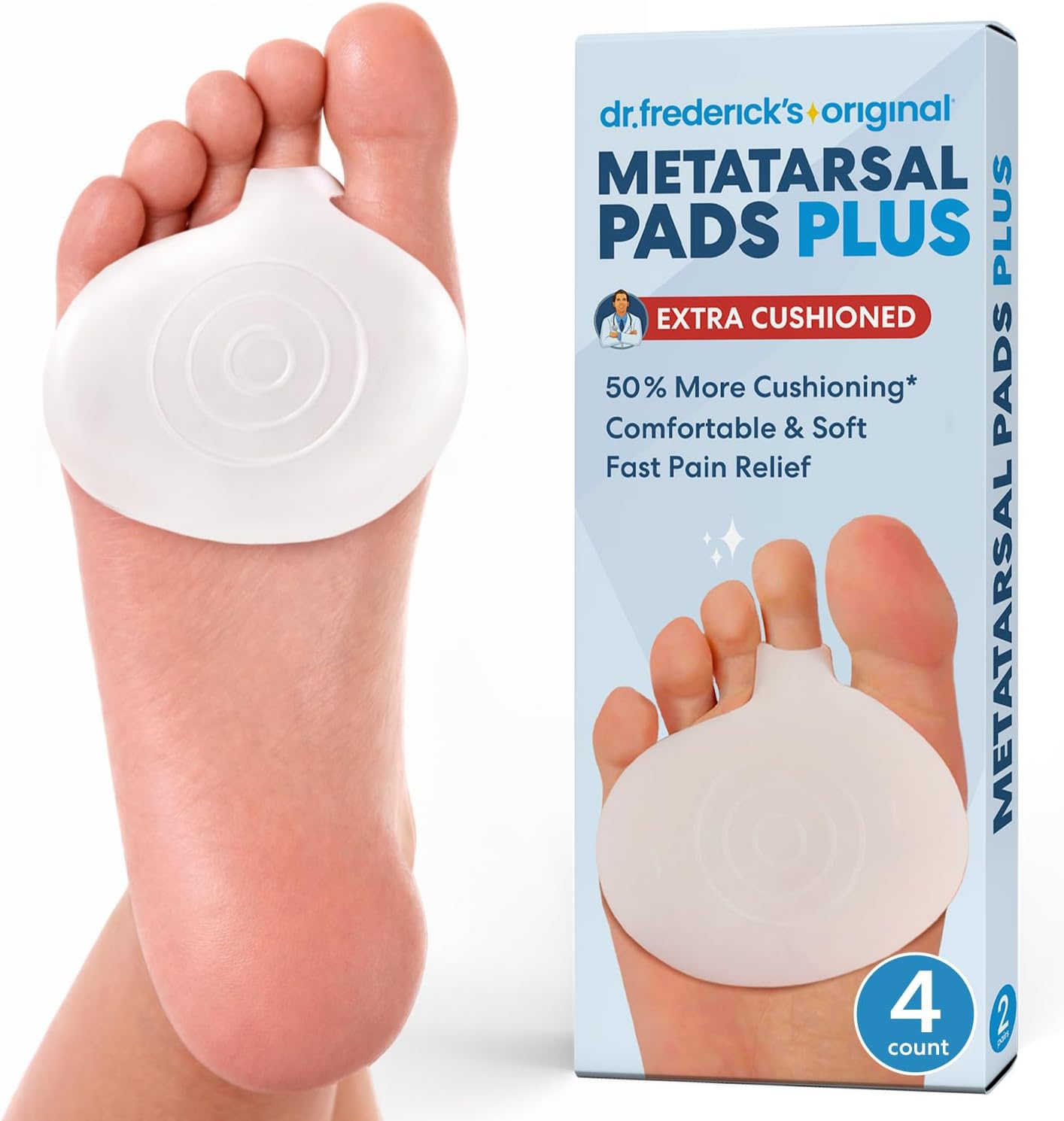
Dr. Frederick's Metatarsal Pads Plus
Dr. Frederick's
$12-$20
Why this accessory
Offloads forefoot wart pressure during walking
Gel pad positioned just behind the ball of the foot offloads metatarsal head pressure
Adhesive backing keeps the pad in the correct anatomical position
Reduces the nerve compression that causes Morton's neuroma pain
What Is Happening in Your Foot
Plantar warts, medically known as verruca plantaris, are benign growths on the sole of the foot caused by human papillomavirus (HPV) infection. HPV enters the skin through small cuts, breaks, or areas of softened skin and infects the keratinocytes of the outer skin layer, causing them to proliferate abnormally and form the wart. Unlike warts on other parts of the body that protrude outward, plantar warts are pushed inward by body weight, creating a flat or slightly raised lesion with a roughened surface that is often covered by a callus. The characteristic black dots visible within a plantar wart are thrombosed capillaries - small blood vessels that have clotted within the wart tissue. Plantar warts are highly contagious but not dangerous, and many resolve spontaneously over months to years in healthy immune systems.
Biomechanics
Plantar warts differ mechanically from all other foot conditions because the mechanical problem is caused by the direction of load application rather than by structural or tissue injury. Every other condition on this platform involves load causing tissue damage. Plantar warts involve load causing pain by compressing a viral lesion into the underlying tissue with every step. The wart itself is the source of discomfort, and footwear that reduces the pressure applied to the wart site reduces pain during treatment. Donut pads that surround the wart and cushioned midsoles that distribute pressure across a broader area both reduce the compressive force on the wart with every footstrike. Neither intervention treats the viral infection itself - only antiviral treatment or immune-mediated wart resolution achieves that.
Why Symptoms Behave the Way They Do
Plantar wart pain does not typically follow a morning-worsening pattern. Pain is characteristically worst during and after periods of standing and walking when compressive force is applied to the wart. Many patients notice that the wart is less painful at the start of a day before prolonged loading and progressively more painful as the day continues. Removing shoes and reducing weight-bearing typically provides immediate but temporary relief.
What Makes It Worse
Prolonged standing or walking that applies sustained compressive force to the wart with every step
Thin-soled or minimally cushioned footwear that provides no pressure distribution between the wart and the ground
Direct pressure from footwear seams or hard insole surfaces on the wart location
Walking barefoot in shared facilities where HPV is present on surfaces - a risk factor for initial infection and for spread to new sites
Picking or traumatizing the wart, which can spread HPV to adjacent skin and cause satellite warts to develop
Immune compromise from diabetes, immune-suppressing medications, or illness that prevents the immune system from clearing the HPV infection
What Helps
Maximum cushioning footwear that distributes plantar pressure broadly and reduces peak compression at the wart site
Donut-shaped foam or felt pads with a cutout over the wart that offload the specific wart location
Salicylic acid treatment applied as directed to the wart surface - the most evidence-supported over-the-counter treatment for plantar warts
Podiatrist-performed cryotherapy with liquid nitrogen - the most common in-office treatment with good resolution rates
Duct tape occlusion - applied to the wart continuously for six days then removed - has some evidence supporting modest efficacy as an adjunct treatment
Patience - the majority of plantar warts in healthy individuals resolve spontaneously within two years as the immune system generates a response to the HPV infection
Common Misconceptions
Myth: Plantar warts have roots that grow deep into the foot.
Plantar warts do not have roots. They are confined to the epidermis - the outer skin layer. The impression of depth comes from the inverted growth pattern caused by body weight compression and from the presence of thrombosed capillaries that extend into the upper dermis. Effective treatment does not require deep tissue removal, and aggressive home treatment attempting to remove a perceived root can cause unnecessary tissue damage and infection risk.
Myth: You can catch plantar warts only from other people's warts.
Plantar warts are caused by HPV that lives on contaminated surfaces - shower floors, pool decks, and locker room floors - rather than requiring direct contact with another person's wart. The virus can survive on surfaces for significant periods and enters the foot through small skin breaks or areas softened by moisture. Wearing sandals in shared facilities prevents this surface-to-skin transmission route.
Myth: Over-the-counter treatments always work quickly for plantar warts.
Plantar wart resolution with salicylic acid treatment typically requires 12 weeks or more of consistent application. The thick overlying callus and the inward growth pattern of plantar warts make them more resistant to topical treatment than warts on other body sites. Treatment requires patience, consistency, and regular debridement of the overlying callus to allow the salicylic acid to reach the wart tissue. Cases that do not respond to 12 weeks of consistent over-the-counter treatment warrant podiatrist evaluation.
Sources: American Academy of Dermatology Verruca Pedis Guidelines; Cochrane Review of Topical Treatments for Cutaneous Warts, 2012; APMA
Plantar Warts by Occupation
How this condition presents differently depending on how you spend your day.
runners
Runners who use gym showers and locker rooms regularly face elevated HPV exposure risk, and the compressive forces of running amplify plantar wart pain once infection is established.
Gym and athletic facility showers are high-risk HPV transmission environments. Runners who shower at facilities after training accumulate significant surface exposure over a training season. Once a plantar wart is established, running subjects it to repetitive compressive forces that make it more painful than the same wart would be in a less active person. Many runners attempt to run through plantar wart pain rather than addressing it, which rarely succeeds.
Shoe Priority
Maximum cushioning running shoe that distributes forefoot pressure broadly. A donut pad over the wart inside the running shoe offloads the specific wart site during training. Sandals or flip-flops worn in all facility showers and changing areas without exception prevent initial HPV transmission.
travelers
Travelers who use hotel pools, gyms, and shared shower facilities face elevated plantar wart exposure risk in environments with variable cleaning standards.
Hotel gyms, pool areas, and spas are high-traffic environments where HPV is transmitted through shared surfaces. Travelers frequently pack minimally and may not include shower sandals. Post-trip plantar wart development several weeks after return - reflecting the HPV incubation period - is a common pattern in frequent travelers who use shared facilities without foot protection.
Shoe Priority
Pack lightweight sandals specifically for use in hotel showers, pool areas, and spa facilities. Prevention requires the physical barrier of footwear between the foot and contaminated surfaces - no topical product prevents HPV transmission from contaminated floors.
construction workers
Construction workers who share changing facilities and showers face HPV exposure risk, particularly in environments where barefoot walking is common during breaks.
Shared changing facilities on construction sites may have lower cleaning standards than commercial gym facilities. Workers who remove heavy work boots and walk barefoot in shared areas during breaks accumulate surface HPV exposure. The callused, often cracked skin of construction workers' feet can provide multiple HPV entry points.
Shoe Priority
Lightweight sandals kept in work bag for use in shared changing and shower facilities. Workers with active plantar warts should ensure their work boot provides adequate plantar cushioning to manage wart compression during the high-step-count demands of construction work.
seniors
Older adults with immune senescence - the gradual decline in immune function with age - are less able to clear HPV infections spontaneously, making plantar warts more persistent.
The immune system becomes progressively less effective at recognizing and clearing viral infections with age. Plantar warts that would resolve spontaneously within months in a younger person may persist for years in an older adult. Diabetic older adults face additional immune compromise. The callused, less elastic skin of older feet also provides more HPV entry points.
Shoe Priority
Maximum cushioning shoe with adequate plantar padding to reduce wart compression during daily walking. Older adults with persistent plantar warts should seek podiatrist evaluation for treatment rather than waiting for spontaneous resolution, which is less reliable in this population.
Frequently Asked Questions
Related Guides and Resources
MySoleMatch Picks
Top APMA Verified Shoes for Plantar Warts
Every shoe below carries the APMA Seal of Acceptance. Reviewed by licensed podiatrists and confirmed to promote good foot health. Picks are matched specifically to Plantar Warts based on clinical alignment strength.
New Balance Fresh Foam X 880v15
new balance
$145-$155
Why it works for Plantar Warts
Soft cushioning distributes pressure away from the wart site reducing pain during treatment.
6mm
Heel Drop
high
Cushion
4
Widths
MySoleMatch is an independent platform. We are not affiliated with any shoe brand or the APMA. Shoe links are affiliate links through Amazon, HOKA, Brooks, and other partner programs. We may earn a small commission if you purchase through our links at no additional cost to you. These picks are editorially selected based on APMA acceptance and clinical alignment to Plantar Warts. Not commission rates. Always consult a podiatrist for persistent foot pain.
Walk Into Your Appointment With Answers
Before Your Next Appointment
Take Your Results to Your Podiatrist
Answer a few quick questions. Takes under 2 minutes. Get personalized shoe recommendations.
Not Sure Which Shoe Is Right?
Take our guided quiz and get a personalized recommendation based on your specific foot condition and lifestyle.
Start the Quiz