
Ask anyone who runs or walks for exercise when they should replace their shoes, and you will get the same answer almost every time. Three hundred to five hundred miles. It is repeated by shoe salespeople, printed in brand marketing, and stated as settled fact across most of the internet. It is also traceable to a single 1996 review article, not a controlled study of shoe wear itself, and the research published since then tells a more complicated story than the number suggests.
This is not an argument that shoe replacement does not matter. It clearly does. It is an argument that the specific number everyone repeats deserves more scrutiny than it usually gets, and that mileage alone is a weaker signal than most people assume.
Where the number actually came from
The commonly cited 500 mile guideline traces back largely to a 1996 clinical review on common running injuries, which recommended shoe replacement every 500 to 700 kilometers based on the observation that shoes lose shock absorbing capability over time. It was a reasonable clinical recommendation for its era. It was not based on a controlled trial measuring exactly when midsole performance actually degrades, and nearly three decades of midsole material science have passed since it was written.
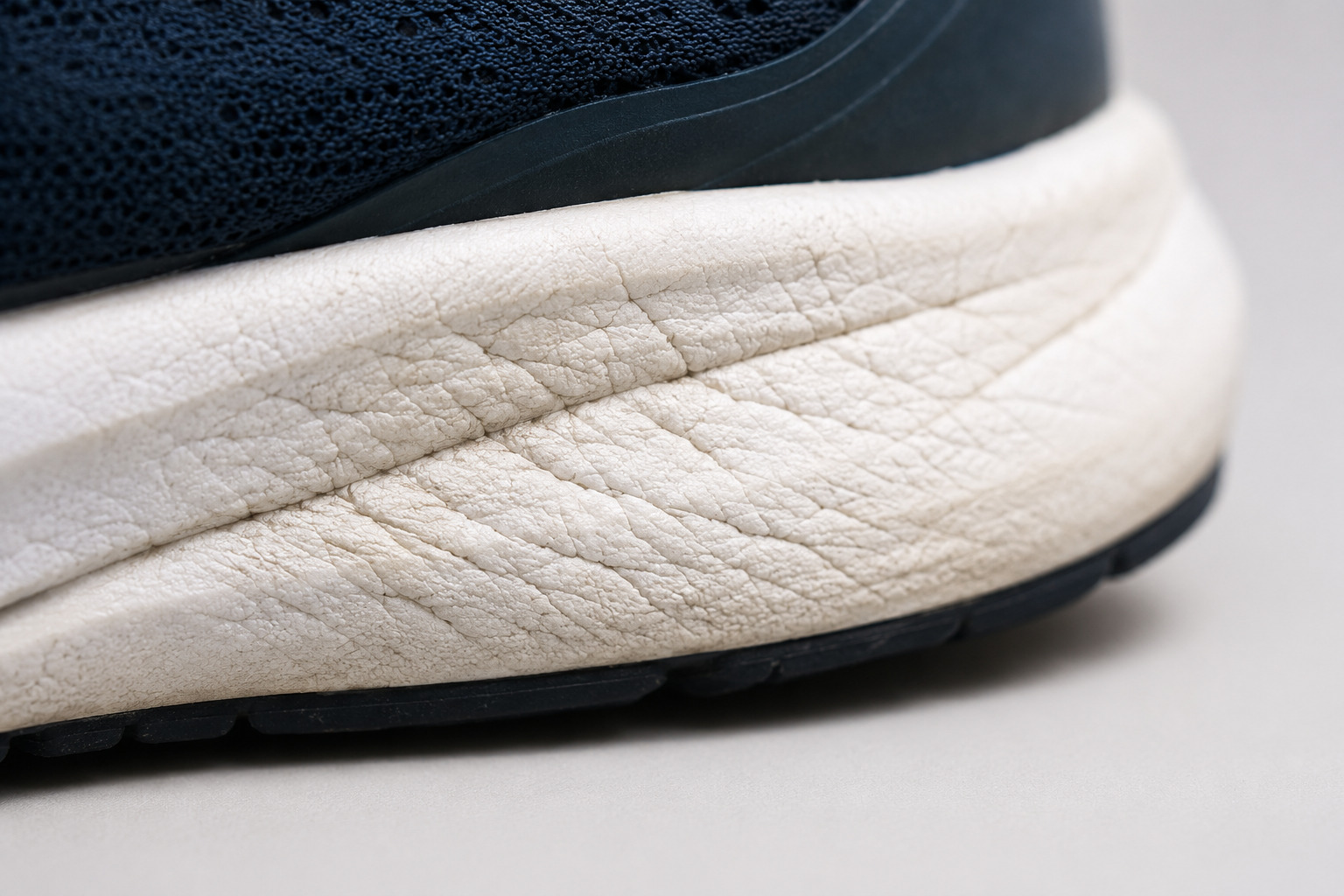
The number everyone quotes is older than most current midsole foam formulations
Modern compression molded EVA, supercritical foams, and multi density midsoles behave differently than the shoes available when the original 500 mile guidance was written.
More recent research has actually found the opposite problem with the popular number. It may be too generous, not too conservative. A 2017 study measured midsole hardness directly using a durometer at baseline and after 160, 320, 480, and 640 kilometers of running, and found measurable hardening of the heel midsole beginning as early as 160 kilometers, roughly 100 miles, far sooner than the 300 mile floor most guidance assumes.
The part almost nobody mentions: you probably cannot feel it happening
The same 2017 study asked runners to self report whether they noticed a change in cushioning as their shoes accumulated mileage. Despite the measurable hardening detected by instruments, the runners did not reliably perceive a meaningful loss of cushioning, even after 640 kilometers, roughly 400 miles, of use.
This is the actual headline most coverage of shoe replacement buries. The midsole is quietly failing well before it feels like it is failing. Waiting until a shoe stops feeling supportive is waiting for a signal that, according to this research, arrives later than the underlying material change it is supposed to indicate.
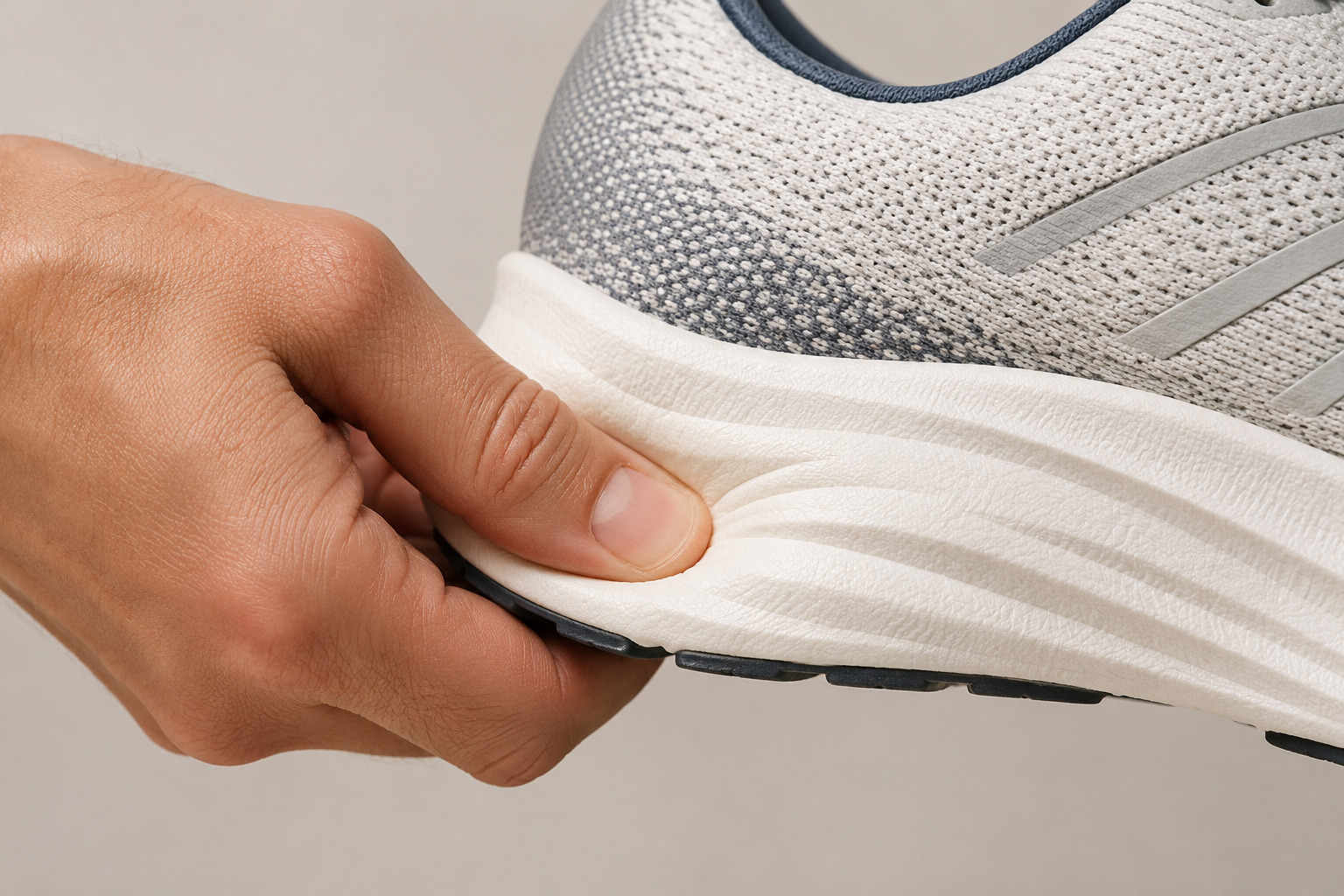
Feel is a lagging indicator, not a leading one
By the time reduced cushioning is subjectively obvious, the midsole has typically already been compressing for a meaningful stretch of mileage.
What the injury link actually looks like
Here the research gets genuinely uncertain, and an honest article has to say so plainly. The connection between a compressed midsole and increased injury risk is frequently stated as fact in consumer content, but the underlying evidence is thinner and more mixed than that confidence implies. Some studies have found associations between shoe age and altered plantar pressure patterns. Others examining midsole hardness directly against injury outcomes have found no significant relationship at typical training velocities. A large prospective study following recreational runners instead found that a runner's own perceived comfort and overall appreciation of a shoe was associated with lower injury risk, independent of the shoe's measured cushioning properties.
The honest summary is that compressed midsoles clearly change how force moves through the foot, that part is measurable and consistent, but a clean, universal link from that change to injury has not been established the way popular advice implies. Comfort and fit, not a mileage countdown, remain the two factors most consistently tied to how a shoe actually performs for the person wearing it.
So what should actually guide replacement
Given that mileage is a rough proxy at best and subjective feel arrives too late, the more reliable approach combines a few physical checks rather than trusting either signal alone.
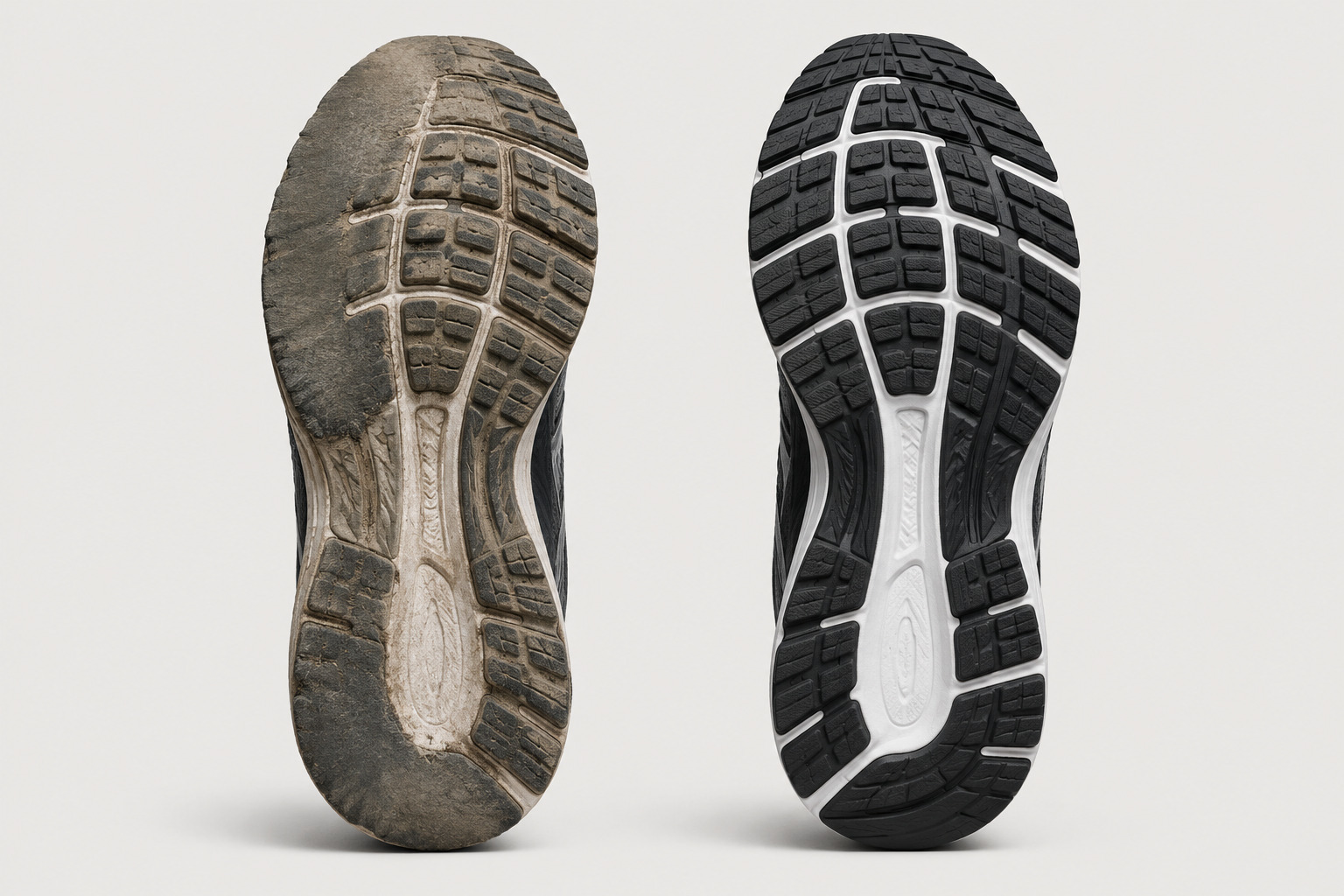
The outsole is usually the last part of the shoe to fail, not the first
Tread wear is the easiest thing to see, which is exactly why it is the least reliable signal. The midsole underneath is typically compromised well before the outsole looks obviously worn.
A visible compression crease running across the sidewall of the midsole, uneven wear when comparing one shoe to the other, a heel counter that has gone soft or lost its shape, and new aches appearing in familiar shins, knees, or arches during otherwise unchanged routines are all more specific signals than a mileage count alone. Tracking approximate mileage still has value as a rough baseline, particularly for anyone running consistently, but it works best as one input alongside a physical check, not as the entire decision.
For anyone managing a specific foot condition, this decision carries more weight than it does for a general walker. A compressing midsole changes the exact support a shoe was chosen to provide, which matters more for plantar fasciitis, shin splints, or overpronation than it does for a healthy, uninjured foot. The MySoleMatch guide on choosing footwear by condition covers how support needs shift once a specific issue is in play, and is worth revisiting whenever a shoe nearing the end of its life was originally chosen to manage a particular problem.
When to stop guessing entirely
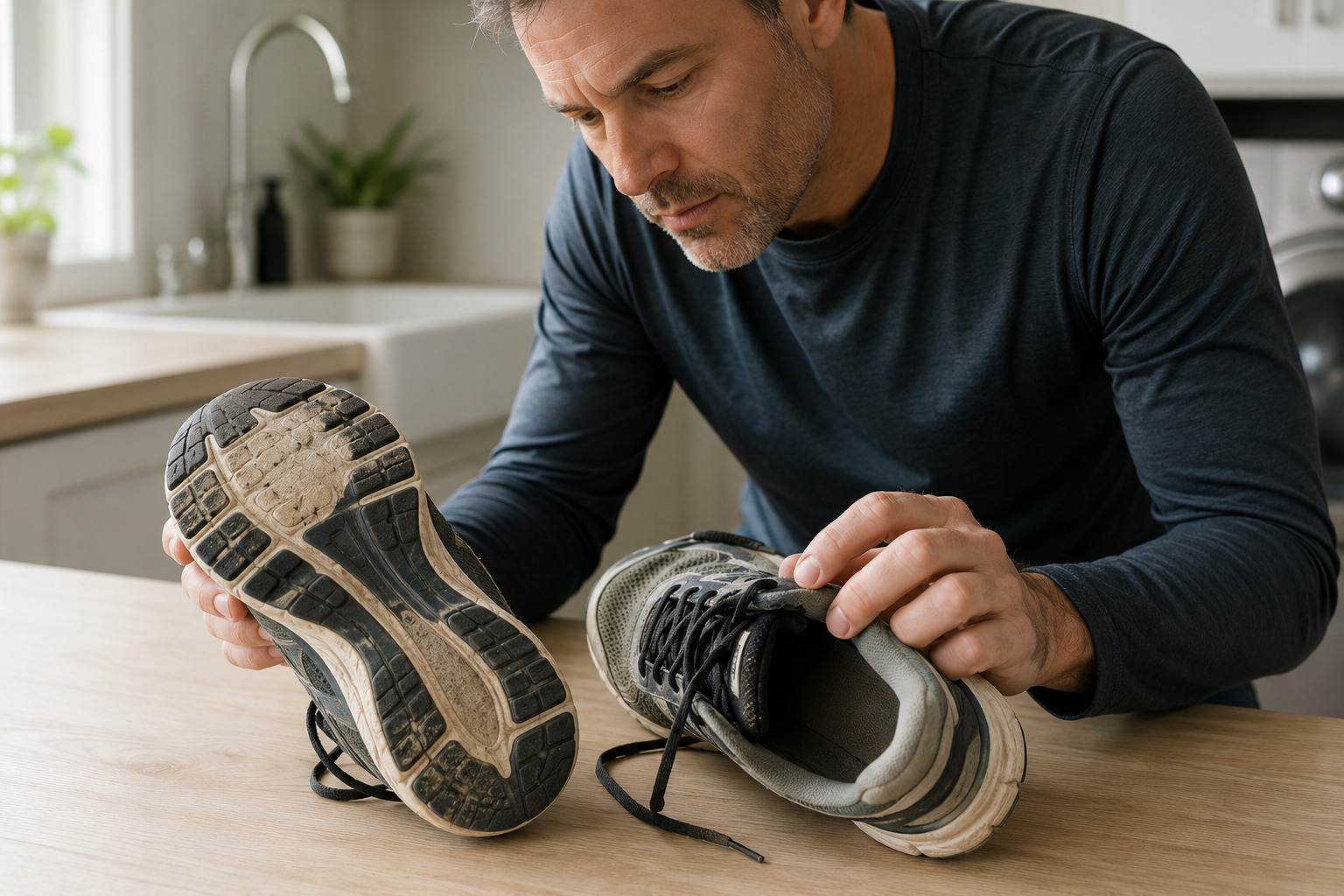
When in doubt, the physical check settles it faster than the math does
Mileage estimates are useful. A hands on check of crease lines, heel shape, and tread evenness is usually the faster, more accurate answer.
If new, unexplained joint or foot discomfort shows up during routine activity and does not resolve after replacing a genuinely worn shoe, that is a reasonable point to involve a podiatrist rather than continuing to guess at footwear as the sole cause. Persistent pain that a shoe change does not resolve is exactly the kind of signal covered in When to See a Podiatrist.
The honest version of this topic is less tidy than a single number. The midsole starts changing sooner than most people expect, feels fine for longer than it should, and the link between that compression and actual injury is real but far less settled than the confident advice around it suggests. A mileage estimate is a reasonable starting point. A hands on check of the shoe itself is the more reliable way to finish the decision.