Disclosure: We may earn a small commission if you purchase through links on this page. No additional cost to you, and we only recommend products we trust. This helps us keep MySoleMatch free and ad-free. Thank you for your support!
Ankle Instability
Ankle instability is one of the most common long-term consequences of ankle sprains. When the lateral ligaments do not fully heal or are not adequately rehabilitated, the ankle becomes prone to repeated giving-way episodes. The right footwear - with a firm heel counter, stable midsole base, and secure fit - is a key part of managing this condition alongside bracing and targeted rehabilitation.
Signs You May Have Ankle Instability
Recurring ankle giving way on uneven surfaces or during activity
Persistent outer ankle tenderness and swelling
Feeling of wobbliness or unreliability in the ankle joint
Reduced range of motion and stiffness
Loss of proprioception and balance confidence
Pain along the outer ankle particularly after activity
Walk Into Your Appointment With Answers
Before Your Next Appointment
Take Your Results to Your Podiatrist
Answer a few quick questions. Takes under 2 minutes. Get personalized shoe recommendations.
Best Shoes for Ankle Instability | MySoleMatch
A firm heel counter is the most critical footwear feature - it resists inversion and keeps the heel seated securely. A broad midsole base reduces the inversion lever arm. Secure midfoot lockdown through lacing and heel fit is essential. Collar height provides supplemental benefit in high-risk activities but does not replace the heel counter and midsole base as the primary stability features.

Brooks Adrenaline GTS 25
$150-$160
Why this shoe
The Adrenaline GTS 25 has one of the firmest heel counters in the stability category, which is the primary structural feature for ankle instability management. Its GuideRails system provides broad midsole support to reduce inversion lever arm without overcorrecting gait mechanics. The 10mm heel drop positions the subtalar joint in a stable orientation.
GuideRails holistic support system controls excess movement without overcorrecting
DNA Loft v3 nitrogen-infused cushioning for lightweight plush comfort
APMA Seal of Acceptance pid=9201 - PDAC A5500 diabetic shoe certified - verified directly from APMA Seal Database May 2026

ASICS GEL-Kayano 32
$160-$170
Why this shoe
The GEL-Kayano 32 combines a rigid heel counter with the 4D Guidance System that provides structured medial and lateral midsole support. The 8mm heel drop and secure heel fit lockdown make it one of the most structurally protective stability shoes for ankle instability.
4D Guidance System provides adaptive stability for overpronation control
FF Blast Plus foam midsole with higher stack height for balanced cushioning
PureGEL technology in heel for softer landings and shock absorption
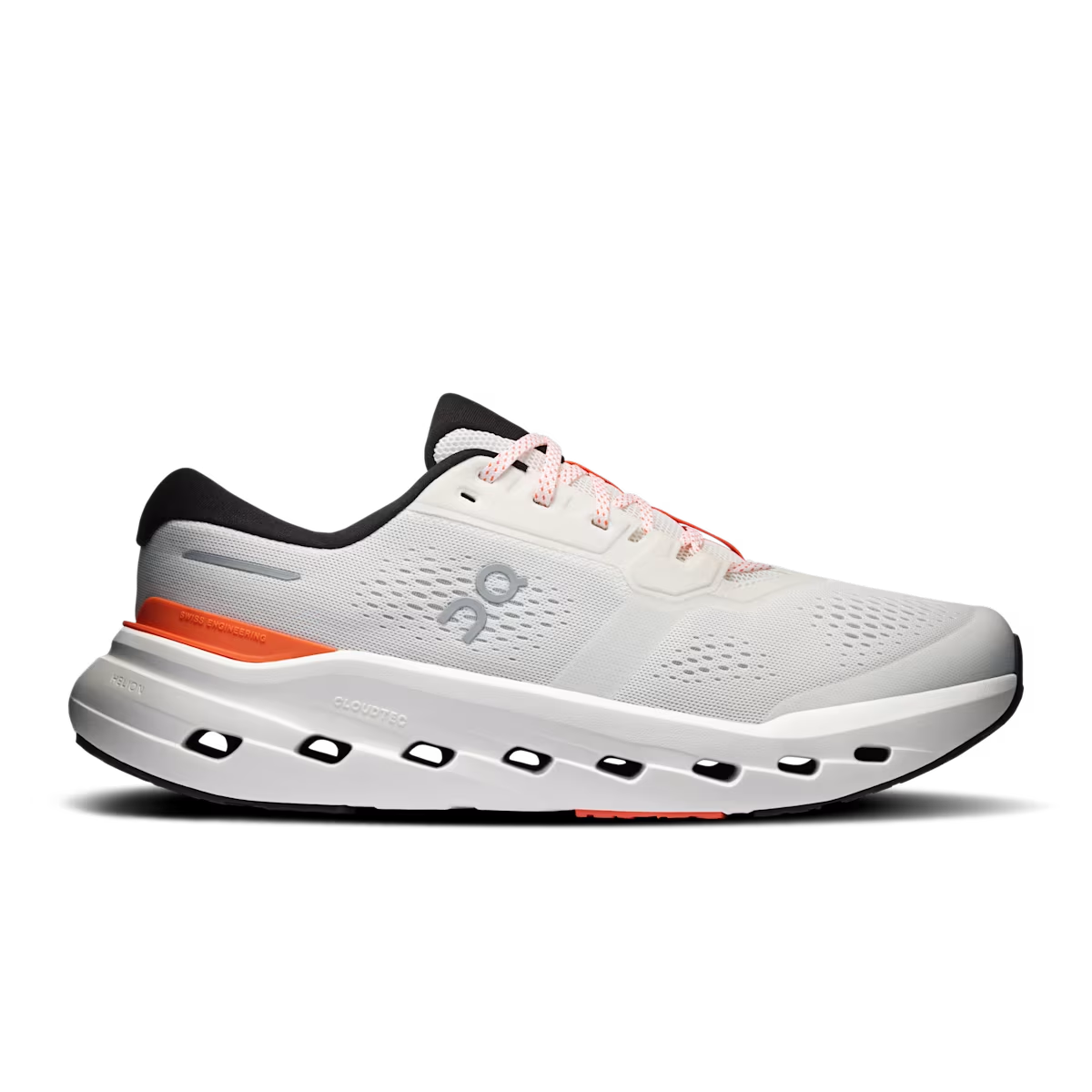
On Cloudrunner 3
$160
Why this shoe
A firm, structured heel counter and wider platform base provide mechanical resistance to inversion, though this is a running shoe rather than a dedicated stability trainer for ankle rehab.
Asymmetrical heel clip and taller sidewalls provide mild-to-moderate overpronation support without heavy correction
Helion Superfoam midsole runs firm and stable, prioritizing consistency over plush softness
Decoupled heel design allows more natural foot movement through the stability platform

New Balance Fresh Foam X 860v15
$145-$155
Why this shoe
The 860v15 provides Fresh Foam X cushioning with a firm medial post and heel counter that resist inversion loading. The 10mm heel drop and structured upper deliver reliable heel lockdown for runners and walkers with ankle instability.
Fresh Foam X midsole with Stability Plane technology
Engineered mesh upper for breathability
Described by New Balance as a stability shoe

New Balance 990v6
$185-$200
Why this shoe
The 990v6 is built on one of the most stable platform geometries New Balance produces. Its ENCAP midsole delivers a firm, structured base with excellent heel counter rigidity and an 8mm drop for all-day wear.
ENCAP® Structural Support: Built with a durable polyurethane rim that cradles the heel and arch, preventing the over-pronation that actively strains and inflames the plantar fascia ligament.
High-Rebound FuelCell Core: Infused with New Balance's premier performance foam to absorb heavy heel shock and deliver a responsive, bouncy feel that takes the pressure off your feet.
Dual-density foam for lasting comfort and support
Saucony Guide 19
$150
Why this shoe
The Guide 19 provides a structured PWRRUN midsole with medial bridge support and a firm heel counter at a moderate price point. A reliable everyday stability option for mild to moderate ankle instability.
CenterPath technology uses a wide base platform, high sidewalls approximately 8mm tall, and uniform foam density to guide foot positioning without any medial post or dual-density insert. Geometry-based stability that feels invisible underfoot
Softer compression-molded PWRRUN EVA midsole delivers a more cushioned ride than the Guide 18 while maintaining the stable platform runners and walkers with overpronation need
6mm drop confirmed at exactly 6mm in independent RunRepeat lab testing, matching the official Saucony specification precisely. A rare result that validates the spec
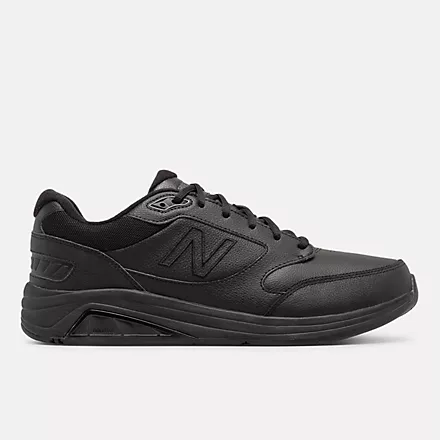
New Balance 928v3 Lace-Up Walking Shoe
$134-$145
Why this shoe
The 928v3 is a motion control walking shoe with a rigid ROLLBAR and firm heel counter for maximum stability. Its wide base and ROLLBAR post make it ideal for older adults or those with severe ankle instability who need maximum structural support for daily walking.
ROLLBAR motion control technology and Clinical-Grade Support: The signature ROLLBAR® motion control system minimizes rear-foot movement, keeping your stride aligned and reducing stress on the plantar fascia.
Reduces morning heel pain and keeps you moving comfortably all day, whether you're on your feet for work or walking for fitness.
Maximum Shock Absorption: Engineered with ABZORB® cushioning in the midfoot to absorb harsh impacts, protecting your heels from painful concrete and hard floors.
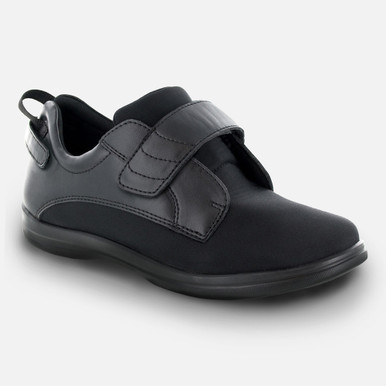
Apex Balance Shoe
$115-$135
Why this shoe
Specifically engineered to reduce fall risk, a direct clinical priority for patients managing ankle instability alongside neuropathy.
Specifically engineered to reduce fall risk - ideal for elderly and neuropathic patients
Biomechanical footbed with contoured EVA provides arch support and shock absorption
Extra-depth design with 5/16 inch removable insole accommodates custom orthotics and AFOs
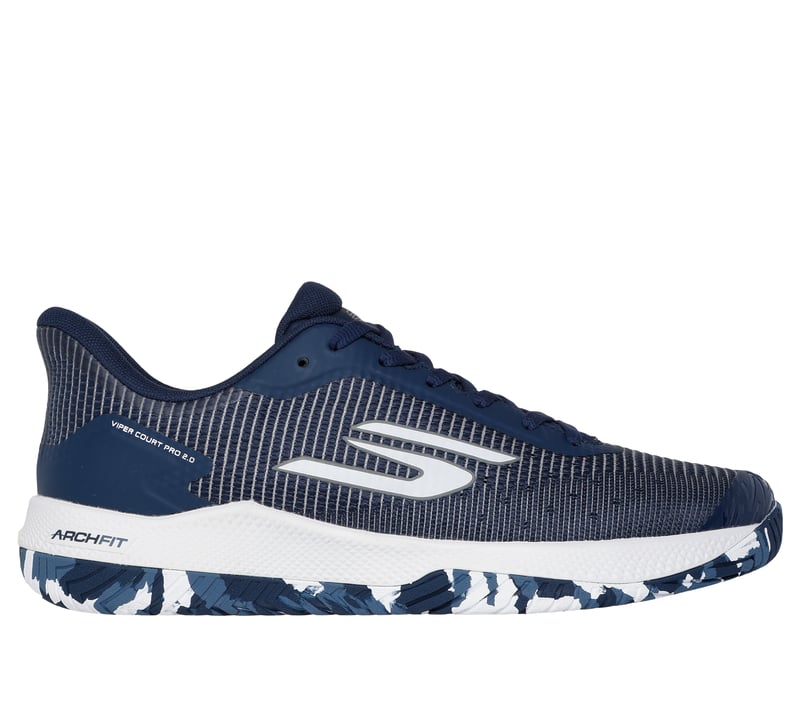
Skechers Viper Court Pickleball
$80-$100
Why this shoe
Lateral reinforcement chassis controls side-to-side movement forces, directly reducing ankle inversion risk during the rapid direction changes of court sports. APMA accepted.
APMA Seal of Acceptance pid=8972 - Skechers Viper Court Pickleball - verified directly from APMA Seal Database May 2026
Non-marking herringbone outsole engineered for indoor and outdoor court surfaces - approved for pickleball, tennis, and racquet sports
Lateral reinforcement chassis controls side-to-side movement forces - reduces ankle inversion risk during rapid direction changes

Nike Structure 26
$120-$135
Why this shoe
Reliable midfoot support system provides rearfoot guidance without a rigid post, offering meaningful lateral stability for mild to moderate overpronation. APMA accepted.
Full-length ReactX foam with midfoot support system wrapping the arch and heel for a firm stable base
APMA Seal of Acceptance pid=9107 - Nike Structure 26 - verified directly from APMA Seal Database May 2026
Reliable midfoot support system controls overpronation without the rigid plastic post of older stability shoes
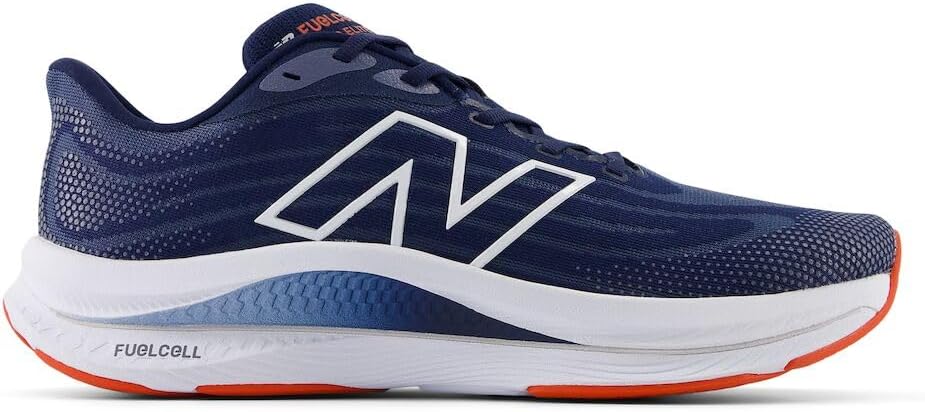
New Balance FuelCell Walker Elite
$130-$145
Why this shoe
Stability Plane provides dedicated lateral stability throughout the walking gait cycle, purpose-built to resist inversion during extended walking. APMA accepted.
FuelCell foam delivers responsive energy return and propulsive feel purpose-built for walking
Walking Strike Path outsole technology guides foot through entire walking gait cycle
Stability Plane provides lateral stability without compromising cushioning
What to Look for in a Shoe
Evidence-based footwear criteria specific to this condition.
Heel Drop
Recommended: 6-10mm
A moderate heel drop positions the subtalar joint in a more mechanically stable orientation, reducing the inversion tendency that worsens ankle instability. Extremely low drop shoes reduce heel counter effectiveness by lowering the heel seat. Very high drop can compromise natural proprioceptive feedback from the ankle.
Avoid below 4mm
Cushioning
moderate
Moderate cushioning provides impact attenuation without the excessive foam compression that compromises heel counter rigidity and midsole stability. Ultra-soft foams allow the foot to sink and unlock the subtalar joint, increasing inversion risk. A responsive, stable foam is preferable to maximum plush for this condition.
Avoid: ultra-soft, maximum-plush, barefoot-style
Stability vs. Neutral
stability
Stability shoes with firm heel counters, broader midsole bases, and guide rail or medial post technology reduce the inversion lever arm and prevent the subtalar joint from unlocking into an inversion-prone position. Neutral shoes with soft, compressible midsoles provide less structural resistance to inversion loading.
Exception: Runners with confirmed supination and high arches may require a neutral cushioned shoe with careful fit assessment. Podiatrist evaluation is recommended when arch type is uncertain.
Width
Recommended: D, 2E
A properly fitted shoe ensures the heel seats firmly in the heel counter without slippage. A too-narrow shoe causes heel pistoning that defeats the stability function of the heel counter. A too-wide shoe allows foot movement that reduces the effectiveness of structural stability features.
Insoles and Orthotics
Removable insoles are preferred to allow custom orthotic accommodation. A podiatrist may recommend a lateral heel wedge orthotic to reduce inversion moments at the subtalar joint alongside footwear modification.
Sources: APMA Clinical Practice Guidelines; American Journal of Sports Medicine; Foot and Ankle International
What Is Happening in Your Foot
Ankle instability is what happens when an ankle sprain does not heal properly - the ligaments remain loose and the ankle continues to give way in the weeks, months, or years that follow. The lateral ligaments that prevent the foot from rolling outward become lax, and the ankle loses the mechanical and neuromuscular stability it needs to handle the demands of walking, running, and sport.
Biomechanics
The lateral ankle ligaments - primarily the anterior talofibular ligament (ATFL) and calcaneofibular ligament (CFL) - resist inversion moments at the subtalar joint. When these ligaments are lax, the subtalar joint unlocks more easily under inversion loading. Proprioceptive deficits compound this: the peroneal muscles, which fire reflexively to counteract inversion, lose their protective reflex speed after injury. Footwear addresses the mechanical component by providing a firm heel seat, broad platform base, and secure fit that resist initial inversion displacement.
What Makes It Worse
Uneven terrain, curbs, and trail surfaces that create unpredictable inversion loads
Court sports with rapid lateral direction changes
Fatigue, which slows peroneal reflex speed and worsens neuromuscular protection
Shoes with soft, compressible heel counters that allow the heel to shift under load
Going barefoot or wearing flat, unsupportive footwear on hard surfaces
What Helps
Footwear with a firm, rigid heel counter that resists inversion displacement
Ankle bracing during high-risk activities
Proprioception training to restore neuromuscular protective reflexes
Peroneal strengthening exercises to improve active stabilization
Activity modification to avoid high inversion-risk surfaces during recovery
Common Misconceptions
Myth: High-top shoes are the most important footwear feature for ankle stability.
Research consistently shows that heel counter firmness and midsole base width are more important than collar height for reducing inversion risk. A firm heel counter in a low-top shoe provides more functional support than a soft collar in a high-top shoe.
Myth: Ankle instability means the ankle will always be weak and requires permanent bracing.
Ankle instability responds well to targeted rehabilitation. Proprioception training and peroneal strengthening can restore significant neuromuscular stability, and many people return to high-level activity without ongoing bracing after completing a structured program.
Myth: If the ankle stops hurting after a sprain, it has healed completely.
Pain resolution after an ankle sprain does not indicate complete ligamentous healing or restoration of proprioceptive function. Many cases of instability develop because people returned to full activity once pain subsided, before the neuromuscular protective systems were fully restored.
Sources: American Journal of Sports Medicine; Foot and Ankle International; Journal of Athletic Training; American College of Foot and Ankle Surgeons
You Might Also Have
Ankle Instability by Occupation
How this condition presents differently depending on how you spend your day.
athletes
Athletes in court sports, trail running, and field sports face the highest ankle instability risk due to lateral loading demands and uneven terrain.
Rapid lateral direction changes in basketball, volleyball, and tennis create inversion loading at high force and speed. Trail runners face continuous unpredictable surface variation. Athletes with a prior lateral ankle sprain are at significantly elevated risk for re-injury, particularly in the first year after return to sport.
Shoe Priority
Sport-specific stability footwear with a firm heel counter, broad midsole base, and secure lacing. Ankle bracing during competition and high-intensity practice is standard sports medicine protocol for athletes with ongoing ankle instability.
hikers
Hikers with ankle instability benefit genuinely from mid or high boot collar height combined with a firm heel counter and stable midsole.
Trail surfaces create continuous lateral loading from unpredictable foot plant events, rock and root crossings, and side-slope terrain. Loaded pack hiking increases inversion moments. This is one of the few contexts where collar height provides clearly additive benefit beyond the heel counter and midsole base alone.
Shoe Priority
Mid or high hiking boot with a rigid heel counter, broad lug outsole for lateral traction, and firm midsole. Ankle bracing under the boot adds a protective layer for those with significant instability.
seniors
Older adults with ankle instability face compounded fall risk that makes footwear stability especially critical.
Ankle instability in older adults combines with age-related proprioceptive decline and reduced peroneal reaction speed to significantly increase fall risk. Many seniors attribute ankle weakness to general aging and do not seek treatment. Footwear must simultaneously address stability, cushioning, and ease of entry.
Shoe Priority
Maximum-stability shoe with a firm heel counter, wide midsole base, and secure closure that ensures the heel seats properly every time. Slip-resistant outsole is an important secondary requirement given fall risk.
Frequently Asked Questions
Related Guides and Resources
From the MySoleMatch Journal
Walk Into Your Appointment With Answers
Before Your Next Appointment
Take Your Results to Your Podiatrist
Answer a few quick questions. Takes under 2 minutes. Get personalized shoe recommendations.
Not Sure Which Shoe Is Right?
Take our guided quiz and get a personalized recommendation based on your specific foot condition and lifestyle.
Start the Quiz