Disclosure: We may earn a small commission if you purchase through links on this page. No additional cost to you, and we only recommend products we trust. This helps us keep MySoleMatch free and ad-free. Thank you for your support!
Stress Fractures
Stress fractures in the foot are tiny cracks in the bone caused by repetitive mechanical stress that exceeds the bone's ability to remodel and repair. They are common in runners and military personnel and require a significant reduction in activity. Cushioning and support that reduce bone impact loading are critical during recovery.
Signs You May Have Stress Fractures
Pain that worsens with activity and improves with rest
Tenderness at a specific point on the bone
Swelling without significant bruising
Pain that develops gradually over weeks
Possible night pain in severe cases
Walk Into Your Appointment With Answers
Before Your Next Appointment
Take Your Results to Your Podiatrist
Answer a few quick questions. Takes under 2 minutes. Get personalized shoe recommendations.
Best Shoes for Stress Fractures | MySoleMatch
Maximum cushioning to reduce bone impact loading is the priority during recovery. Stability and support help prevent compensatory injuries.

New Balance Fresh Foam X 880v15
$145-$155
Why this shoe
Fresh Foam X cushioning reduces bone impact loading during the critical recovery period.
Fresh Foam X midsole with approximately 3% bio-based content for cushioned ride
Structured yet breathable engineered mesh upper
Structured, breathable engineered mesh upper, per New Balance

New Balance Fresh Foam X 860v15
$145-$155
Why this shoe
Stability and cushioning combination supports recovery from stress fractures with proper alignment.
Fresh Foam X midsole with Stability Plane technology
Engineered mesh upper for breathability
Described by New Balance as a stability shoe
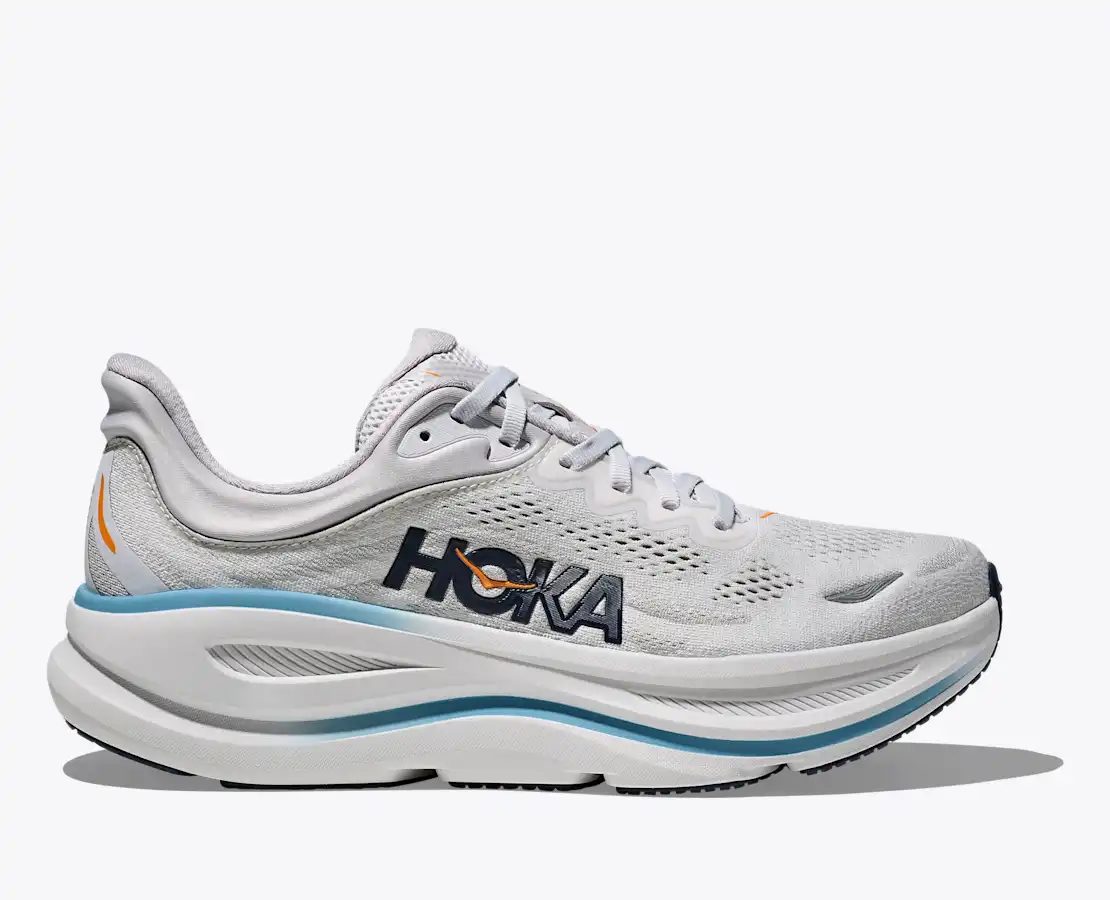
HOKA Bondi 9
$165-$180
Why this shoe
Maximum cushioning reduces bone impact loading during stress fracture recovery - the rocker sole minimizes forefoot stress during push-off.
Supercritical EVA foam for maximum plush cushioning
Meta-Rocker geometry reduces plantar fascia stress
APMA Seal of Acceptance pid=9031 - podiatrist top recommendation for heel pain - verified directly from APMA Seal Database May 2026

Brooks Glycerin 22
$160-$175
Why this shoe
Maximum DNA Tuned dual-density cushioning reduces bone impact loading - podiatrists specifically cite Glycerin for stress fracture and bone bruise recovery.
DNA Tuned dual-density midsole for maximum plush cushioning
Premium luxury neutral trainer with highest stack height in Brooks lineup
APMA Seal of Acceptance pid=8887 - ideal for high arches and stress fracture recovery - verified directly from APMA Seal Database May 2026
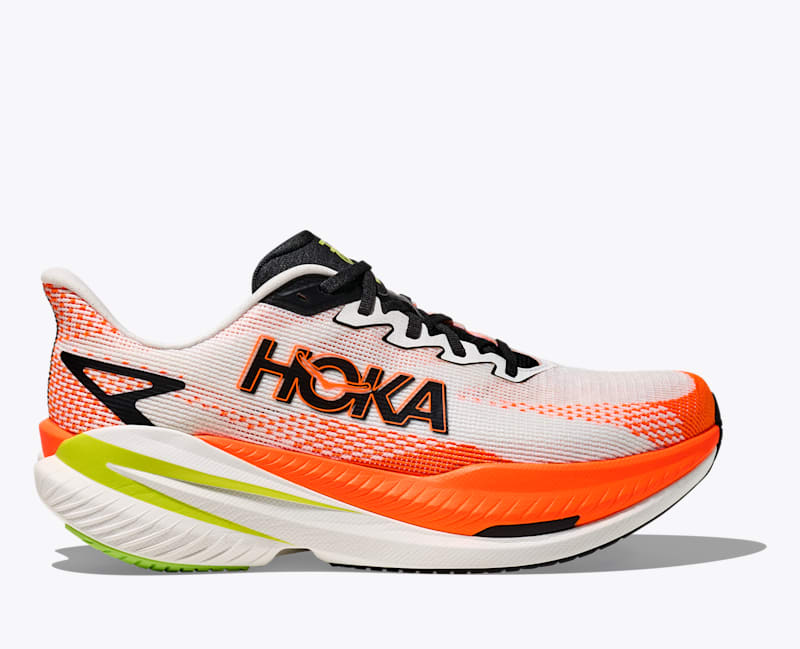
HOKA Mach X 3
$190
Why this shoe
44mm heel stack meaningfully reduces bone impact loading during a supervised return to running after a metatarsal stress fracture, though the plated platform is intended for experienced runners, not general rehab.
PEBA-topped midsole with an embedded Pebax plate delivers a plated, propulsive ride for tempo and speed-focused training
44mm heel / 39mm forefoot stack height provides high-cushion protection without the weight of a full super shoe
J-Frame technology guards against overpronation without overcorrecting a neutral gait, useful for high step-count days

ASICS GEL-Nimbus 28
$165-$175
Why this shoe
43mm maximum stack height reduces bone impact loading during stress fracture recovery - podiatrists specifically recommend maximum cushion GEL shoes for bone bruise recovery.
FF Blast Plus cushioning with PureGEL technology for maximum soft landings
25g lighter than previous version - exceptional cushioning without weight penalty
Engineered knit upper wraps foot for comfort and breathability
Saucony Triumph 23
$165-$175
Why this shoe
42mm maximum superfoam stack reduces bone impact loading during recovery - PWRRUN PB provides superior energy absorption versus standard foam for bone protection.
Full-length PWRRUN PB superfoam midsole - first training shoe with all-superfoam construction
42mm heel stack height for maximum impact protection
Rocker geometry for effortless heel-to-toe transitions
What to Look for in a Shoe
Evidence-based footwear criteria specific to this condition.
Heel Drop
Recommended: 8-12mm
A higher heel drop reduces forefoot impact loading, which is critical during stress fracture recovery in the metatarsals - the most common stress fracture site in runners and active individuals. Elevated heel geometry shifts initial contact toward the heel and midfoot, reducing the repetitive bending stress on metatarsal shafts that drives fracture propagation. Research in the American Journal of Sports Medicine supports cushioned, higher drop footwear as part of conservative stress fracture management.
Avoid below 4mm
Cushioning
maximum
Maximum cushioning is the single most important midsole feature for stress fracture management and prevention. The midsole absorbs the ground reaction forces that would otherwise be transmitted directly to the stressed bone. During recovery, maximum cushioning reduces the peak impact force at the fracture site with every step. For prevention in high-risk populations, maximum cushioning reduces the cumulative bone loading that drives stress fracture development over training cycles.
Avoid: minimal, thin-soled, worn-out midsoles, barefoot-style, racing flats
Stability vs. Neutral
stability
Stability features are indicated for stress fracture patients with flat feet or overpronation, as these biomechanical factors alter plantar pressure distribution and can concentrate bending stress at specific bone sites. For patients with neutral gait, maximum cushioning in a neutral shoe is appropriate. The stability question is secondary to cushioning for stress fractures, but important for preventing recurrence in biomechanically predisposed patients.
Exception: Patients with high arches and supination may develop stress fractures at different metatarsal sites - typically the fifth metatarsal - due to lateral forefoot overloading. These patients may not benefit from medial stability features and require cushioning focused on the lateral forefoot. A podiatrist or sports medicine physician should assess fracture site and gait pattern together.
Width
Recommended: D, 2E
Standard to wide fit is appropriate. A shoe that fits correctly without lateral compression prevents the gait compensations that can shift load toward already-stressed bone. Adequate width ensures even pressure distribution across the metatarsal heads during the push-off phase.
Insoles and Orthotics
Custom orthotics that redistribute plantar pressure away from the stress fracture site are a well-established adjunct to footwear management. A podiatrist or sports medicine physician can identify the specific pressure pattern contributing to the fracture and prescribe orthotics that offload the affected bone during the recovery period. For fifth metatarsal fractures - which have a high non-union rate - offloading orthotics are particularly important. Shoes with removable insoles and adequate depth are essential.
Sources: American Journal of Sports Medicine; Journal of Bone and Mineral Research; APMA Clinical Practice Guidelines
Recommended Accessories for Stress Fractures
Insoles, heel cups, compression socks, and braces that complement your shoe recommendation and provide additional targeted relief.

CEP Progressive+ Compression Run Socks
CEP
$50-$65
Why this accessory
Medical compression reduces bone impact loading during recovery
20-30 mmHg medical-grade graduated compression for serious athletes
Reduces muscle oscillation that causes shin splint and stress fracture risk
Anatomically shaped for left and right feet - not interchangeable
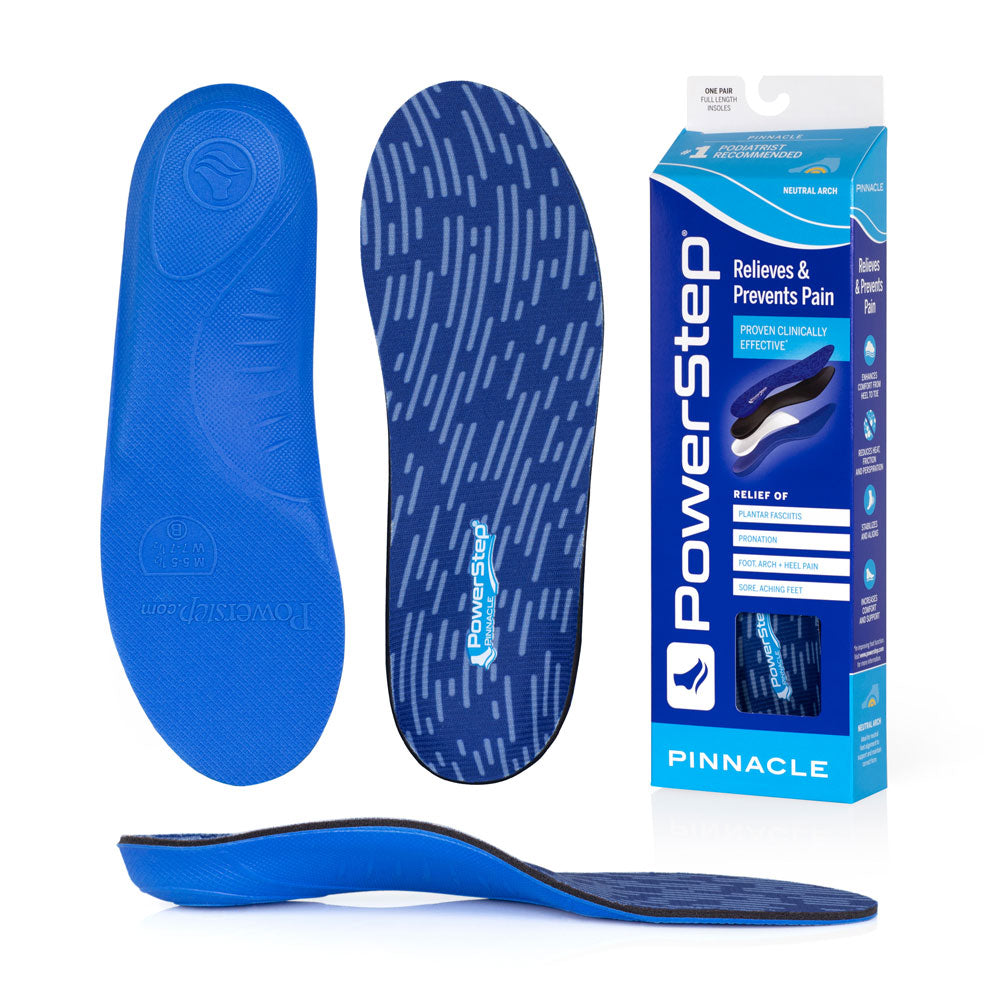
Powerstep Pinnacle Maxx Support Insoles
Powerstep
$45-$55
Why this accessory
Arch support distributes ground force away from fracture site
Number one podiatrist recommended OTC insole in the USA
Double-layer cushioning with semi-rigid arch support controls overpronation
Deep heel cradle stabilizes and cushions the calcaneus on every step
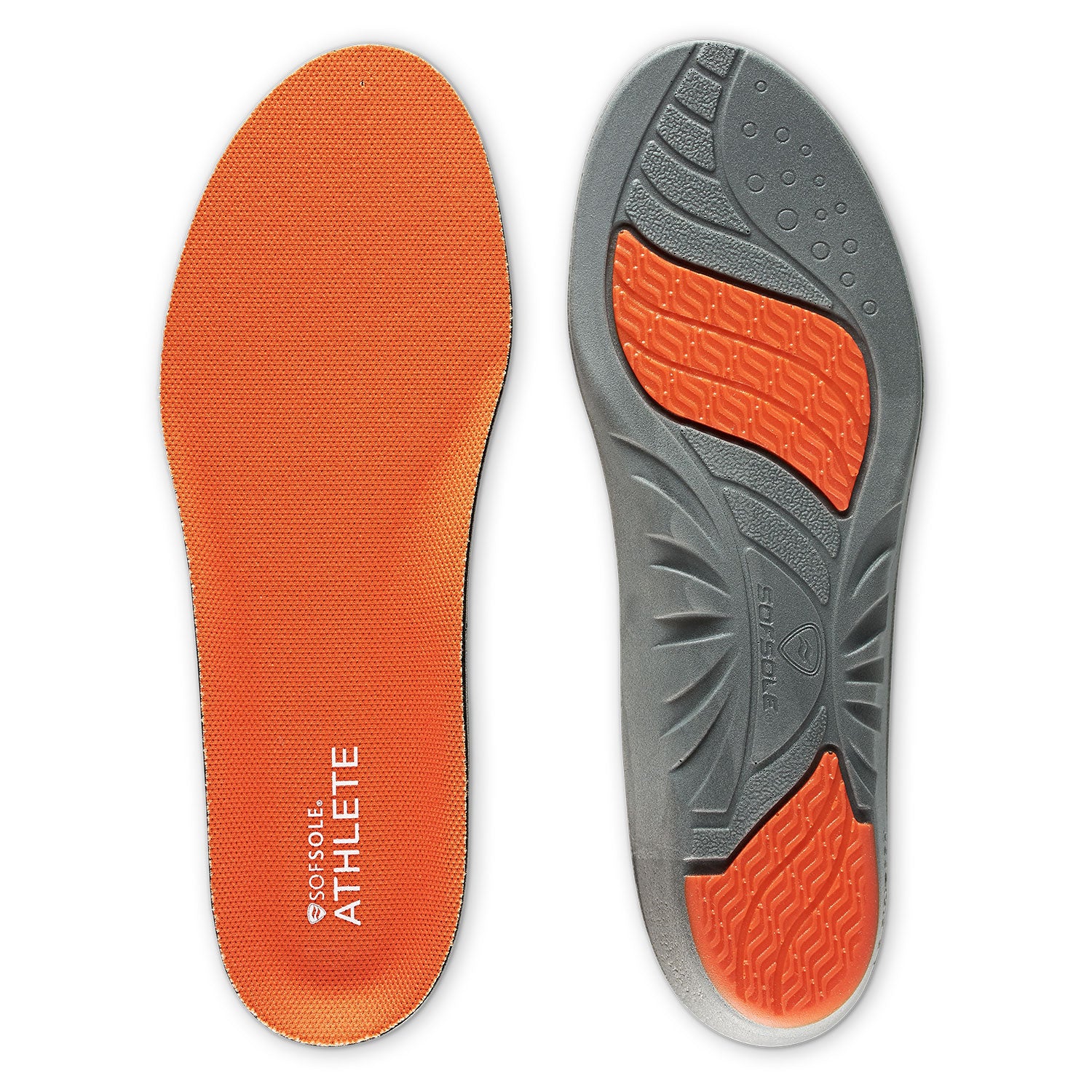
Sof Sole Athlete Performance Insoles
Sof Sole
$20-$45
Why this accessory
Gel cushioning absorbs impact during stress fracture recovery
Gel heel and forefoot pads absorb impact during high activity
Arch support channel reduces plantar fascia strain during running
Moisture wicking lining keeps feet dry during activity

Aetrex L700 Speed Orthotics - Men
Aetrex
$40-$50
Why this accessory
APMA accepted shock absorption reduces bone impact loading during recovery and training
APMA accepted - designed for athletic performance and swift workouts
AeroCell PU provides high energy return during running and high-impact activity
Pro-Shox polyurethane center cushion absorbs shock and reduces impact forces

Aetrex L700 Speed Orthotics - Women
Aetrex
$40-$50
Why this accessory
Women's APMA accepted shock absorption reduces bone impact loading during recovery
APMA accepted - designed for athletic performance and swift workouts
AeroCell PU provides high energy return during running and high-impact activity
Pro-Shox polyurethane center cushion absorbs shock and reduces impact forces
What Is Happening in Your Foot
A stress fracture is a small crack in a bone caused by repetitive mechanical loading that exceeds the bone's capacity to remodel and repair between bouts of activity. Unlike acute fractures from a single traumatic event, stress fractures develop gradually over days to weeks of accumulated bone stress. In the foot, the metatarsals are the most common site, followed by the calcaneus and navicular. Stress fractures are common in runners, military recruits, dancers, and anyone who rapidly increases weight-bearing activity. They represent the end stage of the same overuse continuum that begins with shin splints - bone stress reaction that has progressed to actual microscopic cracking of bone trabeculae.
Biomechanics
Bone is a dynamic tissue that continuously remodels in response to mechanical load through a process called the bone remodeling cycle. Osteoclasts break down stressed bone tissue and osteoblasts lay down new, stronger bone in its place. This process requires time - typically 6 to 8 weeks per remodeling cycle. When loading is applied faster than the remodeling cycle can keep up, micro-damage accumulates faster than it is repaired. The micro-damage coalesces into a stress reaction and eventually a stress fracture. In the foot, metatarsal bending stress during push-off is the primary loading mechanism. Maximum cushioning footwear reduces the peak bending force per footstrike. Stability features reduce the torsional component of metatarsal loading from overpronation. Both interventions slow the rate of bone micro-damage accumulation.
Why Symptoms Behave the Way They Do
Stress fracture pain follows a distinctive activity-related pattern. In early stages, pain begins after a threshold of activity and resolves with rest. As the fracture progresses, the activity threshold before pain onset decreases - eventually pain begins at the start of activity. In advanced cases, pain occurs at rest and at night. Morning pain that is present before any activity suggests a significant stress reaction or complete fracture and warrants immediate medical evaluation. This progression from activity-related to rest pain is the clinical timeline that distinguishes stress fractures from simpler overuse injuries.
What Makes It Worse
Continuing to train through early stress fracture symptoms, which prevents the remodeling cycle from keeping pace with damage accumulation
Sudden training volume or intensity increases beyond the 10 percent per week guideline
Inadequate calcium and vitamin D intake, which reduces bone density and the bone's tolerance for repetitive mechanical stress
Female athlete triad - the combination of energy deficiency, menstrual irregularity, and low bone density that dramatically increases stress fracture risk in female athletes
Running on hard surfaces such as concrete and asphalt that generate higher impact forces than softer surfaces
Worn-out footwear with degraded midsole cushioning that no longer attenuates bone impact loading
What Helps
Immediate activity reduction to a level that allows bone remodeling to exceed micro-damage accumulation - typically complete rest from the causative activity for 6 to 8 weeks
Maximum cushioning footwear that reduces bone impact loading during the unavoidable weight-bearing of daily life
Custom orthotics that offload the specific bone site from peak plantar pressure
Calcium and vitamin D supplementation if dietary intake is inadequate - bone cannot remodel effectively without adequate mineral substrate
Low-impact cross-training such as pool running, cycling, or swimming that maintains fitness without bone loading
Medical evaluation to rule out complete fracture, assess bone density, and identify any contributing hormonal or nutritional factors
Common Misconceptions
Myth: A stress fracture will show up on a regular X-ray immediately.
Stress fractures are frequently invisible on plain X-rays in the first 2 to 3 weeks after symptoms begin. The fracture line only becomes visible once remodeling produces a callus that X-ray can detect. MRI is the most sensitive imaging modality for early stress fractures and can identify bone stress reaction before a fracture line has formed. A negative X-ray does not rule out a stress fracture in a patient with point-specific bone tenderness and activity-related pain.
Myth: Running through a stress fracture will toughen the bone.
Continuing to load a stress fracture prevents the remodeling cycle from repairing the accumulated micro-damage and risks progression to a complete fracture. Some stress fracture sites - the fifth metatarsal, the navicular, and the anterior tibia - are classified as high-risk fractures with significant non-union risk if loading continues. These sites require strict non-weight-bearing management. Training through any stress fracture can extend the total recovery time from weeks to months.
Myth: Stress fractures only happen to high-mileage runners.
Stress fractures occur in anyone whose bone loading exceeds their current bone remodeling capacity. This includes sedentary individuals who begin new exercise programs too rapidly, military recruits in basic training, dancers, and older adults with osteoporosis who sustain stress fractures from normal daily activity loads. The injury is a load-to-capacity mismatch that can occur at any activity level when the increase in loading is too rapid relative to the bone's current strength.
Sources: American Journal of Sports Medicine, Vol. 39, 2011; Journal of Bone and Mineral Research, Vol. 26, 2011; Military Medicine, Vol. 179, 2014; APMA
Stress Fractures by Occupation
How this condition presents differently depending on how you spend your day.
runners
Runners account for the largest share of stress fracture cases, with metatarsal stress fractures representing one of the most common running injuries requiring medical attention.
Training for events with fixed timelines drives training volume increases that exceed the 10 percent weekly guideline. Transitioning to minimalist or lower heel drop footwear without adequate adaptation time increases forefoot loading and metatarsal bending stress. Female runners with menstrual irregularity from energy deficiency face dramatically elevated stress fracture risk due to associated low bone density.
Shoe Priority
Maximum cushioning running shoe with a heel drop of 8mm or higher. Replace running shoes every 300 to 500 miles before midsole cushioning degrades. Never train in racing flats or minimalist shoes during a stress fracture recovery period. Return to full training volume at no more than 10 percent per week after medical clearance.
standing workers
Workers who transition rapidly to highly active roles face stress fracture risk from the sudden bone loading increase of sustained standing and walking.
New employees in retail, warehousing, and food service who go from low baseline activity to 8 to 10 hours of sustained standing and walking impose a sudden bone loading increase analogous to the training spikes that cause stress fractures in runners. The metatarsals and calcaneus are the most common fracture sites in this population. Inadequate work footwear amplifies the bone impact per step.
Shoe Priority
Maximum cushioning work shoe from the first day of an active role. Gradual increase in shift duration during the first weeks of highly active employment reduces the bone loading spike that drives stress fractures in new workers - the occupational equivalent of the 10 percent rule.
seniors
Older adults with age-related bone density reduction can develop stress fractures from activity levels that younger people tolerate without injury.
Bone density declines progressively after age 35 and accelerates after menopause in women. Osteoporotic or osteopenic bone can develop stress fractures from normal daily activity loads - walking, climbing stairs - that would cause no bone damage in younger adults. Older adults who begin new exercise programs require an even more gradual activity progression than younger people to avoid stress fractures.
Shoe Priority
Maximum cushioning shoe with a stable base that reduces both bone impact loading and fall risk. A DEXA bone density scan is recommended for older adults who develop stress fractures from low-level activity to identify osteoporosis as a contributing factor requiring medical management.
walkers
Fitness walkers who increase step counts rapidly are at underappreciated stress fracture risk, particularly in the metatarsals.
Walking generates lower bone impact than running but still applies cumulative loading to the metatarsals with every step. Walkers who rapidly increase from low baseline step counts to 10,000 or more steps daily can exceed metatarsal remodeling capacity. Many walkers are unaware that their footwear cushioning significantly affects metatarsal bone loading per step.
Shoe Priority
Maximum cushioning walking shoe that attenuates metatarsal impact with every step. Step count increases of no more than 10 percent per week allow bone remodeling to keep pace with the new loading stimulus without developing stress fractures.
Frequently Asked Questions
Local Foot Health
Stress Fractures by City
Environmental factors, terrain, and climate affect how common this condition is across different cities. Find local podiatrist resources near you.
Related Guides and Resources
From the MySoleMatch Journal
Walk Into Your Appointment With Answers
Before Your Next Appointment
Take Your Results to Your Podiatrist
Answer a few quick questions. Takes under 2 minutes. Get personalized shoe recommendations.
Not Sure Which Shoe Is Right?
Take our guided quiz and get a personalized recommendation based on your specific foot condition and lifestyle.
Start the Quiz